Moulded parts rarely fail dramatically. Usually, they miss by a fraction—a snap feature is too tight, a wall sinks, a logo needs updating, or a customer changes a mating dimension mid-project. Teams then ask: Can we modify the mould?
Usually, yes. Engineers modify moulds to correct defects, adjust dimensions, cut cycle times, extend tool life, or support design changes. However, success depends on steel condition, original tool design, resin type, the required change, and your risk tolerance.
For product developers, sourcing teams, and buyers, modifying a mould is the fastest way to save a project. Done right, it saves weeks and significant capital. Done poorly, it triggers a cascade of costly new issues.
Can injection moulds be modified for any design change?
Removing steel is easy; adding steel is hard.
-
Removing Steel (Easy): If you need more clearance, a larger pocket, or a relieved shutoff, toolmakers simply machine away the excess metal.
-
Adding Steel (Hard): If a feature must shrink, a boss must move, or a sealing edge needs rebuilding, toolmakers must weld, replace inserts, or rework the cavity block.
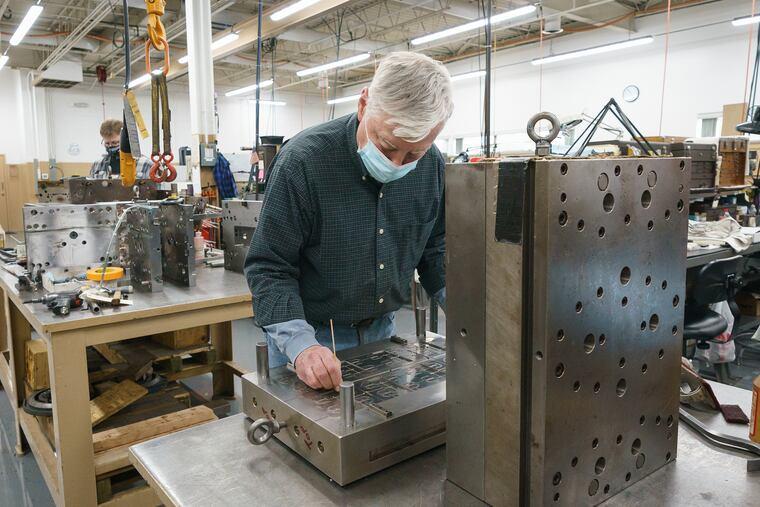
Engineers must plan modifications rather than improvise them. A capable toolmaker evaluates mould steel, tolerances, wear, cooling, and gating before recommending a fix.
Local, minor changes carry low risk. However, changes that alter resin flow, packing, cooling, or shrinkage require broader tooling and process adjustments.
The most common injection mould modifications
Most mould changes fall into a few practical categories. Engineering changes occur frequently when a finished part no longer matches an updated product drawing. Quality issues drive changes when the part shows flash, sink, warpage, short shots, drag marks, or dimensional instability. Production demands drive changes to reduce cycle time, improve venting, increase durability, or simplify maintenance.
Cosmetic changes also happen frequently. These include texture updates, engraving revisions, date stamps, cavity identification, and branding changes. They sound minor, but toolmakers must execute them carefully because surface finish changes affect part appearance, ejection, and local fill behaviour.
Another common case involves end-of-life component replication. A customer may hold an ageing mould with worn inserts or outdated geometry and need a team to bring the tool back into production condition. In those projects, modification and refurbishment overlap. The goal goes beyond reshaping the tool—it restores repeatability and extends usable mould life.
Changes that are usually easier
Machinists generally manage dimensional opening, added venting, engraving updates, shutoff relief, minor ejector revisions, and some insert swaps with less effort. When engineers design the original tool with replaceable inserts, future revisions become much easier and lower risk.
More complex changes
Wall thickness reductions, gate relocation, large core shifts, major cooling changes, and geometry updates requiring steel build-up demand more effort. Toolmakers can still execute these changes, but engineers must conduct tighter reviews and run more validations after modifying the tool.
What determines whether a mould can be modified?
The available steel condition serves as the first factor. If enough steel remains in the right area, machining changes remain simple. If the requested revision exceeds available material, the tool may require welding or a new insert. Tool steel type matters here because certain steels weld and re-machine far better than others.
The original mould architecture serves as the second factor. A toolmaker modifies a mould built with modular inserts, good access, and proper documentation far more easily than a tool featuring one-piece cavity blocks and limited serviceability. This explains why in-house mould design matters. A tool designed for maintainability gives the manufacturer more options later.
Part function serves as the third factor. A cosmetic surface adjustment on a non-critical face acts differently than changing a sealing interface, electrical fit, or structural snap feature. Functional dimensions usually demand more extensive metrology, trial sampling, and part validation after modification.
Process interaction serves as the fourth factor. Tool geometry does not act alone. A mould change alters fill balance, venting, shrink, gate freeze, cooling uniformity, and ejection. What looks like a small steel correction on the drawing may require a technician to establish a new processing window on the moulding machine.
When mould modification makes more sense than new tooling
Modification makes the right move when the base mould remains structurally sound, the change stays localized, and rework costs remain materially lower than building a new tool. It also makes sense when timing proves critical. If a production launch approaches and the team can complete the change through insert replacement or cavity rework, modification protects the schedule.
It also serves as the better choice when the customer wants to improve an existing part without disrupting the broader production setup. For example, correcting flash on one shutoff area or improving venting in a problem location rarely justifies a complete rebuild.
In high-volume programs, modification serves as a strategic step between prototype learning and long-term production optimisation. Technicians can adjust a tool after first-run data shows where the design needs refinement. That represents a normal part of industrialising a product.
When is a new mould a better investment?
A point exists where rework becomes a false economy. If heavy wear damages the mould, or if poor design, dimensional instability, or updated part geometry prevents success, starting with a new tool represents the smarter financial decision.
The same holds true if a requested change affects multiple systems at once—cavity geometry, gate location, runner balance, cooling circuits, and ejection. Once engineers must re-engineer enough of the tool, a replacement mould offers better reliability and lower lifetime cost.
This applies directly to buyers planning long production runs. Saving money on a short-term modification yields no benefit if maintenance becomes difficult or the tool cannot hold tolerance at scale.
Cost, lead time, and validation after modification
Buyers ask whether teams can modify injection moulds for a simple reason: they want to avoid the cost and time of a new build. That expectation often matches reality, but the quote should cover more than machining hours.
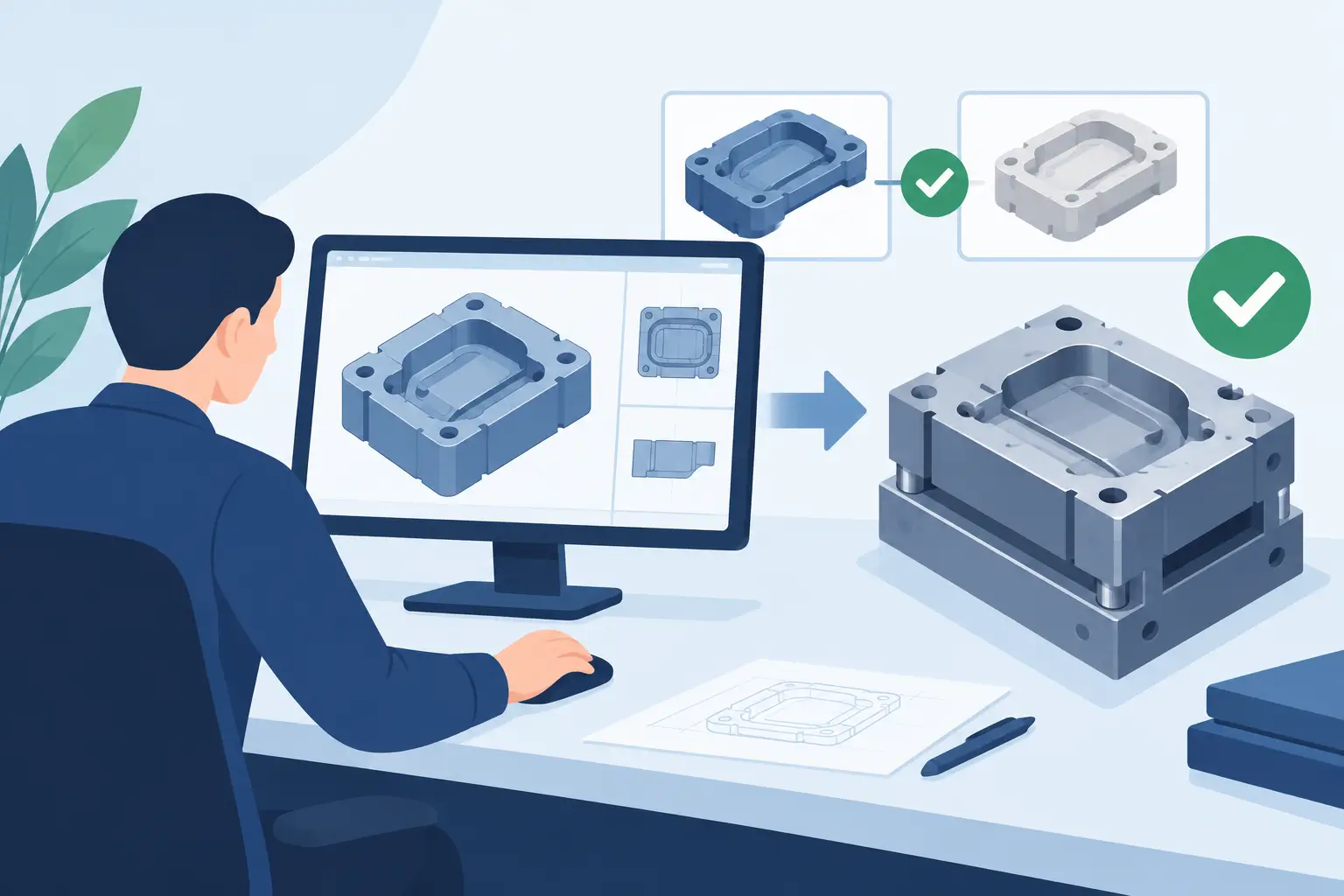
A proper mould modification may require tool disassembly, dimensional review, welding, insert fabrication, polishing, texturing, benching, assembly, mould trials, sample inspection, and process requalification. If an assembly uses the part, teams may also need to perform downstream fit checks.
Lead time depends on complexity. Machinists turn around small engraving changes quickly. Welded cavity rebuilds or cooling-related revisions take much longer because they require machining, heat control, fitting, and multiple sampling rounds.
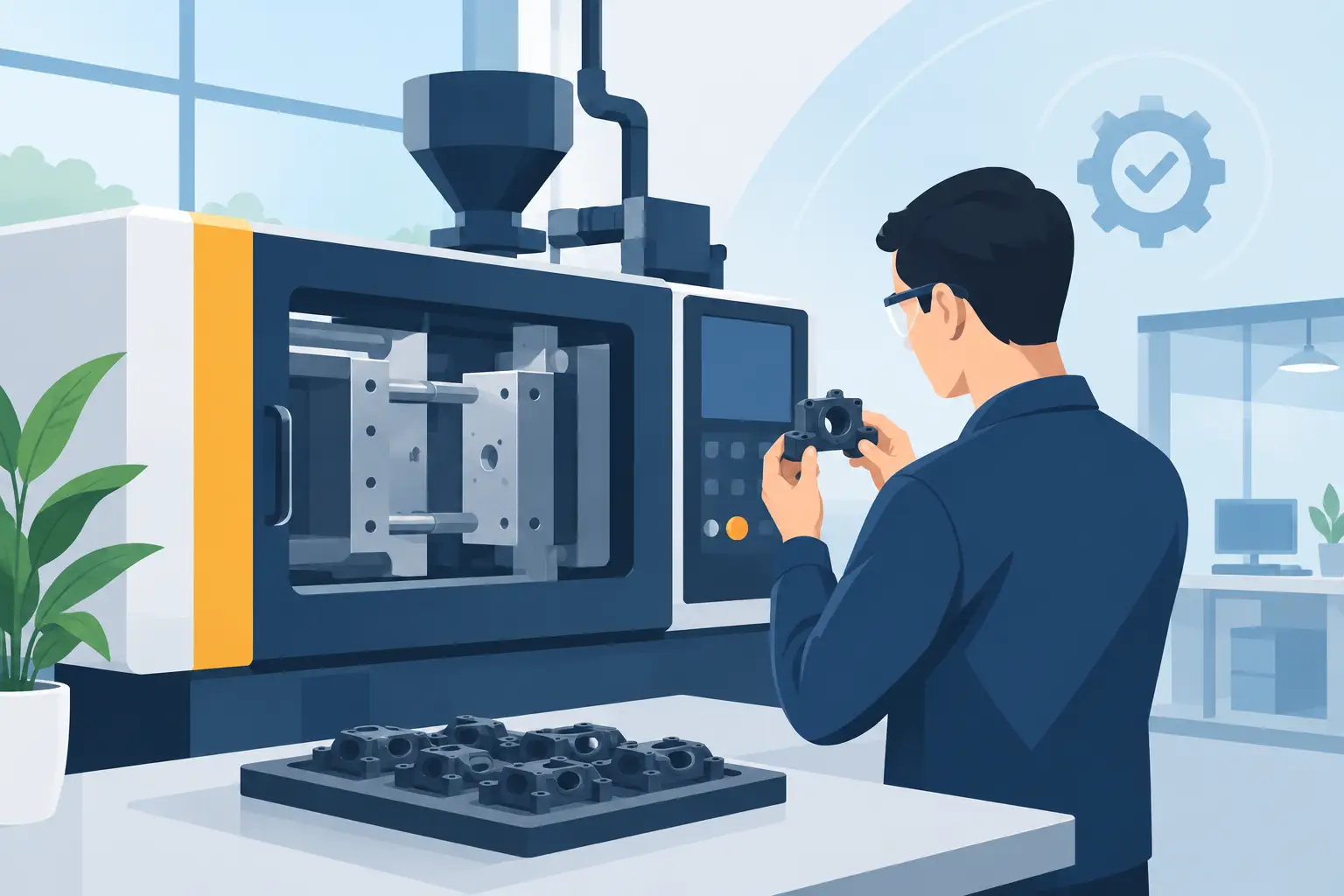
Teams must never treat validation as optional. After modification, the tool must prove that it produces stable parts under production conditions. That means inspectors must review dimensions, appearance, function, and repeatability—not just confirm that one sample looks better than the last.
Why do in-house capabilities change the result?
Mould modification works best when tooling, moulding, and inspection teams are aligned. If the toolmaker changes steel without understanding how the mould runs in production, the correction may fix one problem and create another. The opposite is also true. Process changes alone cannot solve every steel issue.
That is why integrated manufacturing matters. When design review, tool fabrication, mould maintenance, sampling, and quality checks are handled under one operation, decisions move faster, and the technical feedback loop is shorter. A company like Glasfil can evaluate the requested change against actual production behaviour, not just the CAD model.
For customers, that reduces handoff risk. It also makes schedule planning more realistic because the same team can assess the modification, execute it, sample it, and verify the outcome.
The right question is not just whether injection moulds can be modified
The better question is whether the mould should be modified, how far the revision should go, and what result the customer needs from the tool afterwards. Some projects need a fast dimensional correction. Others need a deeper intervention that improves part quality, mould durability, and production consistency at the same time.
The value of mould modification is not in changing steel for its own sake. It is in preserving a production asset while moving the part closer to the real requirement.
If your current tool is close but not right, the next step is not guesswork. It is a technical review of the mould, the part, and the process together. That is where a practical modification plan starts and where avoidable costs usually end.
Contact us today to discuss your project requirements or request a quotation. Let’s build a production process you can depend on.