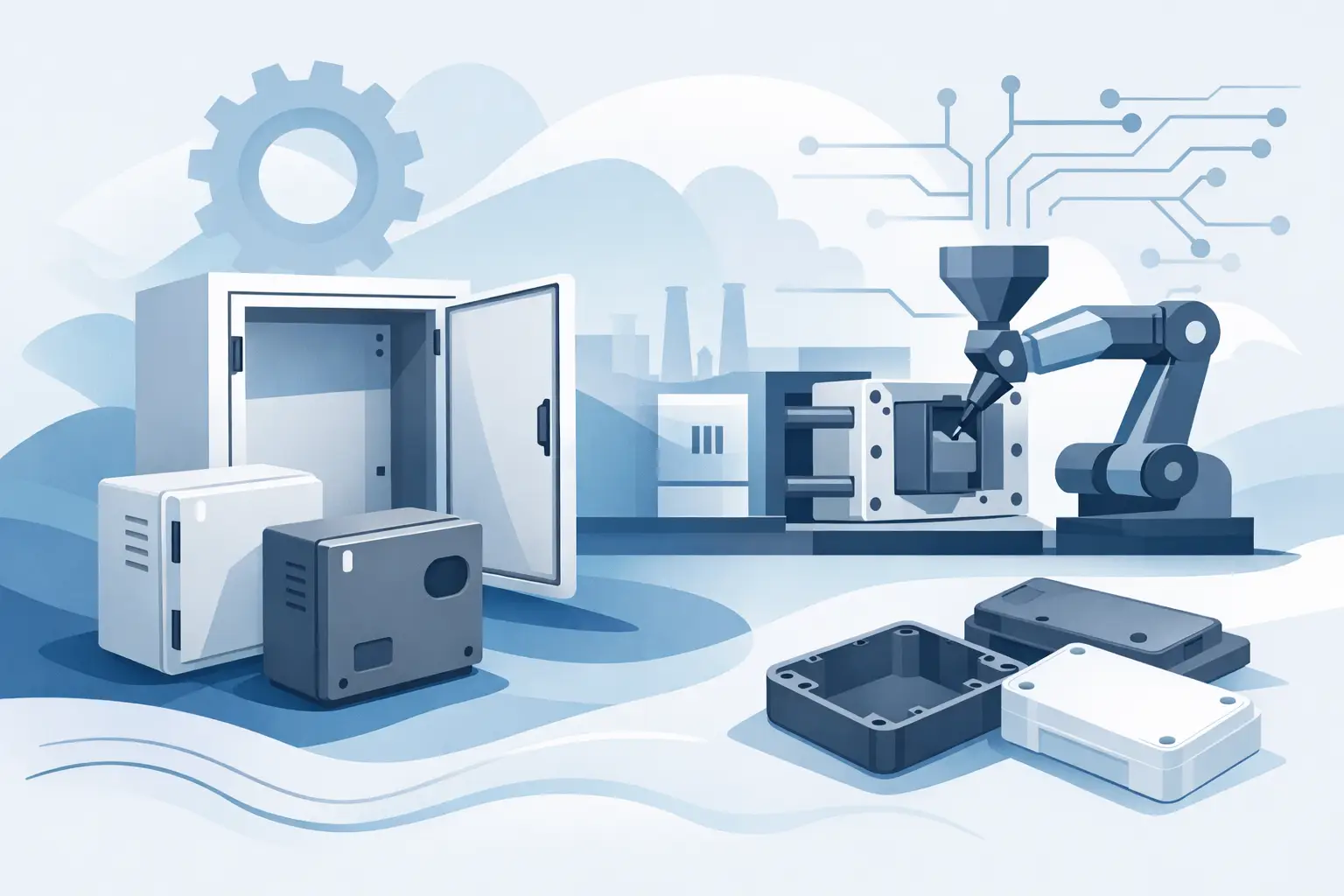
A missed tooling detail rarely stays small for long. It turns into sample delays, part defects, change orders, and production schedules that start slipping one week at a time. That is why choosing the right plastic injection moulding company is not a sourcing formality. It is a manufacturing decision that affects cost, launch timing, product quality, and how much control you keep once production begins.
For buyers, engineers, and OEM teams, the real question is not simply who can mold a part. The better question is who can take ownership of the full manufacturing path, from part review and tool design through repeatable production, finishing, packing, and shipment. The difference matters most when timelines are tight, tolerances are critical, or product changes are still likely.
What a plastic injection moulding company should actually handle
Many suppliers can quote a molded part. Fewer can manage the engineering and production work around it. That gap is where projects often lose momentum.
A capable plastic injection moulding company should do more than run presses. It should support design refinement before steel is cut, build or manage tooling with full visibility, validate manufacturability, control process settings, and maintain quality systems that catch variation early. If secondary operations are needed, such as trimming, assembly, printing, finishing, or specialized packing, those steps should be planned as part of the production flow rather than treated as add-ons.
This is especially important for companies launching a new product or transferring an existing one. A supplier that only handles molding may leave you managing toolmakers, finishers, logistics vendors, and quality issues across multiple partners. A full-service manufacturer reduces that fragmentation and shortens the feedback loop when something needs to change.
Why in-house control changes the outcome
In plastic manufacturing, speed comes from control. If tooling changes require outside coordination, every revision adds time. If quality checks happen late, scrap rises before anyone reacts. If maintenance is outsourced, machine readiness and mold condition become scheduling risks.
That is why in-house capability is more than a marketing point. It affects execution. When mold design, fabrication, modification, production, and quality assurance sit under one operational structure, decisions move faster and technical accountability is clearer.
This does not mean every project needs the same production setup. Some parts are straightforward and cost-driven. Others involve tight tolerances, cosmetic surfaces, complex geometries, or demanding material behavior. But in most cases, buyers benefit when the manufacturer can solve issues without waiting on a chain of subcontractors.
For example, if first samples show sink marks, warpage, or filling imbalance, the best response may require both process adjustment and tool modification. A manufacturer with those capabilities in-house can move from diagnosis to correction quickly. That saves more than time. It protects launch plans and reduces the hidden cost of repeated trial cycles.
Tooling is where the partnership begins
A mold is not just a production asset. It is the physical definition of your part, your cycle time, and much of your future quality performance.
That is why tooling should be part of the supplier evaluation from the start. Ask how design reviews are handled, who owns DFM analysis, how mold flow concerns are addressed, and what happens if modifications are needed after trials. A supplier with real tooling depth will talk clearly about gate location, cooling strategy, venting, steel selection, parting line decisions, and maintenance expectations. They will also discuss trade-offs instead of promising that every target can be met without compromise.
Sometimes the fastest tool is not the lowest-cost tool. Sometimes a lower-cost tool creates downstream quality instability that becomes expensive over a long production run. A good manufacturing partner helps you balance launch speed, tool life, part quality, and forecast volume based on actual use, not just quote-stage assumptions.
What to look for in production capability
Machine count alone does not tell you much. What matters is whether the manufacturer can match machine capacity, shot size, tooling requirements, and process control to your part and volume plan.
A strong production setup includes a practical range of press sizes, stable scheduling, trained technicians, documented process control, and the ability to scale from initial runs into repeat orders. If your part family may expand later, that flexibility matters early.
You should also look at the surrounding production environment. Can the supplier handle inserts, assemblies, cosmetic requirements, part marking, custom packing, or export preparation without adding unnecessary handoffs? Can they support both development-stage demand and ongoing supply? Those questions often reveal more than a generic plant overview.
For industrial buyers, consistency matters more than peak capacity on paper. A supplier with disciplined process control and a realistic production plan is usually a safer choice than one that overpromises volume without showing how quality will hold as output increases.
Speed matters, but only if it is controlled
Every manufacturer says they move fast. The useful question is how.
Fast execution in injection molding comes from integrated steps, clear engineering ownership, available machine capacity, and quick response to tooling or process changes. It does not come from skipping validation. If a supplier talks about aggressive lead times but cannot explain their approval process, trial sequence, or quality checkpoints, speed may simply mean risk shifted to the customer.
A better approach is structured acceleration. That means design decisions are made early, tooling is built with manufacturability in mind, modifications can happen without delay, and production readiness is planned from the first technical review. This is where a one-stop manufacturing model becomes valuable. Fewer transfers mean fewer delays.
That model is one reason companies work with partners such as Glasfil, where tooling, modification capability, molding, finishing, quality assurance, and shipping are managed as one connected operation. For teams trying to move from concept to production on a compressed schedule, that integration is often the difference between an eight-week path and a much longer one.
Quality should be built into the process, not inspected in afterward
Inspection has a role, but it is not a substitute for process control. If a part only passes because defects are sorted out later, the process is already underperforming.
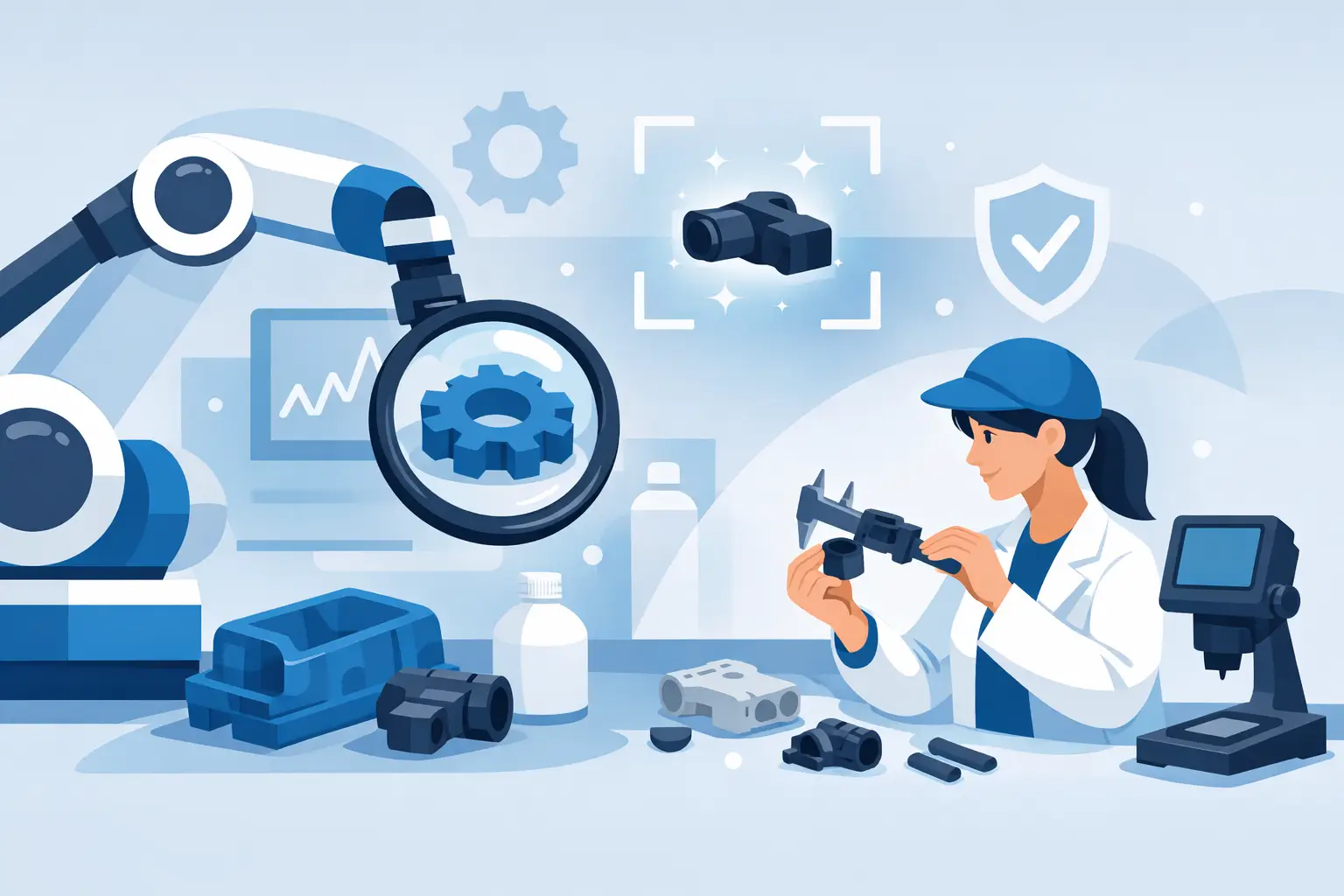
A reliable supplier builds quality into tooling decisions, machine setup, material handling, and in-process checks. That includes dimensional verification, visual standards where appearance matters, and documented controls that can be repeated across shifts and production runs. For regulated or highly specified applications, traceability and reporting become just as important as the part itself.
Buyers should ask practical questions. How is first article approval handled? What measurements are tracked during production? How are nonconformances contained? What is the response time when a process drifts? Strong suppliers answer with systems, not general assurances.
Industry experience matters, but problem-solving matters more
It helps when a manufacturer has worked across sectors such as automotive, electronics, construction, furniture, bathroom accessories, automation, and utility products. That range usually builds stronger process judgment. Teams that have solved different molding and tooling problems tend to spot risks earlier.
Still, broad experience is only useful if it translates into your project. A good supplier should be able to discuss your part in practical terms – wall thickness behavior, likely cosmetic concerns, resin suitability, expected wear points, packaging needs, and production economics at your forecast volume.
The strongest manufacturing partners are not just processors. They are technical operators who can challenge assumptions when needed and still keep the project moving.
The right plastic injection moulding company reduces friction
When procurement, engineering, and operations all have to align, supplier friction becomes expensive. Delays in sample feedback, uncertainty around tool changes, inconsistent communication, or unclear ownership can slow an otherwise viable program.
The right plastic injection moulding company reduces that friction by giving you one accountable manufacturing partner with the equipment, tooling control, and production discipline to execute. That does not guarantee every project will be simple. It means problems are handled closer to the source, with fewer handoffs and faster correction.
If you are evaluating suppliers, look past the quote and examine the operating model. Can they support design, tooling, molding, secondary work, quality, and delivery as one production system? Can they move quickly without sacrificing technical control? Can they keep supporting the program after launch, when revisions, repeat orders, and supply reliability become the real test?
Those are the questions that protect margin, schedules, and product quality. And they usually point to the same answer: choose the partner that can build, adapt, and produce under one roof, because manufacturing gets easier when accountability does too.
If you need help with your injection molding parts, do drop us an email and we will be happy to help.