A delayed tooling correction can push a product launch by weeks. A supplier with limited process control can turn a simple moulded part into a recurring quality claim. That is why a practical contract manufacturing guide matters – not as a broad sourcing checklist, but as a way to reduce risk when custom plastic parts, tight tolerances, and repeat production are on the line.
For OEMs, product developers, and procurement teams, contract manufacturing is not just about finding capacity. It is about finding a partner that can control design refinement, tooling, moulding, finishing, quality, and delivery without creating handoff problems between vendors. The more technical your part and the tighter your timeline, the more this matters.
What contract manufacturing really means in plastics
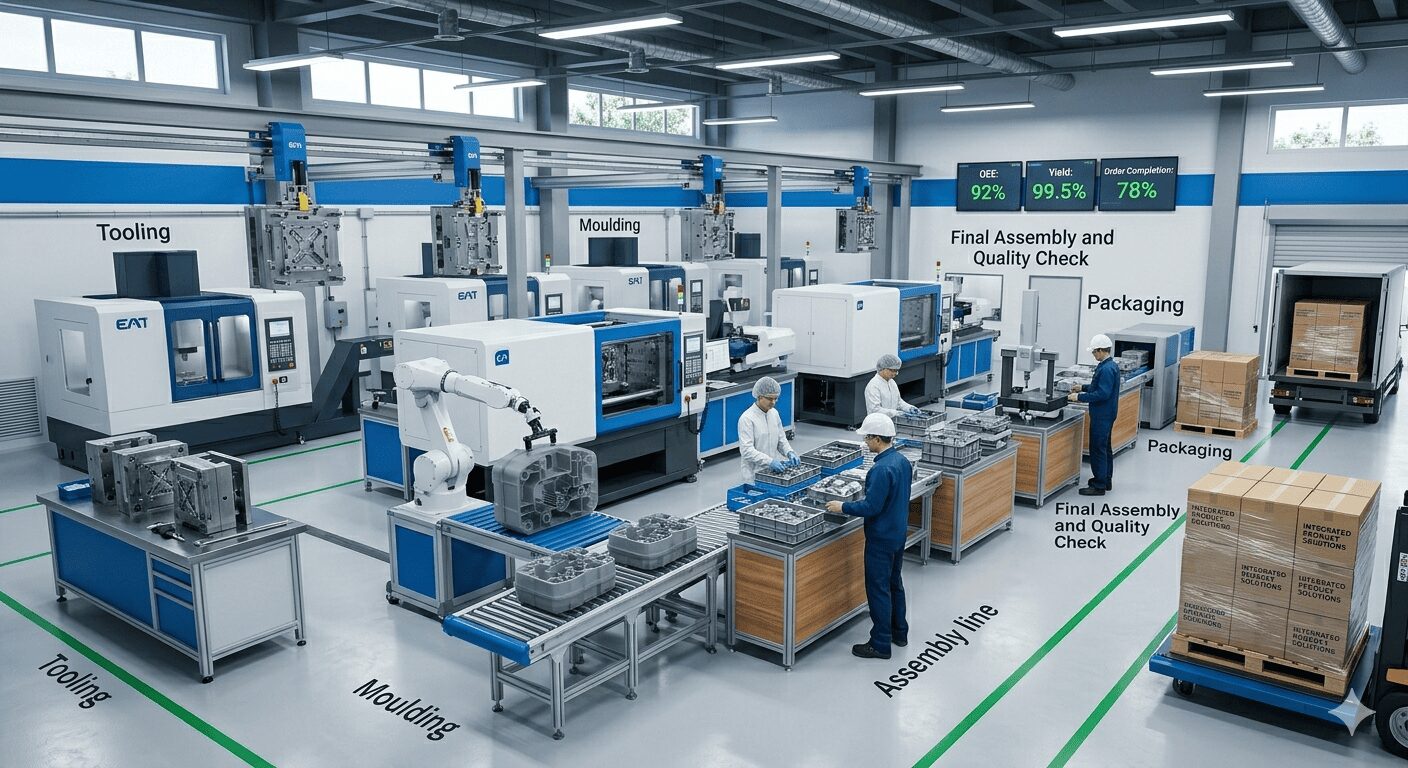
In plastic injection moulding, contract manufacturing usually refers to outsourcing part production to a specialised manufacturer that builds or manages the mould, runs production, controls quality, and often handles secondary operations such as trimming, assembly, printing, packing, and shipping. The scope can be narrow or fully integrated.
That difference is where many buying mistakes happen. Some suppliers only mould parts from existing tools. Others can support DFM review, tool fabrication, mould modification, sampling, validation, and repeat production under one roof. If your project is still evolving, the second model is usually faster and easier to control because design decisions, process adjustments, and tooling changes stay in the same operation.
A low piece price can look attractive at the quoting stage. But if the supplier depends on outside toolmakers, third-party finishing, or separate quality labs, delays and accountability gaps tend to show up later. For products with demanding fit, appearance, or functional requirements, integration often beats fragmentation.
A contract manufacturing guide to choosing the right partner
The right supplier is not always the largest factory or the lowest bidder. It is the manufacturer whose process control matches your product’s risk level.
Start with technical fit. A moulder that performs well on commodity parts may struggle with cosmetic surfaces, engineering resins, insert moulding, or dimensionally sensitive components. Ask what types of parts they run every day, what machine range they support, and whether they can handle expected annual volumes without shifting your job between unstable schedules.
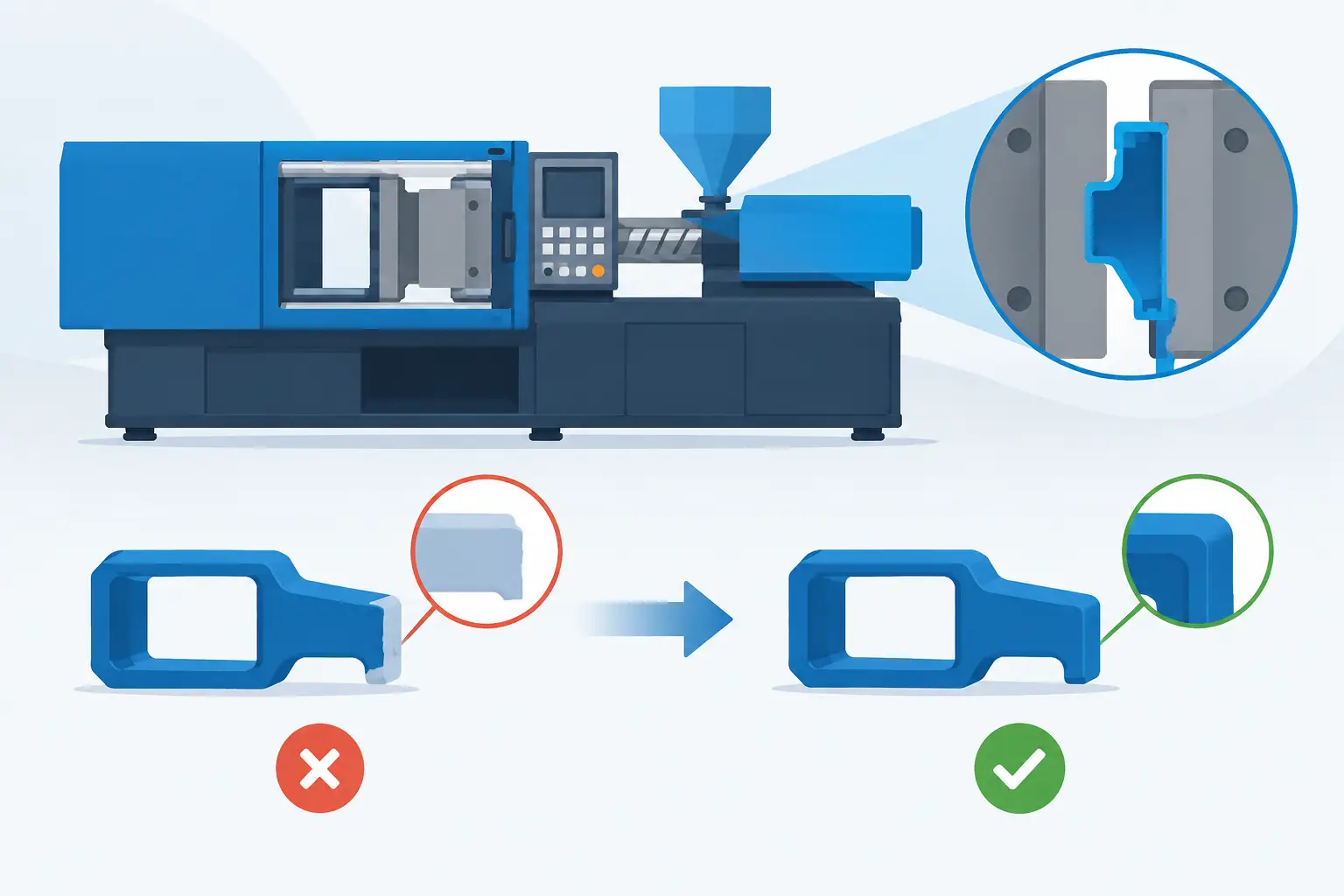
Then look at tooling control. If a manufacturer can design, build, maintain, and modify moulds in-house, engineering changes move faster, and root causes are easier to isolate. This becomes critical when pilot samples expose shrinkage issues, warpage, flash, sink, or gate-related cosmetic defects. In-house tool capability shortens the distance between problem and correction.
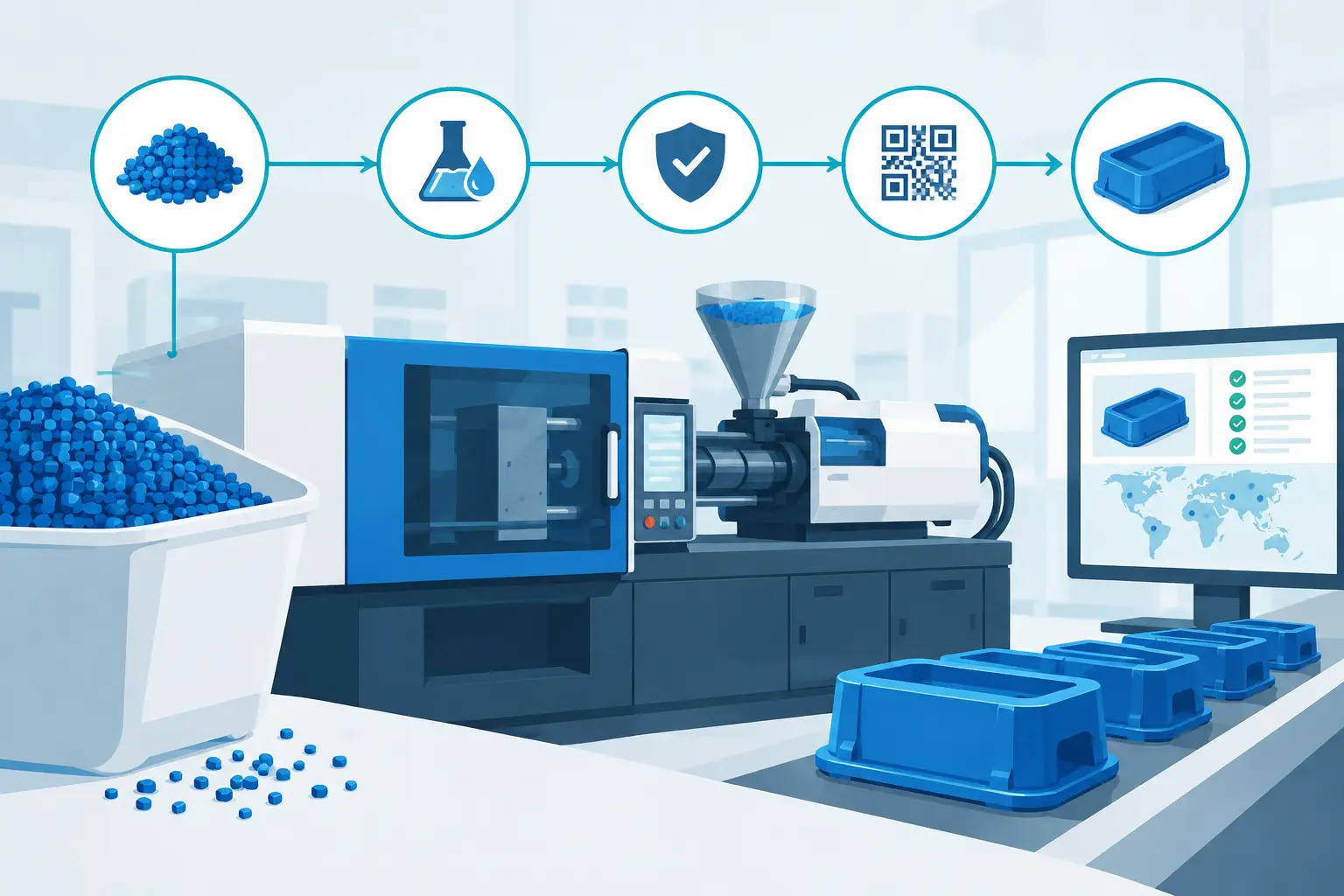
Quality assurance should be reviewed in operational terms, not marketing language. Ask how the first article approval is managed, how process parameters are locked, how traceability is maintained, and how nonconforming material is segregated. A capable manufacturer should be able to explain how it prevents repeat defects, not just how it inspects them.
Communication is another deciding factor. Buyers often focus on unit cost and overlook the cost of poor updates. If tooling is behind schedule, if a steel correction is needed, or if a resin substitution affects lead time, you need fast, direct information. Reliable reporting is part of manufacturing performance.
Tooling, DFM, and why early engineering saves money
Most avoidable costs in injection moulding are incurred before production starts. Part geometry, draft, wall thickness, gate location, shut-offs, undercuts, and resin selection all influence tooling complexity and cycle time. A proper DFM review is one of the highest-value steps in any contract manufacturing program.
This is where experienced manufacturers create real savings. They can suggest design changes that reduce mould actions, improve filling, stabilise dimensions, or simplify ejection without changing the product’s intended function. Those changes may look minor on a drawing, but they can reduce tool cost, scrap, and long-term maintenance.
There is a trade-off, though. Aggressive cost reduction at the DFM stage can create downstream issues if the part becomes too thin, too flexible, or too difficult to assemble. Good engineering support does not chase the cheapest tool at any cost. It balances manufacturability, part performance, and production consistency.
If your product is new, ask how design revisions are handled after initial tool trials. If your product already exists, ask how closely the supplier can replicate critical dimensions, textures, and assembly interfaces. Reverse engineering or replacement part production often requires more verification than buyers expect.
Timeline expectations: where projects usually slow down
Tooling and moulded part programs move quickly when decisions are made early, and information is complete. They slow down when drawings are unclear, resin requirements are still open, or approval steps are split across too many stakeholders.
A realistic timeline depends on part complexity, mould cavitation, steel availability, finishing requirements, and validation needs. Simple parts can move fast. Technical parts with tight tolerances, cosmetic requirements, or assembly features need more iteration. The key question is not whether a supplier promises speed. It is whether the supplier controls the steps that affect speed.
When mould design, fabrication, moulding, and quality checks happen in-house, schedule risk tends to be lower. There are fewer external dependencies and fewer places for problems to sit unresolved. Glasfil, for example, positions this integrated model around full in-house control and short completion timelines because execution speed is hard to maintain when every correction depends on another vendor.
Cost in a contract manufacturing guide: what buyers should compare

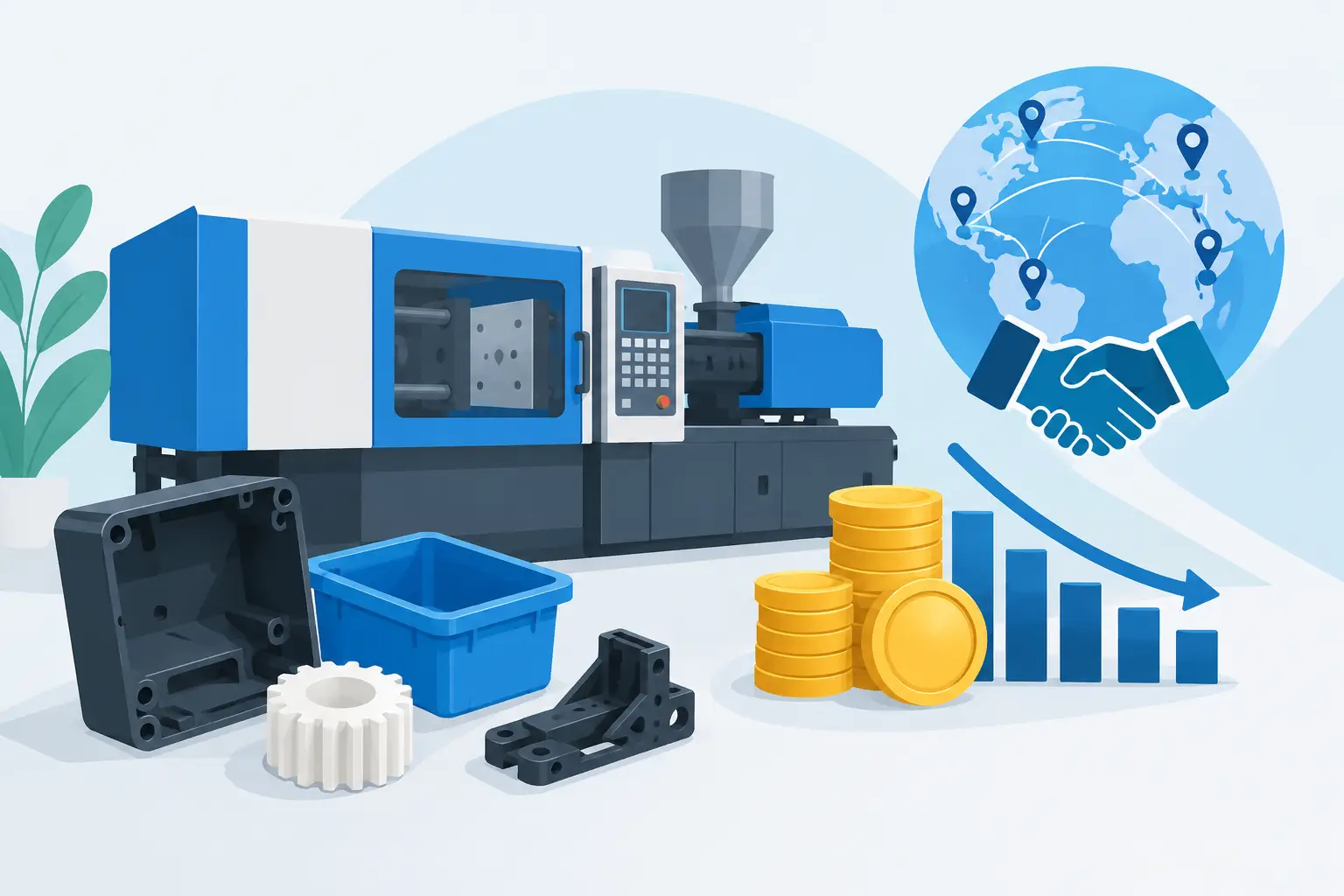
Comparing quotes on piece price alone creates false confidence. Total manufacturing cost includes tooling, material yield, cycle time, defect rate, secondary operations, packaging, logistics, and the cost of delay.
A supplier with slightly higher pricing may still be the better commercial decision if it reduces launch risk, shortens lead time, or lowers the cost of quality problems in the field. That is especially true for parts tied to assemblies, certified products, or customer-facing finishes.
Ask suppliers to separate one-time and recurring costs. Understand what is included in mould maintenance, engineering changes, texture or surface requirements, and inspection reporting. Clarify ownership of the tool, storage conditions, and what happens if production is paused for several months. These details affect long-term cost more than many buyers realise.
It also helps to examine scalability. A supplier that can support prototype quantities but not stable production volumes may force a transfer later. Tool transfer, process revalidation, and quality reapproval are rarely cheap.
Quality, repeatability, and production at scale
Good samples do not guarantee good production. Repeatability is what separates a capable contract manufacturer from a short-term vendor.
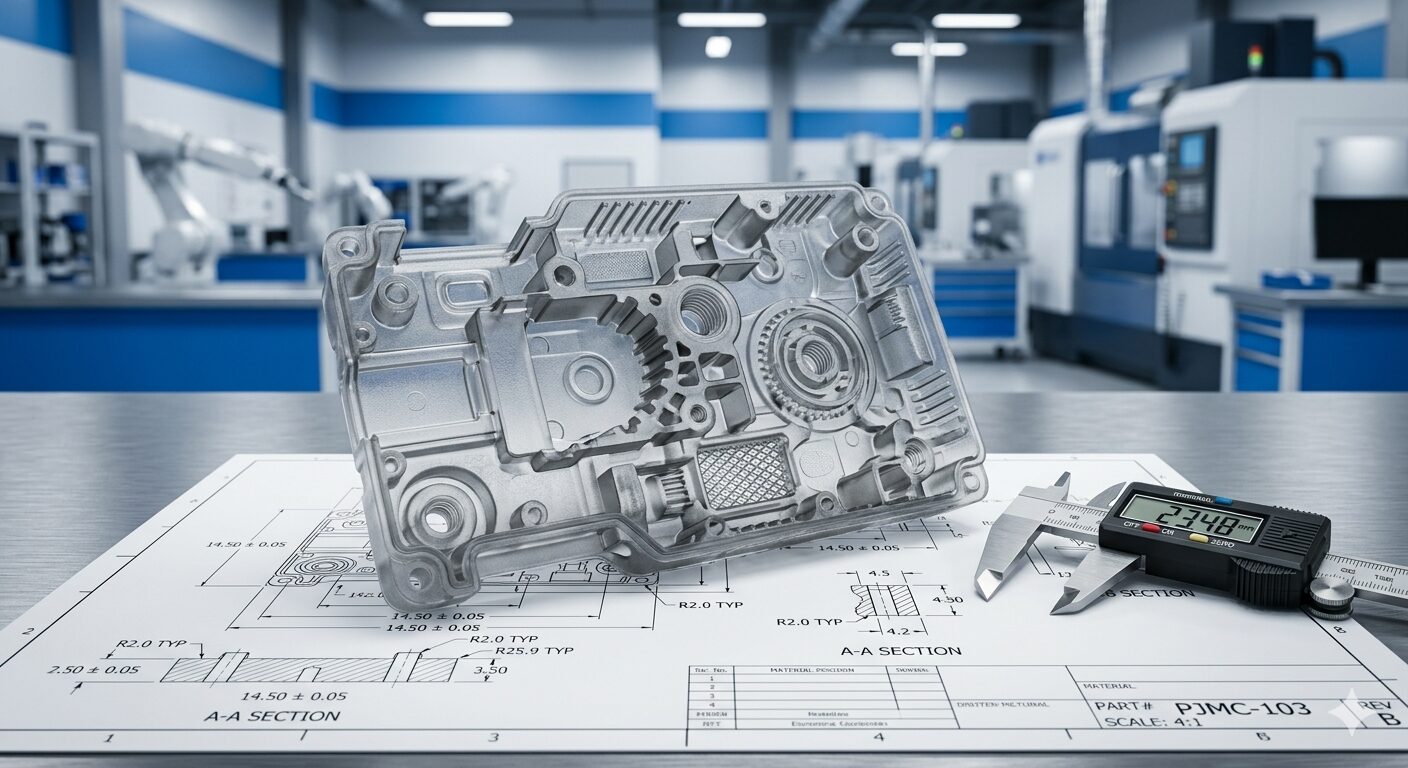
You want to know how the process is stabilised after approval. That includes machine setup discipline, documented parameters, resin handling, preventive maintenance, in-process inspection, and response plans when drift appears. For precision plastic parts, consistency comes from process control and tool condition together. One without the other is not enough.
Secondary operations matter too. A moulded part may still require drilling, tapping, ultrasonic welding, pad printing, labelling, assembly, or custom packing. If those steps are split between multiple subcontractors, defect ownership gets blurred. If they are managed within one production system, traceability is usually stronger, and scheduling is easier.
For regulated or performance-sensitive applications, request evidence of how dimensional records, material certifications, and production history are maintained. The more critical the part, the less room there is for informal process management.
When a one-stop manufacturer is the better choice

Not every project needs a fully integrated supplier. If you already own proven moulds, have a mature specification, and only need overflow capacity, a focused moulding source may be enough.
But if you are launching a new product, correcting defects in an existing part, replacing a discontinued component, or scaling under a deadline, an end-to-end manufacturer usually gives you better control. Design support, tooling, moulding, finishing, maintenance, and shipping all affect the same outcome. Keeping them connected reduces delay, finger-pointing, and avoidable rework.
The strongest contract manufacturing relationships are built on clear technical alignment, stable communication, and ownership from prototype through production. If a supplier can explain how it will manage your part, your tool, your timeline, and your quality requirements in practical terms, you are not just buying manufacturing capacity. You are buying execution.
A good sourcing decision should make the next six months easier, not just the next quote cheaper. If you are planning a new product or scaling an existing one, contact us today to discuss the right tooling approach before steel is cut.