A delayed tool approval, inconsistent part quality, or a supplier that outsources key steps without visibility can push a product launch off schedule fast. That is why choosing the right contract manufacturing partner is not a purchasing formality. It is a production decision that affects lead time, part performance, cost stability, and how quickly your team can move from concept to repeatable output.
For OEMs, product developers, and procurement teams, the real question is not simply who can mold a part. It is who can take responsibility for the full manufacturing path, solve issues before they become delays, and keep technical control where it matters most. In plastic injection molding, those details decide whether a supplier becomes a bottleneck or an extension of your operation.
What a contract manufacturing partner should actually deliver
A capable contract manufacturer does more than quote a unit price and run parts. The stronger model is integrated support across tooling, process development, production, finishing, quality, and shipment. When those functions are managed in one operation, handoff risk drops and problem-solving gets faster.
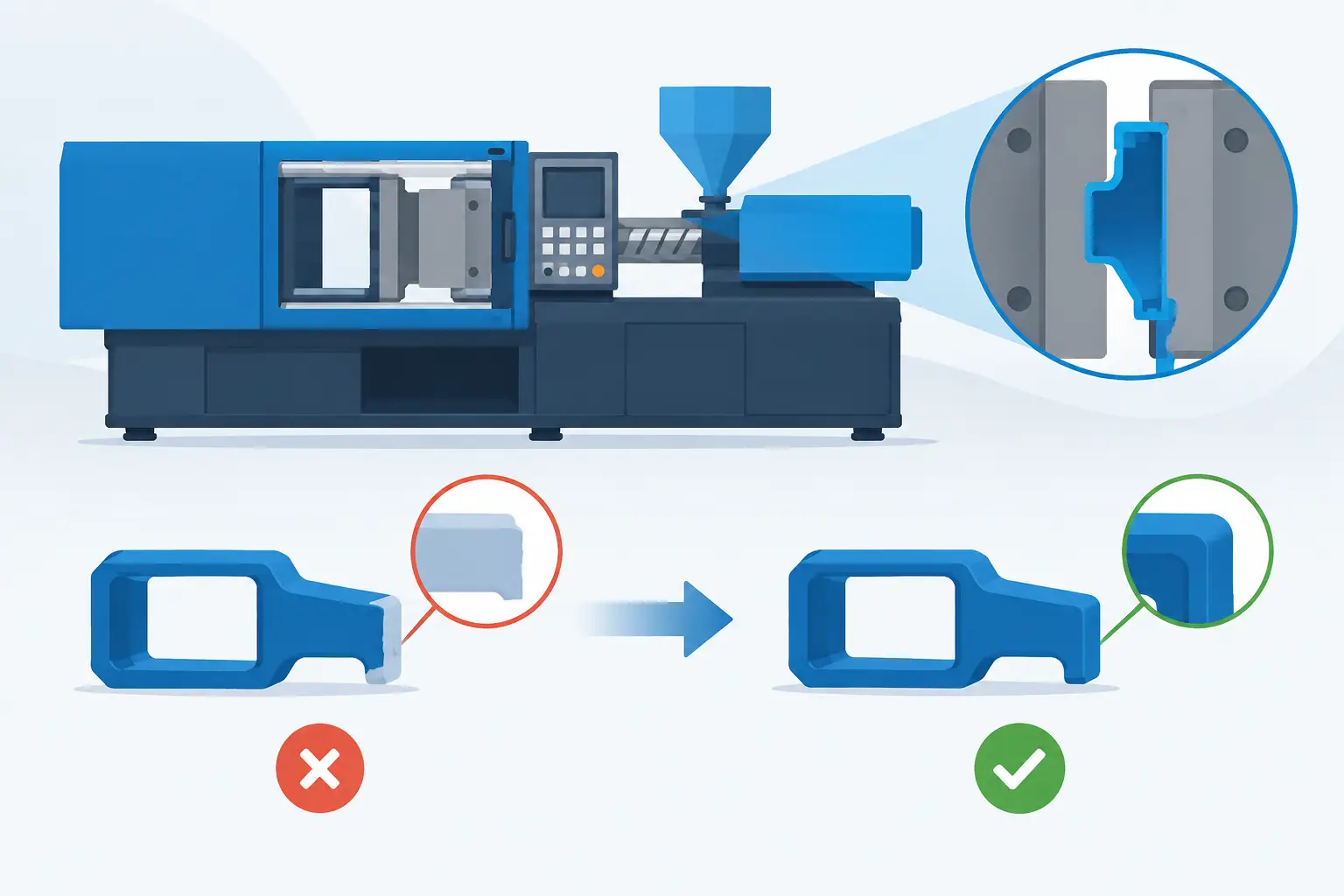
That matters most when projects are still evolving. Early-stage designs often need wall thickness adjustments, draft refinement, material review, gate changes, or mold modifications after sampling. If those steps are split across separate vendors, every revision adds communication lag, added cost, and more room for error. If the same manufacturing team controls design refinement, tool fabrication, molding, and secondary operations, changes can be evaluated and implemented with fewer delays.
This is where buyers should separate true manufacturing partners from simple part suppliers. A supplier may fulfill a purchase order. A partner helps protect the production outcome.
Why in-house control matters in a contract manufacturing partner
In-house capability is not a marketing detail. It affects execution speed and quality control at every stage. If mold design is handled internally, manufacturability issues can be addressed before steel is cut. If mold fabrication and mold modification are also in-house, trial results can be converted into corrective action quickly instead of waiting on external tool shops.
The same applies to molding operations. Machine range, process control, and engineering oversight matter more than generic capacity claims. A manufacturer with the right tonnage range and enough machine availability can support both development runs and stable production volumes without pushing your project into scheduling gaps.
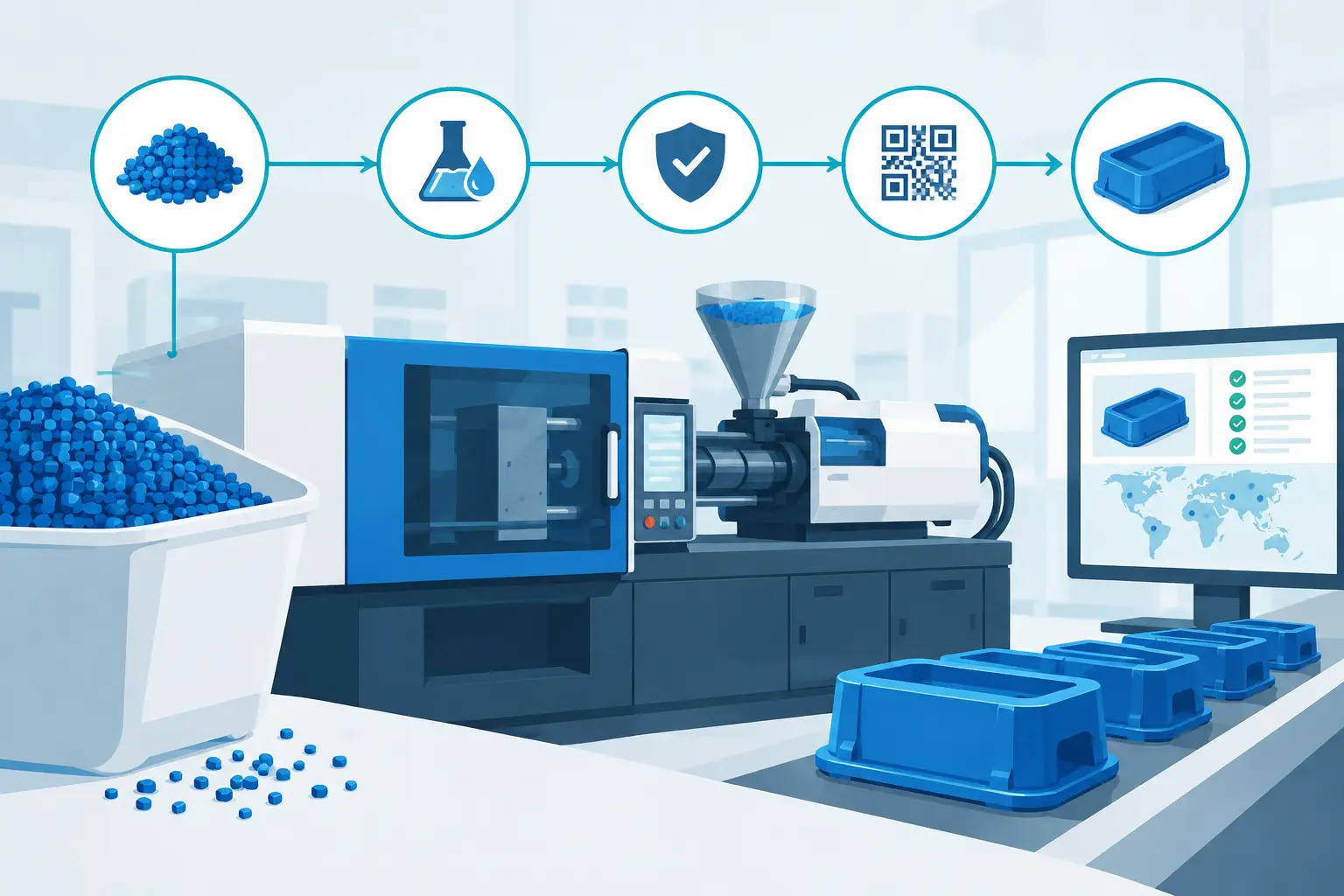
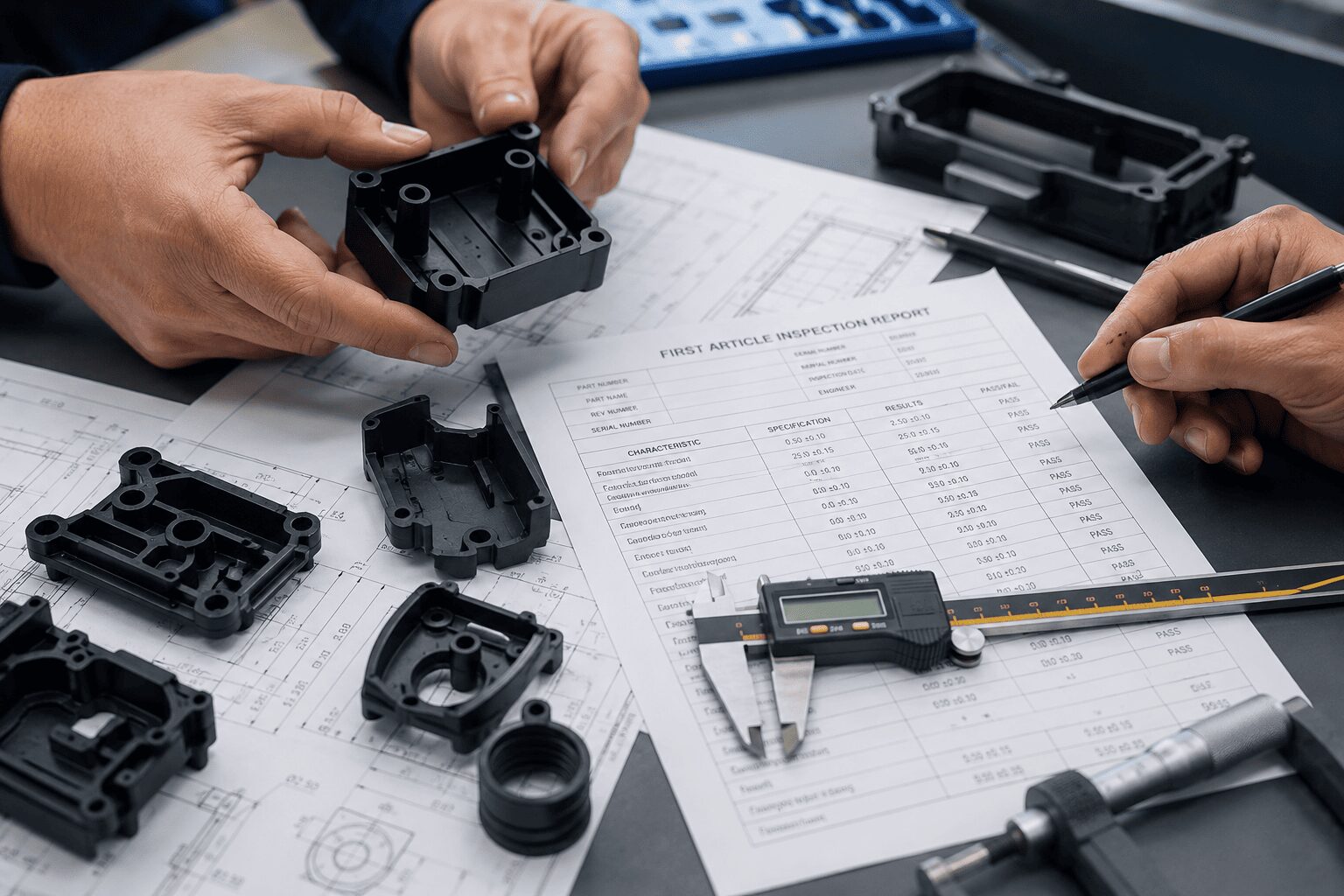
Quality assurance also changes when it stays under one roof. Dimensional checks, visual standards, process monitoring, and corrective action become part of one controlled workflow. That is very different from managing quality issues through multiple subcontractors, each responsible for only one piece of the job.
For buyers under launch pressure, in-house control usually means faster answers, fewer excuses, and better accountability.
The hidden cost of fragmented manufacturing
A lower piece price can look attractive until the project starts moving. If tooling is built in one place, parts are molded in another, finishing is outsourced again, and packing happens somewhere else, the process may be cheaper on paper but weaker in practice.
Fragmented supply chains create a familiar pattern. Design revisions take longer. Root cause analysis slows down because no one owns the full process. Logistics become harder to coordinate. Quality issues become harder to trace. Small problems compound into lost weeks.
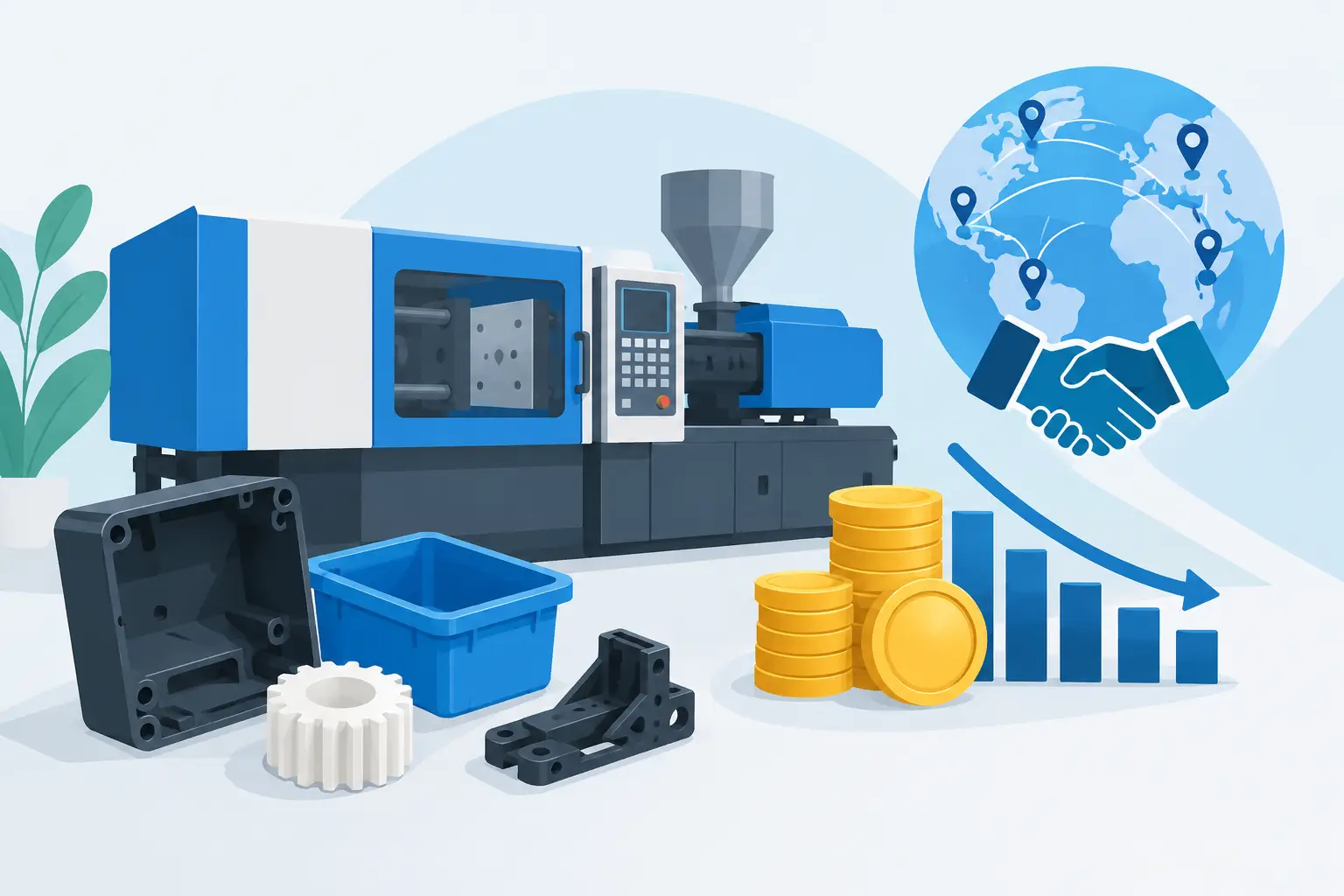
That trade-off is not always unacceptable. For very simple parts, stable designs, and low-volume demand, a fragmented model can still work. But for custom molded products, demanding tolerances, recurring production, or programs with schedule pressure, the cost of poor coordination often outweighs the savings.
A single contract manufacturing partner with broad process ownership gives buyers something procurement teams and engineers both value – clearer responsibility.
How to evaluate a contract manufacturing partner before you commit
The strongest evaluation process goes beyond RFQs and capability slides. Buyers should look at how a manufacturer works when conditions are less than perfect, because that is when partnership quality shows up.
Start with tooling. Ask whether mold design, fabrication, maintenance, and modification are done internally or outsourced. If your part needs refinement after first trials, the speed of those changes can decide your launch date. A manufacturer with full mold modification capability has a practical advantage here.
Next, look at engineering involvement. Some suppliers wait for final drawings and execute only what is specified. Others actively review geometry, resin selection, shrink behavior, gating, and cycle efficiency before production starts. For many programs, especially new product introductions, this support prevents expensive mistakes.
Production range matters too. Machine count and tonnage capacity should align with your current part and future scaling needs. If a supplier can sample the part but struggles to support repeat volume, you may end up qualifying a second source sooner than expected.
Then examine secondary operations. Many molded components are not complete when they leave the press. They may need trimming, assembly, surface finishing, printing, packing, or custom shipment preparation. If those steps are outside the manufacturer’s scope, your team takes on more coordination work and more risk.
Finally, ask about quality systems in practical terms. Not just whether inspections happen, but how process variation is tracked, how nonconformance is handled, and how quickly feedback moves back into tooling or process adjustments.
Speed is not just about production time
Many manufacturers talk about fast lead times. The more useful question is what makes them fast.
Real speed comes from reducing dependency between stages. If one team designs the tool, another fabricates it, a third modifies it, and a fourth runs production, every issue waits in line. If those capabilities are integrated, the loop gets shorter. Engineering questions are answered sooner. Trial feedback reaches toolmakers directly. Production planning is based on internal coordination rather than external promises.
That is why eight weeks from idea to product is not simply a scheduling claim when the operation is built around internal control. It reflects a system where design, tooling, molding, finishing, and quality are aligned from the beginning.
Of course, speed has limits. Complex geometries, specialty materials, demanding cosmetic standards, and validation requirements can extend timelines. A good manufacturing partner will be honest about that. Fast execution only helps if it is also technically sound.
What strong partnership looks like after launch
The first production run is only the start. A reliable contract manufacturing partner supports the less visible work that keeps a program stable over time.
That includes mold maintenance, repair response, repeatability across batches, and support for engineering changes. It also includes practical communication – forecast alignment, shipment planning, packaging consistency, and the ability to respond when volume changes unexpectedly.
This is where one-stop manufacturing has a measurable advantage. When the same operation manages tooling, processing, finishing, and quality, long-term performance is easier to sustain. Small deviations are caught closer to the source. Engineering changes move through the system with less friction. Buyers spend less time coordinating suppliers and more time managing product strategy.
For companies serving multiple markets, international experience also matters. A manufacturer that has supported projects across industries and countries is generally better prepared for documentation needs, production consistency expectations, and delivery coordination beyond a local footprint.
The best fit depends on your product, risk, and timeline
Not every buyer needs the same type of manufacturing support. If the requirement is a basic molded part with no secondary processing and no expected revisions, a narrow supplier may be enough. If the product is custom, launch timing is tight, tooling changes are likely, or downstream steps matter, the safer choice is a contract manufacturing partner with wider operational control.
That distinction matters because manufacturing problems rarely stay isolated. A tool issue affects parts. A part issue affects finishing. A finishing issue affects packing and shipment. The more disconnected those stages are, the harder the recovery becomes.
For that reason, many industrial buyers now evaluate suppliers less by quoted piece price alone and more by control of the full process. That approach tends to reduce surprises, shorten decision cycles, and protect production continuity.
At Glasfil, that is the standard we believe manufacturing support should meet – from in-house mold design and modification to injection molding, finishing, packing, and shipment. Buyers should expect a partner that can own the work, move quickly, and keep production decisions grounded in engineering reality.
The right manufacturing relationship should make your next launch feel more controlled, not more complicated.
Contact us today to discuss your project requirements or request a quotation. Let’s build a production process you can depend on.