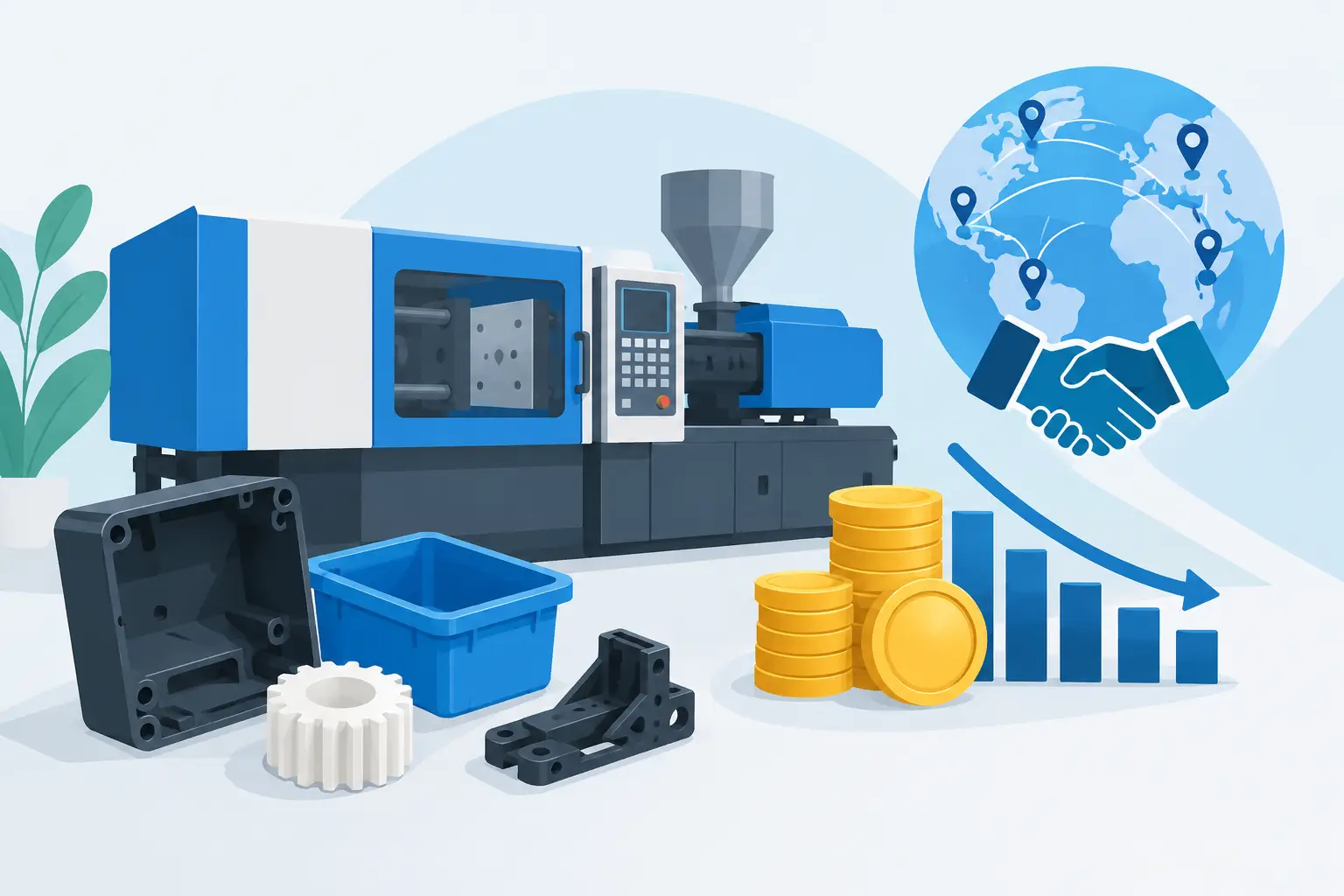
A plastic component can look straightforward on a CAD screen and still delay your launch, create recurring quality issues, or cause unexpected cost increases. The top benefits of integrated manufacturing come from preventing handoffs between separate vendors. When design support, tooling, molding, finishing, quality control, and delivery operate under one manufacturing partner, decisions move faster and directly tie to the final production result.
For OEMs, product developers, and procurement teams, integration provides a practical way to reduce production risk while maintaining total control over part quality, lead times, and overall cost. This value shines brightest in custom injection molded parts, where a small tooling, material, or processing decision impacts every single unit off the line.
Top Benefits of Integrated Manufacturing for Plastic Parts
Faster transition from concept to production
Product launches usually slow down between stages rather than within them. Design teams hand drawings to toolmakers, toolmakers raise concerns, separate molder facilities test tools, and parts return for redesign. Each transfer creates another queue, another misinterpretation, and another delay.
Integrated manufacturers evaluate manufacturability before technicians build the tool. Teams review wall thickness, draft angles, gate locations, parting lines, tolerances, material behavior, and assembly requirements as one complete production system. Engineers then execute design changes when they cost less and cause zero disruption.
Complex parts naturally require iteration. However, integrated teams ensure that the engineers refining the design, the toolmakers building the mold, and the operators running samples all share the exact same technical data and production priorities. At Glasfil, our in-house design, mold fabrication, tool modification, and injection molding capabilities accelerate your product launch—frequently delivering finished components in as little as eight weeks.
Better control of tooling performance
The mold serves as the fundamental production asset behind every injection molded component. Managing tool condition, revision history, and technical limits across separate vendors turns routine defect diagnosis into a lengthy ordeal. Molders blame the tool, toolmakers blame the processing parameters, and your production line stalls.
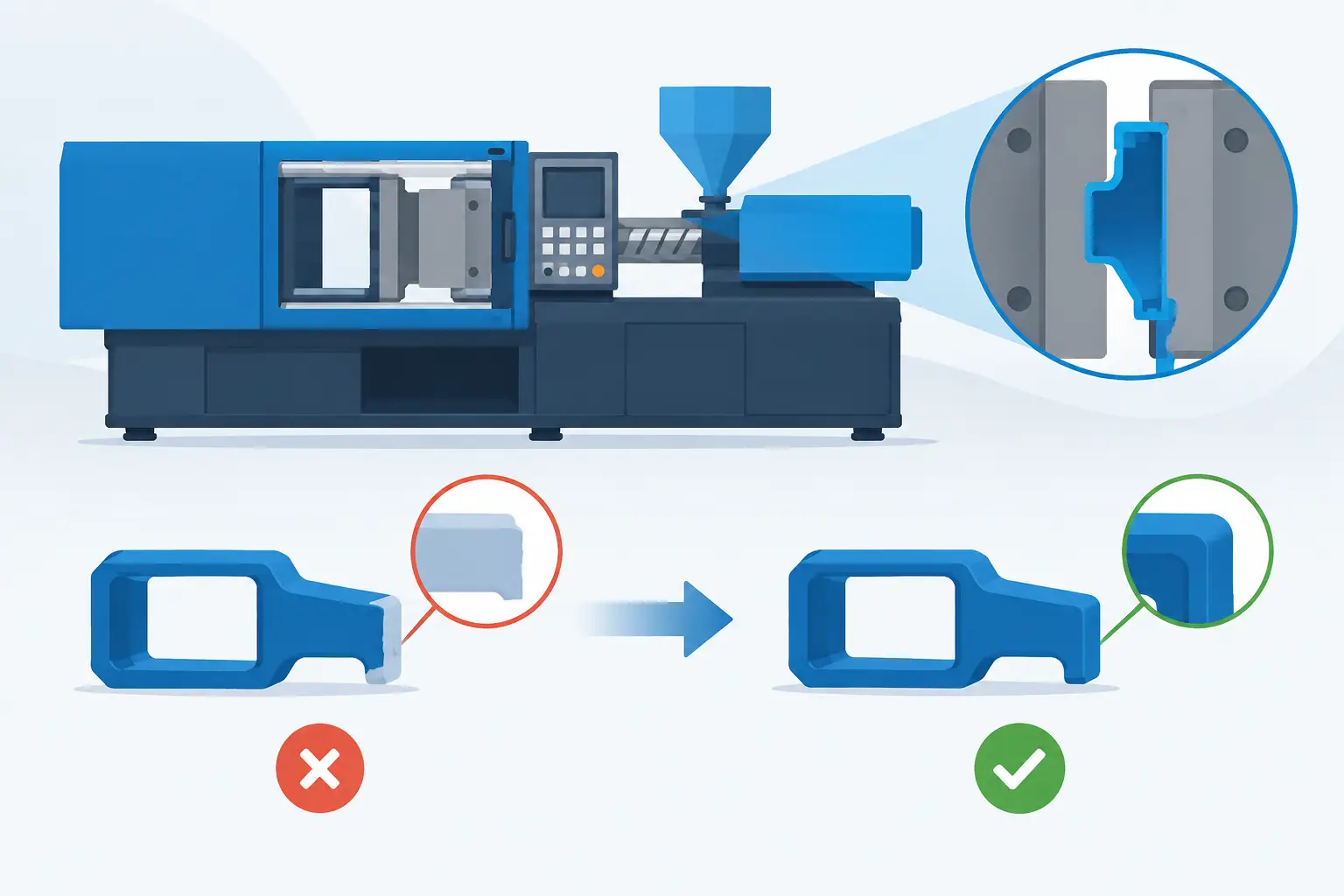
Integrated manufacturing unifies tooling and molding expertise. Technicians evaluate defects instantly to pinpoint whether the issue stems from cavity geometry, improper venting, inefficient cooling, ejection pin marks, resin choice, press settings, or material handling. This unified view yields swift, effective corrective action.
Integration also safeguards long-term mold care. Facilities schedule preventive maintenance, repairs, and engineering modifications around active production runs rather than treating them as disconnected events. For recurring production programs, this discipline protects tool life and guarantees part-to-part consistency across every batch.
Stronger quality ownership
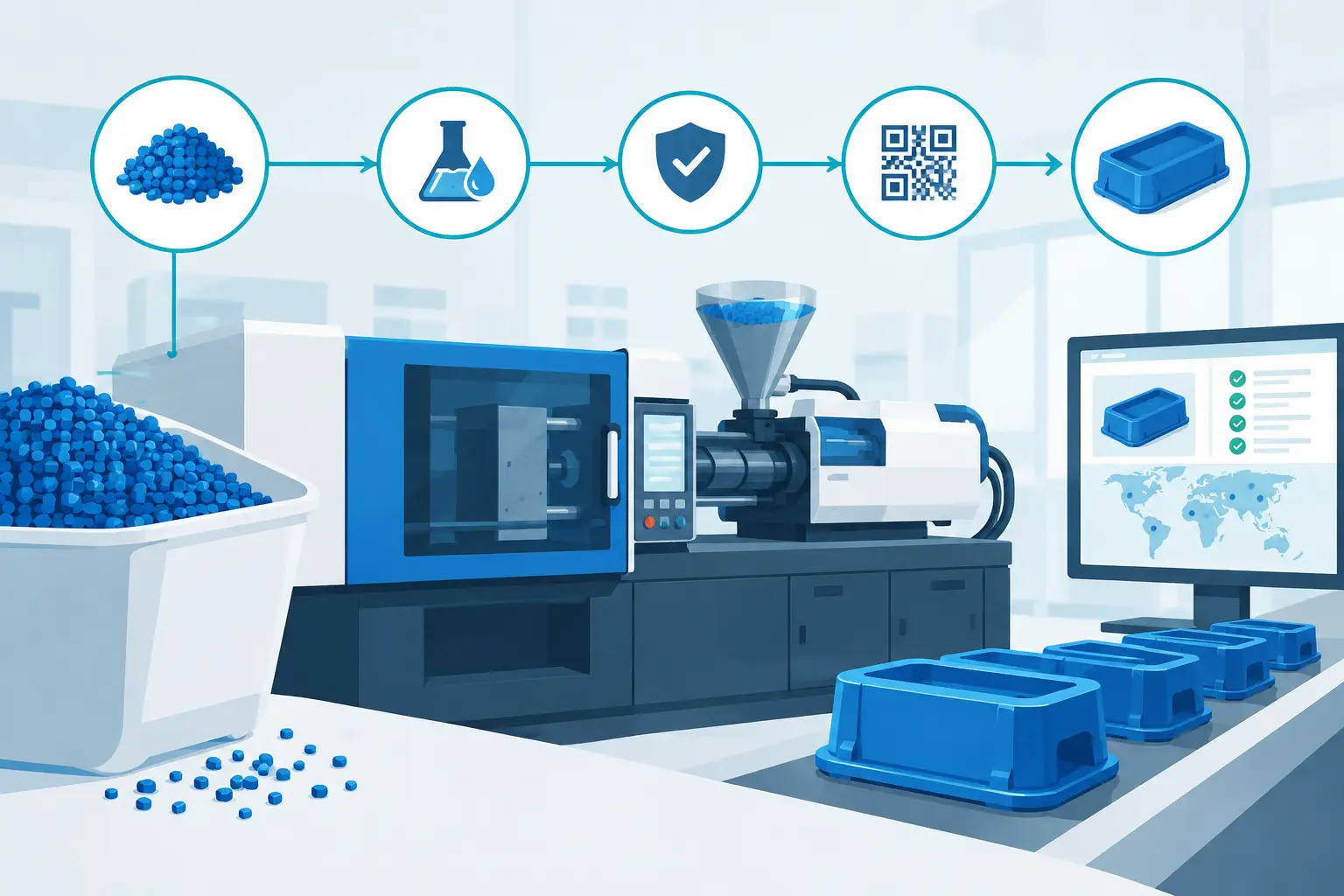
Effective quality control lives directly within the active workflow rather than waiting at a final inspection station. Independent inspection teams can reject non-conforming parts, but they lack direct control over the root production cause. An integrated facility links measurement data straight back to the mold, molding press, material lot, process parameters, and secondary operations.
This complete traceability ensures parts fit mating components, pass cosmetic standards, and endure harsh operating environments. Applications in automotive, electrical, construction, automation, and utility sectors demand distinct acceptance criteria. Manufacturers must build the production process around real part functionality rather than generic inspection checklists.
In-house quality systems also enable immediate operational adjustments. When production trends drift, technicians review live data, isolate the root cause, and recalibrate parameters within a controlled environment. This rapid response safeguards tight-tolerance components and high-volume runs where minor variations create major risk.
Integration Reduces the Cost of Handoffs
The lowest quoted price for an individual service is not always the lowest production cost. Splitting a project among independent design, tooling, molding, finishing, and logistics providers can appear economical at the purchase-order level. It can also introduce costs that are harder to see: duplicated project management, freight between facilities, repeated sample approvals, incompatible schedules, and delayed problem resolution.
An integrated manufacturing partner reduces those transaction points. Engineering information is transferred internally, components do not need to travel between multiple suppliers for routine operations, and accountability for the finished part is clearer. Procurement teams gain a simpler supplier structure without giving up the technical detail required for a custom program.
This is not an argument that one supplier is right for every product. A highly specialized process or a region-specific fulfillment need may justify a separate provider. The key question is whether the additional handoff produces enough value to outweigh the added coordination, lead-time, and quality risk.
More accurate decisions on material and process
Material choice should never be treated as an isolated purchasing decision. The right resin depends on the component’s function, expected loads, temperature exposure, chemical resistance, appearance, regulatory needs, and molding geometry. A material that performs well in theory may still create molding challenges if the tool design, flow path, shrink rate, or wall section has not been considered.
Integrated teams can assess those factors together. They can compare material options against real production constraints, then validate the choice through sampling and inspection. That creates a more reliable basis for decisions on substitutions, cost reductions, and design changes.
The same applies to secondary processing. Printing, assembly, finishing, packing, and labeling need to fit the part design and production sequence. Planning them early helps avoid an otherwise common failure: a molded part meets dimensional requirements but cannot be processed, packed, or shipped efficiently without additional labor or damage risk.
Reliable capacity planning and delivery
A finished plastic part is only valuable when it arrives in the correct quantity, condition, and timeframe. Integrated manufacturing improves delivery performance because the production schedule can account for the entire route, from tool readiness and first-off validation through molding, finishing, packing, and shipment.
This is especially useful when demand changes. If an OEM needs to accelerate a pilot run, scale a repeat order, or revise a component after field feedback, an integrated partner has a clearer view of machine availability, tooling status, material needs, and downstream work. Decisions can be made based on the full production picture rather than assumptions passed between suppliers.
Capacity still matters. Buyers should confirm press tonnage, available machine range, staffing, quality resources, and backup plans for critical programs. A partner with multiple machines and plants can provide useful flexibility, but capacity claims should always be matched to the specific mold, resin, cycle time, and annual volume of the project.
When Integrated Manufacturing Delivers the Most Value
The integrated model delivers maximum value when your project faces tight launch deadlines, complex mold geometries, intensive secondary operations, or strict quality requirements. It also benefits programs seeking to reverse-engineer or upgrade legacy parts that lack complete original documentation.
For new product lines, integrated manufacturing provides a reliable framework to convert design intent into mass-production reality. For established programs, it ensures systematic mold maintenance, smooth engineering change order management, and uninterrupted repeat orders.
Start technical conversations long before placing a tool order. Share your part’s application environment, annual volume forecasts, tolerance limits, visual standards, material specs, assembly methods, packaging needs, and target launch dates upfront. Clear inputs allow our engineering team to design a production plan that mitigates real program risks from day one.
Treat integrated manufacturing as a strategic planning advantage rather than a simple vendor consolidation tactic. Partner with a manufacturer that clearly details how its engineering, tooling, molding, quality, and logistics units will manage your specific component.
Contact us to discuss your project, request a quotation, or arrange a technical consultation. Our team will help you determine the most cost-effective and reliable way to manufacture your part.