A threaded brass insert that spins in its housing, a cable that pulls free at the strain relief, or a metal contact that shifts during assembly can turn a well-designed product into a costly field issue. The top insert molding advantages address these failure points at the manufacturing stage by permanently combining plastic with metal or other components in one controlled molding cycle. For OEMs, that can mean fewer assembly steps, more consistent part performance, and a cleaner route from validated design to repeatable production.
What Insert Molding Changes in the Manufacturing Process
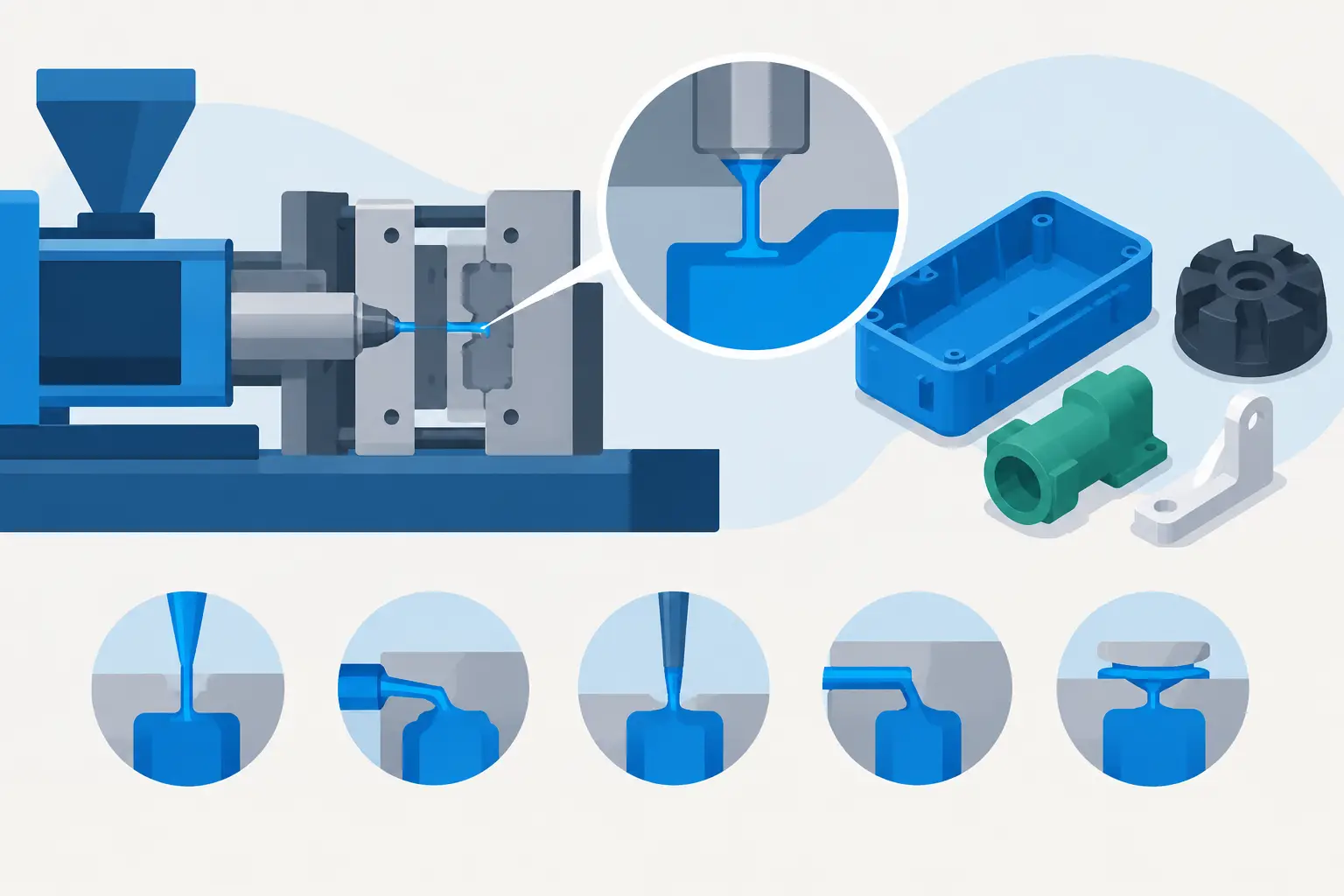
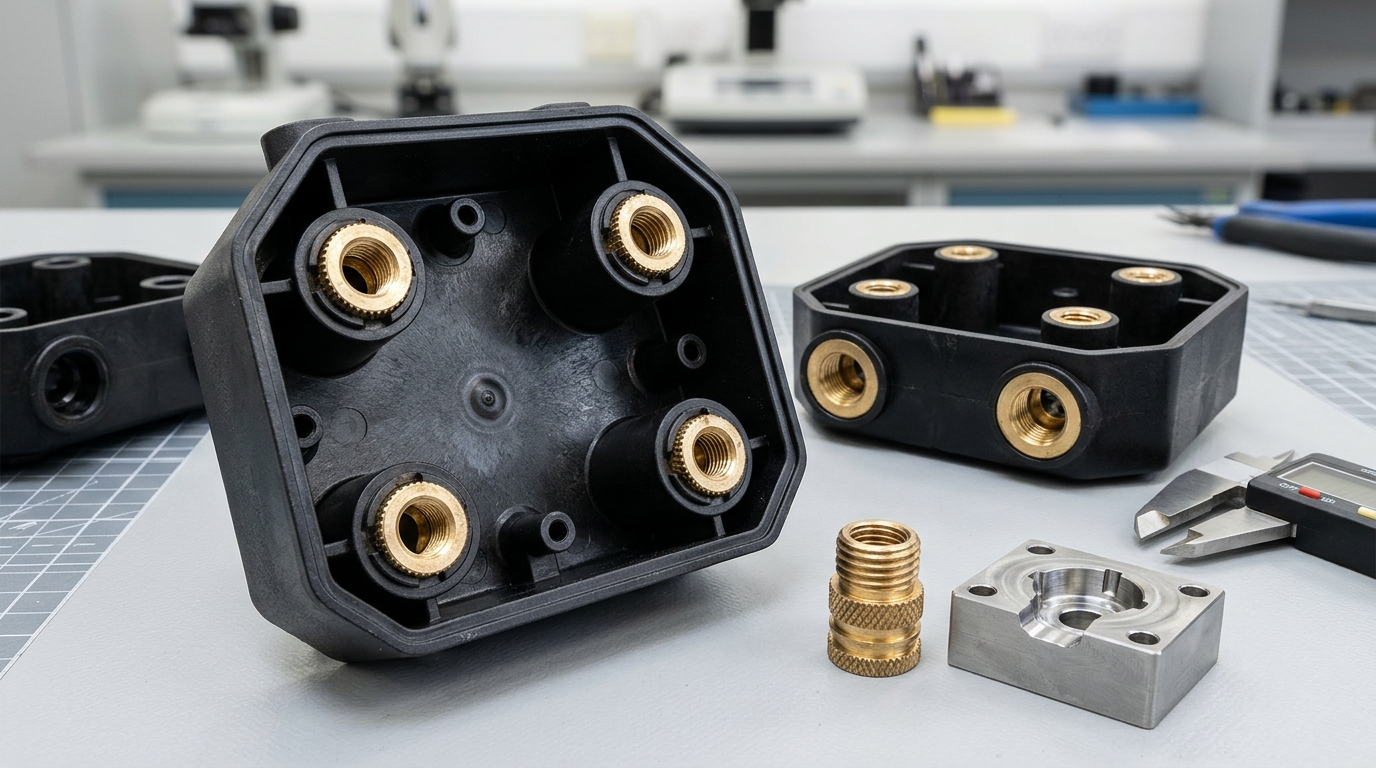
Insert molding is an injection molding process in which a preformed component is placed into the mold before plastic is injected. The insert may be a threaded fastener, stamped terminal, pin, bushing, mesh, magnet, shaft, or a custom metal component. Once the mold closes, molten resin flows around designated features of the insert and solidifies into a single finished part.
This differs from conventional assembly, where the plastic part and metal component are produced separately and joined afterward through pressing, staking, screwing, welding, or adhesive bonding. It also differs from overmolding, which often applies a second material layer over an existing part. In insert molding, the insert becomes an integral element of the molded component from the first production cycle.
The result is not simply a reduction in part count. It is a change in how load, alignment, tolerances, and assembly risk are managed. The value is highest when the insert performs a critical mechanical, electrical, thermal, or fastening function.
Top Insert Molding Advantages for Product Programs
Fewer components and assembly operations
A conventional assembly may require a molded housing, one or more threaded inserts, operators or automation to install them, and inspection to verify position and retention. Insert molding consolidates much of that work into the molding process. The finished part leaves the press with the insert already located and retained.
Reducing post-molding operations can lower labor content, simplify work instructions, and remove handoff points where defects occur. It can also reduce inventory complexity. Rather than managing separate molded parts and assembly-ready components through multiple internal or external stages, the manufacturer can supply one completed component ready for the next production step.
This advantage matters most in high-volume programs, but it also helps lower-volume industrial applications when assembly accuracy is critical or labor availability is limited.
Stronger, more reliable insert retention
Properly designed inserts use mechanical features such as knurls, undercuts, holes, grooves, or flanges. During molding, plastic flows into and around these features, creating physical retention rather than relying only on friction or adhesive strength.
For threaded inserts, this can improve resistance to pull-out and torque-out forces. In terms of electrical terminals and pins, it helps maintain position during connector mating, vibration, and repeated use. For shafts or bushings, it supports consistent alignment under mechanical loading.
Actual retention performance depends on the insert geometry, resin selection, wall thickness, molding conditions, and direction of applied load. A part designed for tensile pull-out faces different demands than one exposed to torque, side loading, or repeated thermal cycling. Engineering review before tool release is essential because an insert that appears secure in a prototype may behave differently in volume production.
Better positional accuracy for functional features
When a metal insert must align with a mating part, small location errors can create downstream problems. Connector pins must meet their counterparts precisely. Screw threads need to sit squarely within the housing. Sensor elements, magnets, and conductive contacts may need exact orientation to perform as intended.
Insert molding uses the mold itself to locate the insert. Dedicated nests, pins, and support features hold it in place during injection. With correct tooling design, the process can provide more repeatable positioning than a separate manual or press-fit assembly operation.
Tooling details matter here. The insert must be supported sufficiently to resist injection pressure without deflecting, yet the support points cannot interfere with required plastic coverage or finished-part function. This is one reason insert molding should be evaluated alongside mold design, not treated as a simple secondary operation.
Improved product durability in demanding environments
Mechanical fastening and bonded joints can loosen, shift, or degrade over time. A molded-in insert is enclosed by the resin and mechanically integrated into the part, which can improve resistance to vibration, impact, and routine handling.
This makes the process useful in automotive interiors, electrical equipment, utility devices, industrial controls, appliances, furniture hardware, and bathroom accessories. It is particularly effective when a plastic housing needs the strength or conductivity of metal without adding a separate mounting operation.
The plastic material still has to suit the operating environment. Moisture, chemicals, ultraviolet exposure, elevated temperatures, electrical requirements, and flame ratings all influence resin selection. Metal and plastic also expand at different rates when temperatures change, so thermal cycling must be considered for tightly toleranced assemblies.
Lower total cost when the program is designed for it
An insert-molded part may have a higher unit molding cost than a plain plastic part because it requires insert handling, specialized tooling, and additional process control. Looking only at the molding price can therefore be misleading.
The more relevant measure is total manufactured cost. When insert molding eliminates installation equipment, labor, inspection, rework, fasteners, adhesives, or quality escapes, the full assembly can cost less. It may also shorten production lead time by reducing the number of operations required after molding.
The cost case is strongest when volumes justify automation or when secondary assembly carries a high defect risk. For a very low-volume part with a simple press-fit component, conventional assembly may remain the more economical choice. The decision should be based on annual volume, assembly complexity, quality requirements, and the consequences of field failure.
Design Decisions That Determine the Result
Insert molding performs best when the insert, resin, and tool are developed as one system. Choosing a standard insert and adding it late to the part design often creates avoidable limitations around wall thickness, gate placement, cooling, and access for loading.
Engineers should establish where plastic needs to flow around the insert, how the insert will be held in the mold, and which surfaces must remain exposed. Sharp corners around the insert should be avoided where possible because they can concentrate stress. Adequate resin coverage is needed to support the insert, but excessive thickness can create sink, longer cycle times, or uneven shrinkage.
Gate location deserves close attention. The flow front must fill the cavity without moving the insert, creating weld lines at critical areas, or trapping air around detailed features. In some applications, a preheated insert improves bonding behavior and reduces the risk of premature cooling around the metal surface. Whether that is necessary depends on material choice, insert mass, cycle targets, and performance requirements.
Insert cleanliness is another production variable. Oils, stamping residues, oxidation, and inconsistent plating can affect molding behavior and downstream performance. A reliable process defines incoming inspection standards and, where needed, cleaning or preparation steps before inserts reach the press.
Tooling and Process Control Are the Real Differentiators
A successful insert molding program relies on more than a capable injection molding machine. It requires tooling that locates the insert consistently, protects functional surfaces, tolerates repeated loading, and allows maintenance without extended disruption. It also requires a controlled method for loading inserts, whether manual, semi-automated, or fully automated.
Manual loading can be appropriate for lower volumes, complex insert shapes, or early production stages. It gives operators flexibility, but it needs clear poka-yoke features and inspection discipline to prevent missing, reversed, or incorrectly seated inserts. Automated loading supports higher volumes and consistency, but its economics depend on part volume, insert presentation, and cycle-time targets.
Process validation should verify more than visual appearance. Depending on the application, the plan may include pull-out testing, torque testing, dimensional checks, electrical continuity tests, leak testing, and functional assembly trials. Sampling requirements should reflect the risk of the component, particularly where the insert supports safety, sealing, or electrical performance.
At Glasfil, in-house tool design, mold fabrication, modification capability, and production control make it possible to address these factors without dividing responsibility across several suppliers. That integration is valuable when early trials reveal a need to adjust insert location, gate design, retention features, or cycle parameters before full production begins.
When Insert Molding Is the Right Choice
Insert molding is usually a strong fit when a product needs durable threaded attachment points, fixed electrical contacts, precision-aligned metal features, reinforced mounting locations, or reduced assembly steps. It is less compelling when the insert must be serviceable, when material compatibility is poor, or when production volume cannot support the added tooling and handling requirements.
The most productive starting point is a design-for-manufacturing review before tooling is committed. Bring the insert drawing, expected loads, environment, target volumes, assembly sequence, and critical tolerances into the same conversation. That allows the manufacturing team to identify whether the part should be insert molded, assembled after molding, or redesigned around a different fastening approach.
A well-executed insert-molded component does more than hold metal inside plastic. It removes uncertainty from a functional joint before the part ever reaches final assembly.
Contact us to discuss your project, request a quotation, or arrange a technical consultation. Our team will help you determine the most cost-effective and reliable way to manufacture your part.