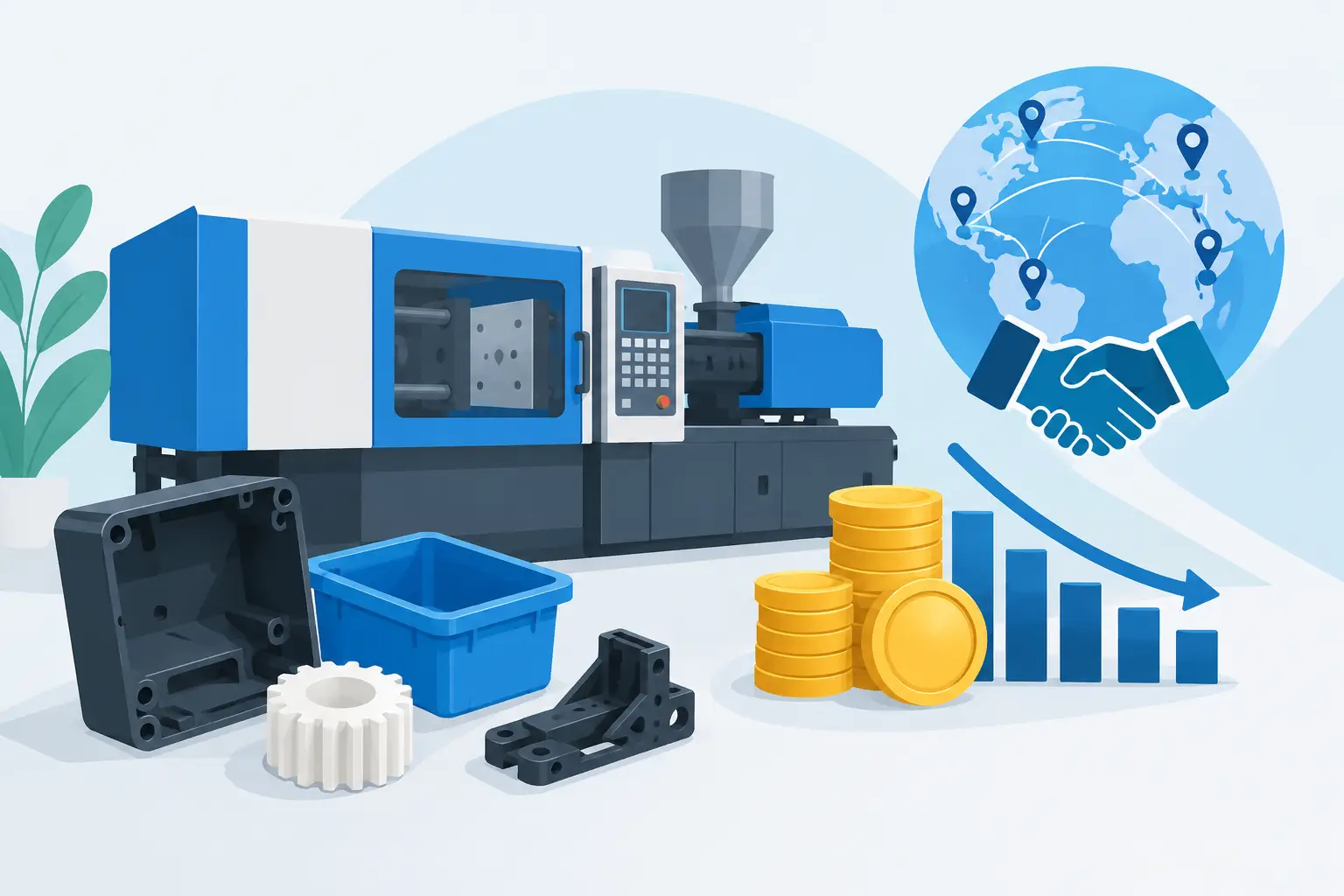
If a supplier can quote quickly but cannot control tooling changes, quality drift, or repeat production, the low unit price will not hold for long. A practical injection moulding supplier checklist helps buyers compare manufacturers on what actually affects delivery, part performance, and total landed cost.
For procurement teams, product developers, and OEMs, supplier selection is rarely about molding alone. The real question is whether the manufacturer can take responsibility for the full production chain – from design feedback and tool build to molded parts, finishing, packing, and on-time shipment. That is where weak suppliers get exposed.
What an injection moulding supplier checklist should measure
A strong checklist should not just confirm that a factory owns injection machines. It should test whether the supplier can hold dimensional consistency, manage engineering changes, scale output, and solve problems without sending the project back to you.
Many buyers focus first on price, machine size, and quoted lead time. Those matter, but they do not tell you enough. Two suppliers may offer similar pricing while operating at very different levels of control. One may outsource tooling, quality checks, or post-processing. The other may run those functions in-house and resolve issues faster because engineering and production sit under one roof.
That difference becomes expensive when timelines tighten or parts fail validation.
Start with tooling ownership and engineering control
Tooling is where most injection molding projects either gain stability or lose it. If the supplier does not design, modify, maintain, or repair molds internally, every adjustment introduces delay, added cost, and communication risk.
Ask how the mold is designed, who builds it, and who is responsible for corrections after T1 and T2 sampling. If mold modification is outsourced, the supplier may still deliver acceptable results, but speed and accountability often suffer. This matters most for custom parts, complex geometries, tight tolerances, and projects still moving through design refinement.
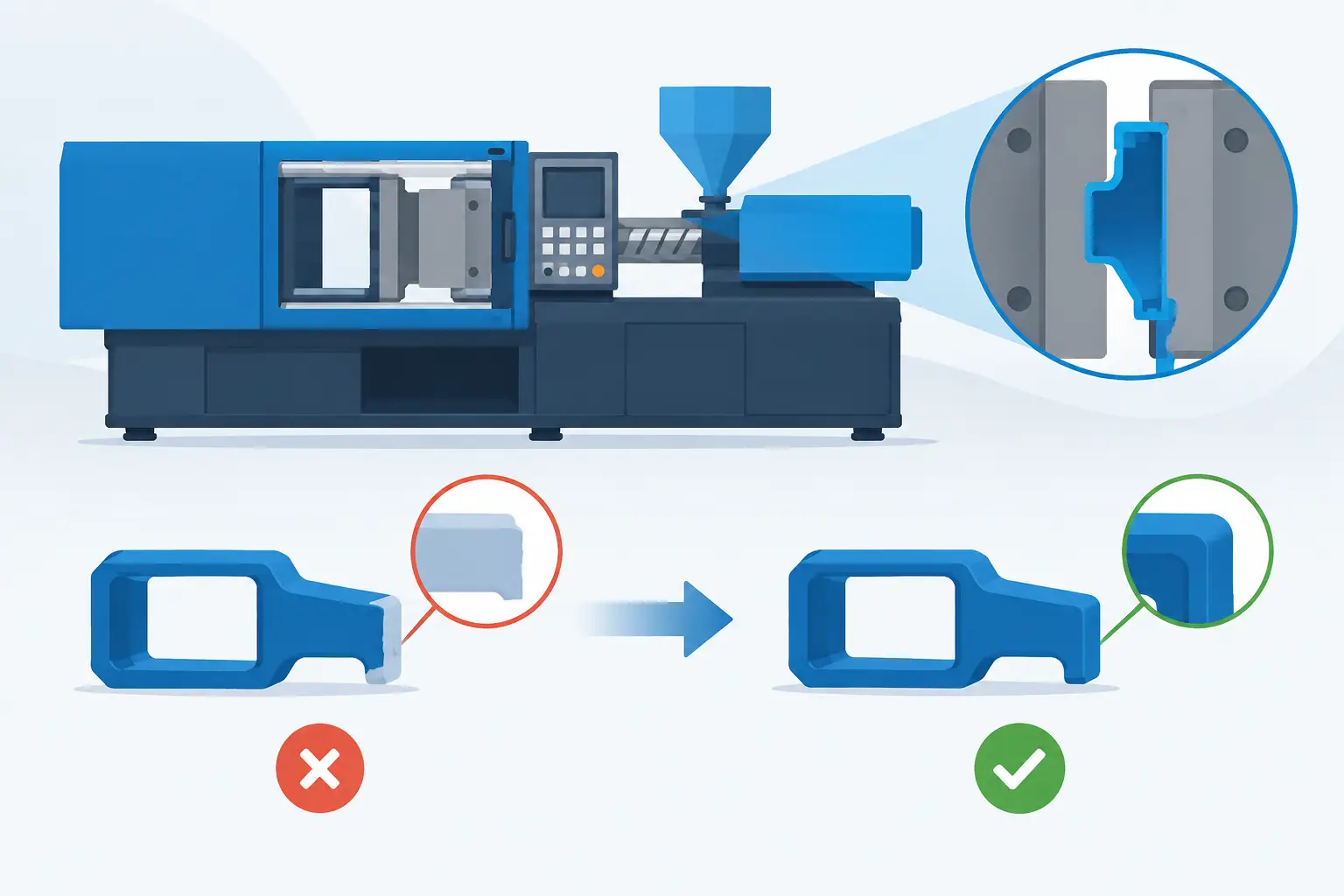
You should also evaluate how early the supplier contributes engineering input. Good suppliers do more than manufacture what is sent to them. They review wall thickness, gate location, draft angles, shrinkage behavior, material flow, and potential weak points before steel is cut. That reduces rework later.
A useful checkpoint here is simple: can the supplier explain how they will improve manufacturability, not just make the part as drawn?
Check machine range, capacity, and production fit
A supplier with modern equipment is not automatically the right fit. What matters is whether the machine range matches your part size, resin type, shot weight, annual volume, and future scaling requirements.
Look at the number of presses, tonnage range, and whether the factory can support both development runs and repeat production. A plant with too little capacity may struggle to absorb urgent orders. A plant built only for high-volume output may not give enough attention to a lower-volume technical part.
Capacity should also be evaluated in practical terms. Ask how production scheduling works, what happens during demand spikes, and whether the supplier has backup options across multiple machines or facilities. If one press goes down, can they move the job without major interruption? That is a better indicator of reliability than a broad statement about available capacity.
Review the quality system beyond certificates
Quality documentation matters, but certificates alone do not tell you how the factory actually controls variation. Your injection moulding supplier checklist should examine inspection methods, in-process control, traceability, and corrective action discipline.
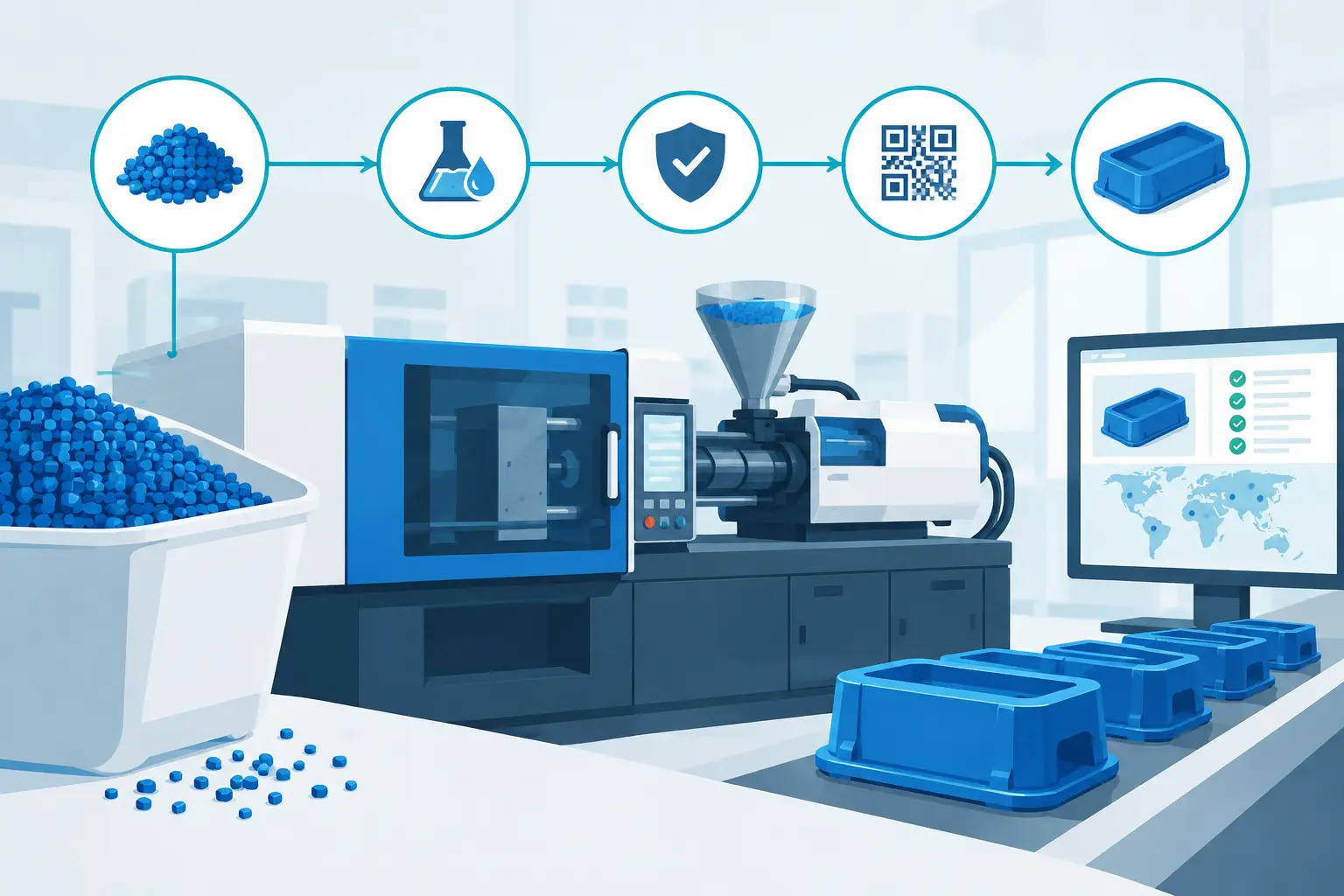
Ask what is measured during startup, during production, and before shipment. Confirm whether they run first article inspection, dimensional checks, visual standards, and material verification as part of normal workflow. If your part has critical dimensions or functional interfaces, find out how those are monitored over time rather than only at initial approval.
It is also worth asking who owns quality decisions. In stronger operations, quality is embedded in production and engineering, not treated as a separate final gate. That usually leads to faster root-cause analysis when defects appear.
For regulated or high-performance applications, the depth of quality control may need to be greater. The right standard depends on the part, the industry, and the risk of failure. A bathroom accessory and an electrical housing do not carry the same verification burden.
Evaluate material knowledge and part application experience
Not every supplier is equally capable across materials and product categories. A factory may be comfortable with commodity resins but less prepared for filled materials, engineering plastics, cosmetic surfaces, or parts with strict performance demands.
Ask which materials they process regularly and what application issues they have solved before. This is especially relevant if your project involves glass-filled compounds, dimensional stability, heat resistance, impact performance, or color consistency. Material selection mistakes often show up later as warping, cracking, sink marks, assembly issues, or field failures.
Experience across industries can help, but it should be relevant rather than generic. A supplier serving automotive, electrical, construction, furniture, and utility applications may bring broader process discipline than a shop limited to simpler commercial parts. The key is whether they can connect that experience to your part requirements.
Do not ignore secondary operations and finished-part delivery
Many injection molded components are not finished when they leave the press. Trimming, drilling, tapping, ultrasonic welding, printing, assembly, packing, labeling, and custom shipment preparation can all affect cost, lead time, and defect rate.
If these processes are split across multiple vendors, coordination gets harder and accountability gets weaker. That does not always make outsourcing wrong, but it does increase project management overhead and the chance of quality issues between steps.
A more capable supplier will be able to explain how secondary operations are controlled, inspected, and scheduled alongside molding. This matters for launch timing as much as for quality. One production bottleneck outside the molding cell can hold up the whole order.
Assess responsiveness during development, not just after award
One of the best predictors of future performance is how the supplier handles the quoting and development stage. If communication is slow, answers are vague, and technical questions are pushed aside before the order is placed, that usually does not improve later.
Look for suppliers that respond with specific manufacturing feedback, realistic timing, and clear assumptions. Fast execution is valuable, but only if it is supported by process control. An aggressive timeline with weak technical review often creates delays later in tool correction, sampling, or qualification.
This is where integrated manufacturers have an advantage. When tooling, molding, quality, and finishing are managed internally, decisions move faster because fewer parties need to align. That can make a major difference for buyers working against launch deadlines.
A practical injection moulding supplier checklist for final comparison
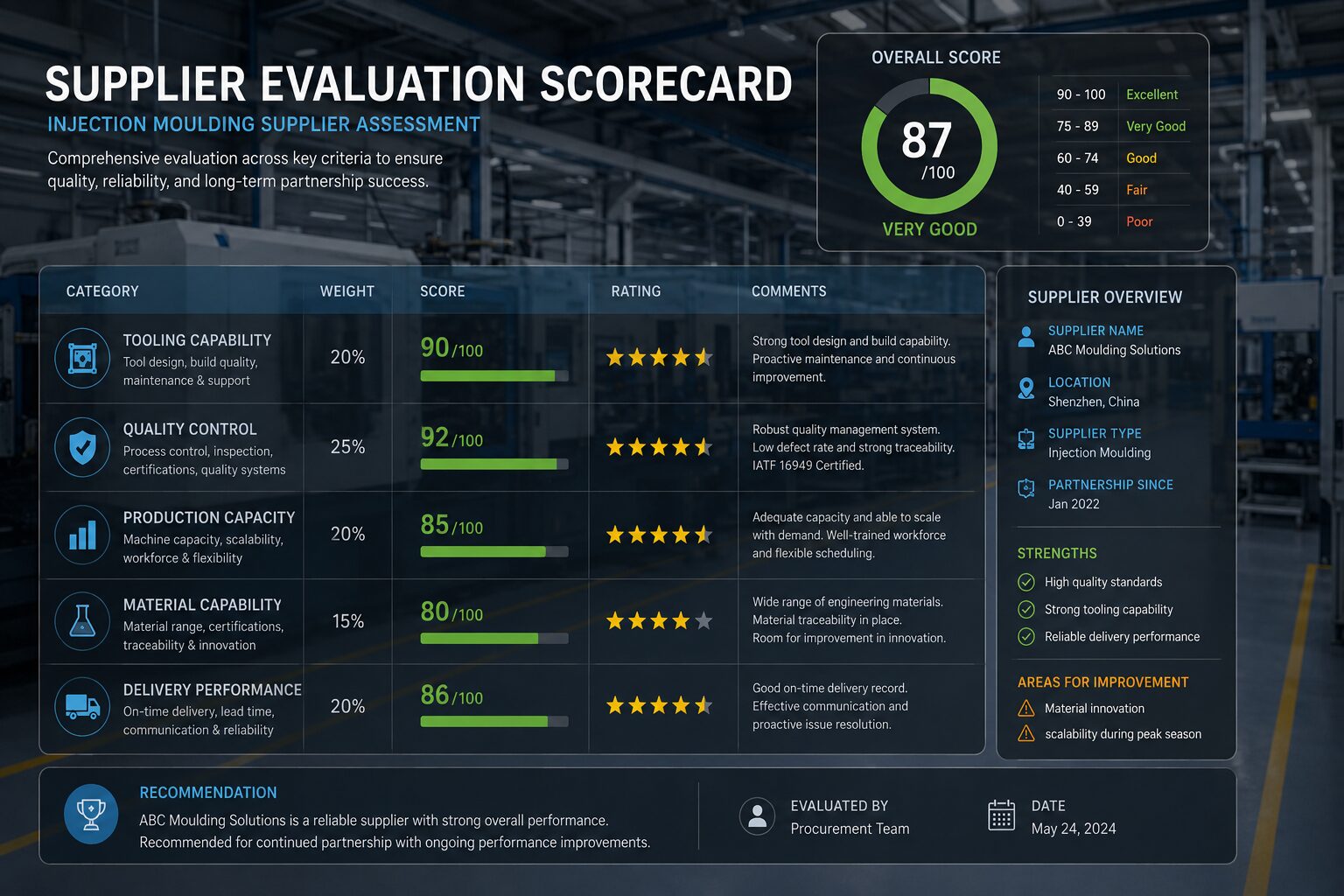
When you compare shortlisted suppliers, score them on the factors that affect long-term execution rather than headline price alone. The strongest checklist usually includes tooling ownership, in-house mold modification capability, machine fit, quality control methods, material knowledge, secondary processing, delivery planning, and communication speed.
It should also capture risk areas. For example, a lower-cost supplier may be acceptable for a mature, non-critical part with stable demand and loose tolerances. The same supplier may be the wrong choice for a new product launch where design changes, validation support, and rapid troubleshooting are likely. It depends on where the risk sits in your project.
A manufacturer with end-to-end control often looks more expensive at first glance, but the total cost picture can be stronger when revisions, defects, and schedule pressure are taken into account. That is one reason many buyers prefer a single partner that can handle design support, tool fabrication, molding, finishing, and shipment in one operation. Glasfil is built around that model because it reduces handoff risk and shortens the path from concept to production.
What good supplier selection looks like in practice
The best supplier decisions are usually made before the first purchase order, when buyers ask harder questions and listen for operational detail. You want a manufacturer that can explain what happens when the mold needs adjustment, when demand increases unexpectedly, when cosmetic defects appear, or when packing requirements change late in the process.
That level of clarity signals real production ownership. It tells you the supplier is prepared not just to make parts, but to keep making them consistently.
If your team is building a supplier scorecard, make it specific enough to reveal how the factory works under pressure. That is when the right manufacturing partner stops being a vendor and starts becoming an extension of your production capability.
Contact us today to discuss your project requirements or request a quotation. Let’s build a production process you can depend on.