A tool can look perfect on a screen and still fail on the press. That gap between CAD approval and stable production is where time, budget, and launch schedules are won or lost. This mould fabrication guide is written for product teams, buyers, and engineers who need tooling that performs in real manufacturing conditions, not just in design reviews.
For B2B plastic part production, mould fabrication is not a standalone purchase. It is a production decision that affects cycle time, part consistency, maintenance load, and how quickly a program moves from sampling to repeatable output. If the mould is built without enough attention to material behaviour, cooling layout, venting, steel selection, or future modification needs, the cost shows up later as scrap, delays, and rework.
What a mould fabrication guide should actually help you decide
A useful mould fabrication guide should not stop at basic tooling definitions. Most buyers already know they need a mold cavity, core, ejector system, and gating strategy. The real question is whether the fabrication process supports the commercial result: reliable production at the required volume, quality level, and timeline.
That means evaluating mould fabrication through three lenses at the same time. First, the tool must produce parts that meet dimensional and cosmetic requirements. Second, it must run efficiently on the intended machines without constant intervention. Third, it must remain serviceable when production scales, design changes occur, or wear starts to affect output.
This is why experienced manufacturers treat mould design and mould fabrication as tightly connected functions. A tool shop that can cut steel is useful. A manufacturing partner that can design, fabricate, test, modify, and then run the mold in-house removes far more risk.
The mould fabrication process from concept to production
Every successful tool starts with a part review. Before steel is cut, the part geometry needs to be checked for draft, wall thickness consistency, undercuts, gate location options, shut-off feasibility, and likely warpage behaviour. A part that looks manufacturable in theory may still create problems if the geometry forces poor filling balance or weak ejection.
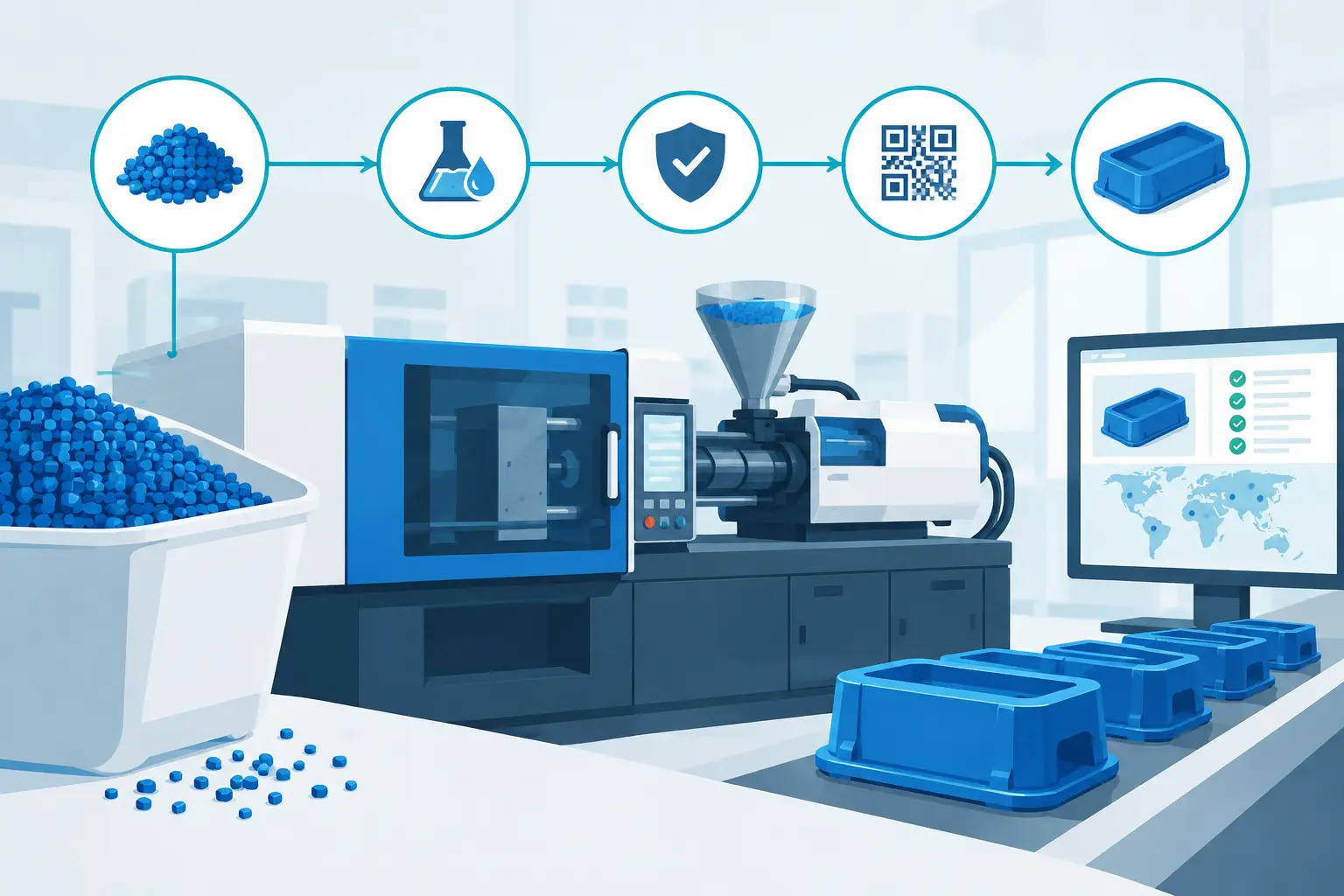
Material choice matters just as much. Resin shrinkage, glass-filled content, flame-retardant additives, surface finish expectations, and part tolerance targets all affect how the tool should be fabricated. A mould for an unfilled consumer component is a different job from a mould intended for a glass-filled technical part with tighter dimensional control.
Once the design inputs are stable, tooling engineers define the mould structure. This includes the number of cavities, runner layout, cooling channels, venting strategy, insert design, side actions if needed, and the steel grades used in high-wear or high-polish areas. Cost and speed matter here, but so does production intent. A lower-cost tool can be the right move for a limited run. For repeat industrial programs, underbuilding the tool often creates more expense later.
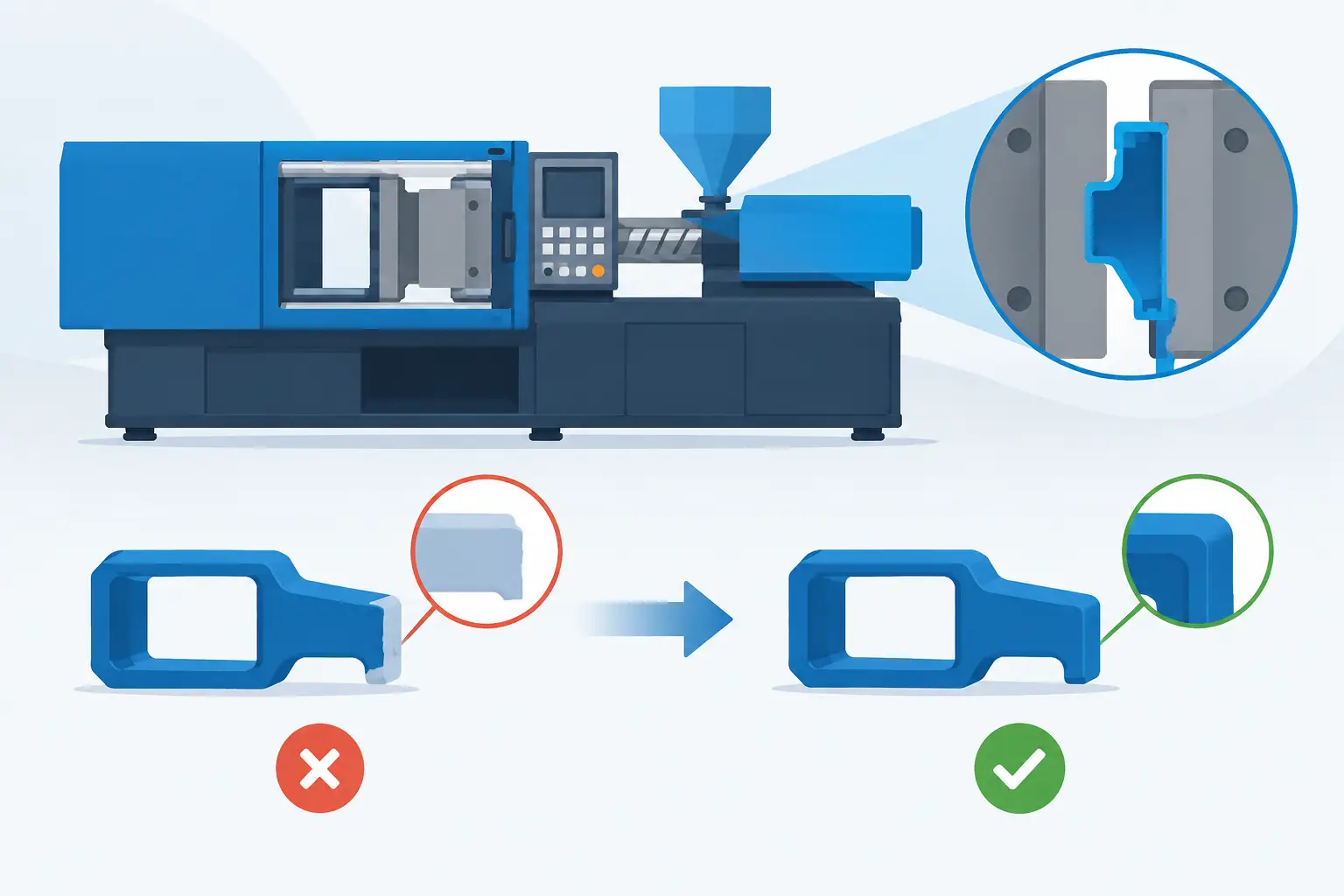
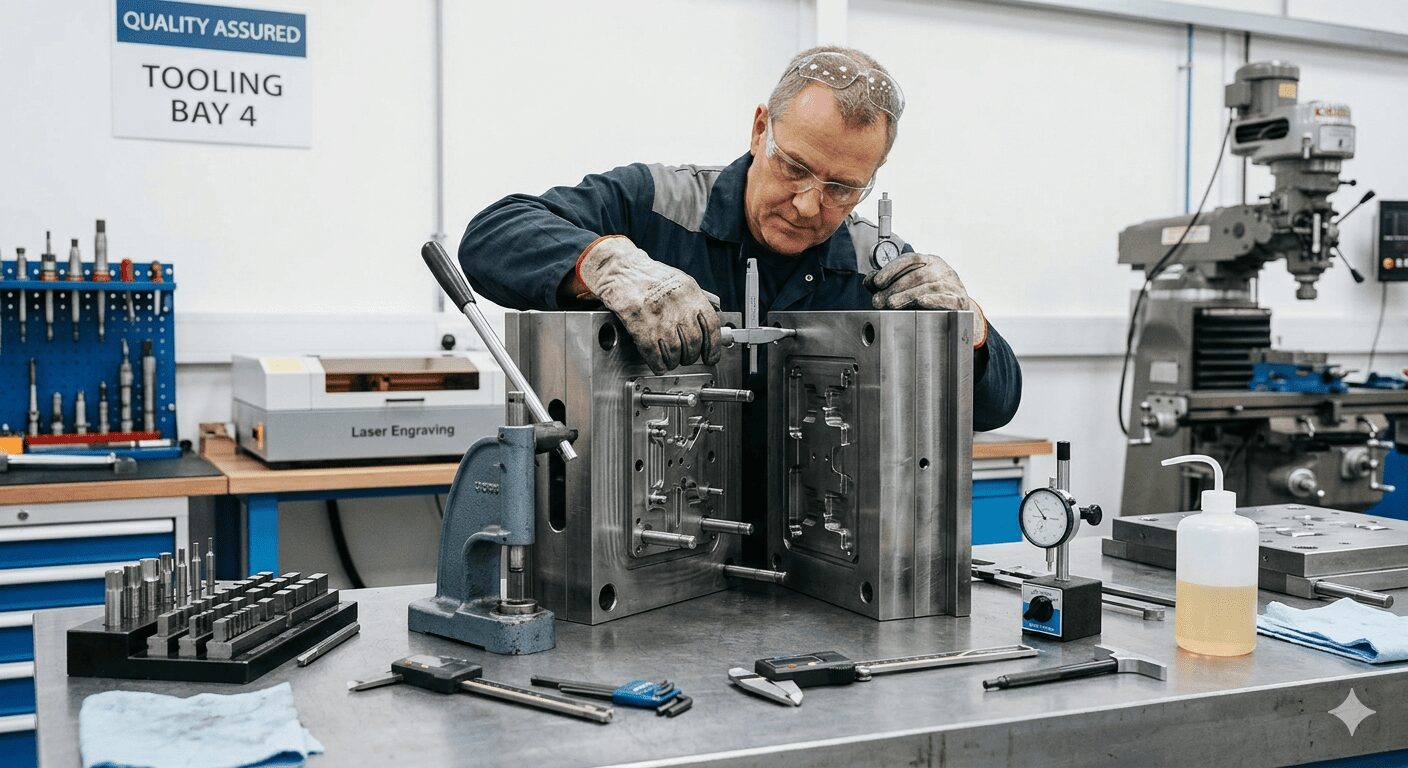
Fabrication then moves into machining, EDM work where required, fitting, polishing, assembly, and inspection. Precision at this stage is not just about individual components being accurate. It is about how all components work together under production temperature and pressure. Small misalignments can turn into flash, sticking, short shots, or premature wear once the mould enters regular use.
Trial runs are where theory meets reality. Sampling should confirm part dimensions, surface quality, cycle time behaviour, gate vestige, cooling performance, and ejection reliability. This is also the stage where practical modifications often happen. In-house modification capability is a major advantage because adjustments can be made quickly instead of sending the tool through another disconnected vendor cycle.
Design choices that affect mould performance the most
Many tooling issues are traced back to a few decisions made early. Cooling is one of the biggest. If cooling is uneven or insufficient, cycle times increase, and part distortion becomes harder to control. Better cooling design often has a direct effect on part quality and production cost, especially in medium- to high-volume programs.
Gate design is another critical area. The gate must support filling without creating cosmetic defects, excessive shear, or difficult trimming requirements. There is no universal best option. Edge gates, submarine gates, hot runners, and valve-gated systems each have trade-offs based on part shape, resin, appearance standards, and projected output.
Steel selection also deserves more attention than it sometimes gets. Harder, more wear-resistant steels can increase initial tooling cost, but they may be justified for abrasive materials or long production life. Softer steels can speed fabrication and reduce upfront cost, which can make sense for prototyping or short-run tools. The right answer depends on expected production demand, not just the purchase order value of the mould itself.
Venting is often underestimated until defects appear. Trapped gas leads to burn marks, incomplete filling, and unstable process windows. Proper venting is a fabrication issue, not a last-minute processing fix. When it is addressed early, the startup is smoother, and quality consistency improves.
Common mould fabrication risks and how to reduce them
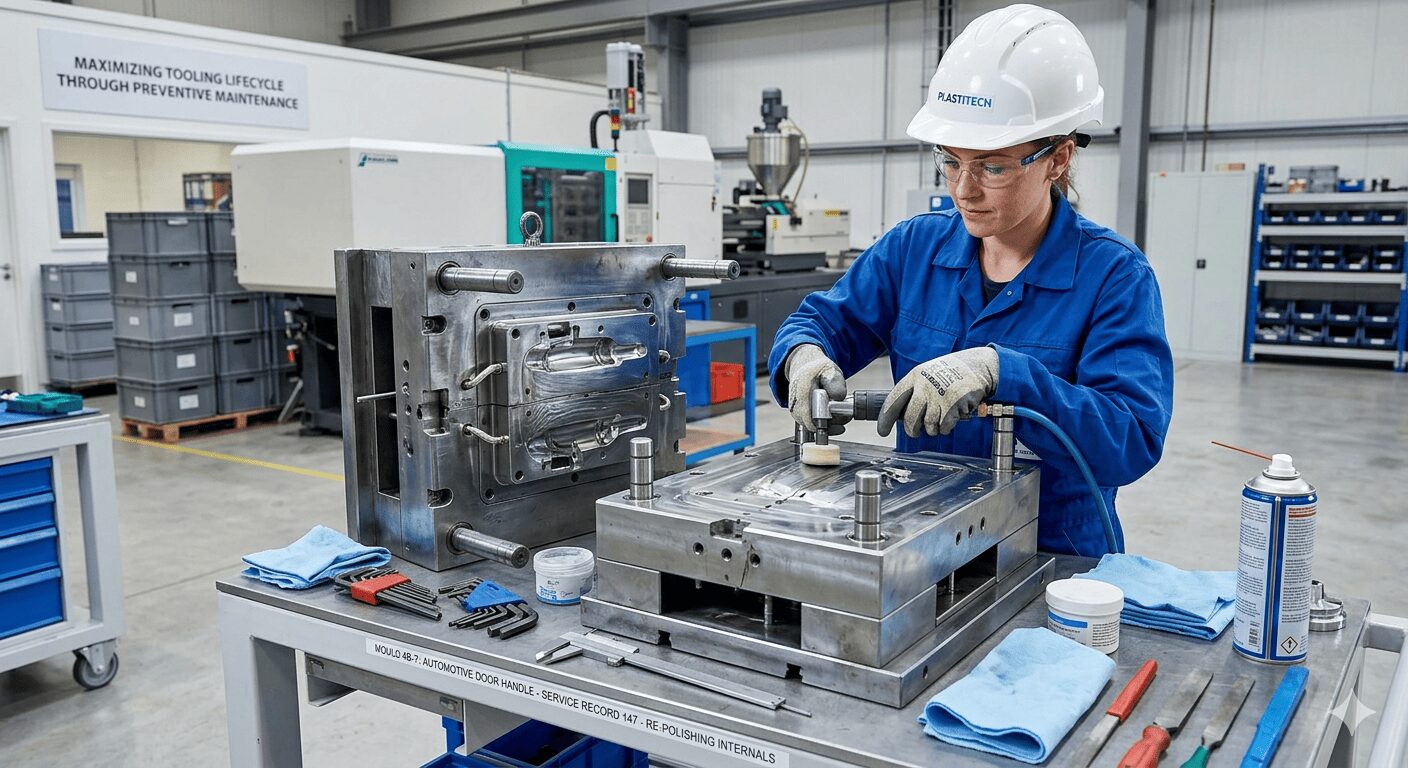
The fastest way to lose time in a tooling project is to approve a design before all stakeholders align on production requirements. Engineering may focus on geometry, procurement may focus on price, and operations may focus on delivery. If those priorities are not reconciled before fabrication starts, the tool can arrive technically complete but commercially wrong.
One common risk is building for the current revision only, without considering likely changes. If product updates are expected, insert-based design or localised replaceable sections can make future modifications far easier. This is especially valuable for OEMs that iterate on products after early market feedback.
Another risk is separating tooling from moulding. A mould that is fabricated by one supplier and run by another can still succeed, but the handoff creates room for blame and delay. When sampling reveals issues, the response time depends on how quickly the fabricator and moulder coordinate. An integrated setup shortens that loop.
Lead time pressure also creates mistakes. Speed is valuable, but rushed decision-making at the quotation or design-approval stage often causes slower outcomes later. Fast execution works best when design review, fabrication, modification, and validation happen under one operational structure with clear accountability.
How buyers should evaluate a mould fabrication partner
Price matters, but it should not be the first filter. For industrial buyers, a better question is whether the supplier can control the whole path from tool build to stable production. If they cannot validate the tool on their own machines, support design changes, maintain the mould, and manage quality in-house, the project risk stays with the customer.
Technical range is also important. A supplier should be able to discuss cavity strategy, tolerances, resin behaviour, machine tonnage, expected tool life, and secondary processing implications in practical terms. If conversations stay at a general level, that is usually a warning sign.
Manufacturing capacity affects reliability more than many buyers expect. Tooling delays are not always caused by bad engineering. Sometimes they come from overloaded workshops, limited machining availability, or fragmented subcontracting. A partner with in-house design, mould fabrication, modification capability, and moulding capacity can usually give more realistic schedules and hold them more consistently.
This is where an integrated manufacturer such as Glasfil has a structural advantage. When mould design, fabrication, moulding, finishing, and quality control are managed in-house, decisions are made with production performance in mind from the start, not added later as separate fixes.
When a low-cost tool is the wrong decision
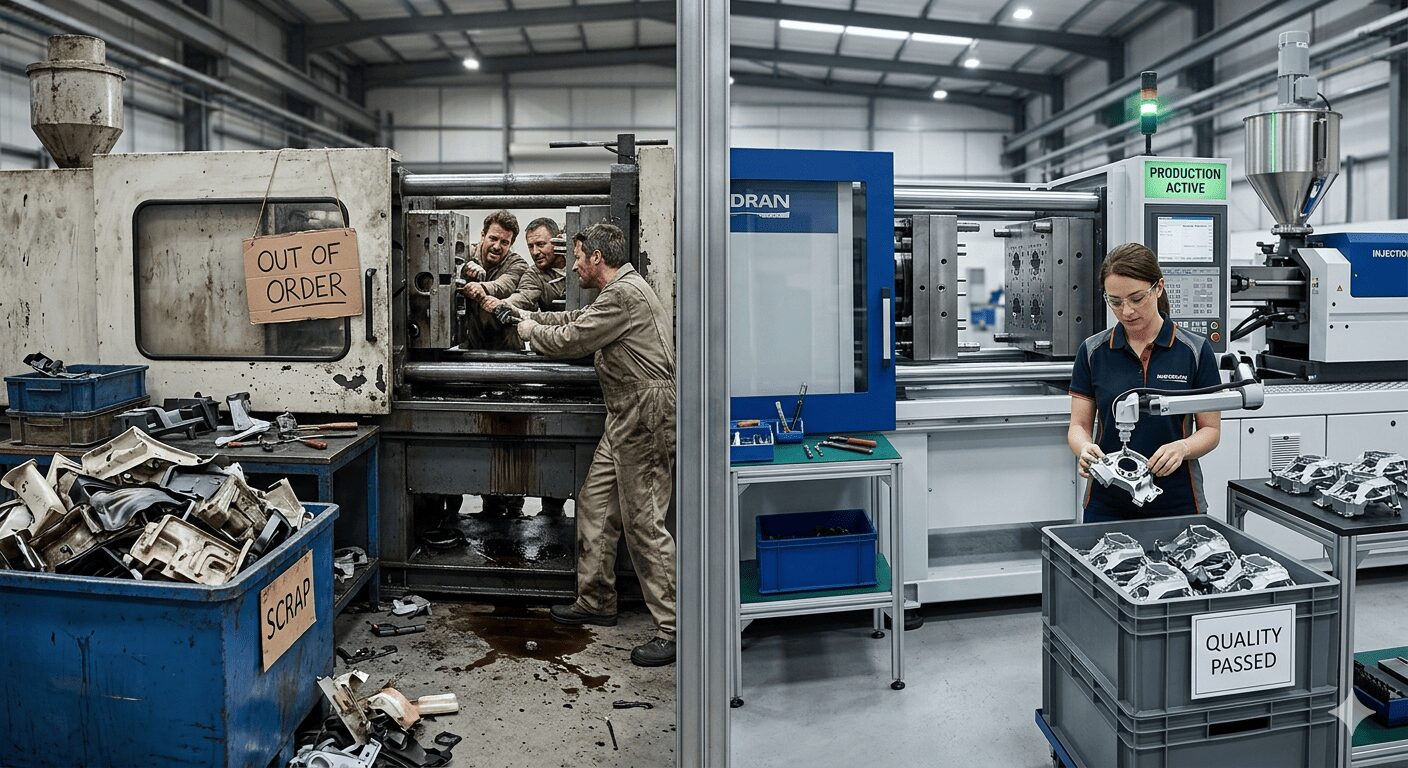
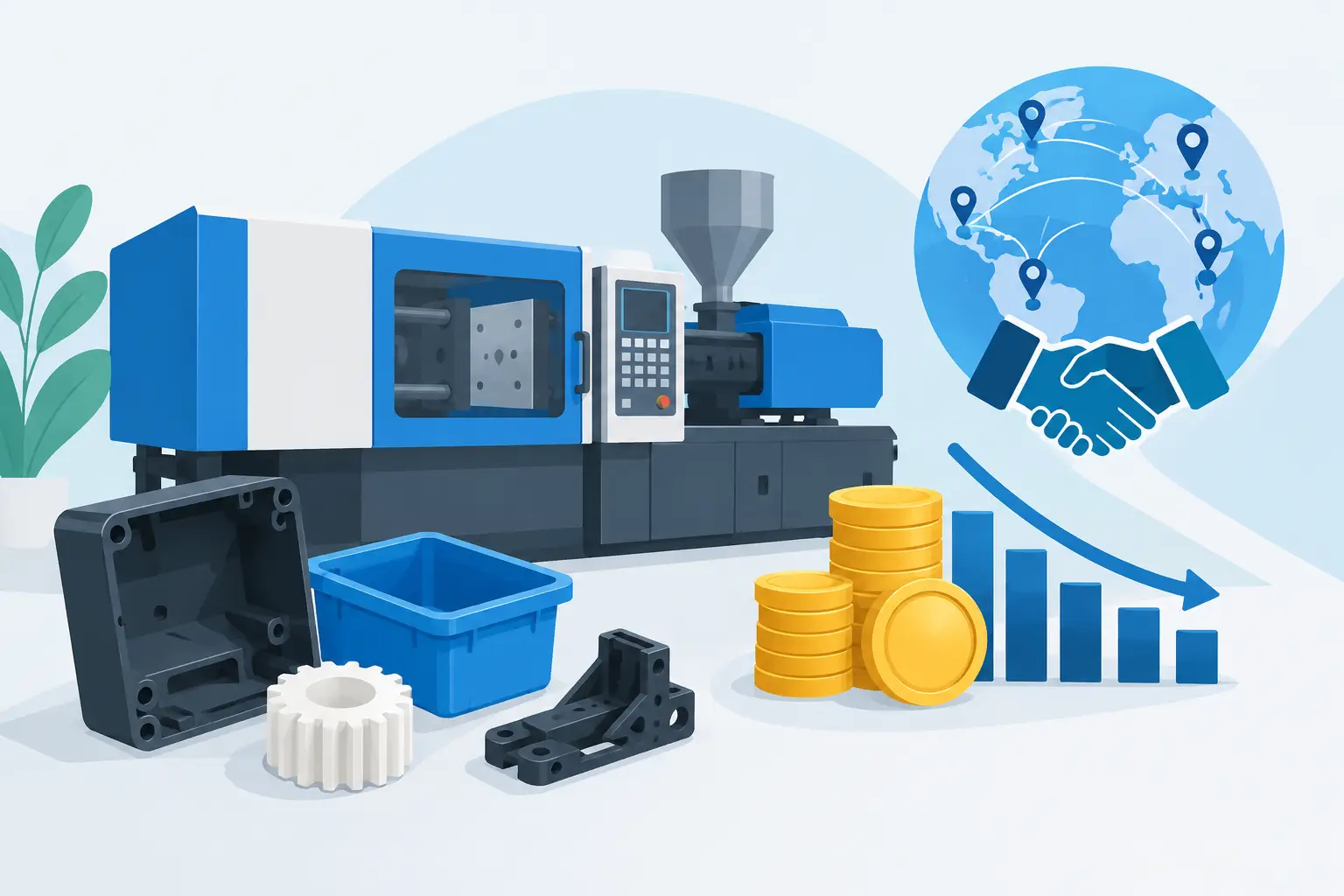
There are cases where a budget tool is completely reasonable. Early product validation, spare-part replication, and short production runs may not need the same steel grade, automation features, or tool life expectancy as a long-term OEM program. The mistake is assuming the cheapest mould offers the lowest total cost.
If the part has tight tolerances, cosmetic requirements, or demanding resin characteristics, a low-cost shortcut usually shifts expense into production. Higher scrap, unstable cycles, frequent maintenance, and repeated corrective work quickly erase the initial savings. For procurement teams under cost pressure, the stronger argument is total manufacturing cost over the life of the program.
A well-fabricated mould should make production easier. It should widen the processing window, reduce operator intervention, hold dimensions more consistently, and support predictable output. That is what tooling value looks like in practice.
Using this mould fabrication guide in a real sourcing decision
The best use of a mould fabrication guide is not as a checklist for buying a tool in isolation. It is a framework for asking better questions before the project starts. Can the supplier review the part for manufacturability? Can they explain how design decisions affect cycle time and maintenance? Can they modify the mould quickly after trials? Can they carry the project from steel to shipped parts without losing control between stages?
If the answers are clear and backed by operational capability, the tooling project has a much better chance of reaching production on schedule. And when launch windows are tight, that is what matters most: not just getting a mould built, but getting a mould built right enough to produce without hesitation.
The strongest tooling decisions are rarely the ones with the lowest quote. They are the ones who keep your production moving when the schedule leaves no room for a second try.
If you are planning a new plastic part or reviewing an existing mould that is not meeting expectations, the next step is not another quote. It is a technical conversation.
Talk to our team about your project. Share your drawings or current tooling challenges, and we will help you identify risks early, optimise your mould strategy, and move faster toward reliable production.
Contact us today to start your mould review.