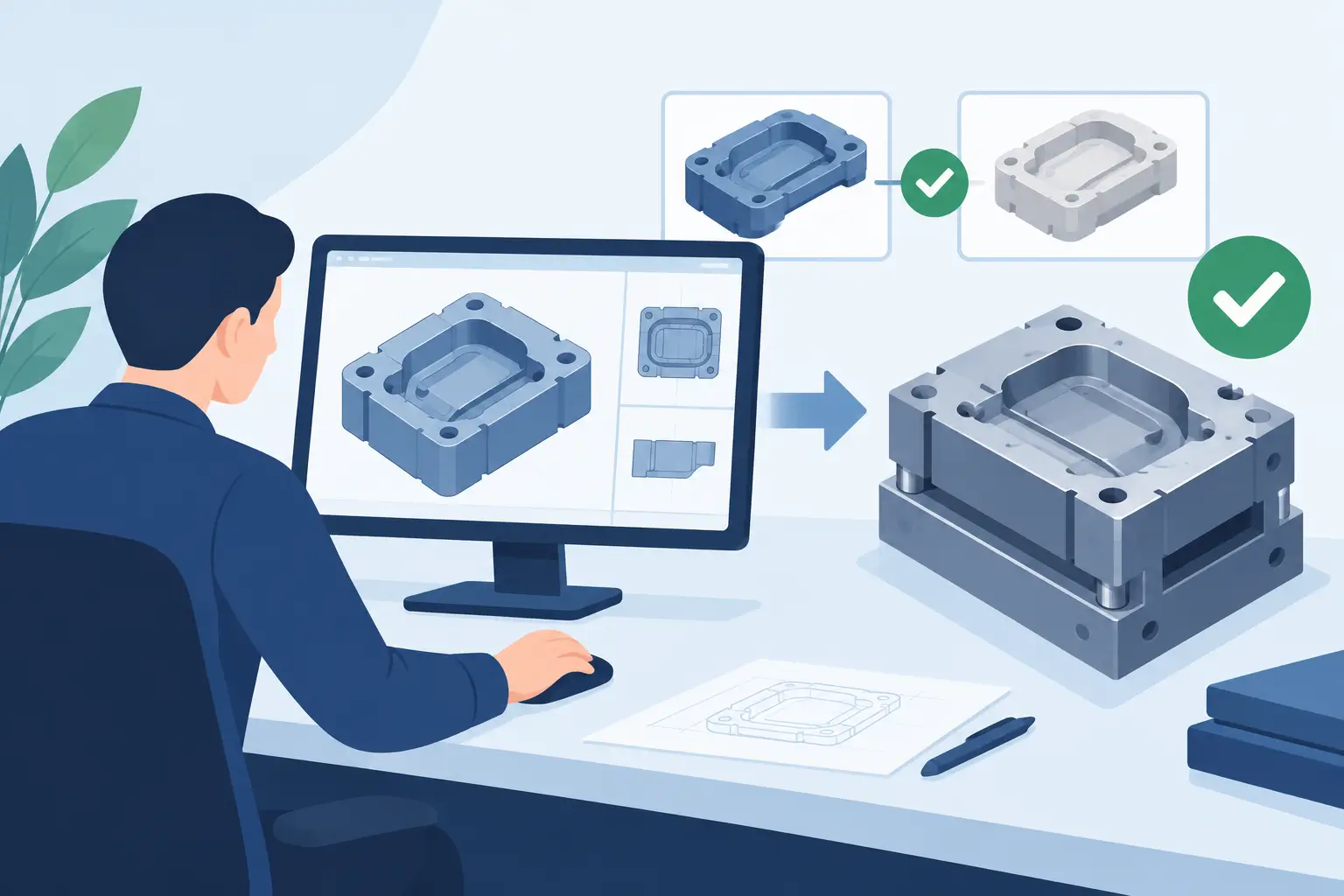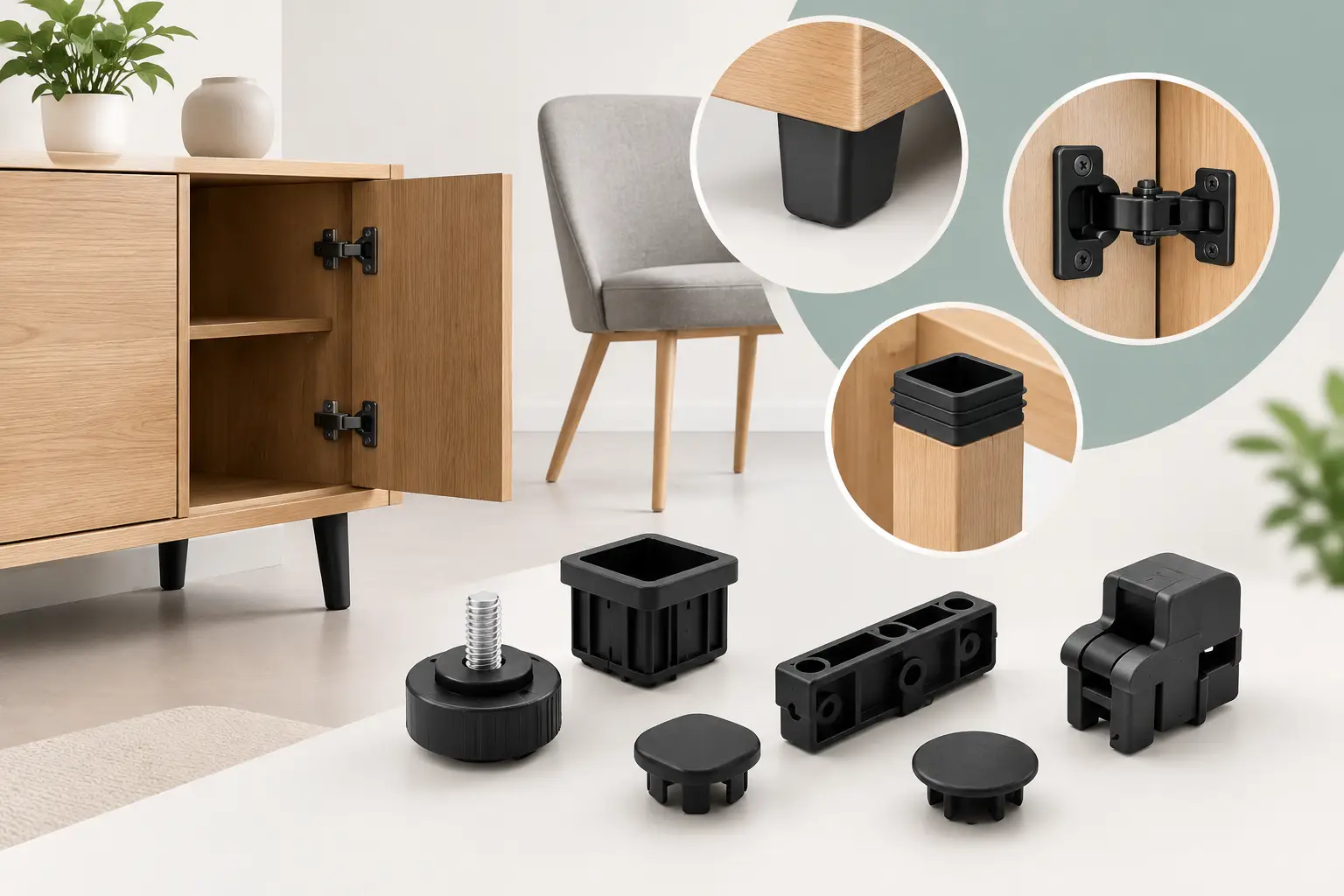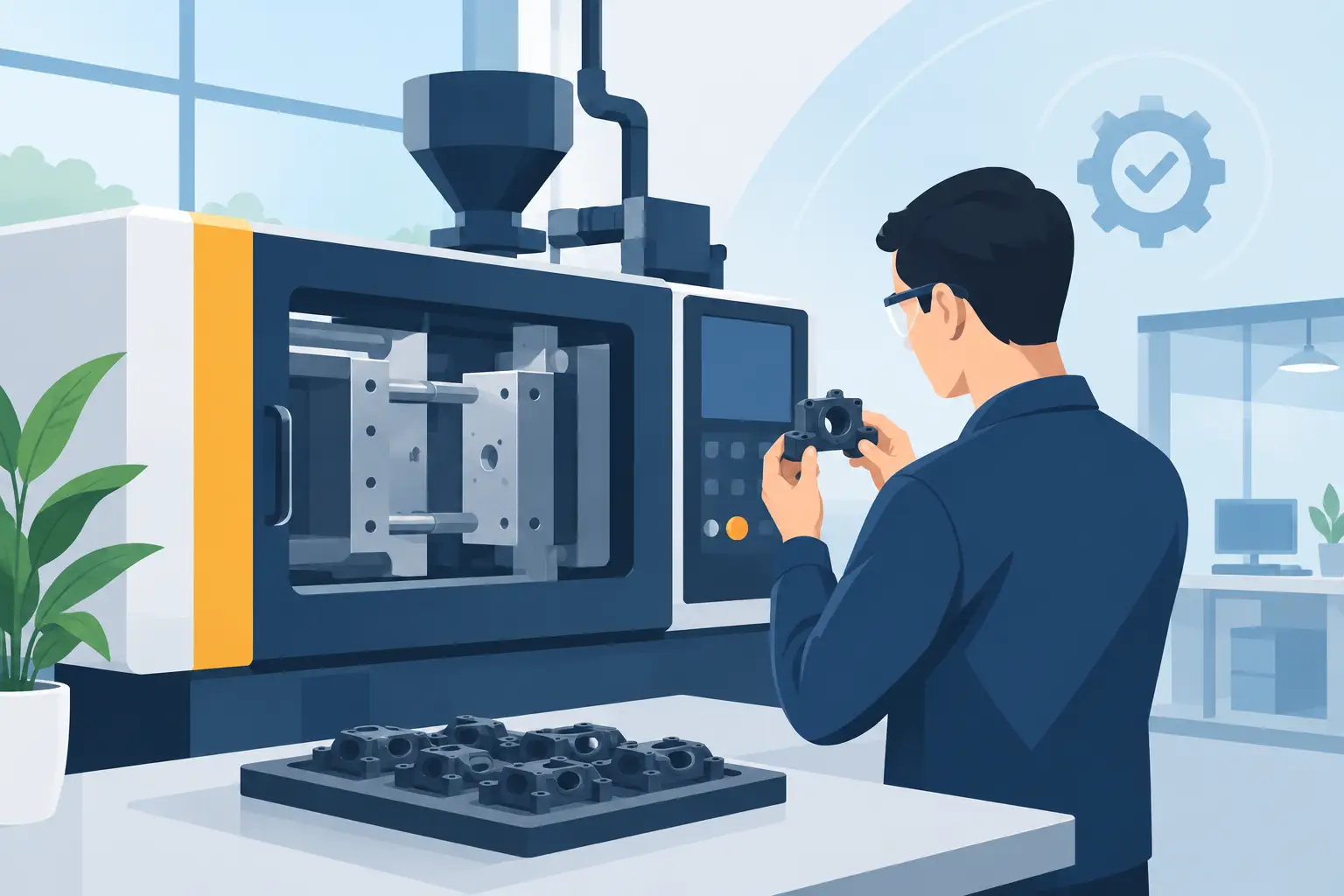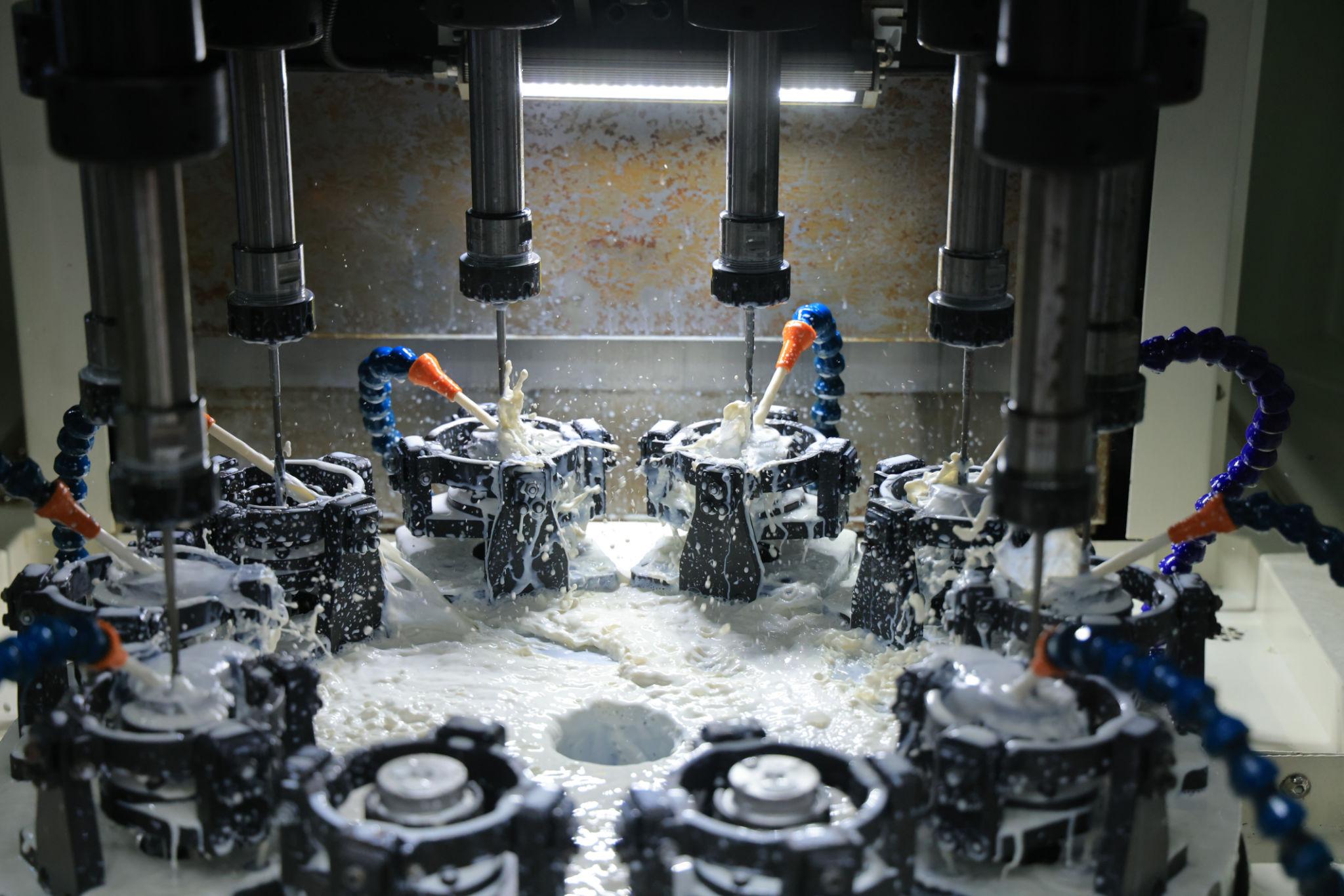
A part can look right in CAD, pass an early print test, and still fail when it reaches moulded production. That is where the decision around prototype tooling vs production tooling starts to matter. For product developers, sourcing teams, and OEMs, this is not just a tooling question. It is a timing, cost, risk, and scalability decision that shapes the entire launch path.
The mistake is treating prototype and production tools as two versions of the same thing. They serve different business purposes. One is built to validate the design and get moulded parts in hand quickly. The other is built to hold tolerance, support repeat output, and keep cost per part under control over the life of the program.
What prototype tooling is designed to do
Prototype tooling is built for speed and learning. In most cases, the goal is to produce a limited number of moulded parts so engineering, purchasing, and end users can evaluate form, fit, and function before committing to a hardened production tool.
That usually means shorter tool life, simpler construction, and fewer built-in features. The tool may use softer materials, reduced cavitation, or less automation around ejection and cooling. That is not a flaw. It is a deliberate trade-off to reduce lead time and upfront cost.
For many companies, prototype tooling makes sense when a product is still moving. If dimensions may change, if snap fits are still being tuned, or if there is uncertainty around resin behaviour, a faster and less capital-intensive tool gives the team room to adjust without locking in expensive steel too early.
Prototype tools are also useful when the business case is still being proven. A pilot launch, customer sampling program, or low-volume market test may not justify full production tooling on day one.
What production tooling is built to handle
Production tooling is engineered for consistency, volume, and long-term economics. It is intended to run repeatably across larger quantities while maintaining part quality, cycle time, and dimensional control.
That changes the tool design from the ground up. Steel selection, cooling layout, venting, gate design, wear surfaces, polishing standards, and maintenance access all matter more because the tool is expected to perform over a much longer service life. The focus is not only on getting acceptable parts. It is on getting acceptable parts every run, with predictable output and stable process conditions.
In a production environment, tooling must support operational realities. That includes machine compatibility, process repeatability, planned maintenance intervals, and the ability to recover quickly from wear or damage. A production tool is a manufacturing asset, not just a validation step.
Prototype tooling vs production tooling in real terms
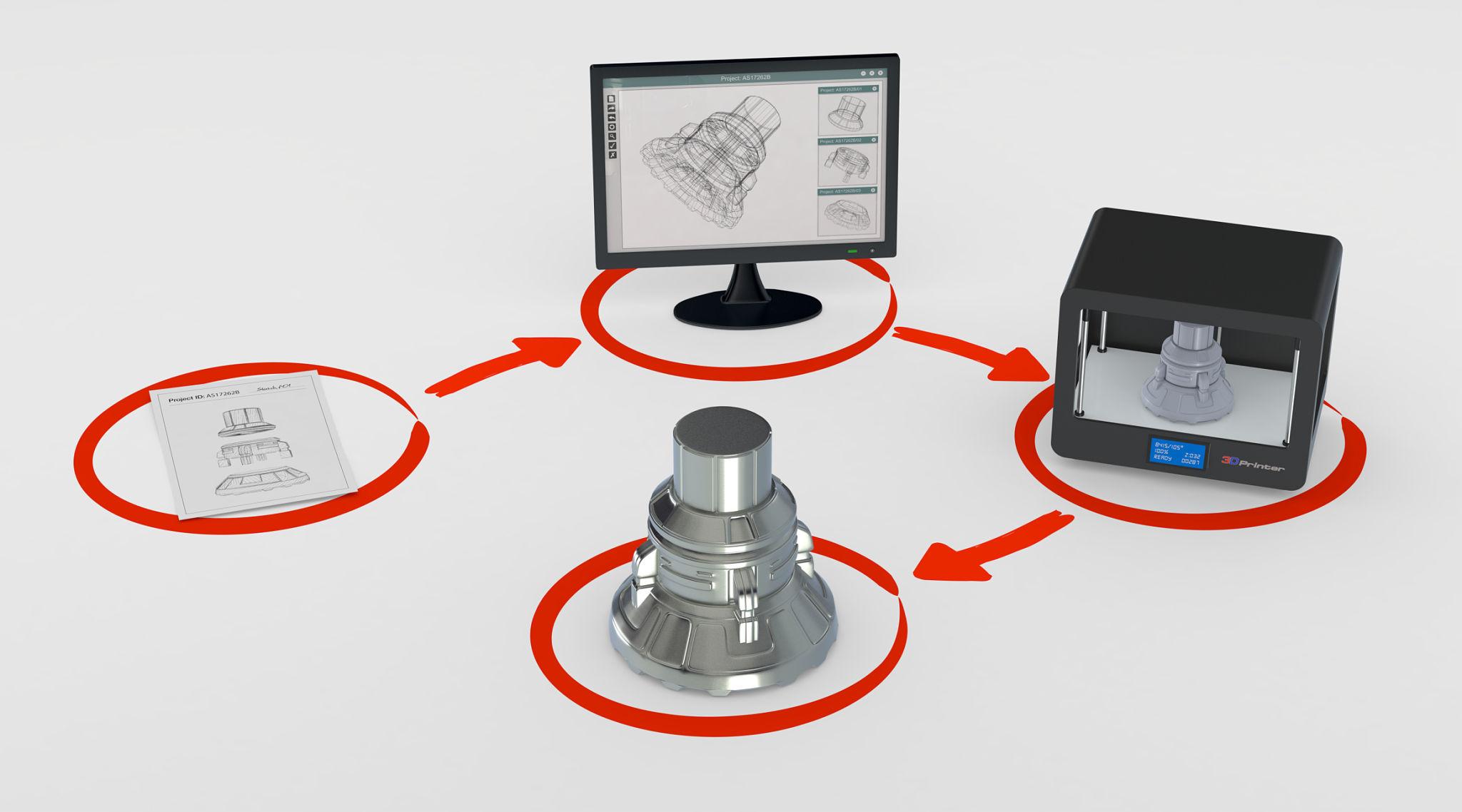
The clearest difference in prototype tooling vs production tooling is not the label. It is the question being asked.
Prototype tooling asks, “Can this part be moulded well enough to test the design?” Production tooling asks, “Can this part be moulded reliably, economically, and at scale?”
That difference shows up in four areas: lead time, upfront investment, tool life, and part consistency.
Prototype tooling is generally faster to build because the tool can be simplified. That helps teams move quickly through design review and physical validation. The trade-off is that the tool may not support high-volume runs, tighter process control, or the lowest possible part cost.
Production tooling requires more engineering time, more precise fabrication, and a larger capital commitment. In return, it supports longer runs, lower unit cost at scale, and stronger control over repeatability.
Neither option is automatically better. The right choice depends on where the product is in its lifecycle and what the business needs next.
When prototype tooling is the right decision
Prototype tooling is often the smarter path when design risk is still high. If a project has unresolved geometry, uncertain material selection, or performance features that need to be proven in moulded plastic, a prototype tool protects the budget while giving the team real production-intent parts.
It is also appropriate when time matters more than long tool life. Some programs need parts now for customer approval, regulatory review, or assembly testing. Waiting for full production tooling can delay decisions that should happen earlier.
This is especially true for products with complex mating components, cosmetic surfaces, or functional tolerances that cannot be judged accurately from 3D-printed parts alone. Moulded prototypes provide better insight into shrinkage, warpage, gate vestige, and actual resin behaviour.
That said, prototype tooling has limits. If stakeholders start treating a prototype tool like a production asset, problems follow. Cycle times may not be optimised. wear may appear sooner than expected. Part variation can increase over longer runs. The tool may do exactly what it was designed to do and still be the wrong answer for scaled output.
When production tooling is worth the investment
Production tooling becomes the right move when the part design is stable and demand is real. If volumes justify the capital, the economics usually shift quickly in favour of a hardened tool.
For OEMs and industrial buyers, this matters because piece price is only one part of cost. Downtime, scrap, inconsistent quality, and delayed delivery can become far more expensive than the difference between a lower-cost prototype tool and a properly engineered production tool.
Production tooling is also the better choice when the application has little tolerance for variation. Components used in automotive systems, electrical housings, automation assemblies, utility products, or repeated service environments need process stability. In those cases, tool design has to support repeatability from the start.
If the part requires secondary finishing, inserts, texture consistency, or assembly-critical dimensions, production tooling gives more control over the variables that affect downstream operations.
The hidden cost of choosing too early or too late
A common sourcing mistake is buying production tooling before the part has earned it. The team wants to save a step, avoid duplicate effort, and move straight to volume. Sometimes that works. Often, it creates a more expensive revision cycle if the design changes after steel is cut.
The opposite mistake is staying in prototype mode for too long. A company proves demand, starts shipping more volume, and continues to rely on tooling that was never meant for sustained production. That can create uneven quality, maintenance interruptions, and avoidable delivery risk.
The best decision usually comes from aligning tooling strategy with project certainty. If uncertainty is high, prototype tooling buys learning. If certainty is high, production tooling buys efficiency.
How experienced manufacturers evaluate the decision
A good tooling strategy is not based on price alone. It starts with a technical and commercial review of the part. Expected annual volume, resin type, tolerance requirements, cosmetic expectations, assembly function, and launch timing all influence the right path.
An experienced injection moulding partner will also look at likely design changes. If the part is still under engineering review, the tool should reflect that reality. If the geometry is mature and demand forecasts are credible, it may be more efficient to move directly into production tooling with the right level of hardening and process support.
This is where in-house tool design and modification capability matter. When the same manufacturing partner can design the mould, build it, adjust it, and run the parts, decisions happen faster, and design changes are easier to control. Glasfil works in that integrated model because it reduces delays between tooling, moulding, and corrective action.
A practical way to think about prototype tooling vs production tooling
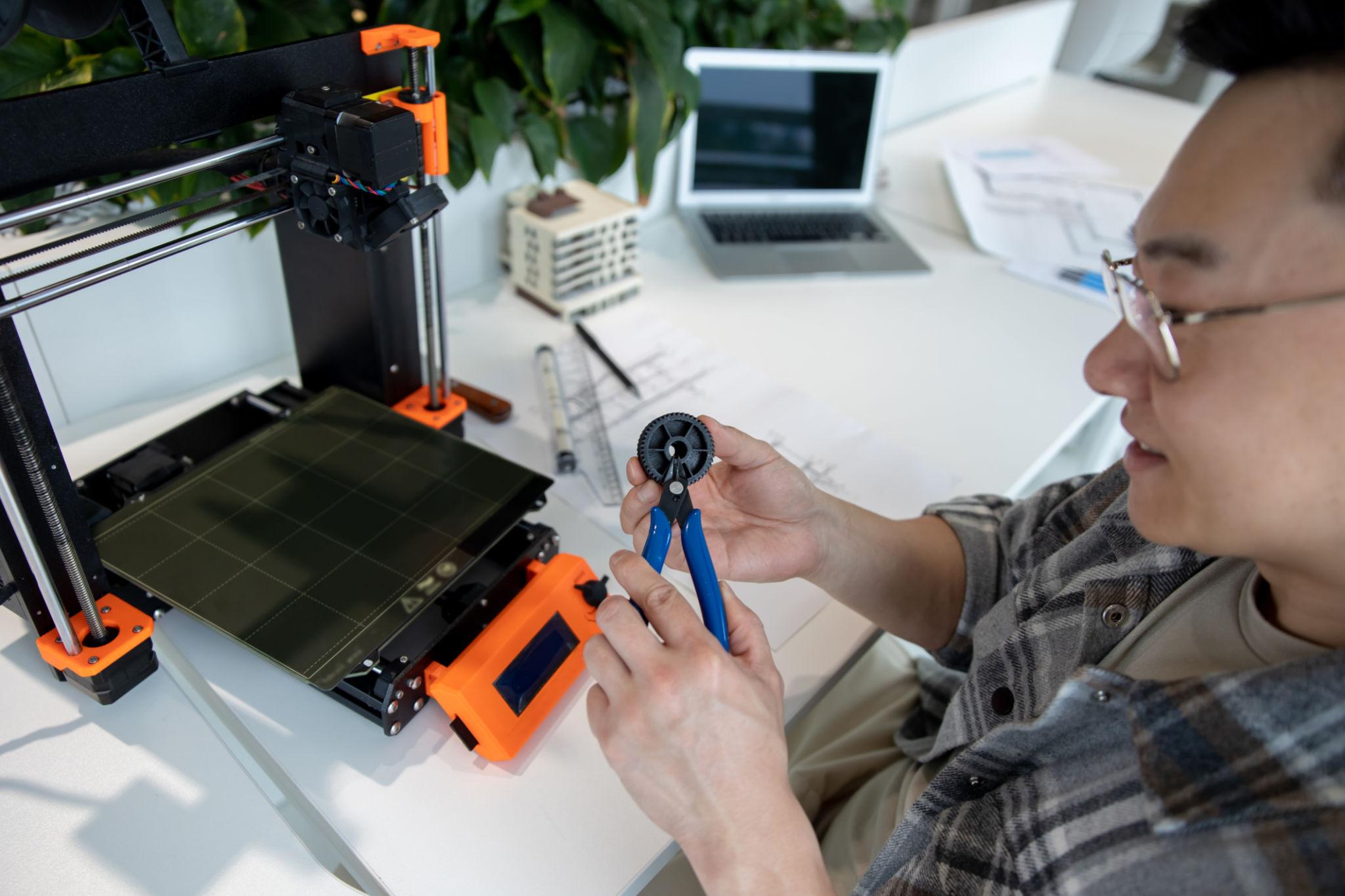
Think of prototype tooling as a decision-making tool and production tooling as an execution tool. One helps you learn quickly with lower commitment. The other helps you deliver reliably with lower long-term risk.
If your team still needs to verify geometry, material performance, or customer acceptance, prototype tooling often creates the fastest path to a confident next step. If your forecast is solid and your part has already been validated, production tooling usually protects schedule, quality, and total cost more effectively.
The key is not choosing the cheaper option. It is choosing the option that matches the current job. Tooling should support the stage of the product, not fight against it.
A well-made mould does more than produce parts. It gives your program a stable foundation. When you choose the right tooling at the right time, the launch becomes clearer, the risks become smaller, and the path from concept to repeat production becomes much shorter.
The longer a tooling decision is delayed or misaligned, the more it can impact your launch timeline and production stability.
If you are planning a new product or scaling an existing one, contact us today to discuss the right tooling approach before steel is cut.