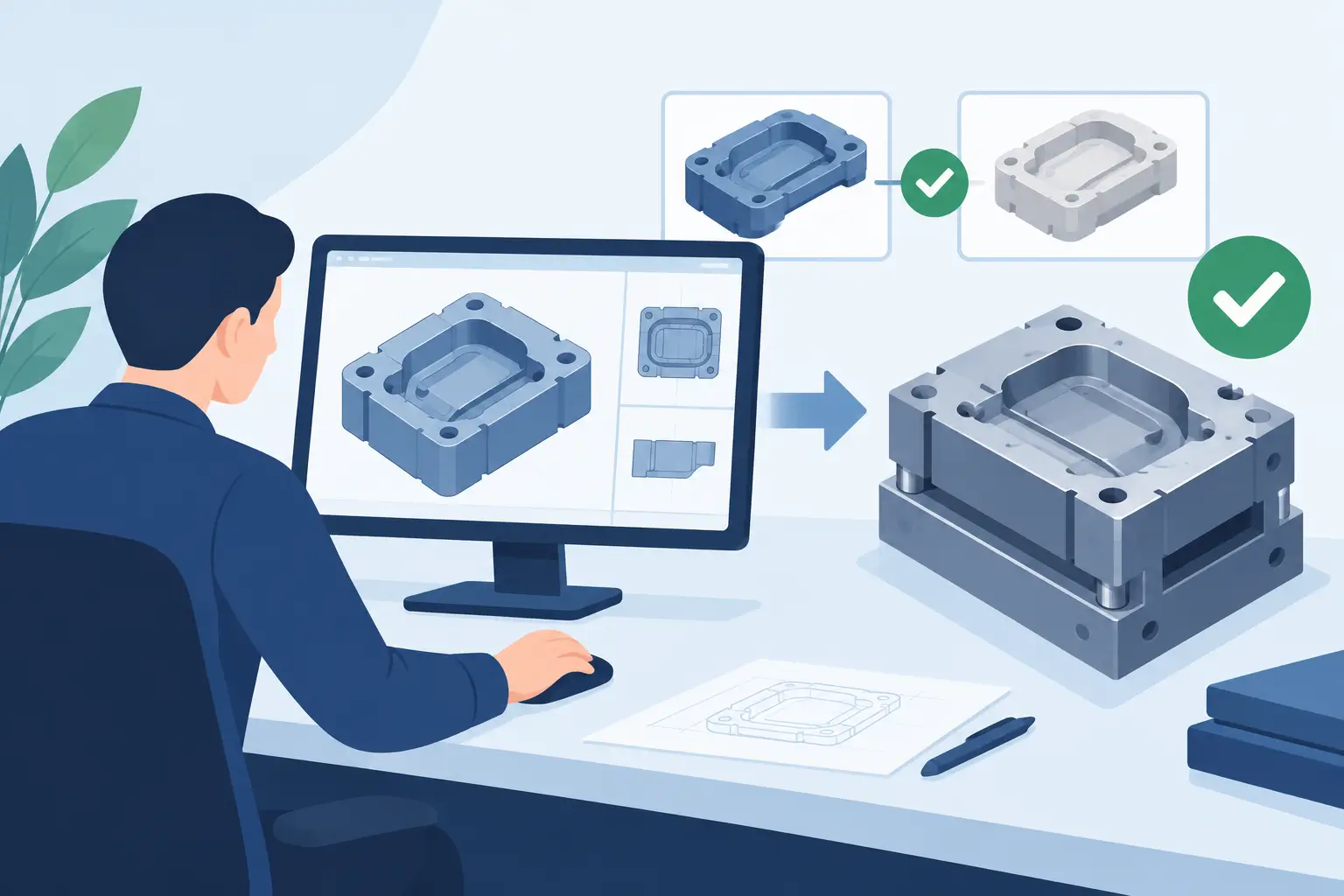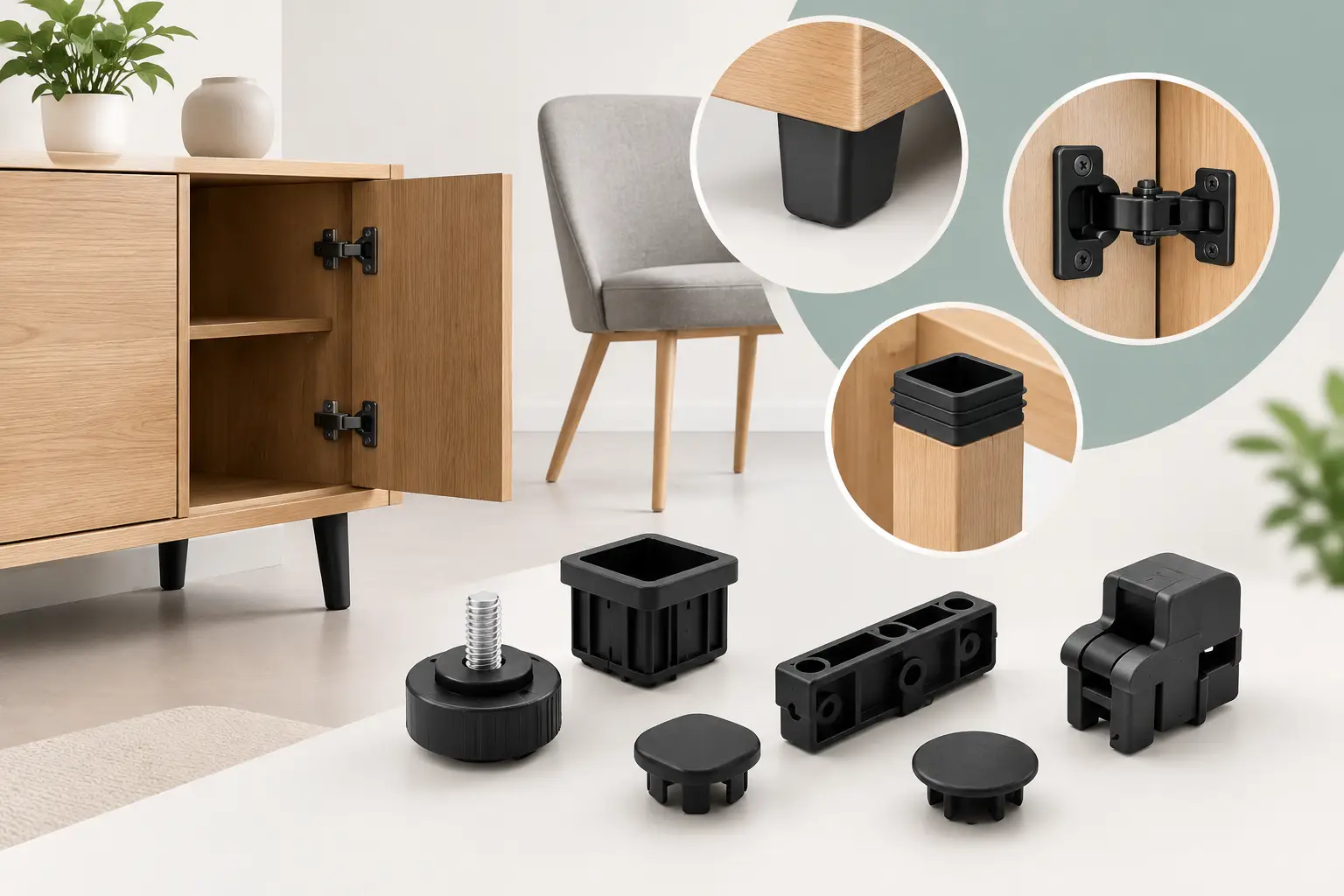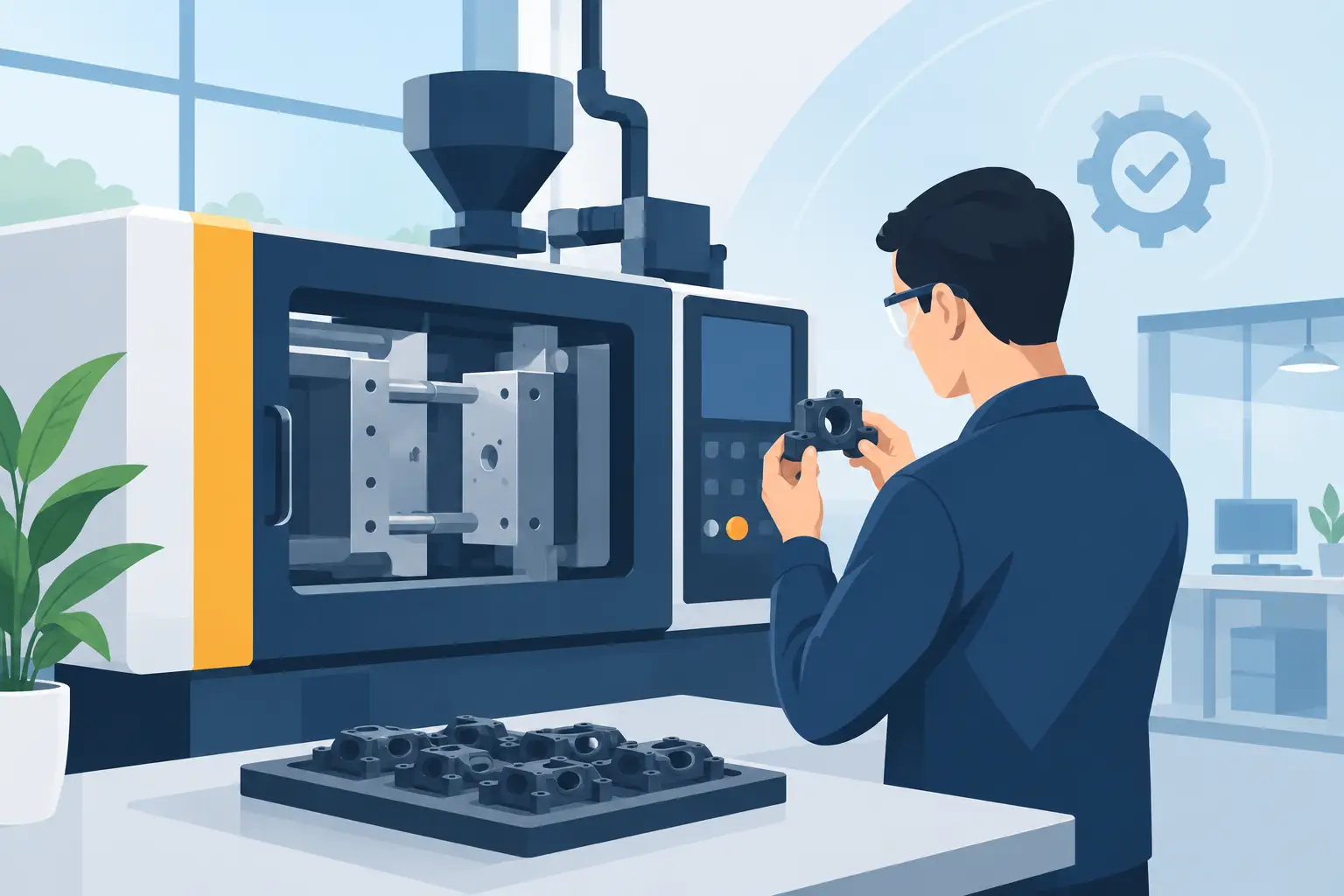
A moulded assembly can look simple on a screen and still become expensive, slow, and unstable in production. That gap is where design for moulded assemblies matters most. If designers do not engineer the assembly for moulding, handling, fit-up, and repeat production at the same time, problems show up fast—warped parts, inconsistent snap fits, long cycle times, high scrap, and avoidable tooling changes.
For product developers, OEMs, and procurement teams, this is rarely a single-part problem. It is an interaction problem. One housing half may mould well on its own, but fail when paired with a cover, seal, insert, or fastener. A clip may work in prototype quantities, then crack after repeated production because designers never aligned material flow, gate location, and wall transitions with actual use. Engineers must start building good assembly performance much earlier than final inspection. They must start at the design phase.
What design for moulded assemblies really means
Design for moulded assemblies is the discipline of developing plastic parts as a production system rather than as isolated components. The goal is to make every feature work in three environments at once: in the mould, on the assembly line, and in the finished product.
That sounds straightforward, but every decision carries built-in trade-offs. A thicker wall may improve stiffness while increasing sink risk. A tighter fit may improve feel while reducing tolerance forgiveness. A moulded-in fastener boss may remove a secondary operation while creating weld line or stress issues if engineers select the wrong resin or gate strategy. The application, the expected volume, the material, and the assembly method dictate the right answer.
This is why engineering teams should review moulded assemblies as complete production units. Parting lines, ejection, draft, shrinkage, joining method, and post-mould handling all affect whether the design will scale cleanly.
The biggest failures start with part interaction
Reasonable decisions made one part at a time create many assembly issues. A designer may optimise each component for geometry and appearance, but still create stack-up problems once those parts meet. That is common in enclosures, meter components, covers, brackets, automotive trim pieces, and utility products where multiple moulded parts must align with repeatable force and position.
Tolerance accumulation is usually the first warning sign. If several dimensions each vary within acceptable limits, the final assembly can still miss its functional target. Holes shift, latch features misalign, sealing surfaces lose compression, and visible gaps become inconsistent. In plastic assemblies, this risk increases because temperature, moisture, shrink variation, and fibre orientation cause parts to move.
Tighter tolerances alone will not fix the problem. Tighter tolerances often raise tooling cost and process sensitivity without solving the root issue. A better approach is to design a datum strategy, locating features, and assembly interfaces that control the dimensions that matter most while allowing noncritical variation where the process naturally needs it.
Fit features need process logic
Engineers should not treat snap fits, bosses, ribs, slots, and alignment pins as purely geometric features. They are process features. Resin behaviour, wall balance, mould filling, and cooling consistency dictate their performance.
A snap arm with sharp transitions may pass basic CAD review but fail after moulding because stress concentrates at the base. A boss placed in a thick wall region may create a sink that changes mating performance. A rib added for strength may distort a cosmetic surface or interfere with the flatness a gasket needs. These are not separate concerns. In moulded assemblies, operators view the exact same concern from different stages of production.
Material choice changes the assembly strategy
Teams often discuss material selection in terms of strength, impact, heat, or chemical resistance. For moulded assemblies, those properties are only part of the picture. The resin also affects shrinkage behaviour, dimensional repeatability, weld line strength, friction, creep, and how features survive assembly loads over time.
For example, a glass-filled grade may improve stiffness and dimensional stability in one direction while increasing anisotropic shrinkage and wear on tooling. An unfilled material may offer better snap fit fatigue performance but create more movement under load. A part used in an electrical enclosure may need flame performance, but that same resin choice can affect flow length and gate requirements.
This is where early coordination pays off. Engineers should develop material, geometry, and tool design together. If they handle these steps in sequence, the assembly usually inherits compromises that they could have avoided.
Tooling decisions shape assembly quality
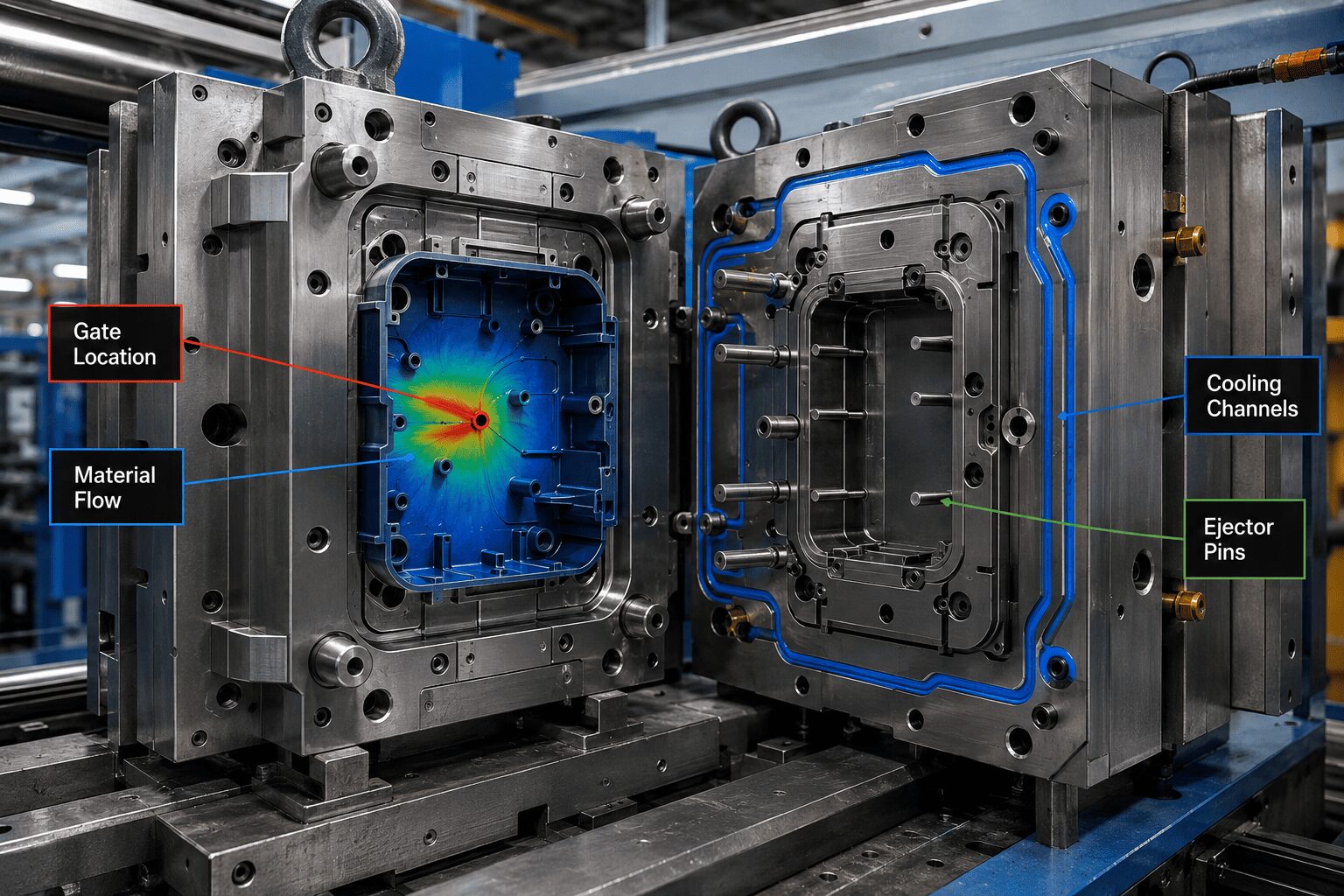
The tool that makes a moulded assembly determines its repeatability. Gate location, runner balance, venting, cooling layout, and ejection strategy all influence whether mating features come out stable enough for reliable assembly.
Consider a housing with precision-alignment posts and a visible exterior. If a toolmaker places the gate for easy fill but creates differential shrink across the sealing plane, the two halves may never seat consistently. Given the system cools unevenly, the part may twist just enough to create rework during fastening. If ejector placement marks a functional surface, downstream operators are left solving a tooling problem manually.
Good design for moulded assemblies accounts for these realities before a toolmaker cuts the tool. In practice, that means reviewing where functional dimensions sit relative to flow direction, where weld lines land, how critical surfaces cool, and how operators will remove the part from the mould without stressing thin or delicate features.
Assembly method should be chosen early
Screws, snap fits, ultrasonic welding, heat staking, inserts, and adhesive bonding each create different design rules. Problems start when designers select the joining method late and force it onto a part that they originally designed for something else.
Screw assembly may seem forgiving, but it brings boss design, torque limits, crack resistance, and cycle time into play. Snap fits reduce hardware count but demand careful strain control and tolerance planning. Ultrasonic welding can produce clean, repeatable joints, yet it requires proper energy director geometry, part support, and material compatibility.
No universal best method exists. Service conditions, assembly speed, disassembly needs, cosmetic requirements, and total production cost drive the right choice.
Designing for production means designing for variation
Prototype success can hide production weakness. Technicians often assemble hand-built samples more carefully, under less time pressure, and from a narrower material and process window than full production. That is why some designs pass validation and then struggle once volume begins.
A production-ready assembly tolerates normal variation. It does not depend on perfect operator technique. It does not need forceful correction at fit-up. Designers should not expect a mould to hold cosmetic, structural, and precision alignment requirements in the same uncontrolled area.
This is where practical engineering discipline matters most. Engineers should tie critical dimensions to realistic process capability. Features should guide assembly naturally. Designers should build components to account for orientation, handling, and fixture support if the line requires secondary operations. If the process requires printing, plating, insert loading, or packing protection, the geometry should anticipate those steps.
At Glasfil, this is exactly why in-house control matters. When we align mould design, mould modification, moulding, secondary processes, and quality checks under one operation, we solve assembly issues at the source instead of passing them between suppliers.
What experienced teams review before release
Before a team sends a moulded assembly to tooling, several questions should already have clear answers:
-
Which dimensions truly control function?
-
Where will the material shrink unevenly?
-
How will the parts locate during assembly?
-
What happens if the material lot, temperature, or cycle changes slightly?
-
Where lie the likely cosmetic risks?
-
Can toolmakers perform maintenance or tool modification without redesigning the entire assembly?
These questions sound basic, but they distinguish a part that an injection moulder can produce from one that it can manufacture reliably. The best projects resolve them early, when changing geometry is fast and inexpensive.
This is also why assembly design should involve toolmakers and production engineers, not only product designers. CAD can confirm intent. Production experience confirms whether the line can repeat that intent across thousands or millions of cycles.
Design for moulded assemblies is really design for speed
Most delays in plastic part programs are not caused by one major failure. They come from accumulated corrections – boss adjustments, latch changes, gate moves, steel-safe edits, warpage fixes, fixture updates, and inspection revisions. Each one adds time, cost, and uncertainty.
Design for moulded assemblies reduces that correction loop. It connects product intent with tooling logic and production reality before launch. That shortens time to approval, improves first-pass yield, and gives procurement teams fewer surprises after the purchase order is issued.
For companies trying to launch new products or stabilise an existing one, that matters more than a clean prototype. What matters is whether the assembly can run repeatedly, meet fit and function, and move through production without constant intervention.
The strongest moulded assemblies are not the most complicated. They are the ones designed with enough discipline to make moulding, joining, and use all work together from the start. That is where cost comes down, quality goes up, and schedules stop slipping.
Contact us today to discuss your project requirements or request a quotation. Let’s build a production process you can depend on.