A mould rarely fails all at once. More often, production teams see the warning signs first – flash at the parting line, inconsistent dimensions, short shots, drag marks, or cycle times that start slipping. That is where mould repair services matter most. The right repair approach does more than get a tool back into the press. It protects part quality, avoids repeat stoppages, and preserves the long-term value of the mould.
For manufacturers running repeat production, a damaged or worn tool is not just a maintenance issue. It affects delivery schedules, scrap rates, labour planning, and customer confidence. In many cases, the real cost is not the repair itself. It is the production instability that follows when repairs are rushed, outsourced without full context, or treated as a temporary patch.
What mould repair services should actually solve
A proper repair service starts with diagnosis, not grinding and guessing. Tool wear can come from resin abrasiveness, poor venting, clamp pressure issues, ejection stress, cooling imbalance, or repeated handling damage during setup and transport. If the repair team only addresses the visible defect, the mould may return to production with the same underlying weakness still in place.
That is why effective mould repair services need to restore both geometry and function. Cavities and cores may need rework, but so might shut-offs, sliders, ejector systems, lifters, gates, vents, leader pins, bushings, and cooling channels. In a multi-cavity tool, a single damaged area can also introduce process variation that affects the entire run. Repair work has to account for how the mould performs as a system.
For B2B buyers, this distinction matters. A low-cost repair that causes another stoppage two weeks later is usually more expensive than a thorough repair done the first time correctly. The goal is stable production, not a short-term restart.
Common issues that require mould repair services
Some repairs are clearly tied to wear. Others are tied to process history or product changes. In either case, the most common tool problems tend to show up in predictable ways.
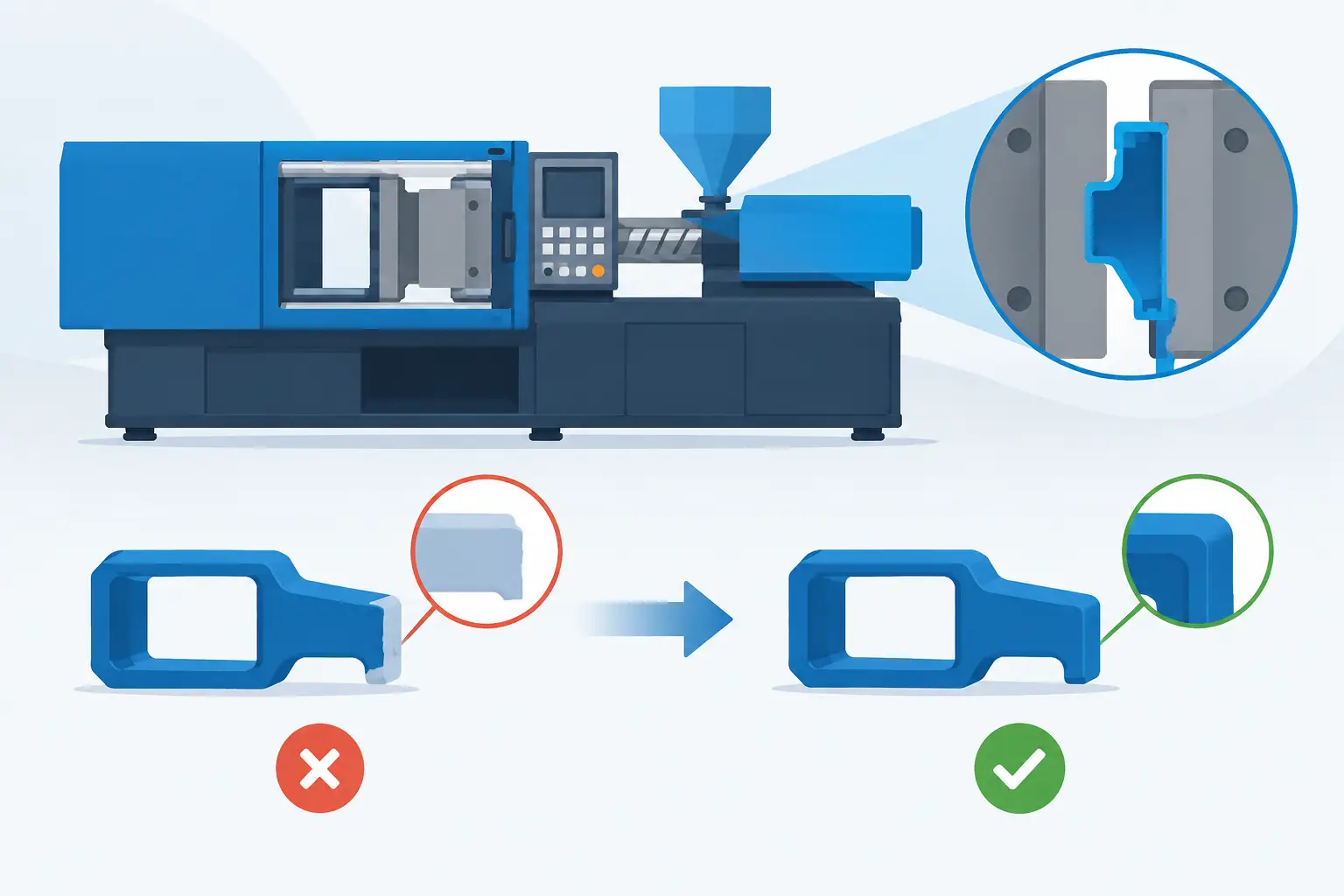
Parting line damage usually appears through flash, mismatch, or visible edge defects. Gate wear may affect fill balance or leave inconsistent vestige. Venting problems can trap gas, causing burns, short shots, or pressure spikes. Ejector damage often leads to sticking parts, drag marks, or deformation during release. Cooling issues can be less visible, but they often drive warpage, long cycle times, and unstable dimensional control.
Then there are geometry-related failures. Cracked inserts, worn cavities, broken cores, and damaged slides can all stop production immediately. These are high-priority situations, but even then, speed alone is not enough. The repair team needs the machining capability, fitting skill, and mould design understanding to return the tool to original or improved condition.
Why in-house repair control changes the result
When mould repair services are handled across multiple vendors, delays and misalignment become more likely. A tool may be disassembled in one place, machined in another, polished elsewhere, and tested later without a complete feedback loop. Every handoff adds time and increases the risk of missed detail.
In-house control changes that. When design, tooling, machining, fitting, and production knowledge sit under one roof, diagnosis is faster and repair decisions are more accurate. The team can compare current tool condition against original design intent, production history, and part quality requirements without waiting for outside interpretation.
This is especially important when repairs overlap with modification work. A customer may not just need a worn insert replaced. They may also need a shut-off adjusted, a venting strategy improved, or a feature revised to reduce recurring defects. In that case, the value comes from having mould modification capability tied directly to repair execution.
For companies managing launch schedules or repeat orders, this integration reduces uncertainty. It also shortens the path from problem identification to validated production.
Mould repair services and the cost of waiting
Some buyers delay repair because the tool is still running. That can be a reasonable decision if the issue is cosmetic and tightly monitored. But many mould problems worsen quickly once they begin affecting alignment, sealing surfaces, or ejection.
A worn shut-off surface can become a flash problem across more cavities. A sticking ejector can start damaging finished parts. Minor galling on a slider can turn into major scoring if left in service. Cooling restrictions can push operators to compensate with longer cycles, creating hidden production loss even before the mould fails.
This is where disciplined repair planning matters. Not every issue needs emergency intervention, but every issue should be assessed against production risk. If the mould supports a high-volume program, waiting too long can cost more in scrap and downtime than the repair window itself.
What a strong repair process looks like
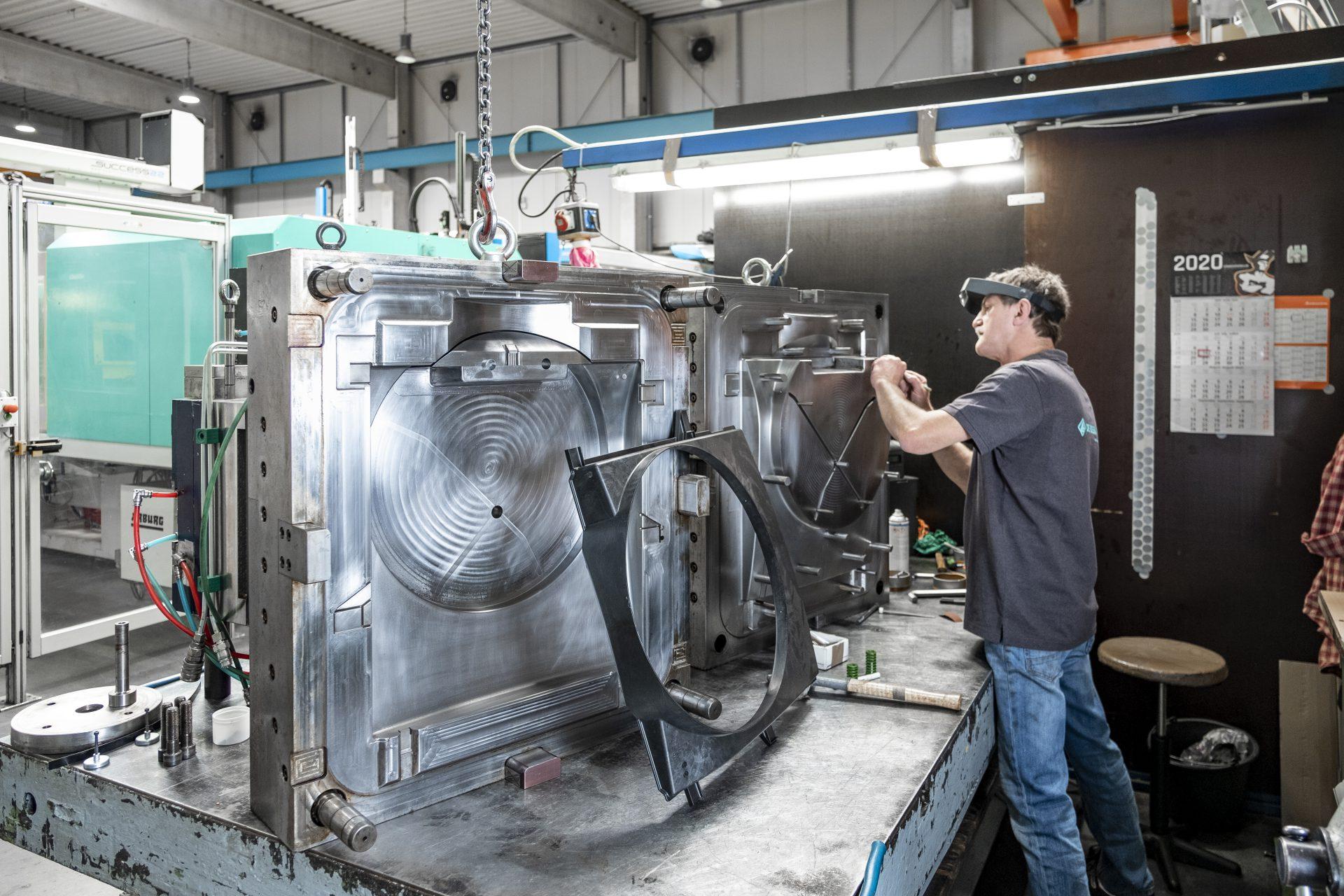
Reliable mould repair services follow a structured path. First comes inspection. The tool is cleaned, disassembled, and checked for wear, damage, misalignment, cracking, and evidence of process-related stress. This stage should include dimensional review where needed, not just a visual check.
Next comes root-cause evaluation. If a component failed, the question is why it failed. Material selection, part geometry, machine conditions, cooling efficiency, and venting performance may all need review. Without that step, repeat damage is common.
Then comes the actual repair work. Depending on the issue, that may include precision machining, welding, grinding, polishing, insert replacement, fitting, or reworking moving elements. In some cases, a replacement component is the right answer. In others, modification is smarter than replication because it addresses the weakness that caused the failure.
After repair, the mould should be reassembled, verified, and, ideally, tested in conditions that reflect production use. A tool is not truly repaired when it looks correct on the bench. It is repaired when it runs correctly and produces stable parts.
When repair becomes modification
There is a line between restoring a tool and improving it, but in practice the two often overlap. A mould may come in for damage repair and leave with better venting, stronger shut-offs, or a revised gate area that improves filling. That is not overengineering. It is practical manufacturing.
The trade-off is budget and timing. If the tool supports a low-volume or end-of-life program, a minimal repair may be the right business choice. If the tool supports an active product with repeated production runs, then repair-only thinking can be too narrow. A modest modification during repair may reduce future stoppages, lower scrap, and improve cycle consistency.
This is one reason experienced tooling teams add value beyond machine work. They can distinguish between a tool that needs restoration and a tool that needs correction.
Choosing a partner for mould repair services
For procurement teams and engineers, supplier selection should go beyond turnaround claims. Speed matters, but only if the repair holds up in production. The better questions are practical ones. Does the supplier have in-house tooling capability? Can they machine and fit critical components accurately? Do they understand production behaviour, not just tool geometry? Can they support both urgent repairs and planned maintenance work?
It also helps to work with a partner that understands the broader manufacturing context. If the same company can support mould design, fabrication, modification, injection moulding, and quality control, repair decisions become more informed. That full-process visibility often leads to better outcomes because the repair is tied directly to part performance.
At Glasfil, that integrated model is central to how tooling problems are solved. Repair is not treated as an isolated workshop task. It is part of maintaining production reliability across the full manufacturing chain.
Preventive thinking reduces emergency repair
Even the best mould repair services should not be the only line of defence. Preventive maintenance, scheduled inspections, and early intervention are what keep repair work from turning into emergency downtime. Tools with high run volumes, abrasive materials, or tight tolerance requirements need especially close attention.
That does not mean every mould needs the same maintenance plan. A simple utility part and a precision cosmetic housing do not create the same wear pattern or business risk. Maintenance intervals should match tool complexity, material behaviour, annual volume, and quality sensitivity.
The practical goal is straightforward: catch wear before it becomes failure, and treat repair as part of tool life management rather than a reaction to breakdown.
A good mould can run for years, but only if wear, damage, and process stress are handled with precision. The strongest repair work does not just restart production. It gives you a tool you can trust on the next run, the next order, and the next deadline.
If you are evaluating a new project or facing ongoing tooling and production challenges, contact us to discuss your requirements, request a technical consultation, or submit your RFQ.