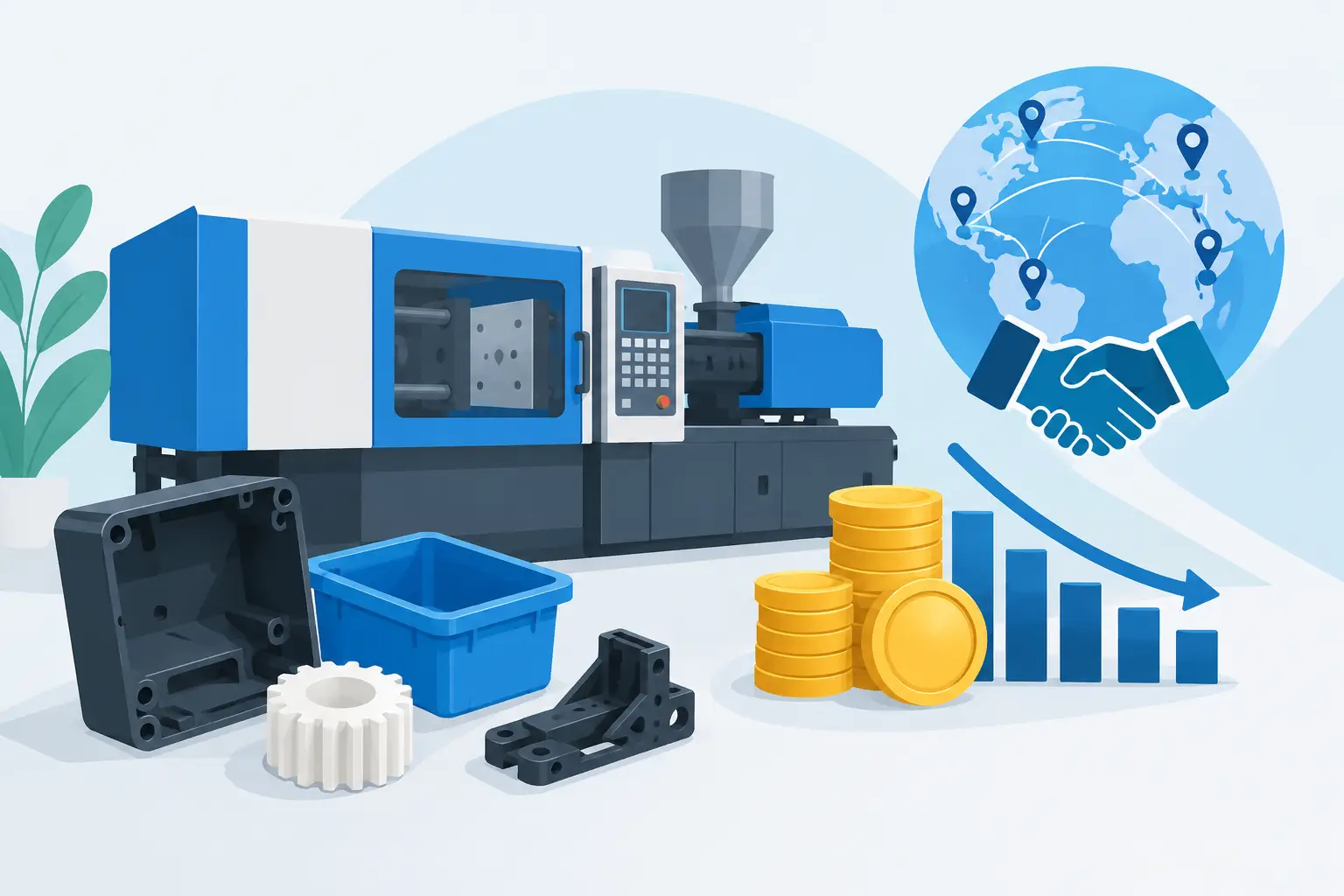
 A part can look perfect in CAD and still fail the moment it reaches the mould shop. That gap between concept and repeatable production is where most delays, cost overruns, and quality issues start. For companies sourcing custom plastic components, the real challenge is not getting one acceptable sample. It is getting stable tooling, consistent output, and a manufacturing process that keeps working when volumes rise.
That is why plastic part sourcing has to be treated as a manufacturing decision, not just a purchasing task. Material selection, wall thickness, draft, gate location, tolerance strategy, surface finish, and post-moulding requirements all affect the final result. When those decisions are handled in separate steps by separate vendors, lead times stretch and accountability gets blurry.
What custom plastic components really require
Custom plastic components are often discussed as if the moulded part is the product. In production terms, the part is only the visible outcome of a larger system. The mould design, steel selection, cooling layout, machine capability, process control, inspection method, and finishing steps all shape whether the part performs as intended.
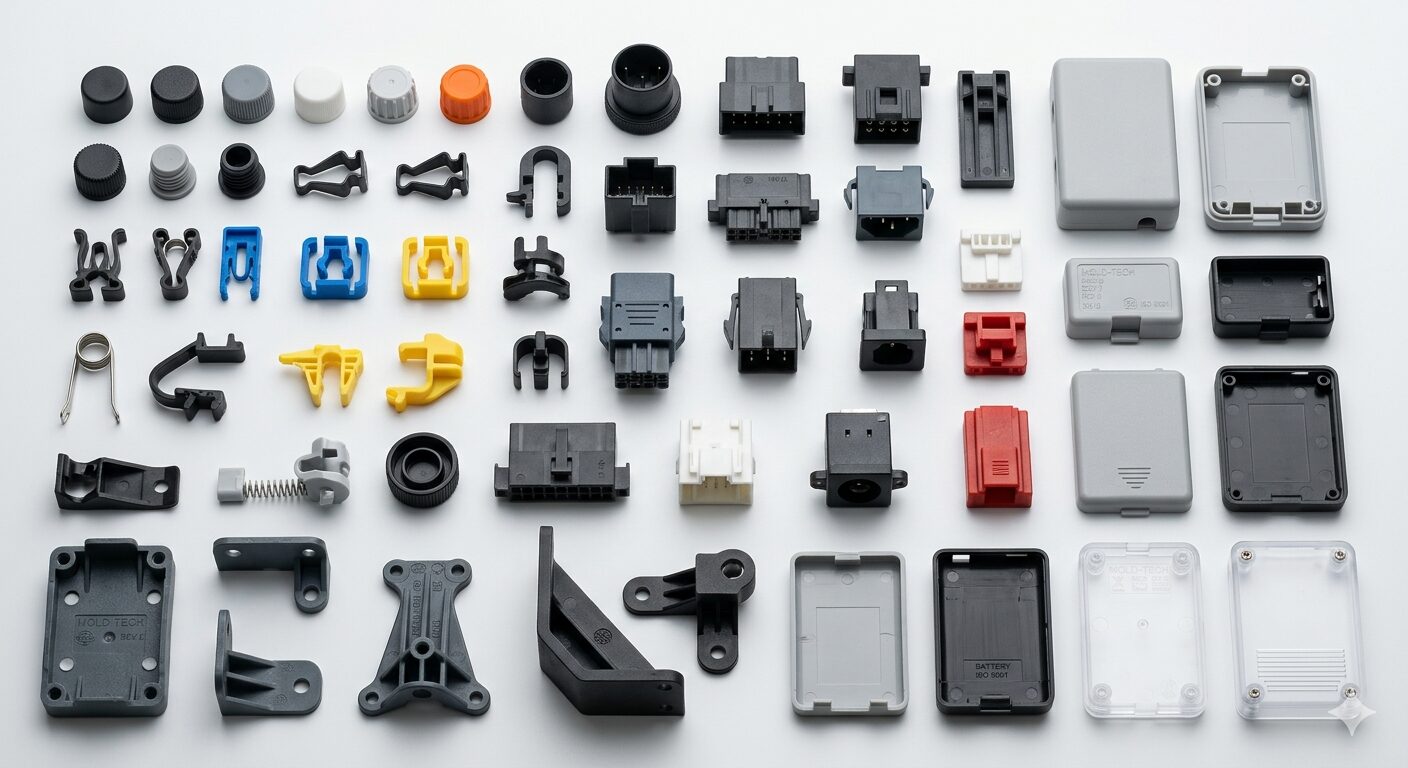
This matters even more for B2B buyers working on industrial products, consumer durables, automotive subcomponents, electrical housings, bathroom accessories, furniture hardware, or utility-related parts. In these categories, the part usually has to do more than fit. It may need to hold a load, resist heat, protect internal electronics, maintain dimensional stability, or match an assembly line requirement.
A supplier that only offers moulding can produce a part. A manufacturing partner with in-house tooling, engineering support, secondary processing, and quality control can solve the production problem behind that part. The difference shows up quickly when design changes are needed, defects appear, or launch dates move forward.
Why does in-house control change the outcome?
When production is split across multiple vendors, every adjustment creates friction. The toolmaker may blame the moulder. The moulder may point back to the part design. If finishing is outsourced, defects can be found too late. If quality checks happen at the end instead of throughout the process, scrap costs rise before anyone reacts.
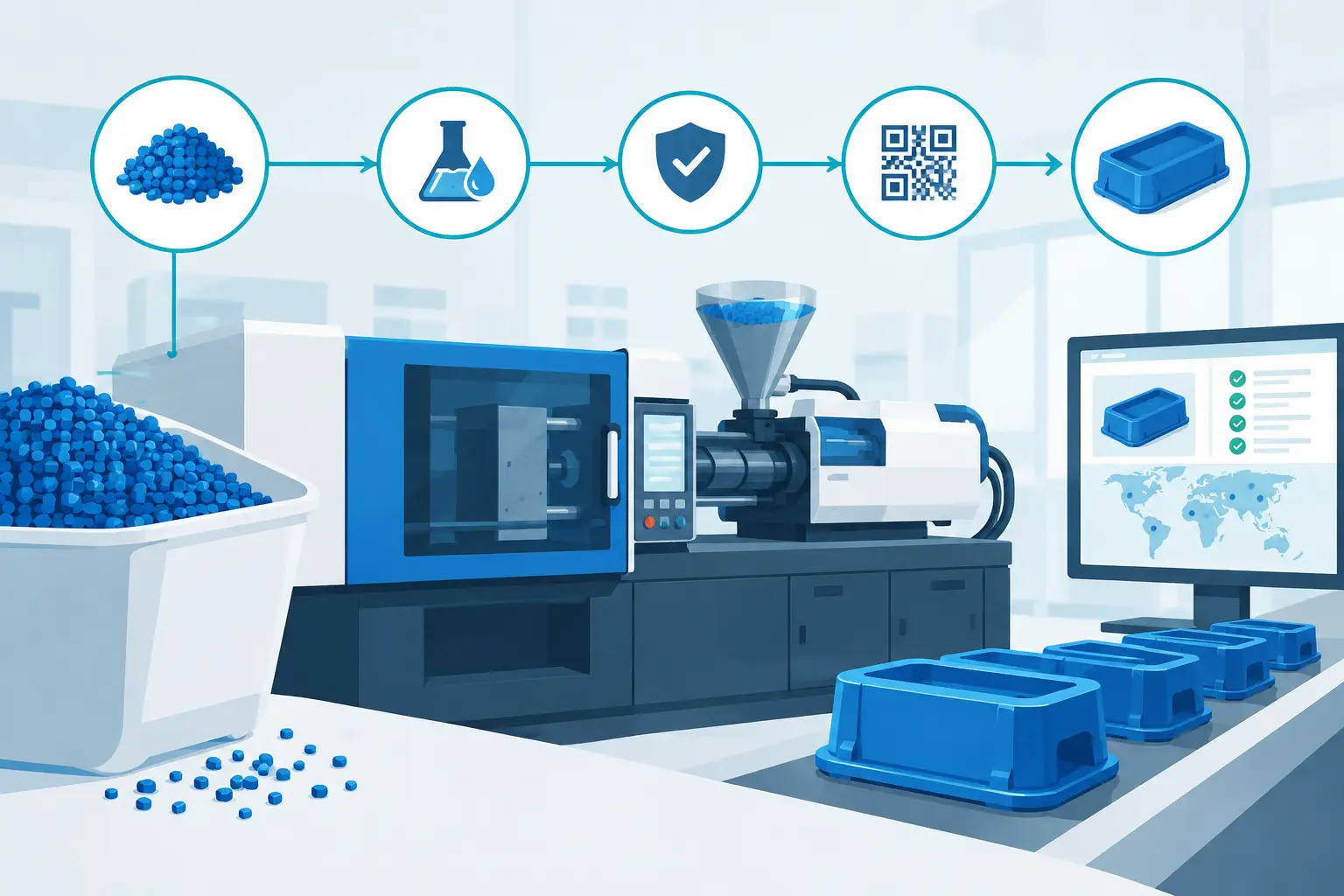
In-house control shortens that loop. Design refinement, mould fabrication, trial runs, process correction, finishing, packing, and shipment can be managed as one production flow. That improves speed, but the more important benefit is technical control. Tool modifications happen faster. Sampling feedback moves directly to the people who can act on it. Quality issues are easier to trace because the process is visible end-to-end.
For buyers under launch pressure, this is not a minor operational detail. It is often the factor that decides whether a project stays on schedule.
Designing custom plastic components for production, not just approval
One of the most expensive mistakes in injection molding is approving a design that is technically possible but commercially inefficient. A part may mould, yet still require long cycle times, frequent maintenance, unstable dimensions, or excessive secondary work.
Good design-for-manufacturing support looks beyond geometry. It asks whether ribs are proportioned correctly, whether sink marks are likely, whether undercuts justify side actions, whether parting lines will affect appearance, and whether tolerances are realistic for the chosen material and tool design. It also considers how the part will be handled after moulding. If assembly, printing, ultrasonic welding, or packaging are required, those steps should influence the design early.
This is where experienced engineering input saves time. It is easier to adjust draft angles and wall transitions in development than to rework steel after the tool is complete. It is also easier to discuss trade-offs early. Sometimes the right decision is a more complex mould that lowers unit cost over long production runs. In other cases, a simpler tool with faster completion is the better commercial choice. It depends on forecast volume, product life cycle, and performance requirements.
Tooling quality sets the ceiling
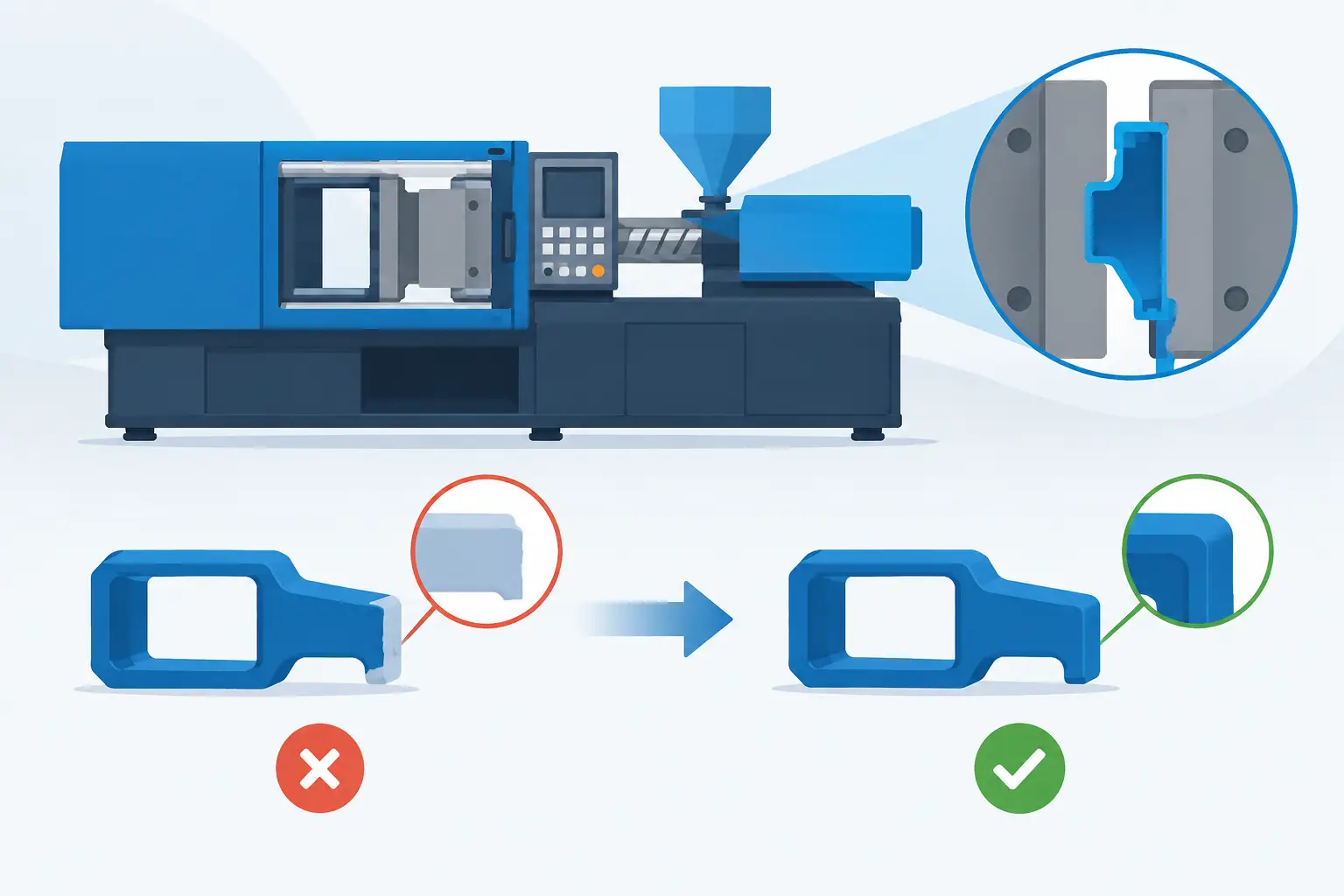
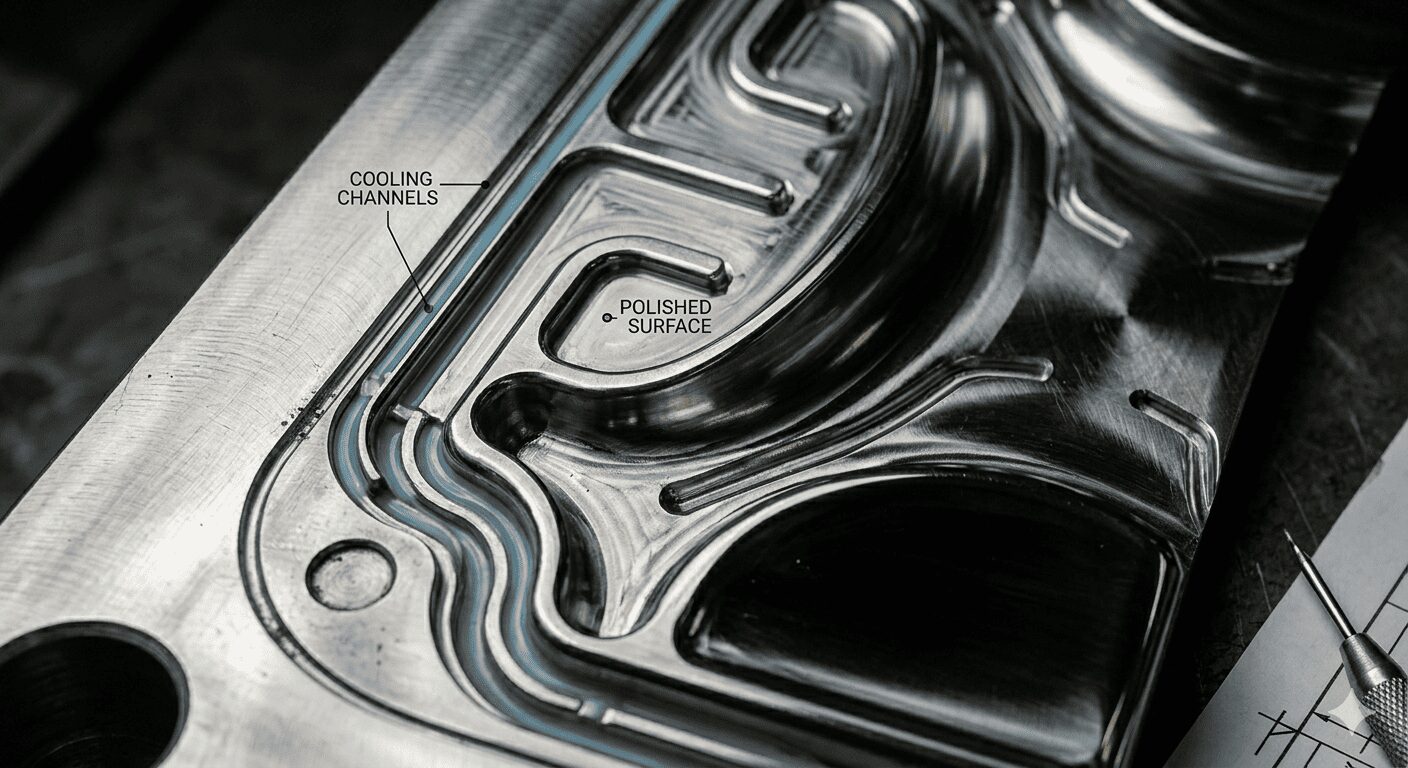 If the mould is weak, no amount of process tuning will fully compensate. The mould determines repeatability, cooling efficiency, part consistency, and maintenance demands. Buyers focused only on initial tool price often feel that later, through lost production time, flash issues, dimensional drift, or poor surface finish.
Precision tooling should be evaluated in practical terms. Can the tool be modified quickly if the product evolves? Is the cooling design adequate for stable cycle times? Are wear areas protected for long-run durability? Has the gate strategy been chosen for fill balance, cosmetic requirements, and downstream trimming? These are production questions, not just engineering preferences.
For custom plastic components with tight tolerances or assembly-critical dimensions, mould quality is especially important. A low-cost tool may appear competitive during quoting, but if it creates unstable output, the total cost rises through sorting, rework, downtime, and customer complaints.
Capacity matters, but process discipline matters more
Buyers often ask about press tonnage and machine count first, and they should. Machine range affects the size and complexity of parts a manufacturer can produce, and available capacity affects delivery reliability. But machine availability alone does not guarantee consistency.
The real test is whether the moulder can match the tool, material, and process window correctly, then maintain control over repeated runs. Resin behaviour, temperature settings, injection pressure, hold time, cooling time, and mould condition all affect the result. Even a small drift can show up as warpage, short shots, flash, splay, or dimensional variation.
That is why disciplined setup and in-house quality assurance are central to dependable supply. A capable manufacturer does not just run the machine. It establishes a stable process, validates the output, and monitors the part against the features that matter in real use.
Secondary processing is part of the job
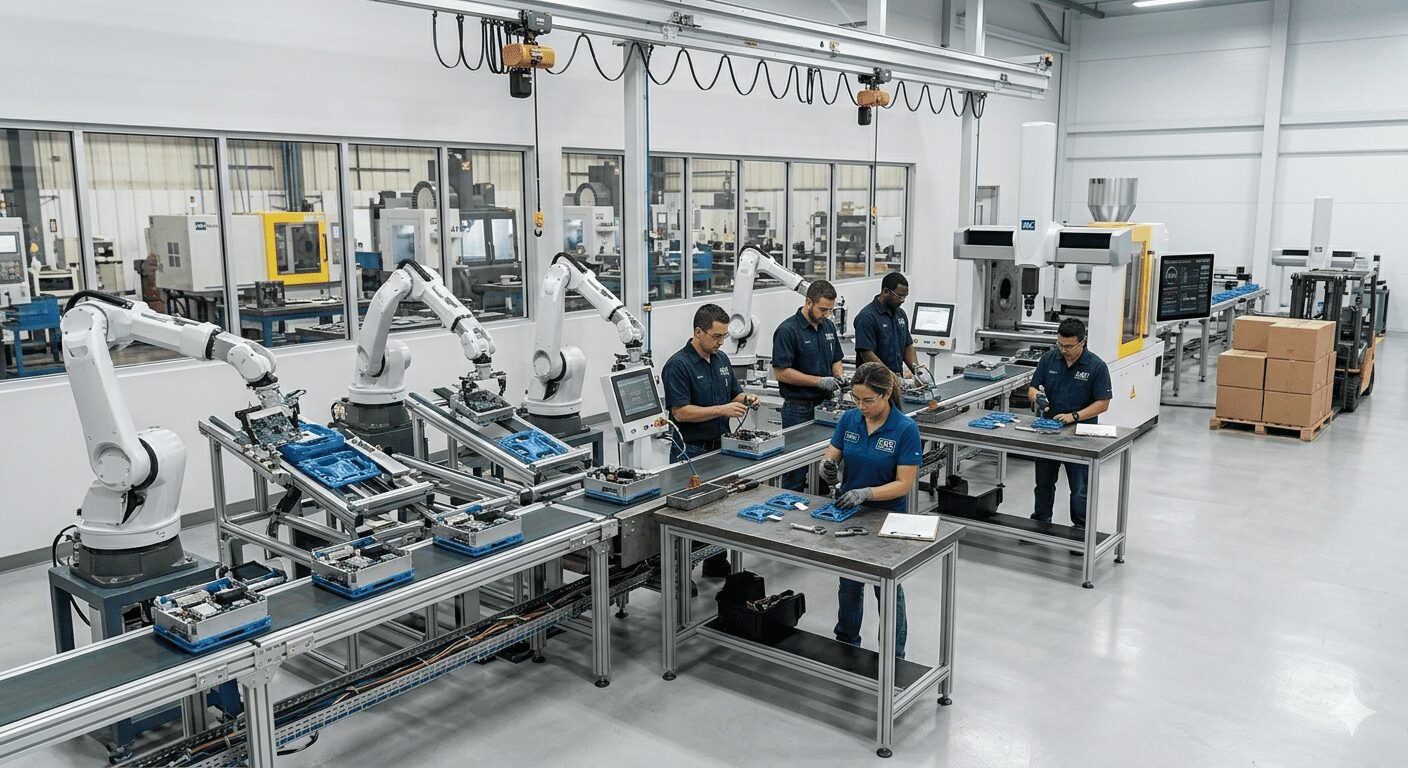 Many custom plastic components are not finished when they leave the press. They may need trimming, drilling, tapping, insert fitting, pad printing, ultrasonic welding, assembly, or custom packing. If those operations are treated as separate add-ons, lead time and handling risk increase.
Integrated secondary processing keeps the workflow tighter. It reduces transport between vendors, lowers the chance of damage, and simplifies responsibility. It also improves planning. If a moulded housing must be assembled with inserts and packed to a customer-specific format, those requirements should be built into the production schedule from the start.
This is especially relevant for OEM buyers and procurement teams managing multiple SKUs. They are not just buying parts. They are buying execution, schedule reliability, and fewer handoffs.
Where custom plastic components go wrong
Most production problems are predictable. The issue is that they are often addressed too late. A design may not account for material shrinkage. A cosmetic surface may be paired with an aggressive gate location. A recycled or substituted resin may affect fit. A supplier may accept unrealistic tolerances to win the order, then struggle in production.
The better approach is to surface risk early. If a part has complex geometry, say so. If the volume forecast does not justify an expensive multi-cavity tool, say so. If appearance and tight tolerance are competing priorities, explain the trade-off. Buyers do not need vague reassurance. They need technical clarity they can act on.
That is the value of working with a manufacturer that can review the product as a whole. At Glasfil, that means supporting projects from mould design through moulding, finishing, quality checks, packing, and shipment within one controlled operation. For companies trying to reduce launch risk, that level of integration is often faster than managing several specialist vendors.
Choosing the right manufacturing partner
The strongest supplier for custom plastic components is not always the one with the lowest quoted piece price. It is the one that can hold quality over time, adapt when revisions are needed, and support growth without disrupting delivery.
That means looking at technical coverage as much as cost. Ask how tool modifications are handled. Ask where quality checks happen. Ask whether sampling, finishing, and logistics are coordinated internally. Ask how quickly production can move from approved design to shipped parts. These questions reveal how a manufacturer works when conditions are normal and when they are not.
A good part is not enough. Industrial buyers need a supply partner that can deliver the same result on the next run, the next revision, and the next market expansion.
When custom plastic components are approached with that mindset, sourcing becomes simpler. Fewer surprises, faster corrections, and a clearer path from concept to repeat production – that is what keeps a project moving.
If you’re reviewing a new part or planning to scale an existing one, it helps to get manufacturing input early.
At Glasfil, we work with B2B teams to bridge the gap between design and repeatable production — from tooling and moulding to finishing and delivery.
Have a project in mind? Contact us to share your drawings or requirements with us, and our team will review them with you.