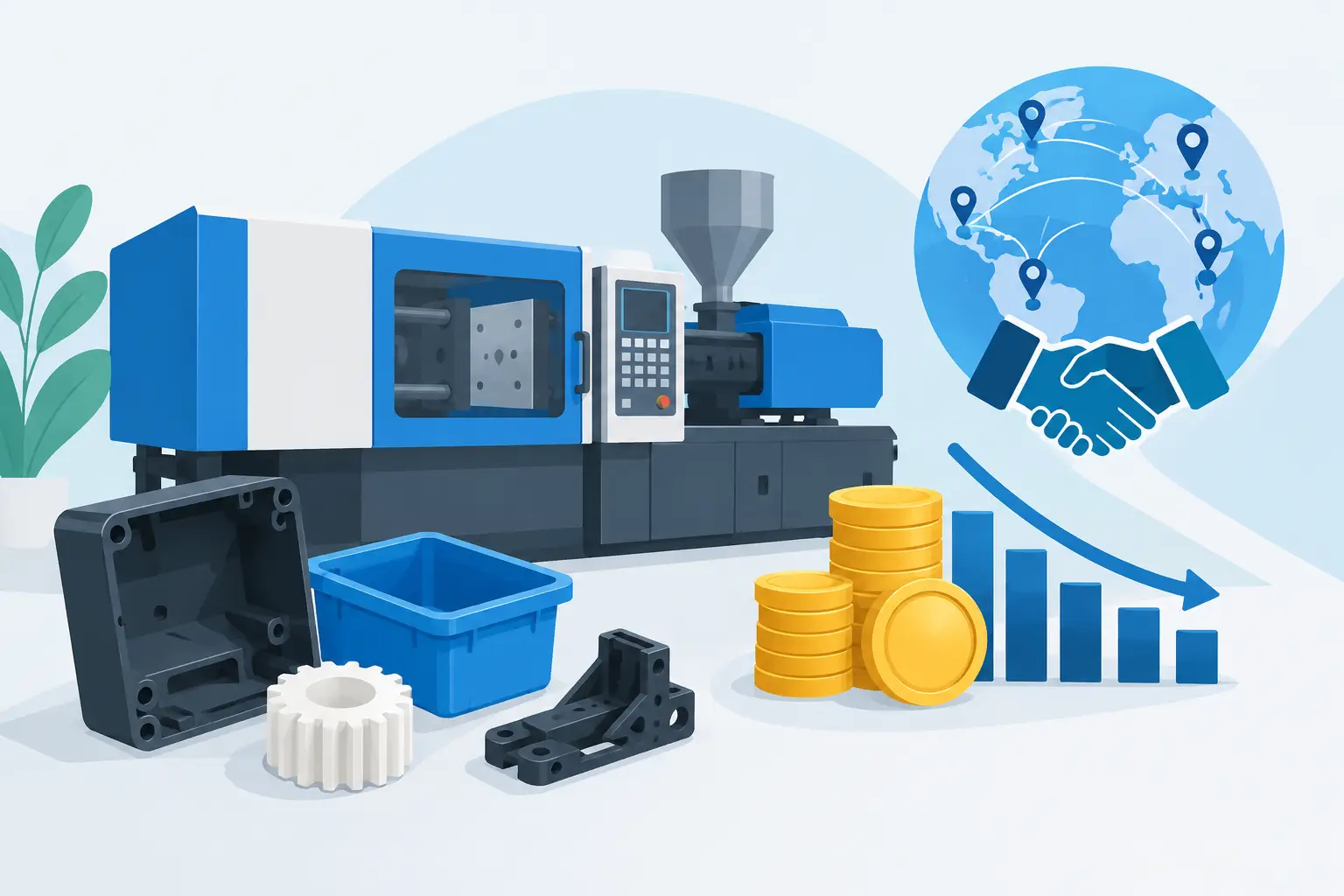
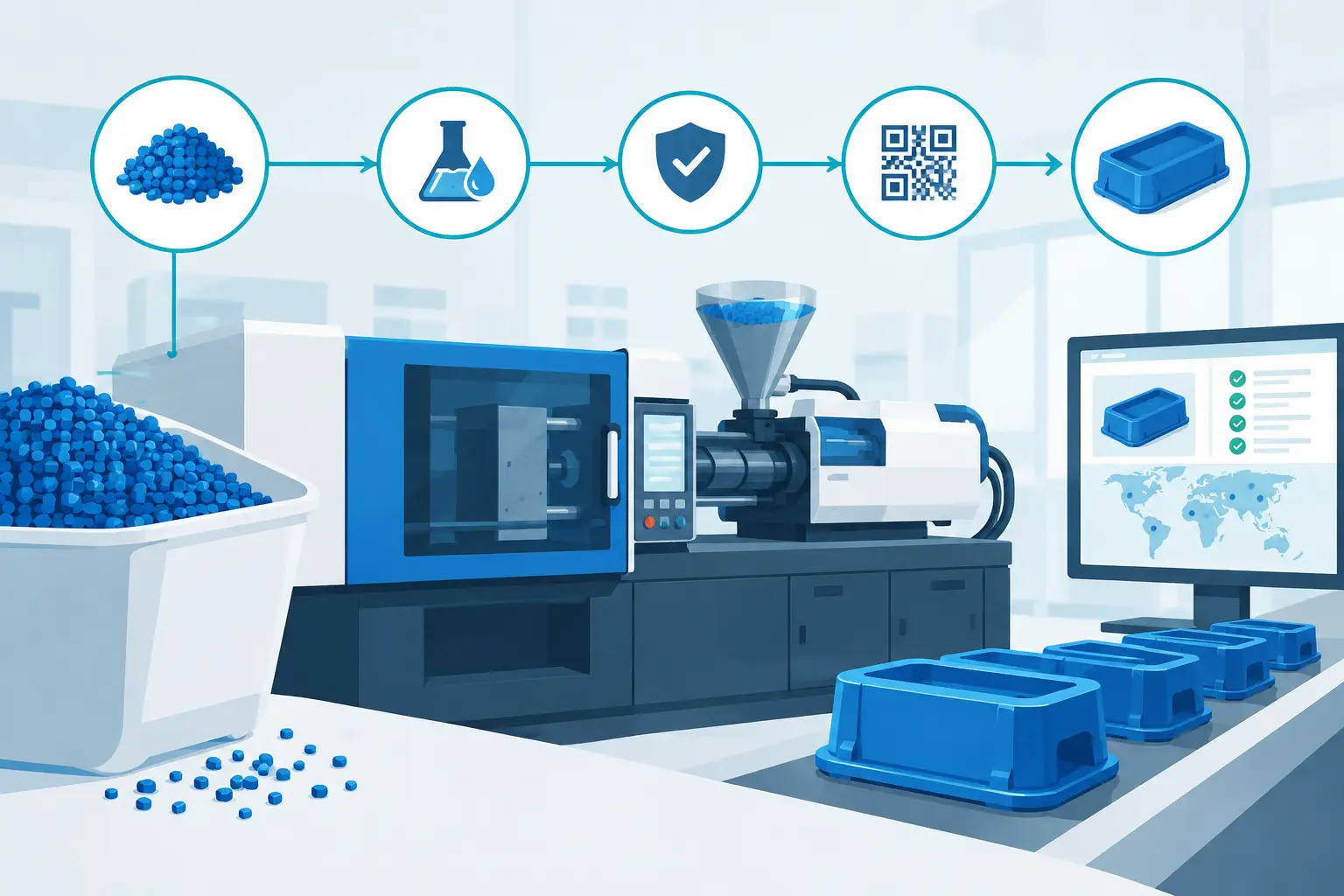
A part can look simple on a screen and still fail on the production floor. That gap is where the plastic injection molding process either creates repeatable value or introduces waste, delays, and quality issues. For OEMs, product developers, and procurement teams, understanding how the process works is not just an engineering exercise. It is the basis for better tooling decisions, tighter quality control, and faster production launch.
What the plastic injection molding process actually does
At its core, injection molding turns plastic resin into consistent, high-volume parts by heating the material, injecting it into a mold cavity under pressure, cooling it, and ejecting the finished component. The principle is straightforward. The execution is not.
Every stage affects the next one. Resin behavior influences fill pattern. Fill pattern affects packing pressure. Packing affects shrinkage. Shrinkage affects dimensions, appearance, and assembly performance. That is why good molding results rarely come from treating the press as a standalone machine. The mold design, material choice, tooling accuracy, machine capacity, and process control all have to work together.
For businesses sourcing custom plastic components, this matters because part cost is only one variable. Tool life, scrap rate, dimensional stability, cosmetic quality, and production speed all shape the real cost of ownership.
How the plastic injection molding process works step by step
Material feeding and melting
The process starts with plastic pellets loaded into a hopper. Those pellets move into the barrel, where a reciprocating screw conveys, compresses, and heats the material until it reaches the proper melt state. Barrel temperature settings matter, but they are only part of the picture. Screw speed, back pressure, and resin drying conditions also affect melt consistency.
Some materials are forgiving. Others are highly sensitive to moisture, shear, or temperature variation. Engineering resins often demand tighter process discipline than commodity plastics. If drying is missed or melt temperature drifts, defects can show up quickly as splay, brittleness, burn marks, or dimensional inconsistency.
Injection into the mold
Once enough molten plastic collects in front of the screw, the machine injects it into the mold cavity. This stage happens fast, often in seconds or less, depending on part geometry and wall thickness. The objective is to fill the cavity completely before the material freezes off.
This is where mold design carries significant weight. Gate location, runner balance, venting, wall transitions, and part geometry all influence how the material flows. A part with sharp thickness changes or poor venting may trap gas, hesitate during fill, or warp after cooling. A supplier with in-house mold design and modification capability can solve these issues much faster than one relying on outside tool corrections.
Packing and holding
After the cavity appears full, the machine continues applying pressure for a set period. This is the packing or holding phase. It compensates for material shrinkage as the plastic cools and solidifies.
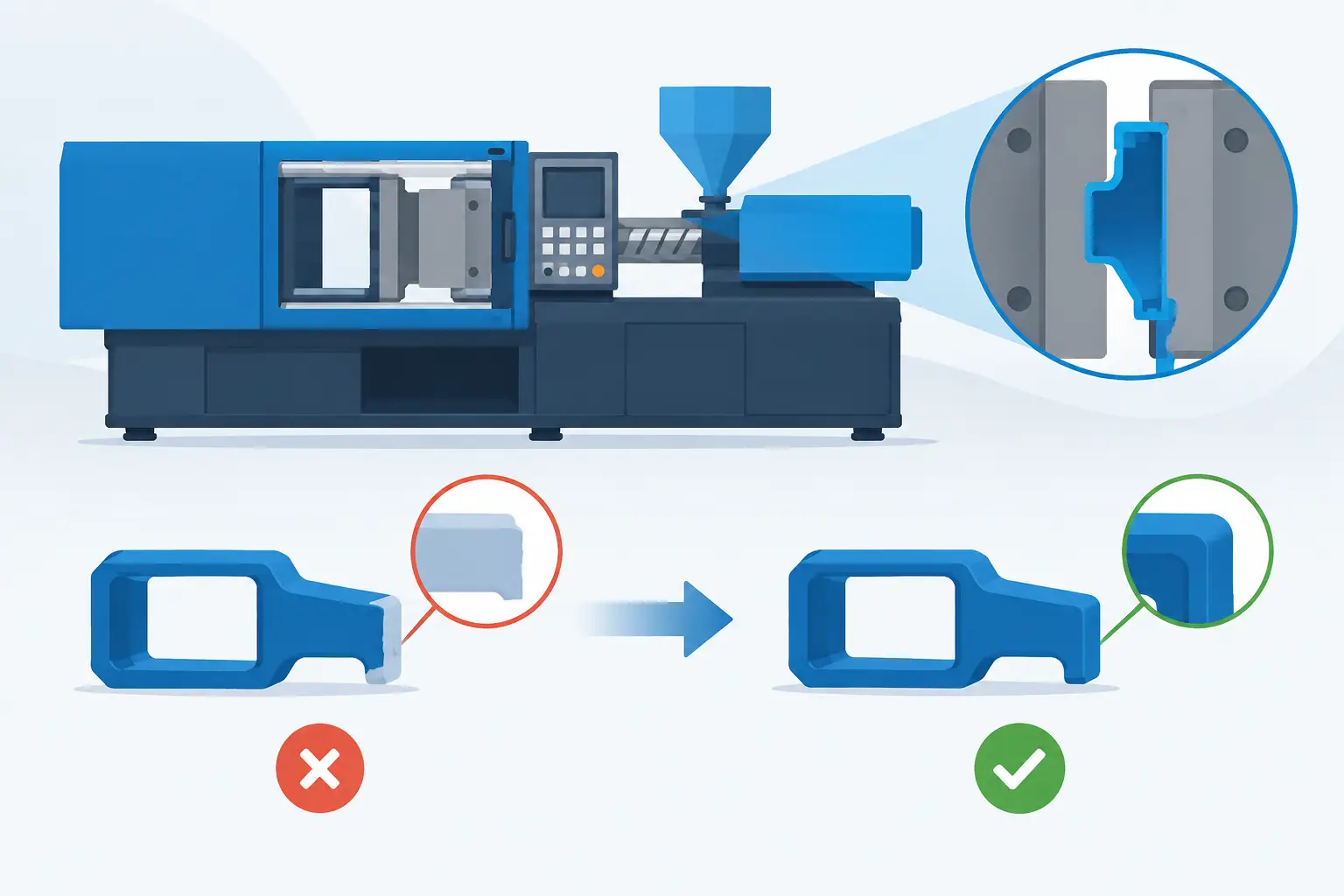
This step often decides whether a part holds dimension or sinks around thicker sections. Too little pressure and the part may be underpacked, leading to voids, sink marks, or short shots. Too much pressure and flash, internal stress, or gate-related issues can appear. There is no universal setting. The right window depends on resin type, gate freeze time, part geometry, and the performance requirement of the finished product.
Cooling and solidification
Cooling usually takes the largest share of the cycle. The part must become rigid enough to eject without deformation, but waiting too long increases cycle time and cost. Efficient mold cooling design is one of the biggest drivers of productivity.
Cooling channels, steel choice, part thickness, and material shrink rate all influence this phase. A poorly cooled mold can create hot spots, warpage, and longer cycles. For high-volume programs, even small cooling improvements can translate into meaningful annual savings.
Ejection and repeat cycle
When the part is ready, the mold opens and ejector systems push the component out. The cycle then repeats. Ejection sounds simple, but it can create scratches, stress marks, distortion, or sticking if the part design and mold finish are not aligned.
This is why manufacturability should be addressed before steel is cut. Draft angles, undercuts, surface texture, and ejection points need to support not just part shape, but reliable production over long runs.
What determines part quality in injection molding
The process is highly repeatable when the variables are controlled. When they are not, defects are rarely random. They usually come from a mismatch between design intent, tooling, material, and machine settings.
Tooling quality is the first major factor. A precision mold produces more consistent parts, better surface finish, and more stable dimensions across long production runs. It also reduces troubleshooting time because the tool behaves predictably. In contrast, a mold built with weak tolerances or poor cooling design can create ongoing quality and maintenance problems that continue long after the first samples look acceptable.
Material selection is next. The right resin depends on the application, not just the target price. Structural performance, temperature exposure, chemical resistance, UV stability, appearance, and regulatory requirements all matter. A lower-cost material may reduce piece price but increase failure risk in the field. On the other hand, overengineering the resin can drive unnecessary cost if the part does not need that level of performance.
Machine capability also matters more than many buyers expect. Clamp tonnage has to match the projected cavity pressure and part size. Shot size must fit the component volume with proper processing margin. The machine has to deliver stable injection speed, pressure, and temperature control. Press selection is not just about whether the part fits. It is about whether the process can be held consistently from run to run.
Then there is process development. A capable supplier does not rely on trial and error alone. It uses structured setup, process windows, first article validation, and in-house quality checks to establish repeatability. That is especially important when a component has tight tolerances, assembly interfaces, or aesthetic standards.
Why early design decisions have outsized impact
Many cost and quality problems in the plastic injection molding process start before production begins. Thin walls can reduce material use and cycle time, but if they are too thin for the chosen resin and flow path, the part may not fill properly. Thick sections can improve stiffness, but they often create sink and long cooling cycles. Complex features may eliminate secondary assembly steps, but they can increase tooling complexity and maintenance.
This is where design-for-manufacturing support changes outcomes. Adjusting radii, draft, gate position, wall balance, or parting line location during the development stage is far less expensive than modifying steel after tool build. For companies working to launch products quickly, integrated support across design refinement, tooling, molding, and finishing removes a major source of delay.
A single manufacturing partner can also shorten communication loops. If the team designing the mold, building the tool, and running the production press is under one roof, feedback moves faster and corrective action is more direct. That can make a measurable difference when timelines are tight or a part requires tuning after first trials.
Common trade-offs buyers should understand
Injection molding is efficient, but it is never one-dimensional. Lower tooling cost may mean shorter mold life or less process stability. Faster cycle times may increase internal stress or cosmetic variation if pushed too hard. Multi-cavity molds improve output, but they demand tighter runner balance and more process discipline.
Surface finish is another common trade-off. A high-gloss cosmetic part may require tighter polish standards, stricter contamination control, and more careful ejection strategy. Tight tolerances can be achieved, but they depend on geometry, resin behavior, environmental conditions, and realistic measurement methods. In many programs, the best result comes from balancing technical requirements instead of maximizing every variable at once.
That is why experienced manufacturers ask detailed questions early. Annual volume, application environment, assembly method, compliance requirements, and packaging expectations all affect how the process should be built around the part.
Where the process creates business value
For B2B buyers, the real advantage of injection molding is not just scale. It is repeatability. Once the mold and process are properly developed, the same tool can produce large volumes of consistent parts with predictable cycle times and stable quality.
That predictability supports purchasing, inventory planning, assembly scheduling, and product performance in the field. It also makes changes easier to manage when the supplier controls mold maintenance, process documentation, secondary operations, and quality assurance in-house. Glasfil’s model reflects that reality. End-to-end control is not a marketing phrase in this space. It is what reduces handoff risk and keeps production moving.
The plastic injection molding process works best when it is treated as a complete manufacturing system, not a single machine operation. Buyers who understand that tend to make better tooling investments, avoid preventable delays, and get parts that perform the way they were designed to. If a component matters to your product, the right process discipline at the start will save time long after the first shipment leaves the dock.
Contact us to help you review your project costings and also risk mitigation on borders volatility.