A plastic part rarely fails because of one dramatic mistake. More often, it fails because early decisions were made in isolation – design without tooling input, material choice without end-use testing, or pricing without a realistic production plan. If you are figuring out how to launch plastic production, the fastest path is not rushing to mould steel. It is building a production plan that connects design, tooling, process capability, quality, and scale from the start.
For OEMs, product teams, and procurement leaders, that matters because launch cost is only part of the equation. A cheap start can become an expensive production problem if the tool needs repeated modification, the part warps in service, or the supplier cannot maintain consistency once volumes increase. Plastic production works best when engineering and execution are aligned before the first shot is moulded.
How to launch plastic production with fewer delays
The first question is not which machine will run the part. It is whether the product is actually ready for production. Many parts look complete in CAD but still carry hidden moulding risks: uneven wall thickness, poor draft, undercuts that complicate tool design, cosmetic surfaces in hard-to-control areas, or tolerances that do not match the chosen resin and process.
That is why the launch should begin with a manufacturability review. At this stage, the goal is to identify what will affect tool complexity, cycle time, part stability, and finishing requirements. A design that performs well on paper may still be expensive or unstable in production. Small design adjustments made early can reduce tooling cost, improve repeatability, and shorten time to market.
Material selection should happen in the same conversation, not later. Resin choice affects shrinkage, strength, heat resistance, appearance, chemical performance, and mould behaviour. It also affects secondary operations such as welding, printing, assembly, or plating. If the application is automotive, electrical, bathroom, furniture, or utility-related, the production environment and compliance requirements will shape the material decision. There is no universal best resin – only the right resin for the load, environment, finish, and target cost.
Start with the business case, not just the part
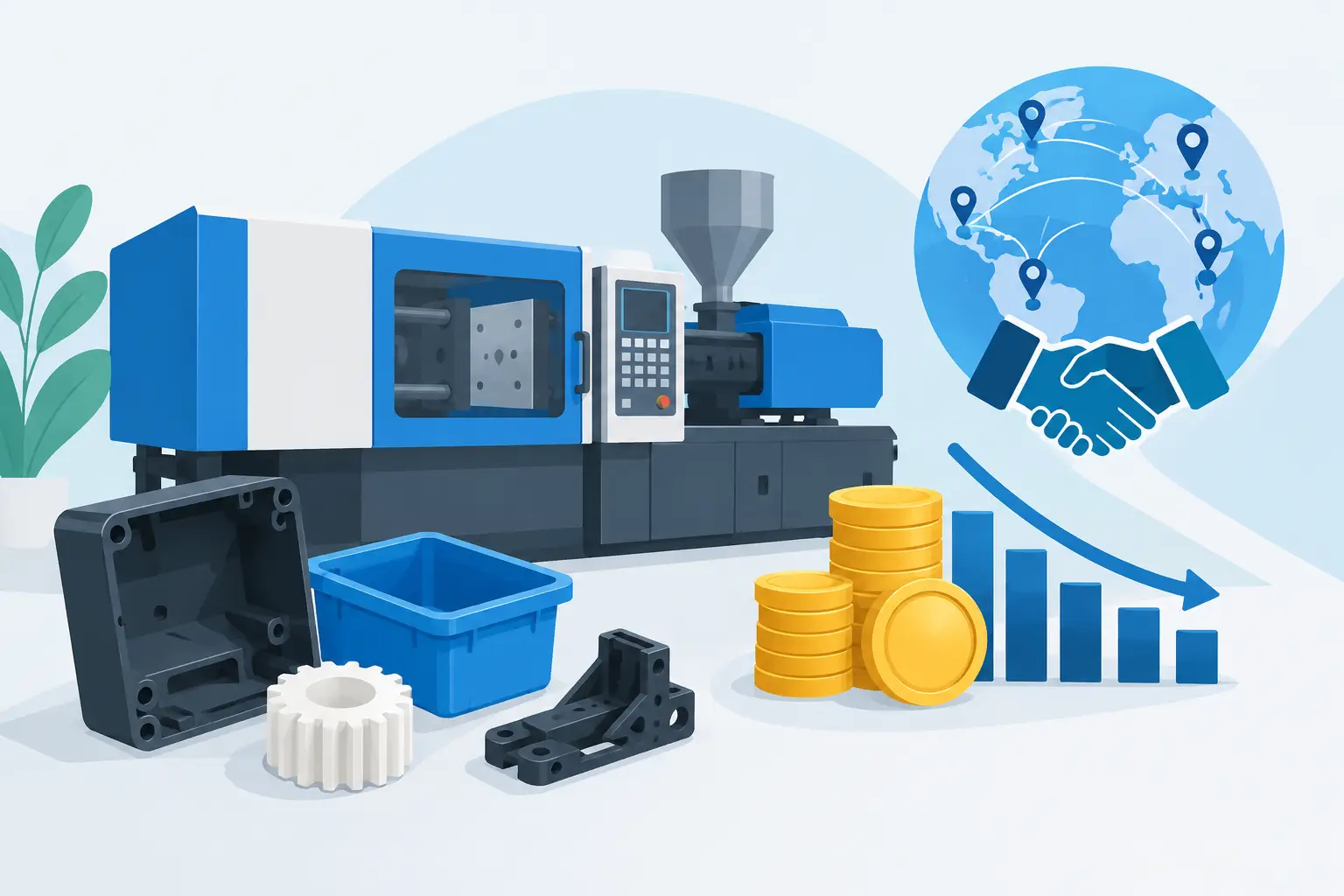
Plastic production is a manufacturing process, not a single purchase. Before authorising tooling, define the commercial and operational framework clearly. That includes annual volume, expected order frequency, price targets, service life of the tool, quality standards, packaging needs, and any regional shipping considerations.
A part projected at 20,000 units per year should not be approached the same way as one expected to reach 500,000. The tool concept, cavitation, automation level, and quality plan may all change based on volume. Overbuilding a tool can tie up capital unnecessarily. Underbuilding it can create downtime, maintenance issues, and delivery risk just when demand rises.
This is also the point where supplier structure matters. If design refinement, tooling, moulding, finishing, and quality checks are split across multiple vendors, each handoff introduces delay and accountability gaps. An integrated manufacturing partner can shorten launch by keeping engineering feedback, tool adjustment, process setup, and production control under one roof. That is especially valuable when timelines are tight or the part is likely to require iteration after first trials.
Tooling is where launch speed is won or lost
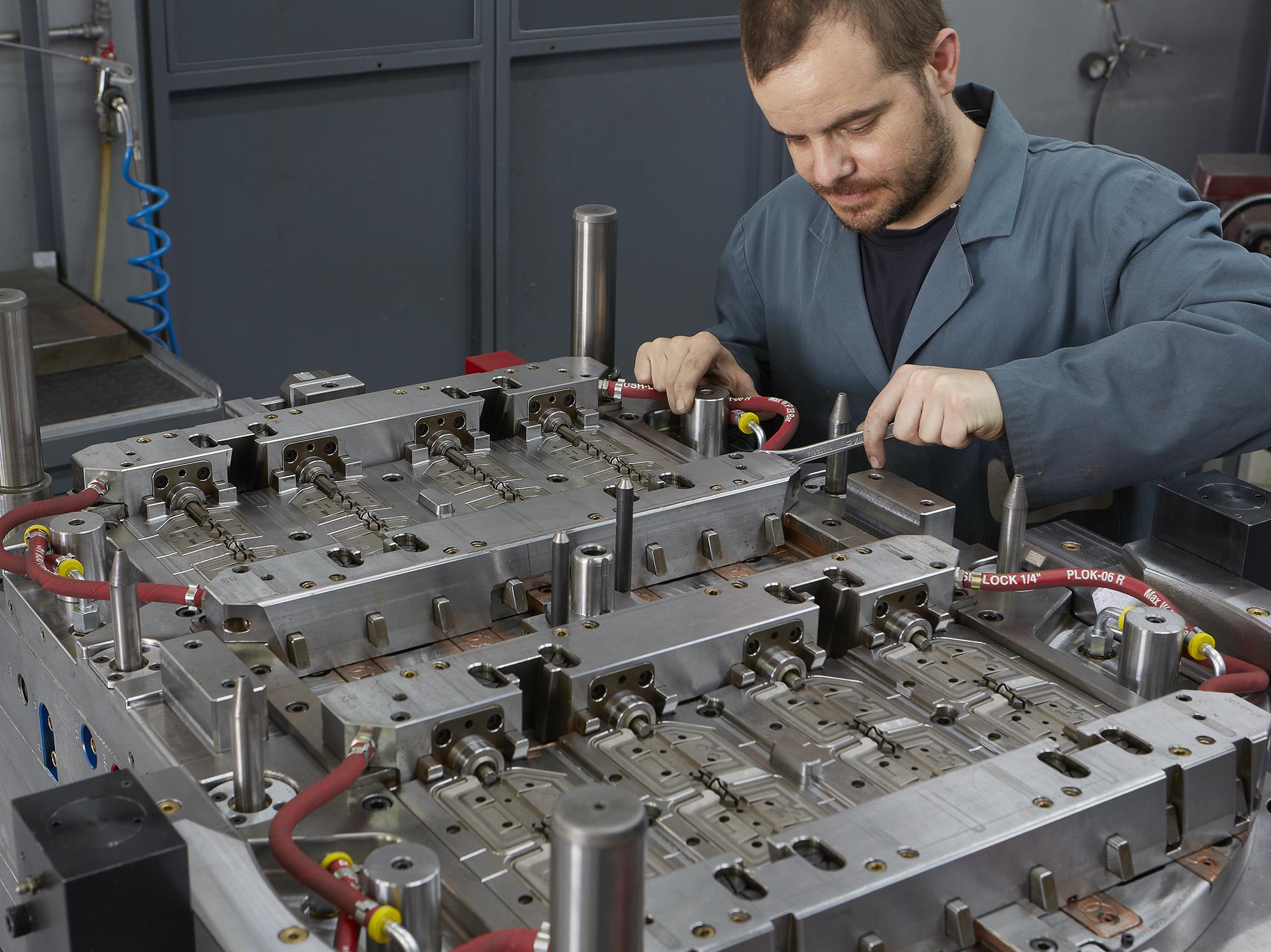
If you want a predictable launch, pay close attention to tool strategy. Injection moulding tooling determines part geometry, repeatability, surface quality, cycle efficiency, and maintenance burden for years. It should be treated as a production asset, not a one-time expense to minimise at any cost.
The right mould design depends on part geometry, resin behaviour, expected volume, and quality requirements. Gate location, cooling layout, venting, ejection, steel selection, and cavity balance all affect production performance. A tool that can technically make parts is not automatically a good production tool. The difference shows up in scrap rate, cycle time, consistency, and how quickly changes can be implemented if market feedback or fitment issues arise.
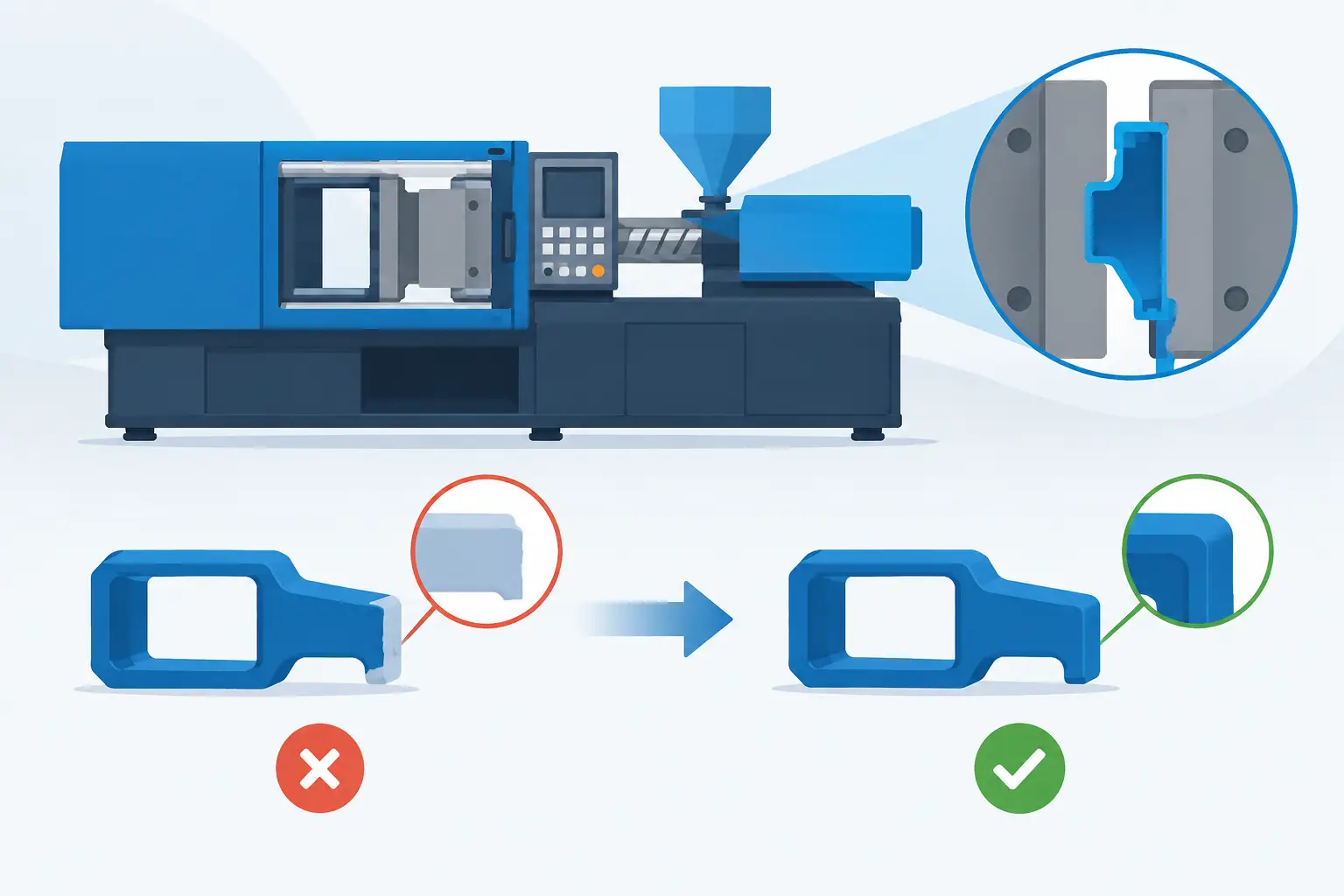
This is why in-house mold design and modification capability has real launch value. When trial data reveals a sink mark, flash issue, flow hesitation, or dimensional shift, response time matters. Waiting on external toolmakers can stretch a simple correction into weeks. Keeping tooling control close to the moulding process reduces delay and gives engineering teams better visibility into what is changing and why.
Validate the process before you scale
A successful sample run is not the same as a production-ready process. Early moulded parts can look acceptable while still hiding instability that appears later under longer runs, different operators, or changing ambient conditions. Process validation is what turns a first-off result into a stable manufacturing baseline.
That means establishing the correct machine parameters, documenting the processing window, checking dimensional consistency, and confirming that the part meets functional requirements over repeated cycles. If the product includes assembly features, threaded inserts, cosmetic requirements, or post-mould finishing, those steps should be validated as part of the launch plan rather than added after approval.
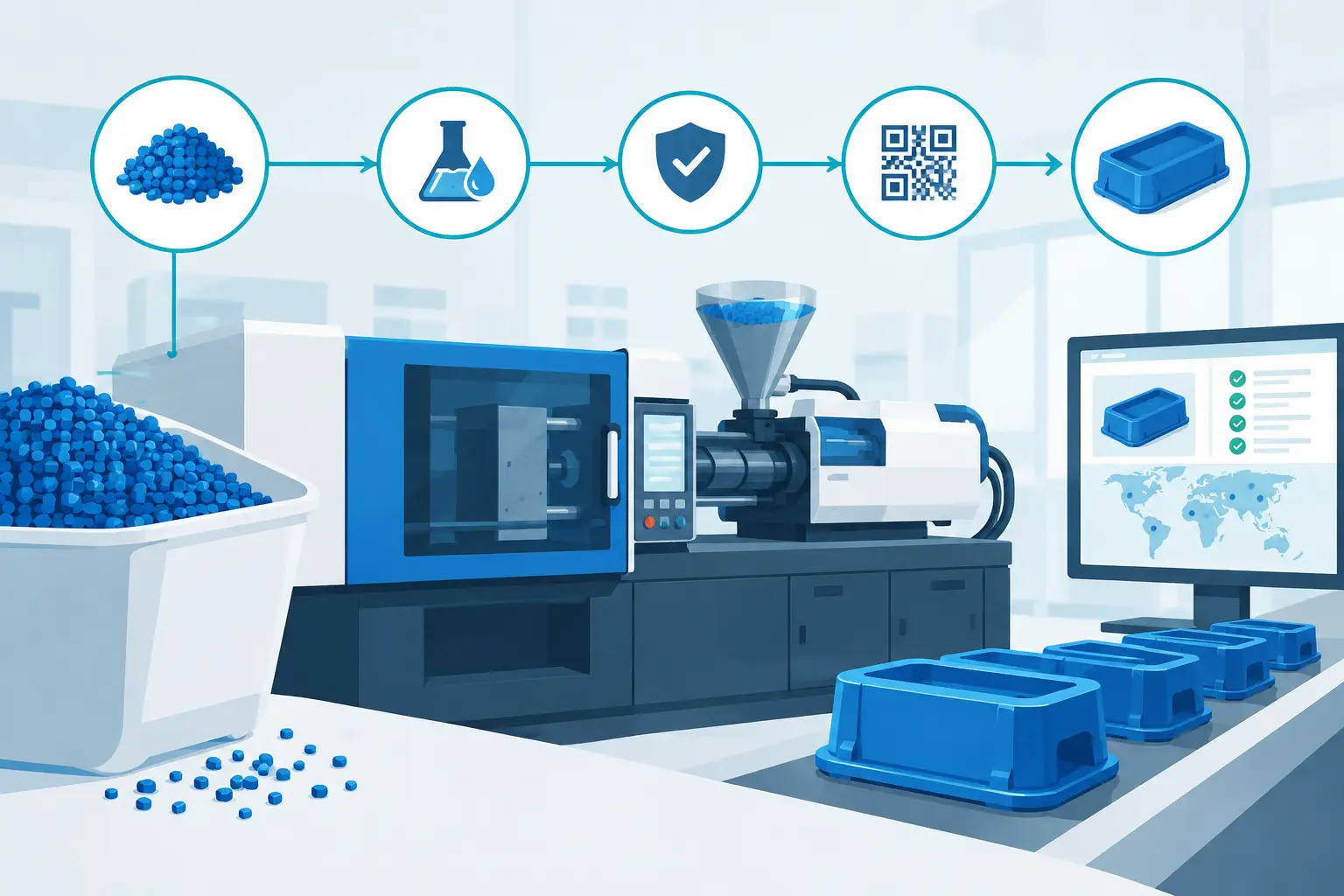
Quality planning should be practical and specific. Critical dimensions, visual criteria, resin traceability, inspection frequency, and packaging standards all need to be defined before volume production starts. In regulated or performance-sensitive industries, that discipline is not optional. Even in less regulated sectors, it reduces disputes and prevents costly production drift.
How to launch plastic production at scale
Scaling is where weak launches start to show cracks. A part that runs well in small batches can become unstable when demand increases, tooling wear starts, or cycle pressure rises. That is why capacity planning should be addressed early, not after the first purchase orders arrive.
Machine size, shot capacity, clamp force, automation needs, and shift model all influence scalability. So do secondary processes such as trimming, pad printing, ultrasonic welding, assembly, packing, and shipment preparation. If your supplier can mould the part but cannot support downstream operations reliably, you still have a bottleneck.
Production continuity also depends on maintenance. Mould maintenance plans, spare component readiness, and process documentation protect output over time. For repeat programs, especially across international supply chains, consistency matters as much as raw capacity. Buyers are not only purchasing parts. They are purchasing delivery confidence.
This is where a one-stop manufacturing structure becomes commercially useful. When the same partner handles tooling, production, finishing, and quality assurance internally, there is less fragmentation between prototype intent and production reality. For many industrial programs, that is the difference between hitting the launch window and spending months managing avoidable corrections.
Common mistakes that slow down launch
Most launch delays come from preventable gaps in planning. One common issue is approving tooling before the design is mature enough for production. Another is choosing resin based mainly on nominal cost rather than long-term performance and process behaviour. A third is assuming cosmetic requirements are simple when surface finish, gate vestige, flow lines, or colour variation may need specific tools and process decisions.
Procurement pressure can create another problem: selecting suppliers based on piece price without evaluating tooling control, engineering support, or response speed during trial and ramp-up. Lower initial pricing can look attractive, but if every change requires coordination across multiple parties, the real cost of delay rises quickly.
There is also the issue of incomplete launch ownership. Plastic production involves engineering, sourcing, quality, logistics, and often customer-facing deadlines. If no one is managing the full path from part approval to repeatable supply, decisions get fragmented. The result is usually rework, schedule slips, or quality instability.
What a strong launch partner should bring
A capable manufacturing partner should do more than quote a mould and run parts. They should be able to challenge the design when needed, recommend process-aware material options, build and adjust tooling quickly, validate production conditions, and support secondary operations without losing control of quality.
For companies launching new plastic components, speed matters, but speed without technical control usually creates a second launch later. The better approach is to work with a supplier that can move quickly because engineering, tooling, moulding, and quality are integrated. That shortens feedback loops and gives buyers a clearer path from concept to stable output. Glasfil operates in that model, with in-house tooling, injection moulding capacity, secondary processing, and quality assurance aligned around production execution.
If you are preparing for a new product, replacement part, or transfer program, treat launch as an engineering and supply chain decision at the same time. The earlier you connect part design to tooling reality and production discipline, the fewer surprises you will pay for later. A good plastic part starts in the mould, but a reliable production program starts much earlier.
Contact us to learn how we can support your next project.