A supplier can quote the right part price and still create an expensive production problem. Late tooling changes, inconsistent cycle times, unclear quality ownership, and outsourced secondary operations often emerge only after a purchase order is placed. A disciplined contract manufacturer evaluation review identifies these risks before they affect a launch, an assembly line, or a customer commitment.
For custom plastic components, the review must go beyond a general supplier questionnaire. The manufacturer must prove that it can control the full route from part design and mold construction through injection molding, finishing, packing, and shipment. This is where procurement, engineering, and quality teams need to evaluate the same operation from different angles – then agree on the evidence.
Why a contract manufacturer evaluation review matters
A contract manufacturer is not simply a source of machine time. They become part of your product-development and supply-chain infrastructure. Its tooling decisions affect part cost for years. Its process discipline affects field performance. Their response time affects how quickly you can correct a design issue or react to demand.
The lowest initial quote may be appropriate for a mature, noncritical part with stable demand and simple geometry. It is rarely the only useful measure for a new product, a tight-tolerance component, or a program that requires frequent engineering changes. In those cases, the real question is whether the supplier can solve problems without creating delays between departments, subcontractors, and facilities.
An effective review turns broad claims such as “full service,” “high quality,” or “fast lead times” into verifiable operating capability. It should establish who owns the tool, where it is built, how process parameters are controlled, how nonconforming material is handled, and what happens when output must increase.
1. Start with the part, not the supplier brochure
Define the manufacturing requirements before comparing suppliers. A clear part brief should include annual volumes, forecast variability, critical dimensions, resin specification, surface finish, cosmetic requirements, assembly interfaces, packaging expectations, and target launch date. If the part will operate in heat, moisture, chemicals, UV exposure, or under mechanical load, state that early.
This information reveals whether a supplier’s equipment and engineering capability actually fit the job. A 560-ton press capacity, for example, is meaningful only when paired with the part’s projected shot weight, mold footprint, cycle-time target, and material behavior. A manufacturer may have sufficient tonnage but lack the process window, drying discipline, or tooling expertise required for the resin.
For replacement parts or discontinued components, provide a physical sample, available drawings, and information about the mating assembly. Reverse engineering can be practical, but dimensional assumptions should be documented before mold fabrication begins.
2. Evaluate tooling control and modification capability
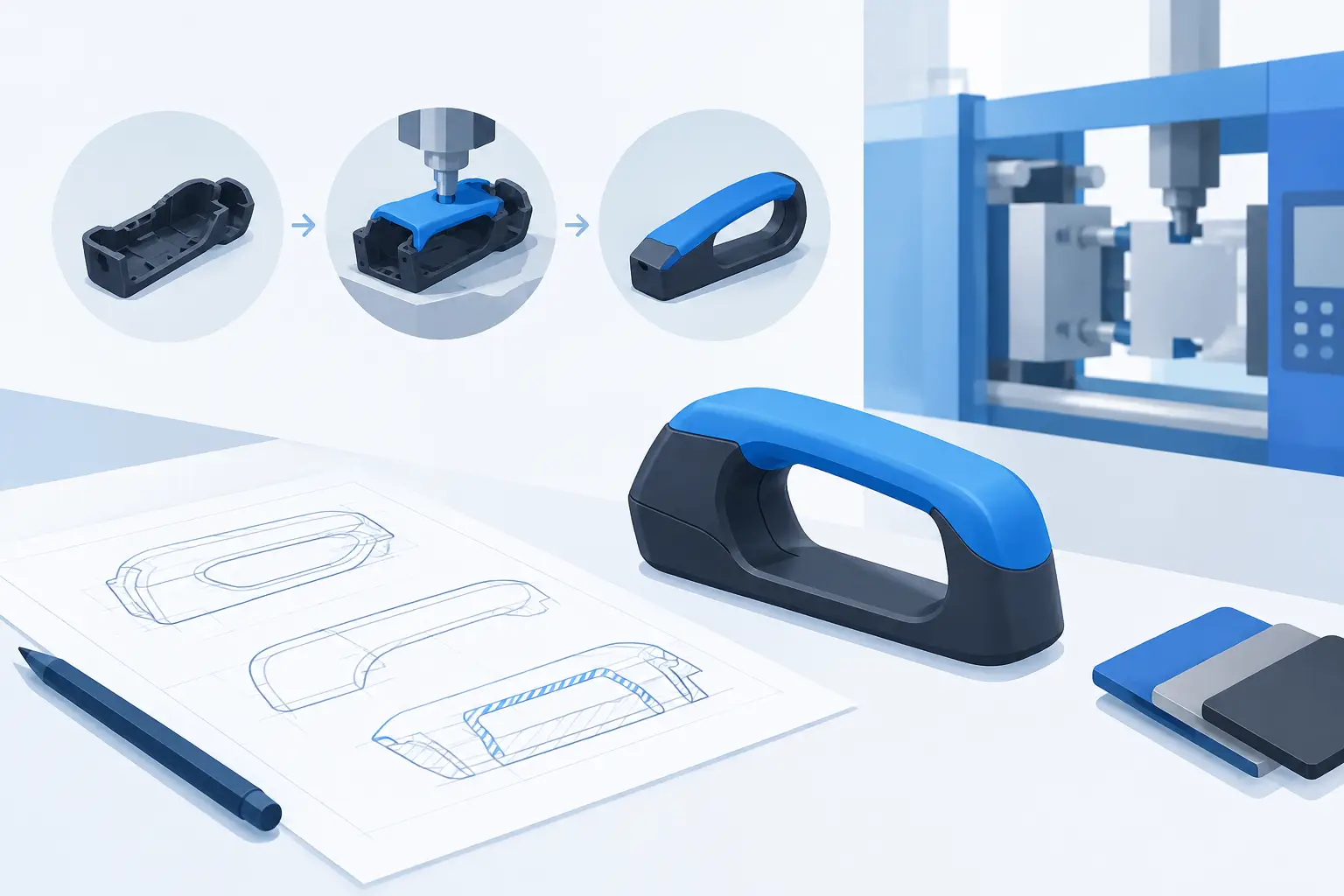
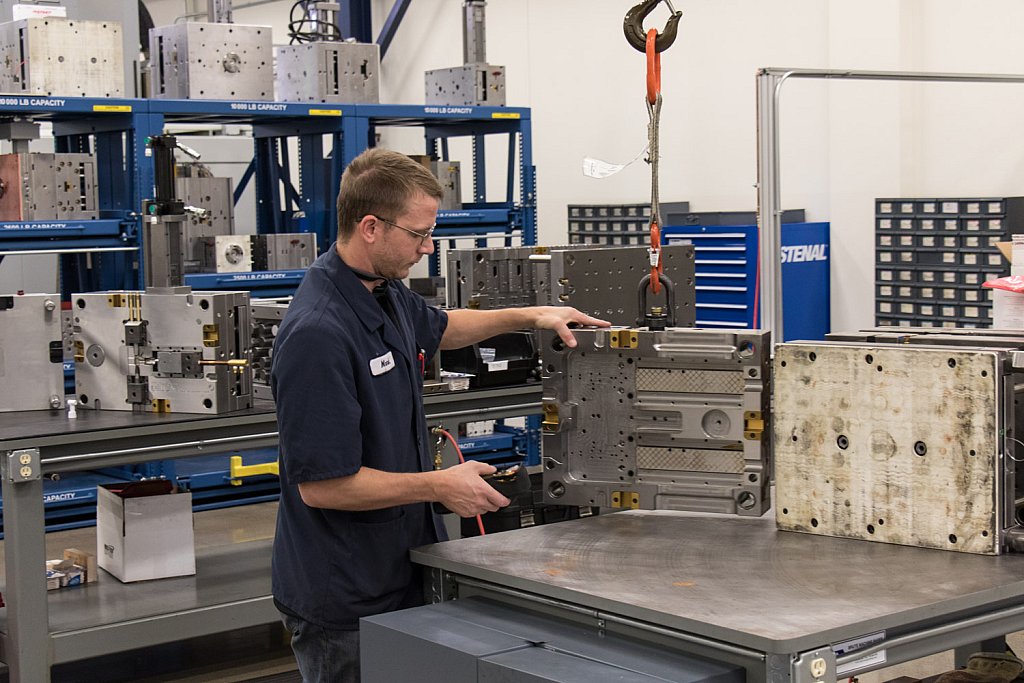
For injection-molded products, the mold is often the most consequential capital asset in the program. Ask whether mold design, fabrication, maintenance, repair, and modification are managed in-house or distributed across outside shops. Neither model is automatically wrong, but each carries different timing and communication risks.
In-house tooling control can shorten the loop between a molding trial and a corrective action. When the same manufacturer can review mold flow concerns, adjust a gate, revise a cooling circuit, repair wear, and run another trial, engineering decisions move faster. It also makes accountability clearer when a part does not meet specification.
Request a practical explanation of the supplier’s tooling process. You should understand the design review stage, steel selection, standard-component approach, sampling plan, preventive maintenance schedule, spare-part strategy, and process for approving engineering changes. Ask how quickly the manufacturer can make a mold correction after a trial identifies an issue.
A useful review also distinguishes between a mold that can produce samples and a mold designed for dependable repeat production. Cycle time, cooling efficiency, ejection reliability, cavity balance, wear resistance, and maintenance access affect total cost long after the first approved part is delivered.
3. Verify capacity in the context of real production
Machine count alone does not prove available capacity. Review the press range, automation, auxiliary equipment, staffing model, shift pattern, maintenance planning, and current utilization. A supplier with 19 machines may offer broad scheduling flexibility, but the relevant question is whether the right machine, operator skill, drying equipment, and inspection resources will be available when your orders need to run.
Ask for a capacity plan based on your forecast, including expected cycle time, number of cavities, scrap allowance, setup time, and contingency for equipment downtime. For high-volume programs, ask how the manufacturer manages peak demand and whether duplicate tooling or backup press options are feasible.
Capacity assessment should also include downstream operations. If parts require printing, ultrasonic welding, assembly, trimming, painting, special packaging, or labeling, a finished-goods lead time depends on those steps as much as molding output. A one-stop manufacturer can reduce handoffs, but only if each operation is planned and controlled within the same delivery schedule.
4. Review quality systems at the process level
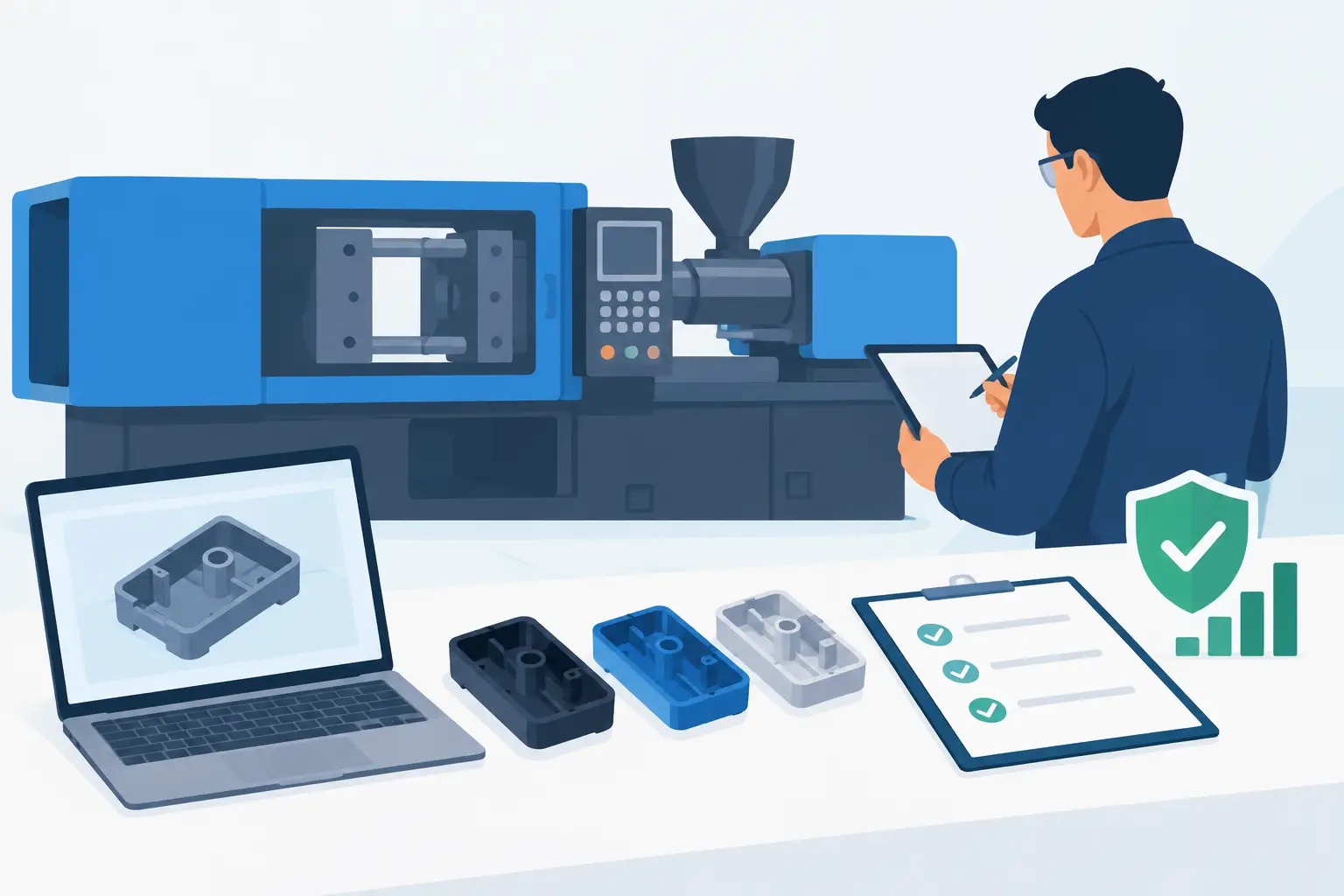
A certificate or quality manual is a starting point, not the final answer. The stronger indicator is how the manufacturer translates requirements into daily controls on the production floor. Review the incoming material process, resin traceability, first-article approval, in-process inspection, final inspection, calibration system, nonconformance procedure, and corrective-action workflow.
For precision parts, ask which dimensions are measured at startup, during production, and at final release. Clarify whether inspection frequency changes with risk level, tool maturity, or lot size. Cosmetic parts may need controlled lighting and defined acceptance samples, while functional parts may need gauges, fit checks, leak tests, or electrical verification.
The supplier should be able to explain how it prevents a known defect from recurring. A simple answer such as “operators check the parts” is not enough for a critical program. Look for defined parameters, visual standards, documented reaction plans, and clear ownership when a deviation occurs.
5. Test engineering support before awarding the program
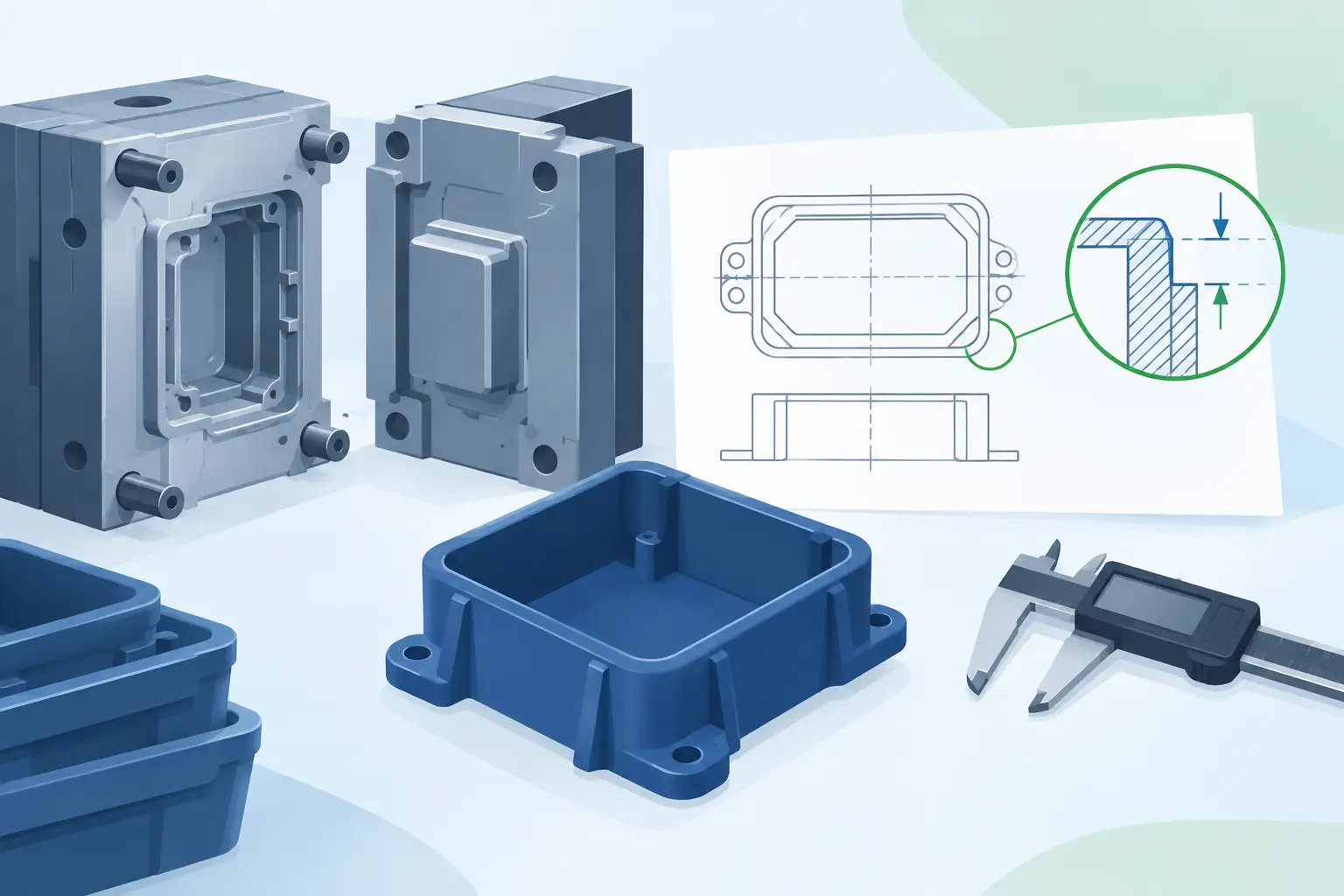
The best time to evaluate technical communication is before production pressure begins. Provide a drawing or representative design and assess the manufacturer’s feedback. Do they identify wall-thickness changes, draft concerns, sink risk, weld lines, gating limitations, tolerance conflicts, or material alternatives? Do they explain the production impact in practical terms?
Good design-for-manufacturing feedback does not mean changing every feature to suit the molder. It means balancing product function, appearance, tool life, cycle time, and unit cost. A supplier should explain the trade-offs so your engineering team can make an informed decision.
Speed is also part of engineering capability. A manufacturer that can move from design review to mold construction, trials, revisions, and approved production without unnecessary external dependencies offers a real advantage on time-sensitive launches. Glasfil, for example, combines in-house mold modification with molding, finishing, packing, and shipping to keep that decision chain under one operational roof.
6. Assess commercial discipline and total landed cost
A quote should be specific enough to expose assumptions. Confirm the tooling price, part price, resin basis, packaging, secondary operations, testing, freight terms, minimum order quantities, storage expectations, and change-order process. If any cost is provisional, identify what event will trigger an adjustment.
Total landed cost is not identical to piece price. It includes scrap exposure, inspection burden, inventory requirements, transport, launch delays, quality failures, and the cost of coordinating multiple suppliers. A lower-cost supplier located farther away can still be the right choice for a stable product with predictable replenishment. For a developing program with frequent revisions, closer technical control may outweigh a small unit-price difference.
Also review payment terms and the ownership terms for molds, drawings, and production data. These details matter if a business is acquired, a product is redesigned, or a supply interruption requires a contingency plan.
7. Check supply continuity and response under pressure
Ask how the manufacturer handles resin shortages, machine downtime, tool damage, labor gaps, and sudden changes in demand. The goal is not to find a supplier that promises no disruption. The goal is to find one that has a credible response process, communicates early, and can make practical decisions quickly.
For international programs, review export documentation, packaging methods, shipment planning, and experience serving your destination markets. A supplier that has delivered across multiple countries should still demonstrate how it will protect your specific product from damage, moisture, contamination, or labeling errors in transit.
A short site visit or virtual production review is particularly valuable here. Follow the physical flow: material receiving, storage, drying, molding, inspection, secondary processing, finished-goods staging, and dispatch. Disconnected work areas and unclear part identification often reveal risks that presentation slides do not.
8. Score evidence, then make the decision jointly
Use a weighted scorecard, but do not let a spreadsheet hide critical weaknesses. Tooling control, quality performance, technical support, available capacity, commercial clarity, and supply continuity should each have defined evidence requirements. A supplier should not receive a high score for a capability it cannot demonstrate through records, equipment, sample parts, process explanations, or customer-relevant examples.
Procurement may prioritize cost structure and contractual clarity, while engineering focuses on tooling and manufacturability, and quality teams focus on control plans. The final decision is stronger when those perspectives are resolved before nomination rather than after an issue reaches production.
The right manufacturing partner should make complex work easier to control, not merely easier to buy. If a supplier can show how it will build, validate, produce, inspect, modify, and deliver your part, you have a basis for a production relationship that can withstand real operating pressure.
Contact us to discuss your project, request a quotation, or arrange a technical consultation. Our team will help you determine the most cost-effective and reliable way to manufacture your part.