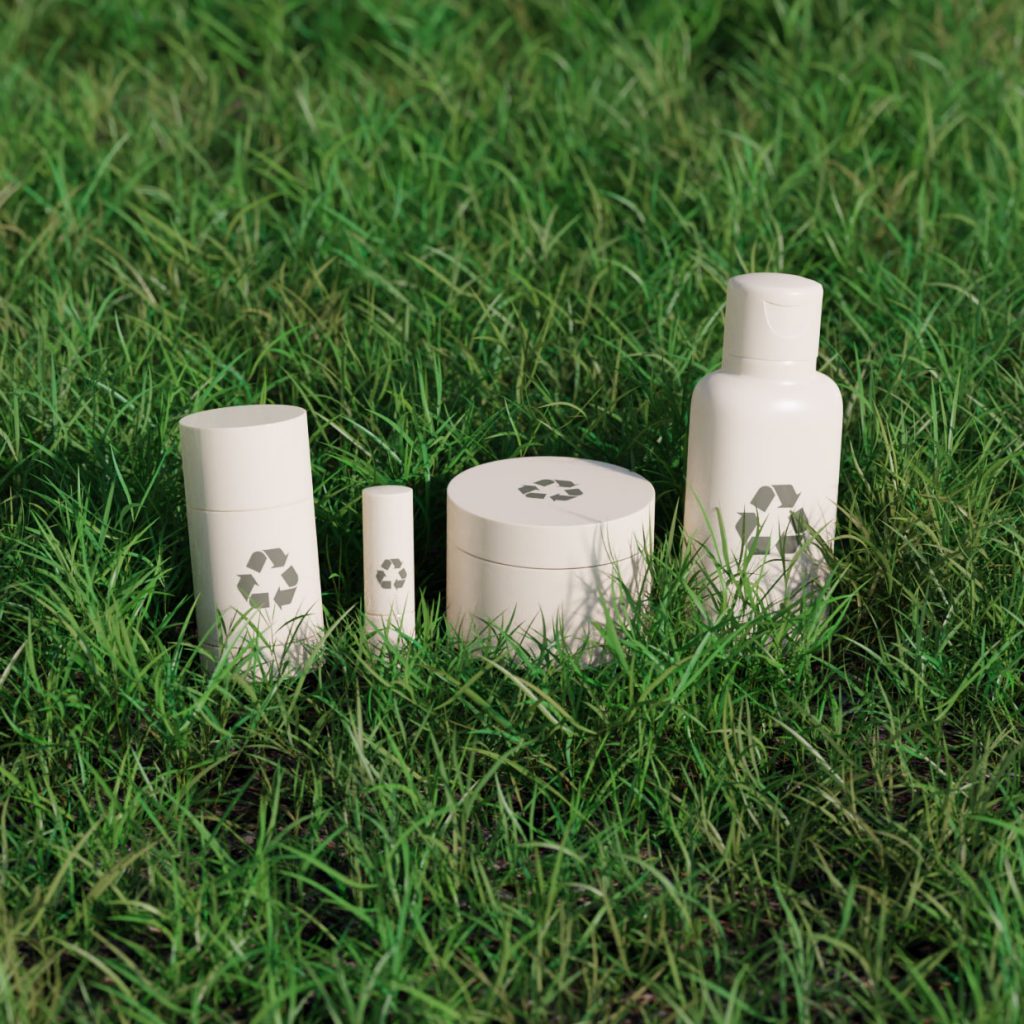
A cosmetic jar can look sustainable on a shelf and still create a recycling problem after use. Mixed materials, oversized components, dark pigments, metalized finishes, and residue from the formula can all reduce its real-world recovery value. Eco-friendly plastic packaging for cosmetic industry is therefore not a matter of selecting a green-looking resin. It is a product engineering decision that must balance brand presentation, formula protection, manufacturability, cost, and end-of-life performance.
For cosmetic brands and product developers, the most effective approach starts before tooling begins. Packaging geometry, resin choice, decoration method, closure design, and production volume should be evaluated as one system. When these decisions are aligned early, manufacturers can reduce material use, improve repeatability, and avoid expensive redesigns after mould fabrication.
What Makes Cosmetic Plastic Packaging Eco-Friendly?
There is no single material or claim that makes packaging eco-friendly. A better definition is packaging designed to use fewer resources, perform reliably throughout its intended life, and fit the collection and recycling infrastructure available in its target market.
For cosmetics, that definition must also account for product compatibility. A moisturizer, fragrance, oil-based serum, exfoliant, or SPF product may interact differently with the package over time. The packaging must protect the formula against moisture, oxygen, light, leakage, and contamination where required. A package that uses recycled content but cracks, warps, leaks, or shortens shelf life is not a sustainable outcome.
The strongest projects typically combine several practical measures: reduced part weight, recycled or recyclable resin selection, simplified material combinations, refill-ready construction where it makes commercial sense, and production controls that keep defects and scrap low. Sustainability is not only about what happens after disposal. It also depends on how efficiently the part is manufactured at scale.
Material Choices for Eco-Friendly Plastic Packaging
The right resin depends on the cosmetic product, desired appearance, filling process, component geometry, and local waste stream. Material selection should be based on testing and engineering evidence, not a generic sustainability claim.
Recycled PP and Recycled PET
Post-consumer recycled polypropylene, or PCR PP, is commonly considered for injection-molded jars, caps, closures, and selected compact components. Polypropylene offers good chemical resistance and useful design flexibility, but recycled content can introduce variation in color, flow behavior, odor, and surface finish. These factors need to be managed through supplier qualification, part design, and process controls.
Recycled PET can support clear or translucent packaging applications, although the manufacturing route and product format matter. PET is frequently associated with bottles and jars, while caps, inserts, and closures may require another resin for functional performance. A package with a PET body and a different-material closure can still be viable, but designers should make separation as intuitive as possible when recycling depends on it.
Virgin PP and PET Designed for Recycling
Using virgin resin is not automatically the least responsible option. Where high recycled-content levels compromise formula protection, visual quality, or mechanical performance, a mono-material package made from virgin PP or PET may offer a more dependable recycling path than a complex multi-material design.
For example, a recyclable PP jar with a PP closure is often easier to evaluate at end of life than a jar assembled with incompatible inserts, metallic layers, magnets, or permanently bonded elastomers. The objective is not to force one resin into every application. It is to make clear, practical trade-offs based on the complete package.
Bio-Based and Compostable Plastics
Bio-based plastics can reduce reliance on fossil feedstocks, but they are not automatically recyclable or compostable in conventional municipal systems. Compostable resins can also create challenges in cosmetic applications where moisture resistance, heat stability, or long shelf life is required.
These materials may be appropriate for specific concepts, limited-use products, or controlled disposal environments. For mainstream cosmetics sold through broad retail channels, established recyclable resins and well-designed refill systems are often more practical than materials that consumers cannot easily sort or process.
Design Decisions That Have the Greatest Impact
The packaging footprint is shaped as much by design as by resin. Small tooling and geometry changes can reduce material consumption across hundreds of thousands of units without changing the consumer experience.
Wall thickness should be optimized for stiffness and filling performance rather than built up as a safety margin. Heavy bases, decorative overhangs, and unnecessarily thick caps add resin, increase cycle demands, and raise freight weight. At the same time, thinning a part too aggressively can cause sink marks, deformation, leakage, or poor thread engagement. The correct wall thickness depends on the polymer, mould cooling strategy, part geometry, and the loads the package will experience during filling, shipping, and consumer use.
Decoration also deserves early attention. Full-body sleeves, metallization, mixed-material labels, and permanent adhesives may interfere with material identification and recycling. Direct embossing, debossing, in-mould labeling where appropriate, or carefully selected label systems can reduce complexity. Brand teams should assess whether every visual feature contributes enough value to justify its material and recovery impact.
Refillable packaging can be a strong option for premium skincare, body care, and selected color cosmetics, especially where the outer pack is durable enough to remain in use. However, refill systems add operational requirements. The refill must be easy to install, leak-resistant, hygienic, and clearly understood by the consumer. A refill format that is difficult to use can create more waste rather than less.
Tooling and Injection Moulding Determine Whether the Design Works
A sustainable concept only becomes commercially useful when it can be molded consistently. For injection-molded cosmetic packaging such as jars, caps, applicator components, compacts, and closures, mould design directly affects quality, cycle time, material waste, and long-term production cost.
Recycled-content resins may process differently from virgin materials. Their flow characteristics can affect gate location, weld lines, shrinkage, gloss, and dimensional consistency. Toolmakers need to account for these variables before cutting steel, particularly for threaded closures, snap fits, thin-wall jars, and parts that must assemble with other components.
Design for manufacturability should review draft angles, wall transitions, rib geometry, undercuts, ejection points, tolerances, and assembly requirements. A visually attractive jar with inadequate draft may scuff during ejection. A cap with poorly controlled threads may leak or cross-thread. A compact with weak hinge geometry may fail after repeated use. These issues can lead to rejects, rework, excess resin consumption, and delayed launches.
In-house mould modification capability is especially valuable when trials reveal a need to adjust flow, cooling, texture, or assembly fit. At Glasfil, design refinement, mould fabrication, injection moulding, secondary processing, and quality control are managed within one production operation. This helps cosmetic packaging teams move from concept to repeatable production without losing technical control between separate suppliers.
Validate Packaging Against the Formula, Not Just the CAD Model
Cosmetic packaging must be tested with the actual formulation and the actual use case. Compatibility work should consider prolonged product contact, elevated-temperature storage, transport vibration, repeated opening and closing, drop resistance, and exposure to oils, alcohols, active ingredients, or fragrances.
The package also needs a clear quality standard. Visual criteria should define acceptable color variation, gloss, texture, gate vestige, and cosmetic surface defects. Functional criteria should cover dimensions, closure torque, leak performance, fit between mating parts, and durability. When recycled resin is used, incoming material controls and production sampling become even more important because lot-to-lot variation can be greater.
Avoid broad environmental claims that cannot be supported. Recycled content should be documented, recyclability claims should reflect the markets where the package is sold, and any compostability statement should be tied to the relevant disposal conditions. Accuracy protects both the brand and the consumer.
Build the Packaging Brief Around Real Production Conditions
Before requesting quotations or starting mould design, cosmetic brands should define the resin strategy, target recycled-content level, expected annual volume, filling conditions, formula characteristics, decoration requirements, and end-of-life objective. They should also identify which features are non-negotiable, such as airtight dispensing, a premium tactile finish, child resistance, or compatibility with an existing filling line.
This brief allows the manufacturer to recommend practical changes before costs are committed. Sometimes the best result is a lightweight mono-material jar. In another project, it may be a durable outer shell with a replaceable refill cup. The correct answer depends on the product, the market, and the supply chain.
The most credible sustainable package is not the one with the loudest claim. It is the one that protects the cosmetic formula, runs efficiently at production volume, meets the brand standard, and gives the consumer a realistic path to reuse or recovery.
Contact us to discuss your project, request a quotation, or arrange a technical consultation. Our team will help you determine the most cost-effective and reliable way to manufacture your part.