A beauty product can have a strong formula, a clear market position, and a capable sales team, yet still lose credibility at the first touch. A cap that cross-threads, a pump that leaks, a jar with visible sink marks, or inconsistent color across a retail display creates an immediate quality problem. Private label beauty packaging Malaysia projects succeed when packaging is treated as an engineered product, not a final-stage decoration.
For brand owners, OEMs, and procurement teams, the decision is not simply whether a bottle or compact looks premium. The real question is whether it can be produced consistently at volume, assembled correctly, withstand filling and transport, and arrive on schedule. That requires early control over design, tooling, resin selection, molding conditions, finishing, inspection, and supply planning.
What Private Label Beauty Packaging Must Deliver
Beauty packaging performs several jobs at once. It protects the formulation, supports the product experience, carries brand identity, and has to meet a commercial target cost. These requirements often conflict. A heavier wall may feel more premium but increase resin consumption and cycle time. A complex shape can differentiate a product but may require expensive tooling, difficult ejection, or secondary operations. A highly polished surface can look exceptional until handling, filling, or freight exposes every scratch.
This is why the first packaging conversation should move beyond reference images. A manufacturer needs to understand the intended product category, filling method, expected annual volume, retail channel, target regions, desired decoration, and launch date. A lip balm tube, face cream jar, serum cap, deodorant component, and cosmetic compact each impose different functional demands.
For example, a screw cap needs reliable thread engagement and controlled torque. A jar and lid must maintain a repeatable fit across production batches. A compact may need hinge strength, clean closing action, and stable alignment after repeated use. If a component is intended for a watery or oil-based formula, compatibility testing is also necessary before a design is approved for production.
Start With Manufacturing Feasibility, Not a Finished Drawing
Many packaging delays begin when a concept is designed without considering how plastic flows through a mold. Injection molding is highly repeatable when the part geometry supports it. It becomes less predictable when a design introduces uneven wall thickness, sharp internal corners, deep unsupported features, or insufficient draft for ejection.
A practical design review should examine wall thickness, rib placement, gate location, shrinkage, parting lines, undercuts, assembly interfaces, and cosmetic surfaces. These details determine whether a component can be molded efficiently and whether it will meet the visual standard expected in beauty retail.
Wall thickness deserves particular attention. Thick sections can cool slowly and create sink marks or internal stress. Thin sections can be difficult to fill, especially with long flow paths or heavily pigmented materials. The objective is not always the thinnest possible part. It is a balanced design that achieves the right feel, strength, appearance, and production stability.
Draft angles are equally practical. A product may look identical with a slightly adjusted taper, yet that adjustment can reduce scuffing during ejection and extend mold performance over repeated cycles. Small engineering changes at this stage are generally faster and less costly than corrections after tooling has started.
Tooling Determines More Than the First Sample
A visually acceptable first sample does not prove a packaging program is ready. The mold must be built for the intended production volume, resin behavior, quality requirements, and maintenance plan. Tooling decisions affect cycle time, repeatability, part appearance, and the ability to scale without disrupting supply.
A low-volume promotional run may justify a different mold strategy than an established private label line with regular replenishment orders. The right approach depends on forecast confidence, number of product variants, required cavities, and the financial cost of delayed market entry. There is no universal answer, but the choice should be deliberate.
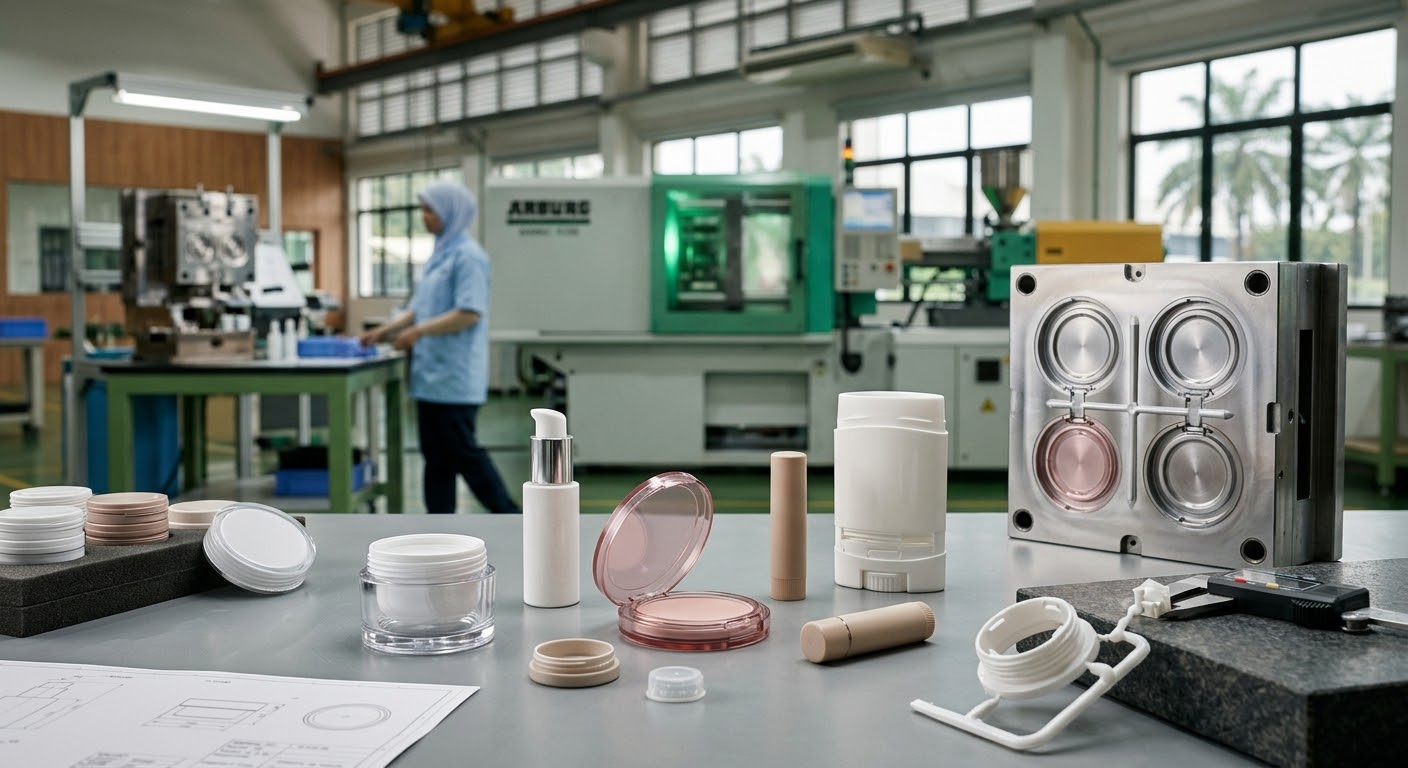
In-house mold design, fabrication, modification, and repair provide an operational advantage when packaging needs refinement. If a thread fit needs adjustment, a logo detail is too shallow, or a closure interface requires correction, the team controlling the tooling can respond without waiting for multiple external suppliers to coordinate. That matters when a launch date is fixed and a small tool change affects every unit produced.
Glasfil applies this integrated approach across molding projects, with in-house design and mold modification capability supporting faster technical decisions from concept through repeat production.
Plan for Change Before Production Begins
Private label programs often evolve. A brand may add a new size, change a cap finish, introduce a regional label requirement, or shift from a single SKU to a family of related products. Packaging should be designed with these possibilities in mind.
Where feasible, shared neck finishes, common closure platforms, and controlled dimensional standards can reduce future complexity. This does not mean every product should look the same. It means the components behind the appearance should be rationalized when doing so protects cost and supply reliability.
Material Selection Is a Performance Decision
Resin choice shapes the look and function of beauty packaging. Polypropylene can be suitable for many caps, jars, and hinged components because of its chemical resistance and practical molding characteristics. PET may be selected for clarity and bottle applications, while other materials may be needed where stiffness, impact resistance, barrier performance, or a specific finish is required.
The right material depends on the formula and the package. Fragrance, essential oils, solvents, active ingredients, and temperature exposure can affect plastics differently. A material that performs well with a dry powder may not be appropriate for a concentrated serum. Packaging teams should avoid treating material selection as a catalog choice alone.
Color and finish also require production discipline. A masterbatch that looks correct on a sample plaque may appear different on a textured cap, a polished jar, or a thin-walled component. Metallic effects, soft-touch finishes, matte surfaces, and high-gloss surfaces all introduce different quality risks. Approved color standards, controlled processing parameters, and retained production samples help keep repeat orders aligned.
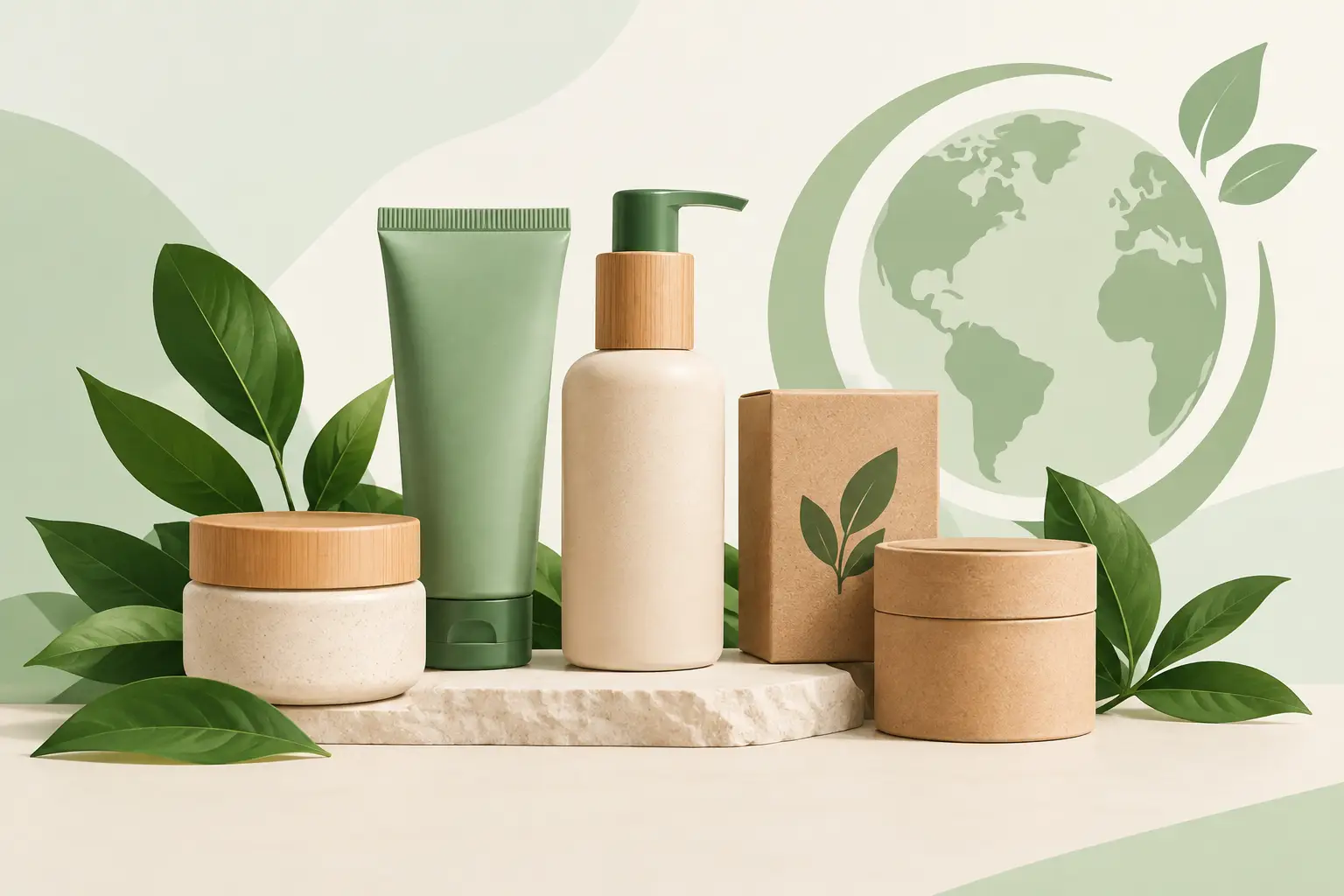
Recycled content can be part of a responsible packaging strategy, but it should be evaluated against visual consistency, mechanical performance, availability, and the requirements of the final product. The best sustainability decision is one that can be repeated reliably, not one that looks good only in a presentation sample.
Quality Control Must Follow the Part Through Assembly
Beauty packaging is frequently judged by details measured in fractions of a millimeter. A cap may mold within tolerance but fail when paired with a bottle from another supplier. A component can look clean before decoration yet show defects after printing, coating, or assembly. Quality control therefore needs to follow the actual production route.
A disciplined plan typically starts with incoming material checks and first-article approval. It continues with in-process monitoring for appearance, dimensions, weight, flash, short shots, warpage, and assembly fit. Final inspection should reflect the product’s true use conditions, including closure function, leakage risk where relevant, cosmetic appearance, packing protection, and traceability.
The inspection level should match the risk. A simple cap for a high-volume, low-cost item needs consistent dimensional control. A prestige compact with a visible hinge, mirror fit, and decorated surface may require a more demanding cosmetic inspection standard. Over-inspection adds cost, while under-inspection transfers risk to the brand and retailer. The target is a clear, agreed standard that production teams can execute consistently.
Choose a Supply Model That Protects the Launch Date
Private label beauty packaging can involve multiple suppliers: a bottle producer, closure molder, pump provider, decorator, assembler, filler, and logistics partner. This model can work, but every handoff creates another point where dimensions, schedules, and accountability can drift.
An integrated manufacturing partner reduces those handoffs for plastic components by coordinating design refinement, tooling, molding, secondary processing, packing, and shipping under one operating plan. For procurement teams, that can mean fewer technical gaps to manage and clearer ownership when a production issue appears.
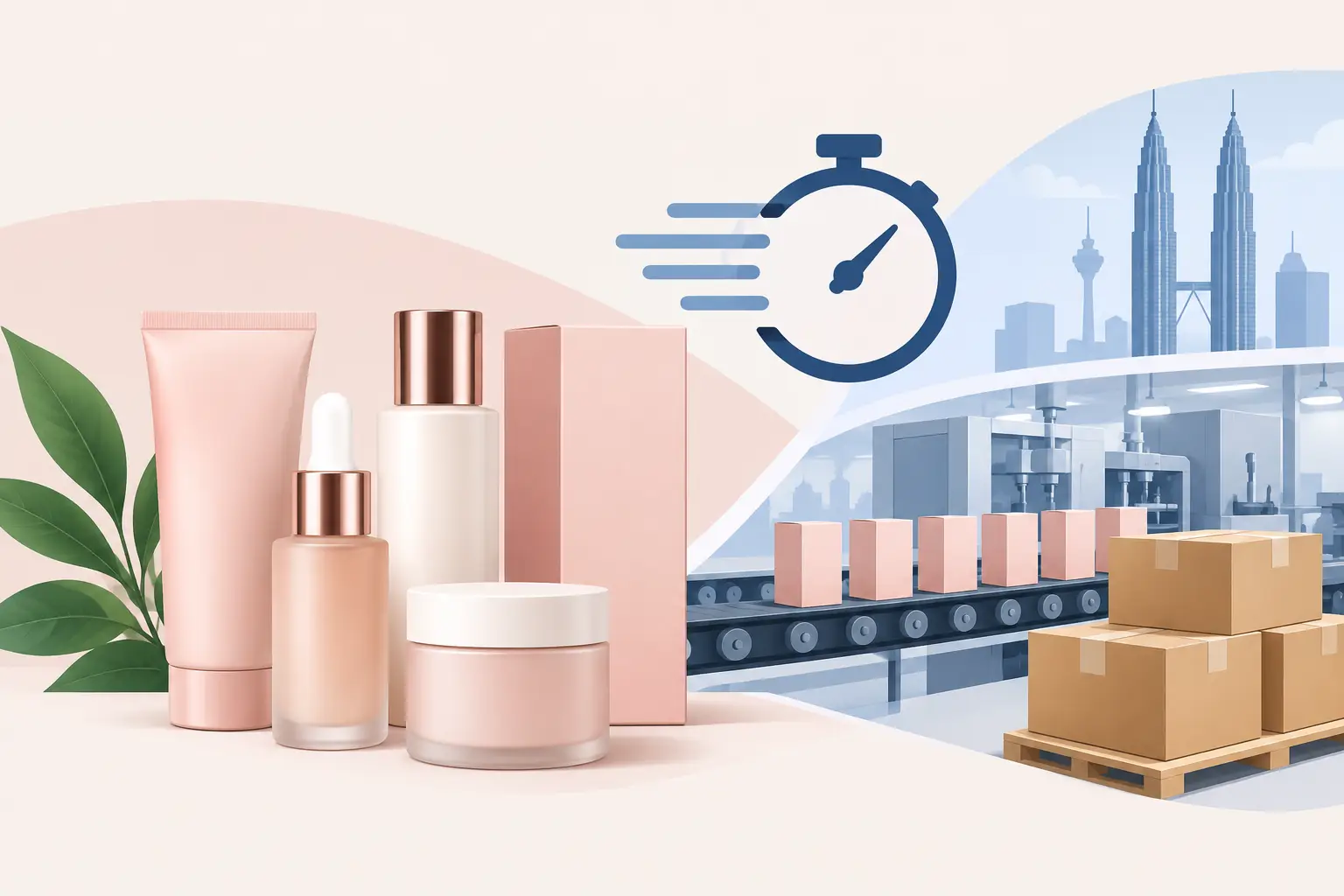
Speed should not mean skipping validation. It means resolving engineering questions early, making tool changes quickly, and keeping production decisions close to the people who control the mold and molding process. A realistic eight-week path from confirmed design to finished plastic parts may be achievable for the right project, but timing still depends on complexity, tooling scope, materials, finishing, approvals, and order volume.
The strongest packaging programs begin with a practical question: can this design be made repeatedly, inspected efficiently, and delivered when the market needs it? When that question guides the work from the first concept, packaging becomes a dependable part of the product launch rather than the reason it slips.
Ready to upgrade your cosmetic packaging? Contact us today to evaluate your design and run a trial with sustainable materials.