Although a cap accounts for a small share of a product’s total weight, it determines whether a package seals, dispenses, survives shipping, and recycles efficiently. For product developers and procurement teams, prioritizing sustainable closures and caps is not a cosmetic packaging decision. It is an engineering and supply-chain decision that must protect function while reducing material impact.
The application—not a material trend—drives the right approach. A closure for a household chemical, an automotive fluid container, or a water-related product faces different demands for chemical resistance, torque retention, tamper evidence, and temperature stability. Successful sustainable design keeps those requirements intact from the first molded sample through repeat production.
Sustainable Closures Must Still Perform
A closure does a demanding job. It must create a reliable seal, withstand opening and closing cycles, work with the neck finish or mating component, and maintain its geometry across changing temperatures. If a sustainable alternative causes leaks, breakage, or premature replacement, it quickly undermines its environmental benefit.
Teams cannot base material selection on recycled content alone. Polypropylene and high-density polyethylene serve as common choices for caps and closures because they provide good chemical resistance, durability, and processing consistency. Depending on the product system, recycled resin offers a practical option, especially when teams keep the cap within the same polymer family as the main container. Mono-material design simplifies sorting and recycling at end of life.
However, trade-offs exist. Post-consumer recycled material can introduce variation in color, odor, flow behavior, and mechanical properties. A closure with thin threads, fine sealing features, or a highly cosmetic surface needs tighter material controls than a simple protective cap. The solution might involve a defined percentage of recycled content, a carefully qualified resin source, or a redesign that adds strength where recycled material changes performance.
The closure and container must be designed as one system
An incompatible cap, liner, valve, or decorative component paired with a recyclable container complicates recovery. Engineers do not need to make every component from a single resin. In some applications, barrier properties, dispensing performance, or safety requirements make a multi-material solution necessary. The key lies in understanding the full assembly and making deliberate choices.
For example, engineers can design a molded closure using the same polymer family as its bottle, while minimizing, making removable, or selecting a separate component for compatibility with the expected recycling stream. Labels, metallic finishes, adhesives, and sleeves also require review. A cap that technicians cannot easily identify or separate in practice fails to deliver the intended result, even if it remains technically recyclable.
Prioritizing Sustainable Closures and Caps in Product Development
Engineers achieve the most impact by improving a cap or closure before finalizing tooling. Changes made after building a production mold drive up costs, extend lead times, and delay validation schedules. Early design-for-manufacturing reviews allow engineering teams to identify risks before they become production problems.
Start by defining the non-negotiable requirements. These normally include the required seal, opening torque, child-resistance or tamper-evident features, chemical exposure, expected service temperature, regulatory obligations, annual volume, and target recycled-content level. An industrial cleaning product closure prioritizes chemical compatibility and leak prevention. A consumer product cap also requires a precise surface finish and color consistency. Teams should never assume either set of requirements.
Next, evaluate geometry. Material reduction adds value when it leaves the part’s strength intact. Wall thickness, rib design, thread profile, hinge geometry, and sealing land dimensions all influence whether engineers can lightweight a closure safely. Removing material from the wrong area causes sink marks, warpage, poor thread engagement, or inconsistent torque. A small geometric change also affects mold filling and cooling time, directly impacting cycle time and unit cost.
Tooling input matters at this stage. Recycled and alternative materials may require changes to gate location, venting, cooling, steel selection, or surface finish. Their flow characteristics differ from virgin grades, and thin-wall caps or detailed features make those differences more visible. A manufacturing partner with in-house mold design and modification capabilities tests these decisions quickly rather than treating tooling as a fixed constraint.
Validate the Part, Not Just the Resin
Material data sheets provide a starting point, but they do not replace part-level testing. A resin can look suitable on paper and still produce a closure that behaves differently after molding, assembly, transport, or repeated use.
Validation should reflect actual product conditions. Torque testing confirms that the cap can be applied and removed within specification. Leak testing evaluates the seal under pressure, inversion, vibration, and relevant temperature changes. Dimensional inspection verifies critical threads, sealing surfaces, and snap features. For hinged caps or dispensing closures, cycle testing can reveal fatigue that a one-time fit check will miss.
Visual inspection is also relevant, particularly where brands require a consistent finish. Recycled content can create color variation or visible specks, which may be acceptable for an industrial component but not for a highly visible consumer closure. Adding masterbatch can improve appearance, but it may affect recyclability targets or complicate material recovery. The right answer depends on the product’s use, brand requirements, and end-of-life strategy.
Production trials should be large enough to reveal real process variation. A few acceptable samples from a prototype tool do not prove that a design will run consistently across a high-volume production schedule. Teams should monitor fill balance, part weight, shrinkage, warpage, cycle time, reject rate, and assembly performance. These measurements turn sustainability goals into controlled manufacturing parameters.
Build Sustainability Into Tooling and Production Control
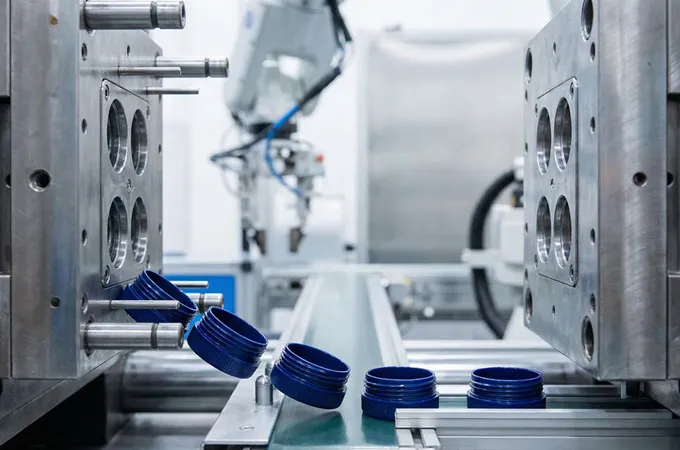
A well-designed mold supports more than part appearance. It provides repeatability. Consistent cavity performance, stable cooling, accurate ejection, and controlled processing reduce scrap, rework, and unnecessary energy use. Those improvements often strengthen both sustainability and operating margins.
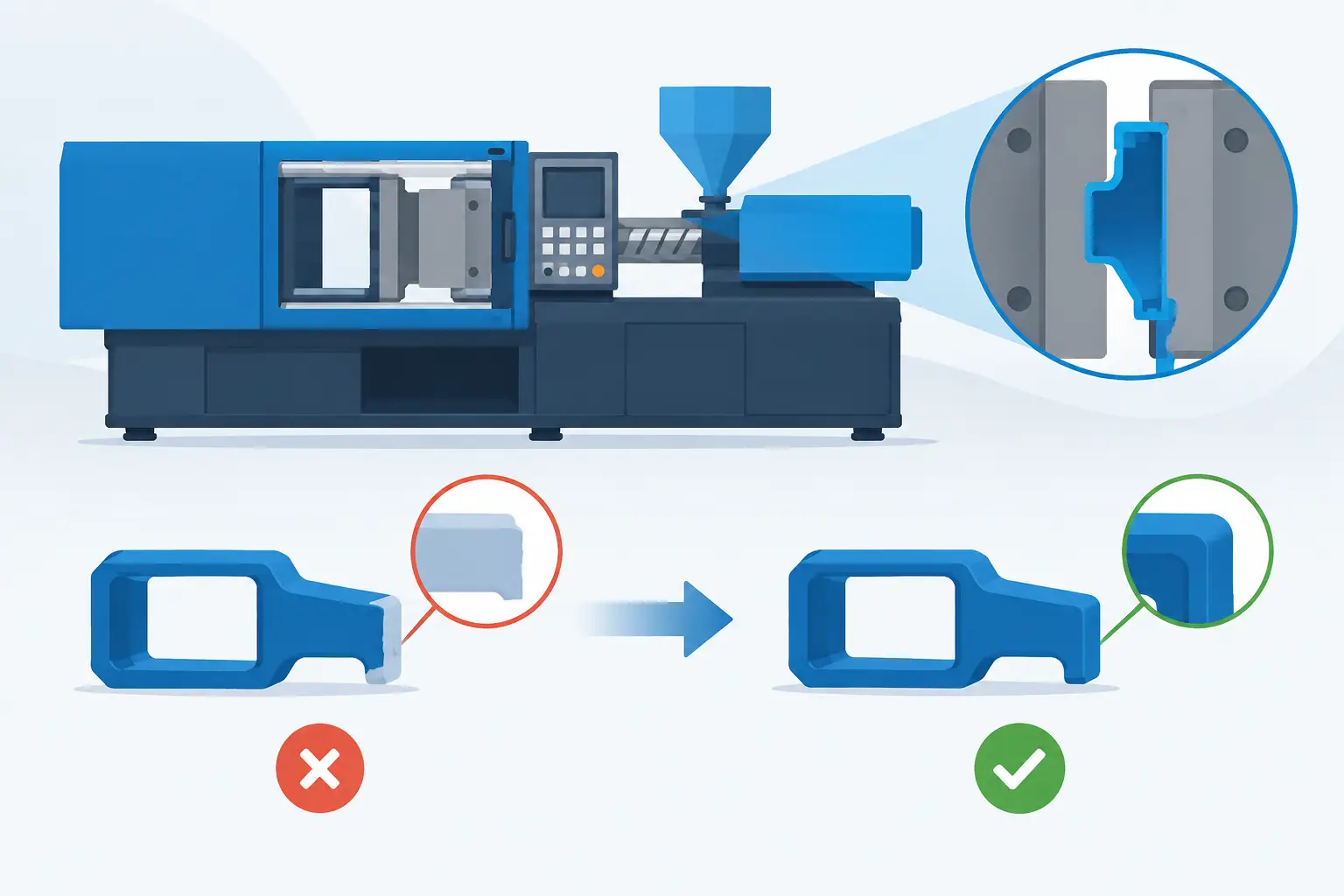
Tool maintenance is equally important. Worn threads, damaged cavity surfaces, or poor venting can create flash, short shots, and dimensional drift. In closures, even minor defects can lead to sealing failure or assembly interruptions. Preventive maintenance and in-process quality checks are practical safeguards against wasted material and unreliable output.
For companies managing several variants, tooling flexibility can also reduce waste. Insert changes, controlled mold modifications, and modular design may allow a manufacturer to adapt a closure for a new size, finish, or brand requirement without starting from zero. This needs to be evaluated case by case. A modular tool is not always the lowest-cost option, but it can be valuable when product ranges change frequently or market demand is uncertain.
At Glasfil, in-house tooling, molding, secondary processing, and quality control can keep these decisions connected. When the team refining a part can work directly with the team building and running the mold, material and geometry adjustments can be assessed against real production conditions rather than in isolation.
Choose Suppliers That Can Support the Full Decision
Sustainable closure programs often stall when responsibility is fragmented. One supplier recommends a resin, another builds the tool, a third runs production, and a fourth handles finishing or assembly. When a problem appears, determining the source can take time and delay a launch.
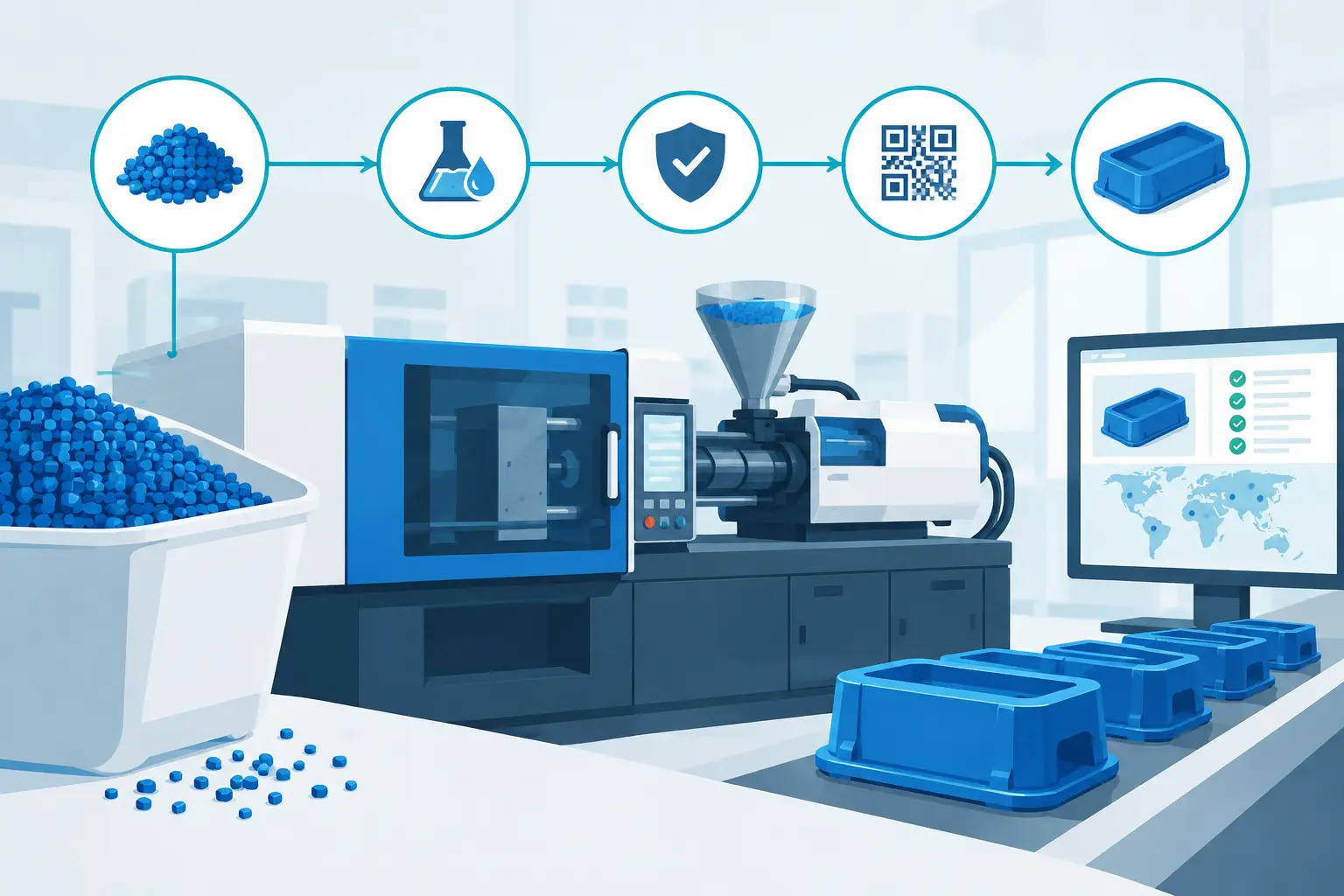
An integrated manufacturing process creates clearer accountability. The supplier should be able to discuss material availability, tooling suitability, mold-flow considerations, molding capacity, inspection methods, secondary operations, packing requirements, and shipment planning. For repeat production, they should also have a process for controlling approved resin grades, color standards, critical dimensions, and change management.
Procurement teams should ask direct questions: What recycled-content range can be maintained consistently? Which dimensions are critical to seal performance? How will lot-to-lot material variation be managed? What testing is completed before shipment? Can the tool be modified in-house if a design refinement is needed? Clear answers are more useful than broad sustainability claims.
A sustainable cap is not simply one made with less plastic or more recycled resin. It is a component engineered to perform reliably, manufactured with controlled waste, and designed with its next material pathway in mind. The strongest programs treat closure design as a production discipline from the beginning, giving teams a practical route to reduce impact without adding avoidable risk to the product.
Ready to scale your next eco-friendly cosmetic line? Contact us today with your 3D models and target specs to get a validated production plan.