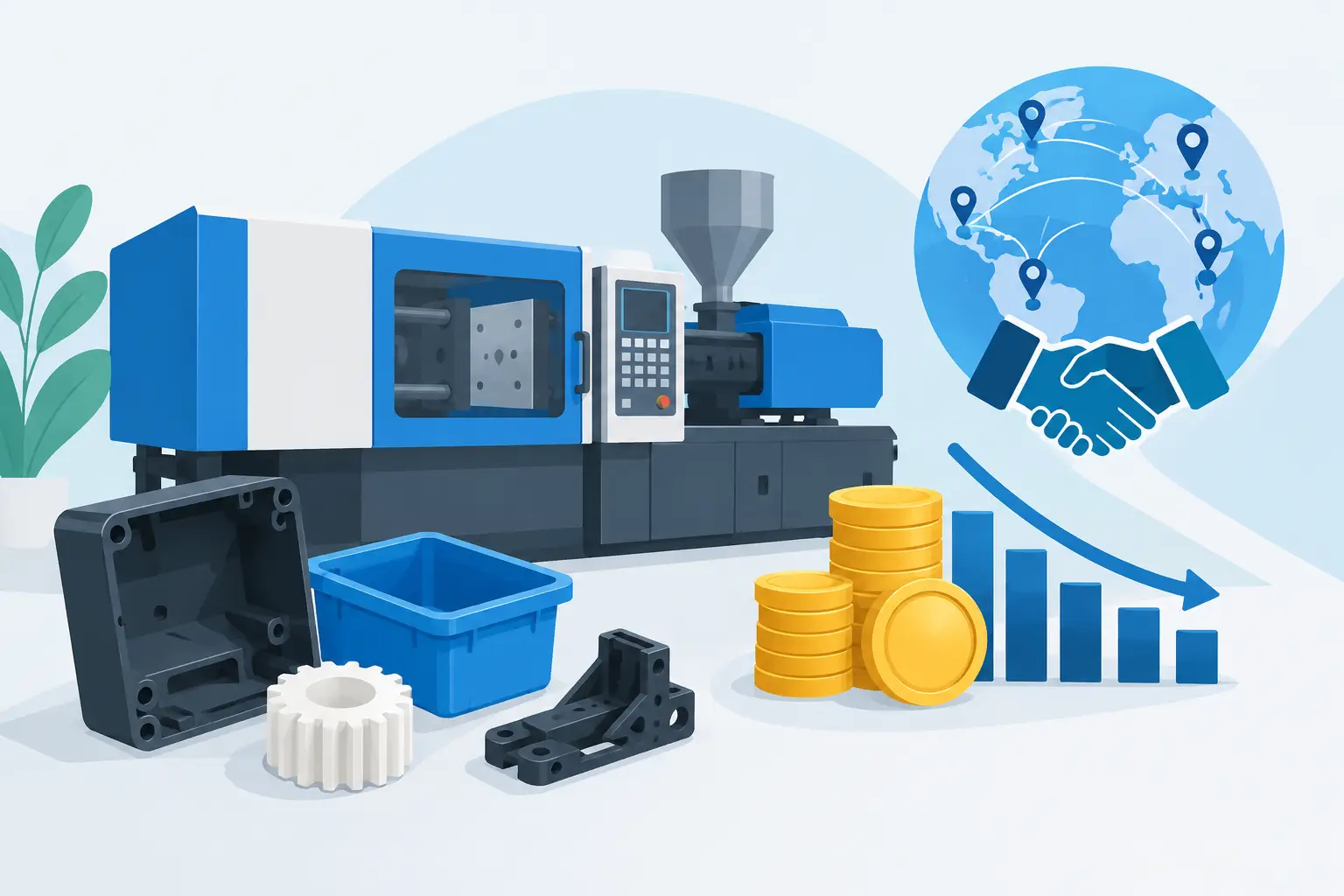
A packaging project can appear sustainable on paper and still fail at the production line. Recycled content can cause a bottle to warp, lightweighting can cause a closure to leak, and a recyclable format might require tooling changes that delay your launch. Choosing a turnkey sustainable plastic packaging manufacturer means choosing a partner that resolves those connected challenges before they become expensive production problems.
For product developers, procurement teams, and industrial brands, the goal extends beyond sourcing a greener plastic part. Teams must manufacture packaging that protects the product, fits filling and assembly processes, meets quality requirements, supports commercial objectives, and scales consistently. Achieving that goal requires direct control over engineering, tooling, molding, finishing, packing, and delivery.
What Turnkey Manufacturing Means for Sustainable Packaging
Turnkey manufacturing brings the main production stages under one accountable partner. Rather than sending a design to one supplier, a mold to another, and production to a third, the single manufacturer manages the entire path from part concept to finished packaged component.
For sustainable plastic packaging, this integration matters because material, geometry, tooling, and process settings directly affect one another. A decision to increase post-consumer recycled content, for example, alters flow behavior, shrinkage, surface finish, and dimensional stability. If you separate the mold maker from the molder, the correction process becomes slow and fragmented. Keeping both capabilities in-house allows engineering teams to evaluate and implement adjustments with far greater control.
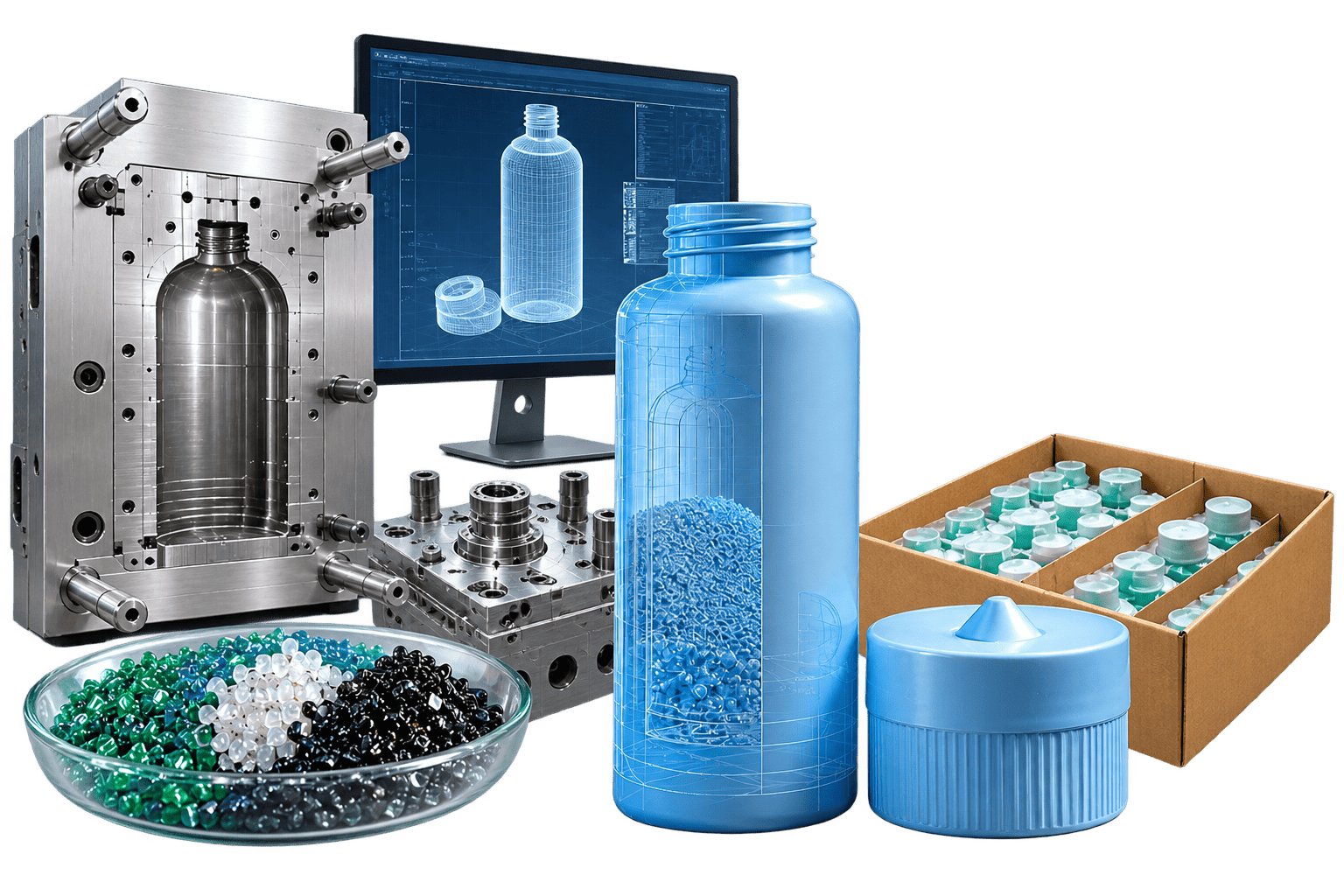
A capable turnkey partner reviews the initial concept, recommends manufacturable geometry, designs and fabricates the mold, produces trial parts, validates the process, carries out secondary operations where needed, and prepares finished components for shipment. The practical benefit: fewer handoffs, clearer responsibility, and a shorter route from approved design to repeatable production.
Sustainable Packaging Is an Engineering Decision
Industry claims often reduce sustainability to simple material selection. While material matters, it only drives part of the result. A package can use recycled or recyclable resin and still create waste if the plant molds it too thick, runs it inconsistently, or produces a part incompatible with the product it contains.
Good packaging engineering starts with function. The component must withstand handling, stacking, transport, temperature exposure, and its intended product environment. A cap, dispenser housing, container, insert, or protective component must also meet fit, sealing, thread, snap, and appearance requirements. Reducing material without confirming these conditions transfers cost and waste elsewhere through rejects, breakage, or product loss.
The strongest sustainability improvements deliver measurable, application-specific results. Teams achieve this by lightweighting a proven design, consolidating multiple parts, selecting a compatible recycled-content formulation, improving cycle efficiency, or designing for simpler material separation at end of life. The right approach depends on the part, resin, production volume, regulatory needs, and available recovery systems in the target markets.
Recycled Content Requires Process Discipline
Post-consumer recycled and post-industrial recycled materials help reduce dependence on virgin resin, but they require disciplined material and process management. Resin batches vary more than virgin materials in color, melt flow, contamination risk, and mechanical performance. Engineering teams must address these variables during design reviews and tool development, long before full production begins.
An experienced injection molding manufacturer evaluates wall thickness, gate placement, cooling, venting, and expected shrinkage before committing to a production solution. Quality checks verify dimensional accuracy, visual consistency, functional fit, and critical performance requirements throughout the run. For parts that need a premium cosmetic appearance or highly precise tolerances, manufacturers must balance recycled content targets against functional and commercial realities.
That is not a reason to avoid recycled materials; it is a reason to define specifications honestly and validate them properly.
Design for Recycling Has Limits
Mono-material designs can simplify recycling compared with permanently bonded combinations of incompatible materials. Reducing unnecessary coatings, inserts, and complex assemblies can also make a package easier to sort and recover. Yet a mono-material solution is not automatically the best answer if it compromises barrier performance, safety, product protection, or required durability.
A practical manufacturer will explain these trade-offs rather than make generic sustainability promises. In some cases, a more complex package prevents product spoilage or extends useful life enough to justify its material profile. In others, a simpler and lighter molded design delivers a clear improvement without sacrificing performance. The correct choice comes from testing the full use case.
How a Turnkey Sustainable Plastic Packaging Manufacturer Reduces Risk
The value of a turnkey supplier is operational control. Packaging launches are vulnerable to small disconnects between concept and production: an unclear tolerance, an unsuitable draft angle, a late material change, or a tool that cannot be modified quickly enough after sampling.
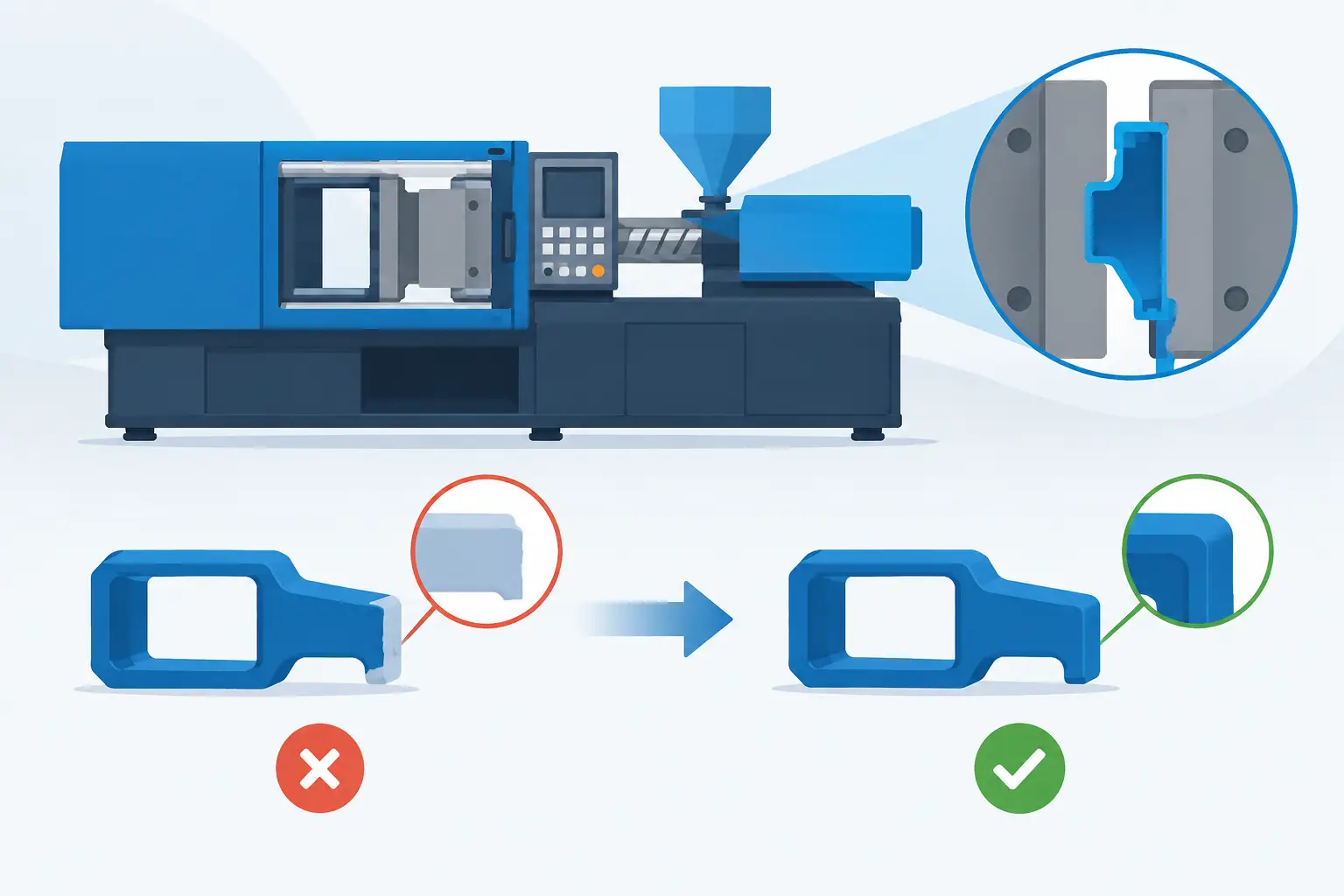
In-house tooling changes the equation. Mold modifications can be made in response to trial data without waiting for an outside toolroom’s schedule or passing technical responsibility between vendors. This is especially valuable for packaging components with threads, snap fits, hinges, sealing surfaces, tamper-evident features, or tight assembly requirements.
At Glasfil, product realization is managed through in-house mold design, fabrication, modification, injection molding, secondary processing, quality assurance, packing, and shipping. With 19 machines up to 560-ton capacity across two manufacturing plants, the operation can support a range of packaging component sizes and production requirements while maintaining direct control over the production process.
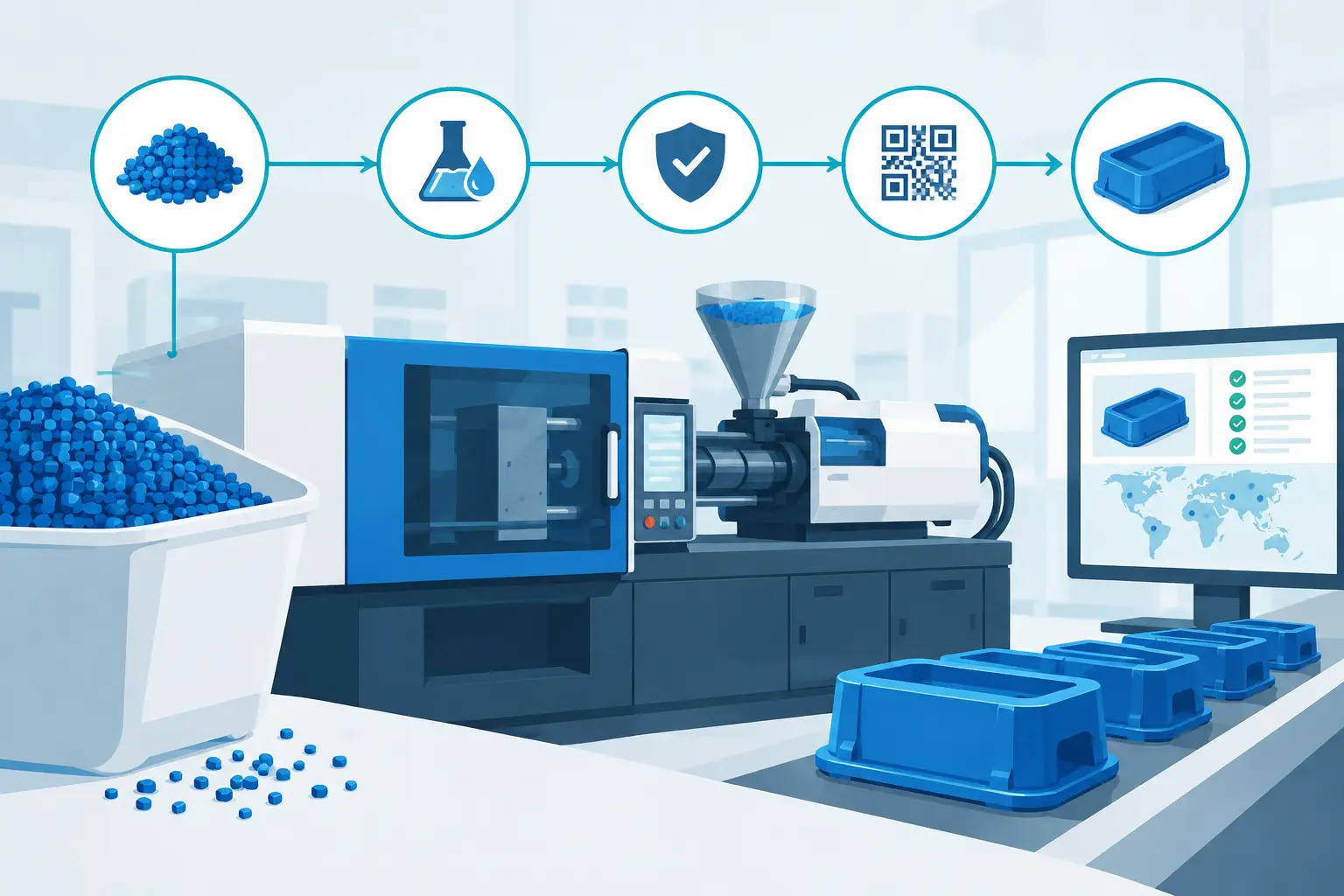
For buyers, the question is not whether a supplier can make a sample. It is whether that supplier can repeat the approved result across production runs, respond to changes, and protect the delivery schedule. A proven process should include documented material specifications, first-article evaluation, defined quality checkpoints, and traceability appropriate to the application.
Questions to Ask Before Selecting a Supplier
Before appointing a packaging manufacturer, buyers should look beyond a quotation and ask how the supplier will manage technical uncertainty. The answers reveal whether the supplier is equipped for development work or only prepared to run an established mold.
Ask who owns mold design and fabrication, and whether mold modifications are completed in-house. Confirm which materials the manufacturer has processed successfully, including recycled-content grades where relevant. Request clarity on part validation, quality inspection methods, maintenance planning, production capacity, and the expected timeline from design approval to production.
It is also worth discussing what happens when the first trial identifies a problem. A reliable partner will have a clear route for reviewing root causes, changing the tool or process, and validating the correction. This is where integrated manufacturing delivers its strongest commercial value. Problems are addressed close to the equipment, engineering team, and quality function responsible for the finished part.
Move From Sustainability Goals to a Manufacturable Brief
A useful packaging brief does more than state that a component should be sustainable. It identifies the part’s function, annual volume, resin preferences, recycled-content target, critical dimensions, product-contact conditions, appearance expectations, assembly method, and destination markets. It also states which objective takes priority when trade-offs arise: minimum weight, high recycled content, premium appearance, lowest unit cost, or maximum durability.
This clarity helps engineering teams make informed recommendations early, preventing a design from reaching tooling before teams make essential decisions. It also gives procurement teams an accurate basis for comparing suppliers, because they evaluate a concrete production solution rather than a broad material claim.
The most effective packaging projects begin with a component that clearly defines its requirements and a manufacturer that turns those requirements into controlled production. Bring the functional problem, the sustainability target, and the commercial deadline into the same conversation early. That is where you make better packaging decisions.
Partner with an End-to-End Cosmetic Packaging Expert
At Glasfil, we integrate custom mold design, precision tooling, and high-volume production under one roof to make your transition to sustainable bioplastics seamless.
Ready to scale your next eco-friendly cosmetic line? Contact us today with your 3D models and target specs to get a validated production plan.