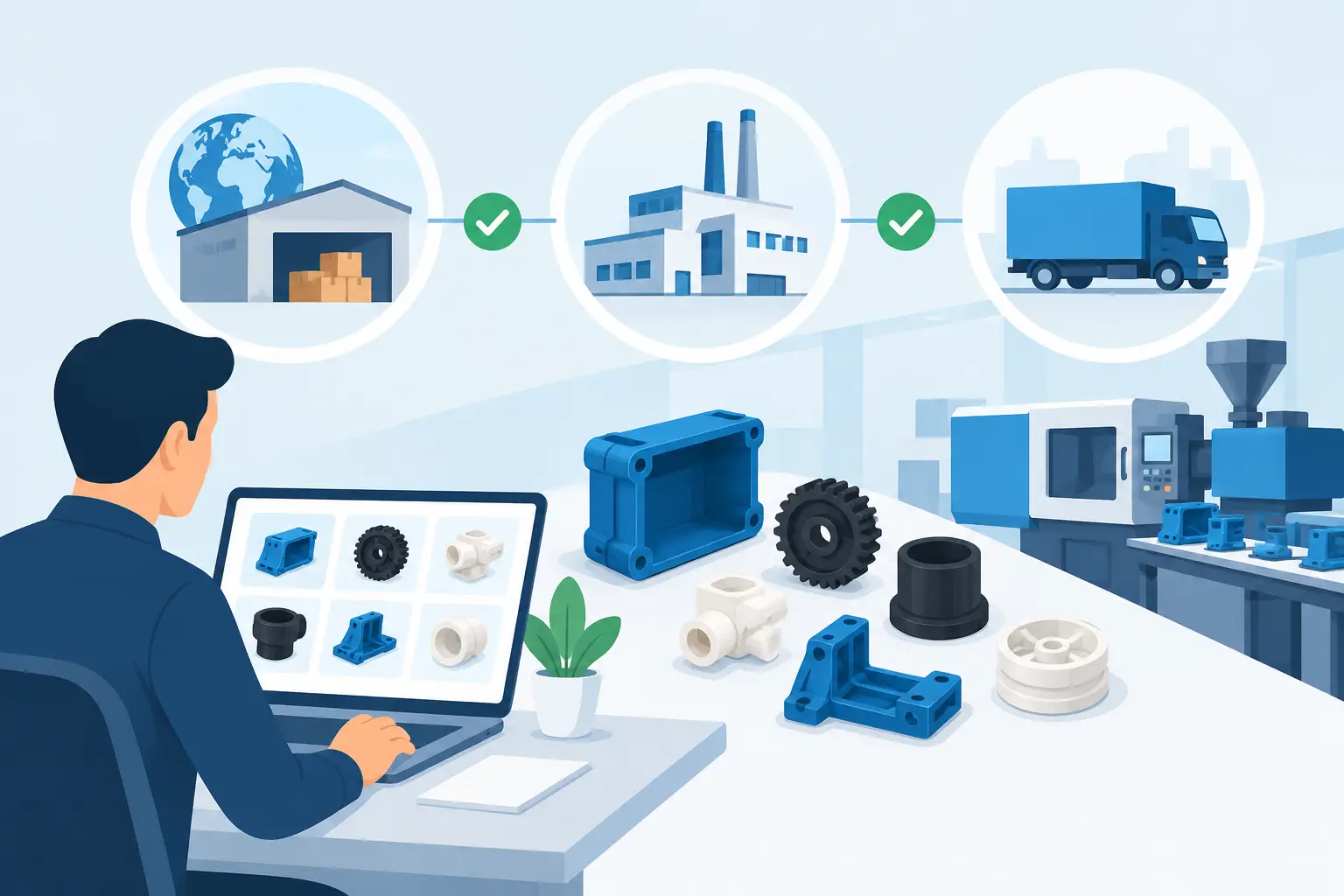
 If you are asking what industry is plastic injection molding, the short answer is manufacturing. The more useful answer is that it sits at the center of modern industrial production, serving as a core process behind thousands of parts used in products people buy, install, assemble, and operate every day.
That distinction matters for buyers. Plastic injection molding is not a niche trade limited to one market. It is a production technology used across multiple industries that need repeatable, high-volume, dimensionally consistent plastic components. For OEMs, product developers, procurement teams, and engineers, that means injection molding is less a standalone “industry” and more a critical manufacturing capability that supports entire supply chains.
What industry is plastic injection molding part of?
Plastic injection molding belongs to the plastics manufacturing sector, which is part of the broader manufacturing industry. More specifically, it falls under industrial production processes used to convert raw plastic resins into finished or semi-finished components.
In practical terms, companies do not usually buy injection molding as an abstract category. They buy molded parts, tooling, engineering support, secondary finishing, quality control, and delivery. That is why the process is often embedded inside larger manufacturing programs for automotive systems, electrical housings, utility components, appliance parts, furniture hardware, bathroom accessories, and many other product categories.
So when someone asks what industry is plastic injection molding, the clearest answer is this: it is a manufacturing process within plastics manufacturing, but its commercial relevance extends into nearly every sector that relies on plastic parts at scale.
Why injection molding crosses so many industries
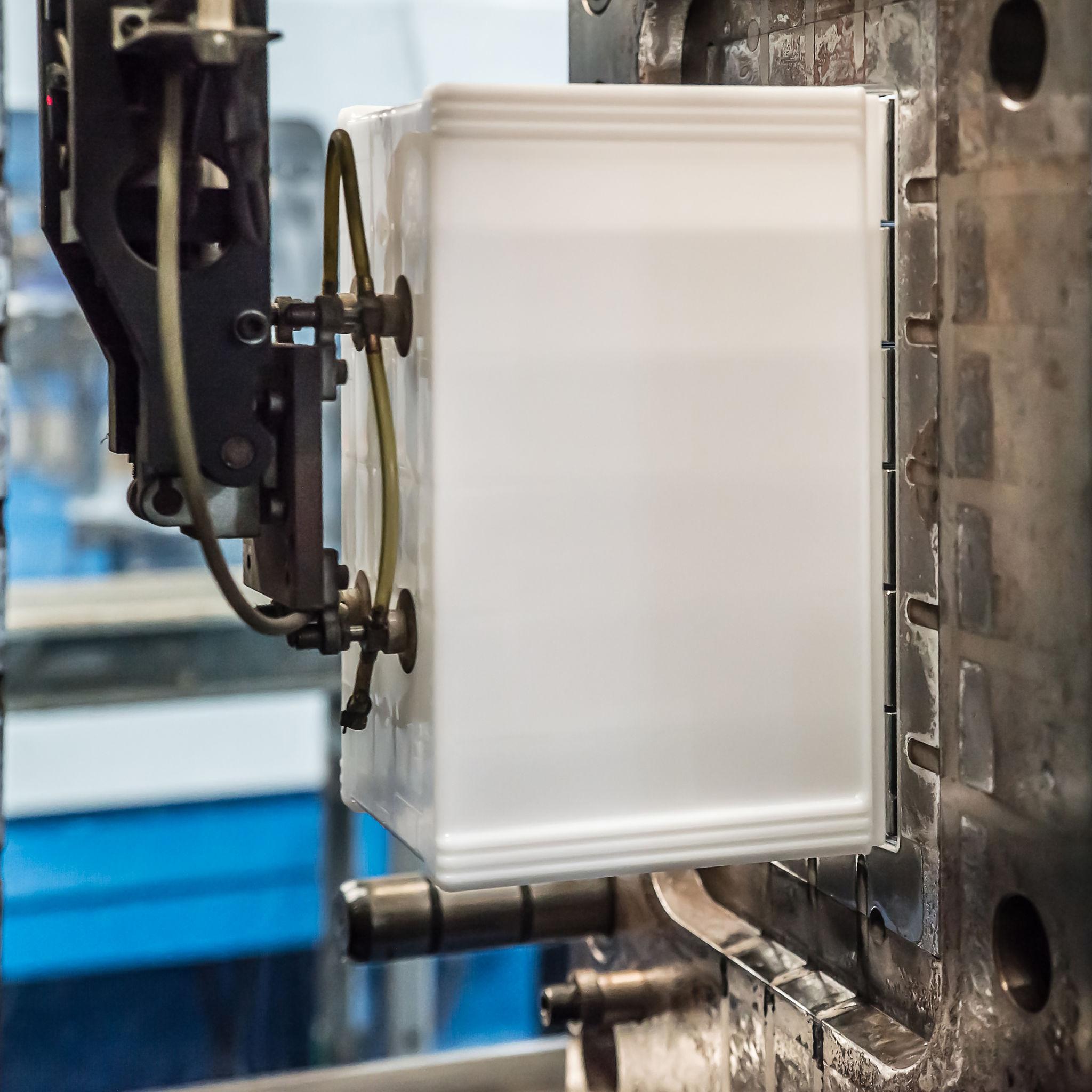 Injection molding has a broad industrial reach because it solves a specific production problem very well. It enables manufacturers to produce complex plastic parts quickly, consistently, and in high volumes once the tooling is in place.
That combination changes the economics of production. A machined or fabricated part may work for prototyping or low-volume runs, but it often becomes too slow or too expensive when demand increases. Injection molding shifts more effort into mold design and tool fabrication up front, then rewards that investment with fast cycle times and repeatable output.
This is also why the process is so attractive for buyers, managing cost, lead time, and quality at the same time. If the part design is right and the tool is built correctly, injection molding can reduce unit cost, tighten tolerances, improve visual consistency, and support stable production over long runs.
There are trade-offs, of course. Tooling requires capital, design mistakes become expensive once steel is cut, and not every application justifies a mold. But for products with recurring demand, the process is often the most commercially efficient route to production.
The industries that rely on plastic injection molding
Automotive
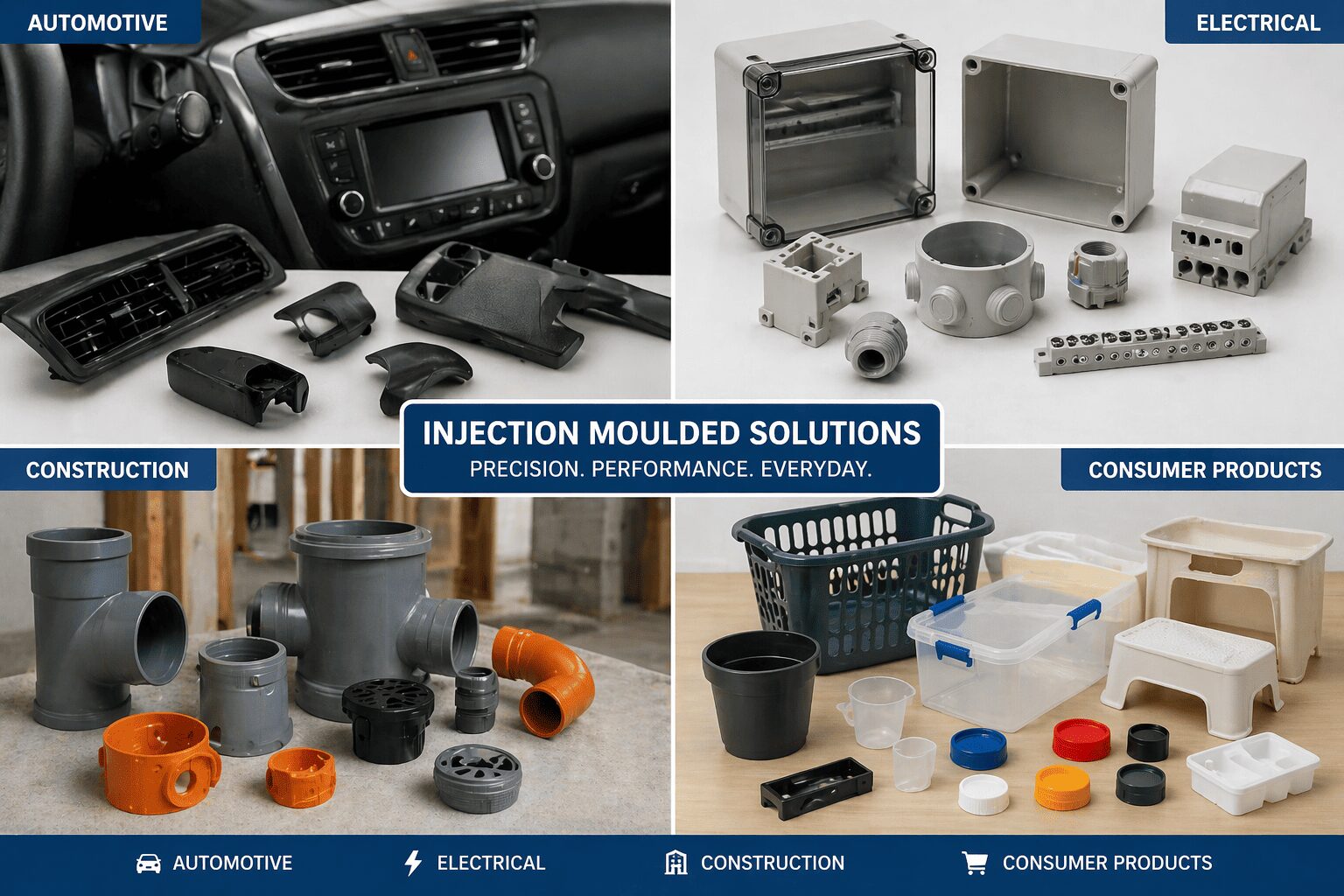
Automotive is one of the clearest examples of where injection molding belongs. Vehicle programs depend on repeatable plastic parts for interior trim, clips, covers, brackets, housings, dashboards, under-hood components, and functional assemblies.
In this sector, consistency matters as much as price. Parts need to fit, perform under thermal and mechanical stress, and remain stable across high-volume production. Material selection becomes critical because different applications may require impact resistance, heat resistance, dimensional stability, or surface quality.
Electrical and electronics
Electrical and electronics manufacturers use injection molding for enclosures, switch components, connectors, insulators, protective covers, and internal support parts. These products often demand close dimensional control because molded pieces must align with circuit boards, terminals, seals, or fastening systems.
This sector also places pressure on mold precision and process discipline. Cosmetic defects may be unacceptable on consumer-facing products, while flash, warpage, or shrink variation can affect fit and function in technical assemblies.
Construction and building products
Construction products may not always get the same attention as automotive or consumer goods, but injection molding is deeply established here. Spacers, mounting elements, utility housings, pipe-related components, fastening systems, and installation accessories are often molded for cost efficiency and repeatability.
The needs are slightly different from consumer markets. Durability, weather resistance, and practical performance usually matter more than premium aesthetics. Buyers in this sector often need a dependable supply over time, especially for products tied to installation standards or infrastructure maintenance.
Furniture and home products
Furniture components, hardware covers, levelling feet, handles, support brackets, and decorative-functional parts are commonly made through injection molding. The process allows brands to balance form, strength, and cost without moving into more expensive production methods unless the application requires it.
This category often blends technical and cosmetic demands. A part may need to carry a load, fit with metal or wood assemblies, and still present a clean finished appearance.
Bathroom and sanitary products
Bathroom accessories and sanitary product components are another strong fit. Injection molding supports items such as dispensers, holders, mounting components, trims, water-related housings, and appearance parts that need reliable production quality.
Here, manufacturers usually have to manage both moisture exposure and visual standards. Depending on the product, surface finish, assembly accuracy, and plating or other secondary processing can all affect the final result.
Industrial equipment and automation
Automation systems and industrial equipment use molded parts for guards, housings, cable management components, sensor mounts, knobs, covers, and machine-adjacent parts. These are rarely one-size-fits-all products. They are often custom components designed around a specific machine, workflow, or assembly requirement.
That makes engineering support especially valuable. In industrial programs, the molding partner often contributes more than production capacity. Design refinement, material guidance, and tool modification capability can directly affect whether a part works reliably in the field.
Utility and metering products
Water meter components and other utility-related parts are a good example of how injection molding supports infrastructure-facing products. These components may require dimensional control, durability, and consistent long-run repeatability because they are integrated into systems that need dependable performance over time.
Unlike short-cycle consumer products, utility components may stay in active use for years. Buyers in this space usually care about process control, material stability, and the manufacturer’s ability to keep production consistent across repeated orders.
Injection molding is a process, but buyers experience it as a supply chain decision
From a technical standpoint, injection molding is a manufacturing process. From a commercial standpoint, it is often a supply chain decision with engineering consequences.
That difference matters because many production problems are not really about molding alone. They start earlier, with part geometry, material choice, tool design, gating, wall thickness, tolerance expectations, or assembly assumptions. A supplier that only presses parts may produce what was requested, even if the design is difficult to mold efficiently. A full-service manufacturing partner will usually look further upstream.
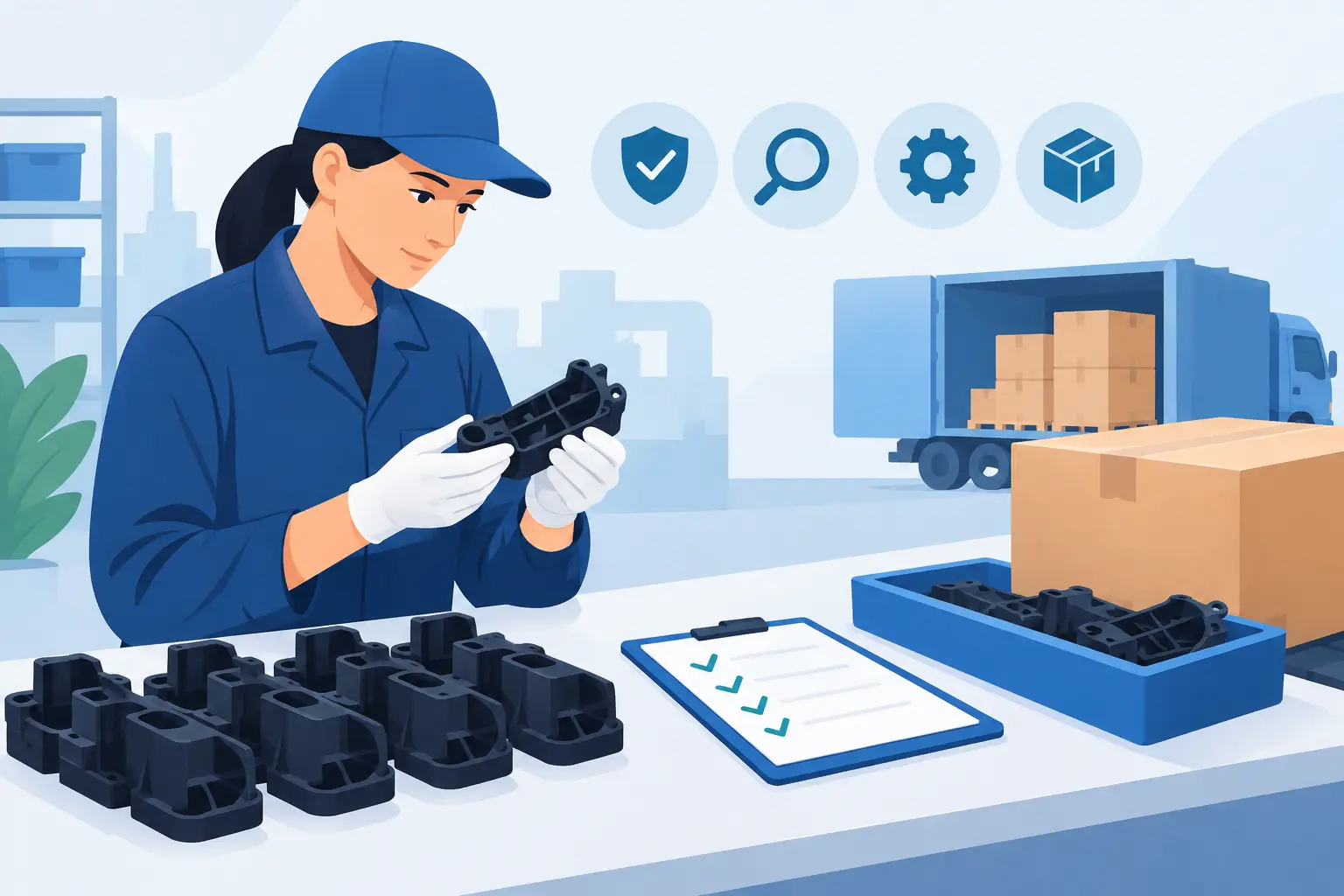
For business buyers, that can be the line between a part that runs and a part that scales. Moldability review, in-house toolmaking, modification capability, quality control, finishing, and packing are not side services. They are part of production risk management.
This is one reason companies working across multiple product categories often prefer integrated suppliers. If design updates, mold corrections, sampling, validation, and production all happen under one roof, communication shortens and response time improves. Glasfil operates in that model because industrial customers usually need execution, not handoffs.
When injection molding is the right fit – and when it is not
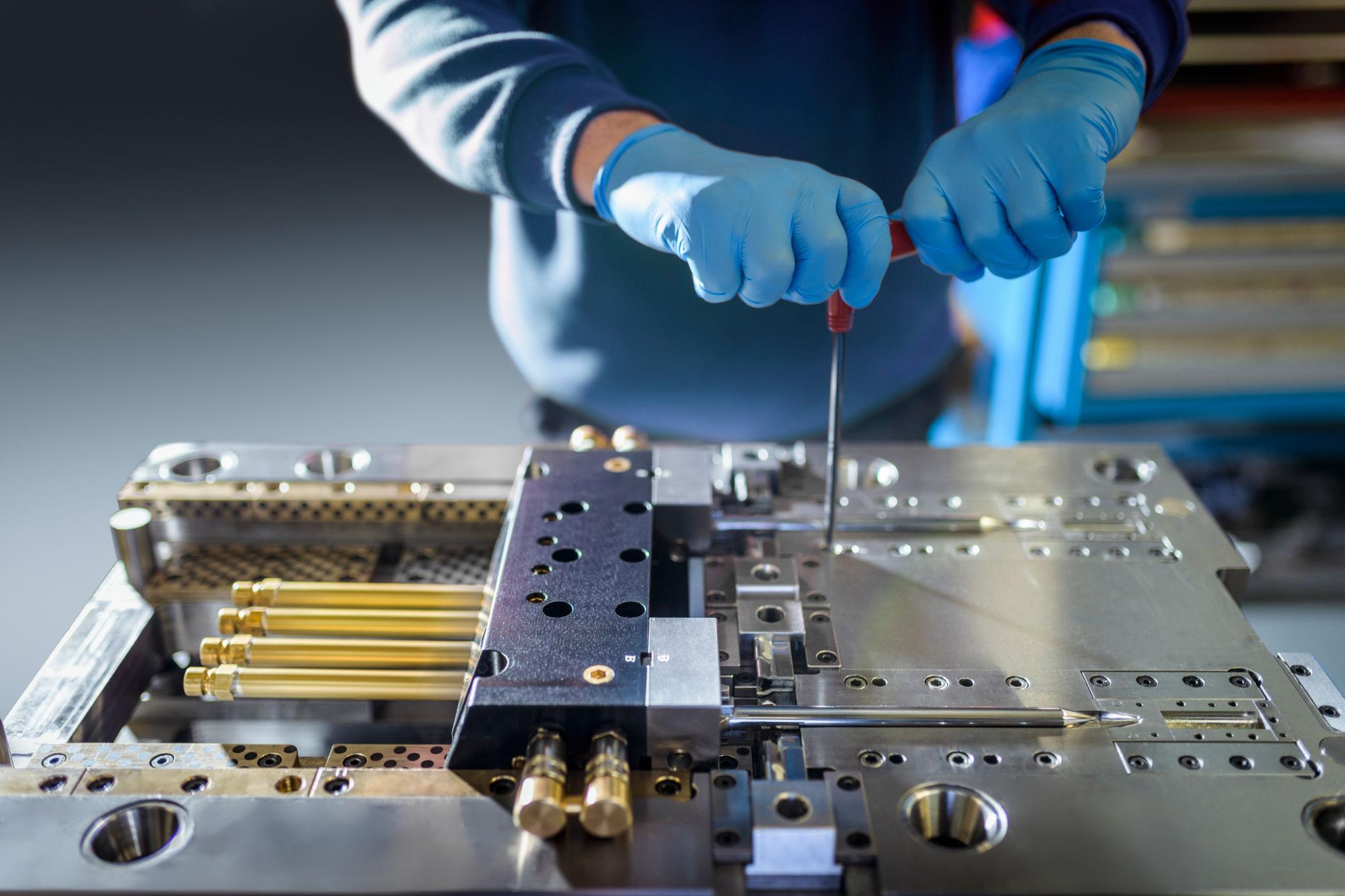 Injection molding is the right fit when a part needs repeatability, moderate to high production volume, and controlled per-unit cost over time. It also makes sense when the component has geometry that would be inefficient to machine or fabricate repeatedly.
It may not be the best fit for very low-volume demand, highly unstable product designs, or parts that change constantly during development. In those cases, prototyping methods, CNC machining, or other fabrication routes can make more sense early on. The question is not whether injection molding is good or bad. The question is whether the production volume, tool life, and part requirements justify the tooling investment.
That is why experienced manufacturers ask commercial and engineering questions at the same time. Annual volume, resin choice, part function, appearance standards, tolerance windows, and assembly requirements all influence whether the process is appropriate.
The most accurate answer for business buyers
If you need the shortest possible answer to what industry is plastic injection molding, say this: it is part of plastics manufacturing within the broader manufacturing industry.
If you need the answer that actually helps with sourcing, say this instead: plastic injection molding is a core industrial production process used across automotive, electronics, construction, furniture, bathroom products, automation, and utility applications whenever companies need custom plastic parts produced accurately, repeatedly, and at scale.
That is how buyers should think about it. Not as an isolated trade, but as a manufacturing capability that connects product design, tooling, production, finishing, quality, and delivery into one execution path.
If you are evaluating suppliers, the better question may not be what industry injection molding belongs to. It may be whether your molding partner can control enough of the process to keep your program on schedule, on spec, and ready to grow.
Choosing the right manufacturing partner is not just about price. It is about consistency, responsiveness, and the ability to support your program as it scales.
At Glasfil, we combine engineering support, in-house tooling, and controlled production to help customers reduce risk and maintain stable output.
Contact us to learn how we can support your next project.