A delayed tool, inconsistent part quality, and slow engineering feedback can derail a product launch long before the first shipment is due. That is why selecting a custom injection moulding partner is not a purchasing formality. It is an operational decision that affects tooling risk, production stability, lead time, and total landed cost.
For OEMs, product developers, and procurement teams, the real question is not simply who can mould a part. It is who can control the full process well enough to deliver repeatable results under real production pressure. The difference matters most when tolerances are tight, timelines are compressed, or a product still needs engineering refinement before scale-up.
What a custom injection moulding partner should actually do
A capable manufacturing partner should do far more than quote tooling and run parts. In many projects, the part design, material behaviour, tool construction, machine setup, finishing requirements, and packaging method are all connected. If those functions are split across too many vendors, delays and defects become harder to trace and harder to fix.
A true custom injection moulding partner brings those variables under control. That starts with design feedback before steel is cut. Gate placement, wall thickness, draft angles, shrinkage behaviour, texture, and assembly requirements all influence whether a part will run efficiently in production. If these issues are handled early, the tool is more likely to perform as expected, and the production process becomes more stable from the first validated run.
It also means the supplier should be equipped to support what happens after moulding. Secondary processing, finishing, assembly, packing, and shipping are not side issues. They affect labour, cosmetic quality, throughput, and how reliably parts arrive ready for use.
Why does in-house control change the outcome
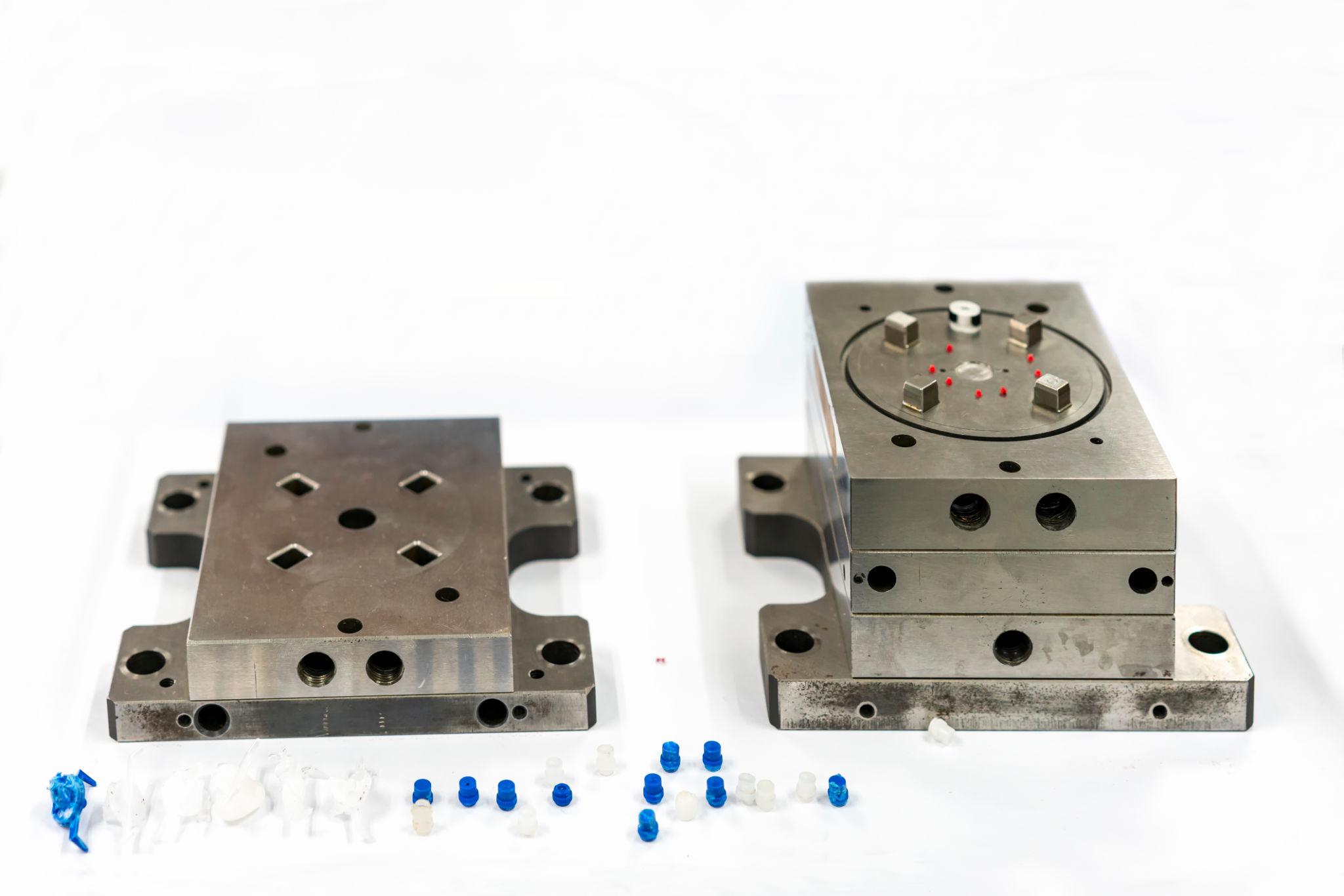
The strongest indicator of a dependable partner is not a polished presentation. It is control. When tooling design, mould fabrication, mould modification, production, and quality assurance are handled in-house, the manufacturer can move faster and solve problems at the source.
That matters most when a project changes, which happens often. A customer may need to adjust fit, strengthen a snap feature, improve cosmetic appearance, or modify a legacy component to match a discontinued part. If mould changes depend on an outside tool shop, every correction adds time, cost, and communication risk. If the manufacturer can modify the mould internally, the response is faster, and the feedback loop is tighter.
In-house control also reduces the handoff failures that commonly appear in custom projects. When one team designs the tool, another builds it, and another runs production, accountability can become blurry. A single integrated operation removes that gap. Problems still happen, but they are easier to diagnose and faster to correct.
How to evaluate a custom injection moulding partner
Buyers often start with price, but price alone rarely predicts production success. A low tooling quote can become expensive if the mould needs repeated correction, cycle times are inefficient, or quality issues disrupt deliveries.
A better evaluation starts with technical fit. Can the supplier handle the part size, resin type, tolerance requirements, and annual volume you need? Machine range matters here. So does experience with precision tooling and repeat production. A supplier with broad machine capacity and process coverage is better positioned to support both pilot quantities and scaled manufacturing without forcing a change in source.
Engineering depth is equally important. Ask how design issues are reviewed before tool build. Ask who owns DFM feedback, who approves tool changes, and how sampling is managed. If the answers are vague, that is usually a sign that the process is fragmented.
Lead time should also be examined carefully. Fast delivery is valuable, but only if the supplier has the internal capacity to support it. Compressed timelines require coordinated engineering, tooling, moulding, and quality planning. If those functions are disconnected, aggressive promises tend to slip.
Quality systems deserve a practical review rather than a generic one. Buyers should understand how the supplier handles first article checks, in-process inspection, mould maintenance, and corrective action. For custom parts, quality is not just final inspection. It is a process discipline from tool design through production control.
The trade-offs behind speed, cost, and complexity
There is no universal best supplier for every project because manufacturing priorities change. Some programs need the lowest piece price at mature volume. Others need speed to market, design flexibility, or engineering support on a part that is still evolving.
That is where trade-offs become real. A supplier optimised for very high-volume commodity production may not be the best fit for a technically demanding launch. A low-cost tool built with minimal upfront engineering can work for simple parts, but it may create instability if geometry is complex or visual standards are high.
The right custom injection moulding partner should be aligned with the stage and risk profile of your project. If your part is new, likely to change, or tied to a broader product rollout, responsiveness and technical control may be more valuable than the lowest initial quote. If the design is mature and demand is predictable, cost optimisation may carry more weight.
What matters is knowing which compromise you are making and whether the supplier is structured to support it.
Signs your supplier is a vendor, not a partner
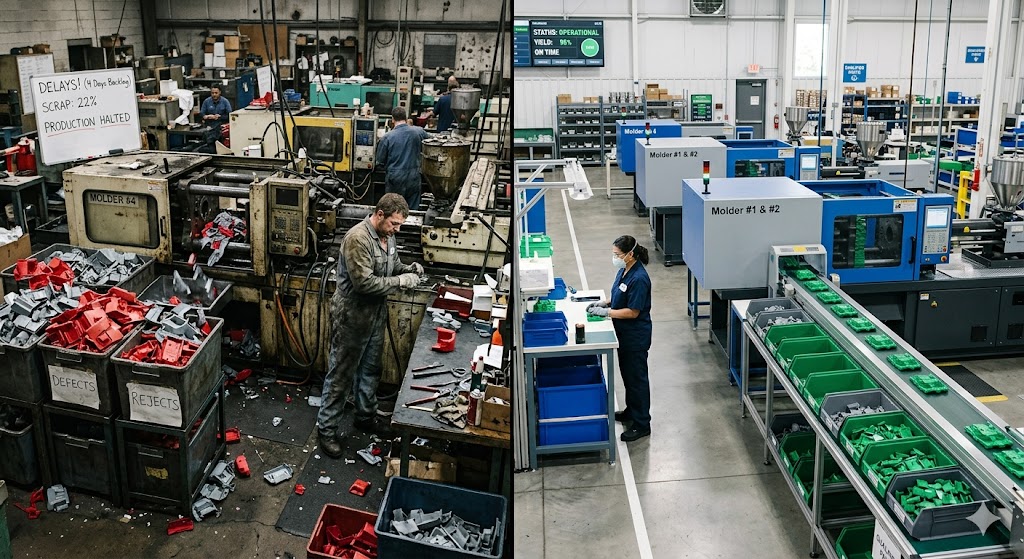
Some manufacturers can produce parts competently but still fall short as long-term partners. The warning signs are usually operational rather than promotional.
If engineering questions take too long to answer, the technical team may be too thin or too removed from production. If mould changes are always delayed, tooling control may sit outside the business. If recurring defects are addressed by sorting rather than root-cause correction, the supplier may be managing symptoms rather than process capability.
Another common issue is limited scope. A vendor that only moulds parts may still leave you coordinating finishing, assembly, packaging, and freight through separate channels. That approach can work, but it adds management overhead and creates more failure points. For buyers under time pressure, integration often saves more than it costs.
Why integrated manufacturing reduces project risk
An integrated partner simplifies execution because decisions are made with the whole production chain in view. Moulding realities inform tooling choices. Production planning accounts for finishing and packing requirements. Quality teams can trace defects back through tool condition, machine setup, and material handling without waiting on outside suppliers.
This is especially valuable in industries where consistency matters across long repeat runs. Automotive components, electrical housings, construction hardware, furniture parts, bathroom accessories, and utility-related products all depend on stable output, not just successful samples. Early samples prove the possibility. Controlled production proves capability.
That is where a full-service manufacturer has an advantage. With in-house tooling, machine capacity, secondary operations, mould maintenance, and quality assurance, the supplier can support both launch and repeat execution inside one operating system. Companies such as Glasfil build around this model because it shortens feedback loops and gives customers clearer control over cost, timing, and quality.
What serious buyers should ask before awarding work?
Before choosing a supplier, ask practical questions that expose how the operation really works. How much of the tooling process is internal? Can the manufacturer modify moulds without outside dependence? What machine capacity is available for current and future volume? How are engineering changes handled after sampling? What secondary operations can be completed in-house? How is mould maintenance scheduled between production runs?
These questions are useful because they move the conversation beyond sales language. They show whether the supplier can absorb complexity or whether your team will end up coordinating it.
The best manufacturing relationships are built on fewer surprises. When a supplier can take responsibility from design refinement through finished part delivery, your team spends less time chasing updates and more time moving the product forward.
If you are selecting a custom injection moulding partner, look past the quote sheet and examine the operating model. The right partner should make production more controllable, not just more available.
Contact us today to discuss your project requirements or request a quotation. Let’s build a production process you can depend on.