A tool can look perfect on the bench and still fail where it matters – in repeat production. That is why knowing how to qualify new tooling is less about checking a box and more about proving that the mould, process, and part will hold together under real manufacturing conditions.
For product developers, buyers, and manufacturing engineers, tooling qualification sits right at the point where cost, timing, and quality start to collide. Move too fast, and you inherit scrap, delays, and engineering changes after launch. Move too slowly, and you lose time to market. The right approach is disciplined, but it also has to be practical.
What tooling qualification actually means
In injection moulding, new tooling qualification is the structured process of confirming that a mould can produce parts that meet drawing requirements, cosmetic standards, functional needs, and repeatability targets at an agreed production rate. It is not the same as a single trial run. A few acceptable samples do not prove process capability.
A qualified tool should answer four questions clearly. First, does the mould produce parts to specification? Second, can the process run consistently across a defined window? Third, will the tool support the expected volume without abnormal wear or instability? Fourth, are the inspection, documentation, and control methods ready for routine production?
That distinction matters. Many launch problems come from treating first shots as final approval.
How to qualify new tooling without creating launch risk
The best qualification programs begin before steel is cut. If the design intent is unclear, qualification turns into guesswork later.
Start with the qualification criteria before tool completion
Before the mould reaches the press, define what success looks like. That usually includes critical dimensions, part weight targets, cosmetic acceptance criteria, material grade, cycle time assumptions, assembly fit, and any special performance requirements such as pressure resistance, snap-fit retention, or electrical insulation.
This is also the point to classify dimensions by risk. Not every feature carries the same production consequence. A hidden non-critical rib does not deserve the same level of scrutiny as a sealing diameter or threaded engagement feature. When teams fail to rank features properly, they either overinspect low-value characteristics or miss the dimensions that actually drive field failures.
A strong qualification plan also identifies sample size, test methods, gauge strategy, and approval responsibility. If procurement, engineering, and quality are not aligned before trials begin, the tool may be technically ready while the project remains commercially stuck.
Verify the mould against the approved design
Before process qualification starts, confirm that the finished mould reflects the latest approved product data. This includes cavity steel dimensions, shut-offs, venting, gate design, cooling layout, ejection, inserts, slides, and material contact surfaces.
This step sounds obvious, but it is where many expensive delays begin. Last-minute CAD changes, undocumented mould modifications, or assumptions made during fabrication can all create downstream variation. A disciplined tool review reduces the risk of chasing part defects that are really mould design mismatches.
For multi-cavity tooling, cavity balance deserves special attention. A tool may produce acceptable parts from some cavities while others drift on fill, flash, or sink. If cavity-to-cavity variation is ignored early, production inherits a sorting problem instead of a stable process.
Trial stages should prove more than a part appearance
A proper qualification does not happen in one shot. It develops through staged trials, each with a clear purpose.
T0 and T1 are for learning, not forcing approval
Early trials are primarily about observing how the mould behaves. Fill pattern, venting effectiveness, gate vestige, ejection marks, short shots, warpage, and cooling efficiency all become visible quickly. At this stage, the goal is to identify what must be corrected in the tool and what can be optimised in the process.
Trying to force approval from an early trial usually creates confusion. The process window is not mature, operators are still learning the mould, and modifications may still be needed. Good teams treat these runs as engineering trials, not proof of final capability.
Qualification runs must reflect normal production conditions
Once the tool has been corrected and stabilised, the qualification run should use the intended production resin, approved drying parameters, standard machine configuration, and realistic cycle conditions. If the mould will run with automation, regrind limits, or secondary operations, those conditions should be represented too.
This is where how to qualify new tooling becomes a production question rather than a lab exercise. A tool qualified under special handling or unusually slow cycles may pass in development and fail after handoff.
In practical terms, the run should be long enough to expose drift. Heat buildup, sticking, dimension movement, and cosmetic shifts often show up after the first few cycles. Short qualification runs can hide tool behaviour that only appears once the process settles into steady-state production.
Measure process capability, not just individual parts

Acceptable samples are useful, but capability is what protects the launch.
Focus on critical-to-quality features
During qualification, dimensional inspection should concentrate on the features that affect fit, function, safety, compliance, or downstream assembly performance. That may include sealing faces, datum relationships, wall thickness in high-stress areas, clip geometry, connector alignment, or flatness.
Statistical review is important here. A dimension that passes once but sits close to the tolerance edge may still be a problem. If normal process variation pushes that feature out during routine production, the tool is not truly qualified. Capability studies help separate lucky samples from stable output.
Establish a realistic process window
A tool should not require one exact setting combination to make acceptable parts. Qualification should define the upper and lower boundaries where parts remain in spec. That means evaluating how material temperature, mould temperature, fill speed, hold pressure, cooling time, and cushion affect key outputs.
The wider the stable process window, the easier the tool will be to run across shifts, operators, and machine schedules. A very narrow window is a warning sign. It may point to venting limits, weak cooling, gate sensitivity, or part design issues that need to be addressed before launch volume rises.
This is one of the most common trade-offs in tooling qualification. A customer may want the fastest possible launch, while engineering sees a tool that technically runs but only within tight settings. Shipping too early can move the cost from development into production scrap and field complaints.
Functional testing belongs in the qualification
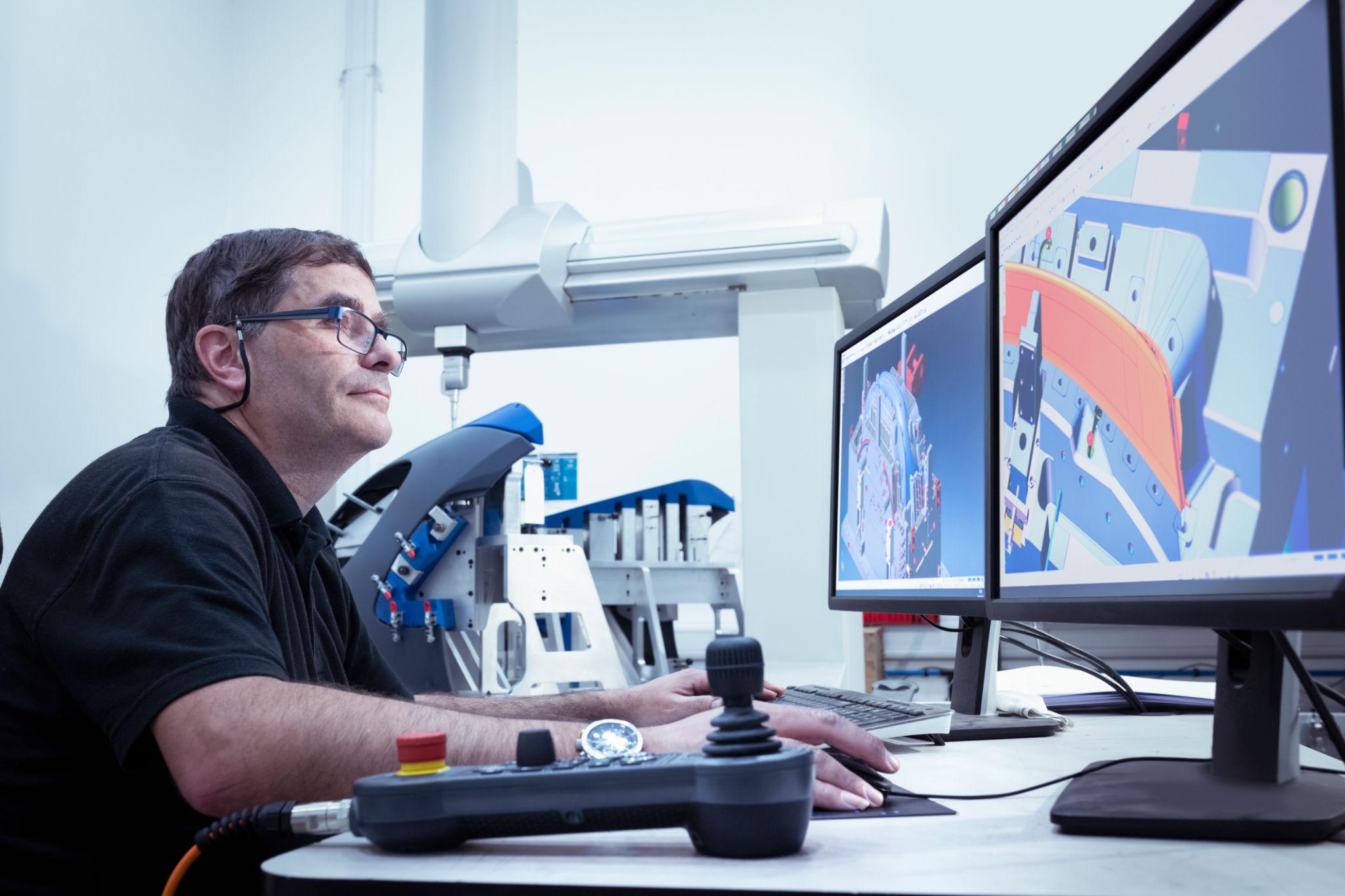
Part approval should not stop at dimensions and cosmetics. Many moulded parts fail in use, even when they look correct on paper.
If the component snaps into a housing, threads onto a mating part, seals against pressure, carries a load, or accepts a secondary insert, qualification should include those checks. Functional testing connects moulding output to real product performance.
For some industries, this also includes environmental or durability testing. Heat exposure, moisture, chemical contact, repeated actuation, or torque loading can reveal stress points that standard dimensional checks miss. The right level of testing depends on the application, but the principle is simple: qualify the part for the job it has to do, not only for what can be measured fastest.
Documentation is part of the tool qualification process

A qualified tool without documented controls is still vulnerable.
Build the production record before handoff
The final package should include approved trial parameters, inspection results, capability data where required, material certification, mould revision status, cavity identification method, and a defined control plan. If any known limitations remain, they should be documented clearly rather than left to tribal knowledge.
This is especially important when the tool supports repeat programs, multi-site coordination, or future mould transfers. Clear records shorten troubleshooting time and reduce the risk of requalification later.
In integrated manufacturing environments, this handoff is faster because tooling, moulding, and quality teams are already aligned. That internal control is one reason companies such as Glasfil can move from mould completion to production readiness with fewer gaps between departments.
Common reasons new tooling fails qualification
Most qualification failures trace back to a short list of causes. The product design may not be fully optimised for moulding. The mould may need venting, cooling, or steel corrections. The process may be unstable because the machine setup does not reflect real production. Or the approval criteria may be unclear from the start.
There is also a commercial cause that gets less attention: teams sometimes approve too early because project timing is under pressure. That can make the launch schedule look better for a week or two, but it usually creates a larger recovery effort later.
The better path is straightforward. Qualify the tool against agreed criteria, under realistic production conditions, with enough data to prove repeatability. If something is not ready, correct it while the tool is still in controlled launch mode.
A good tool should not need heroics to run well. When the qualification is done properly, production starts with confidence instead of guesswork.
Contact us today to request a quote or schedule a discussion with our technical team.