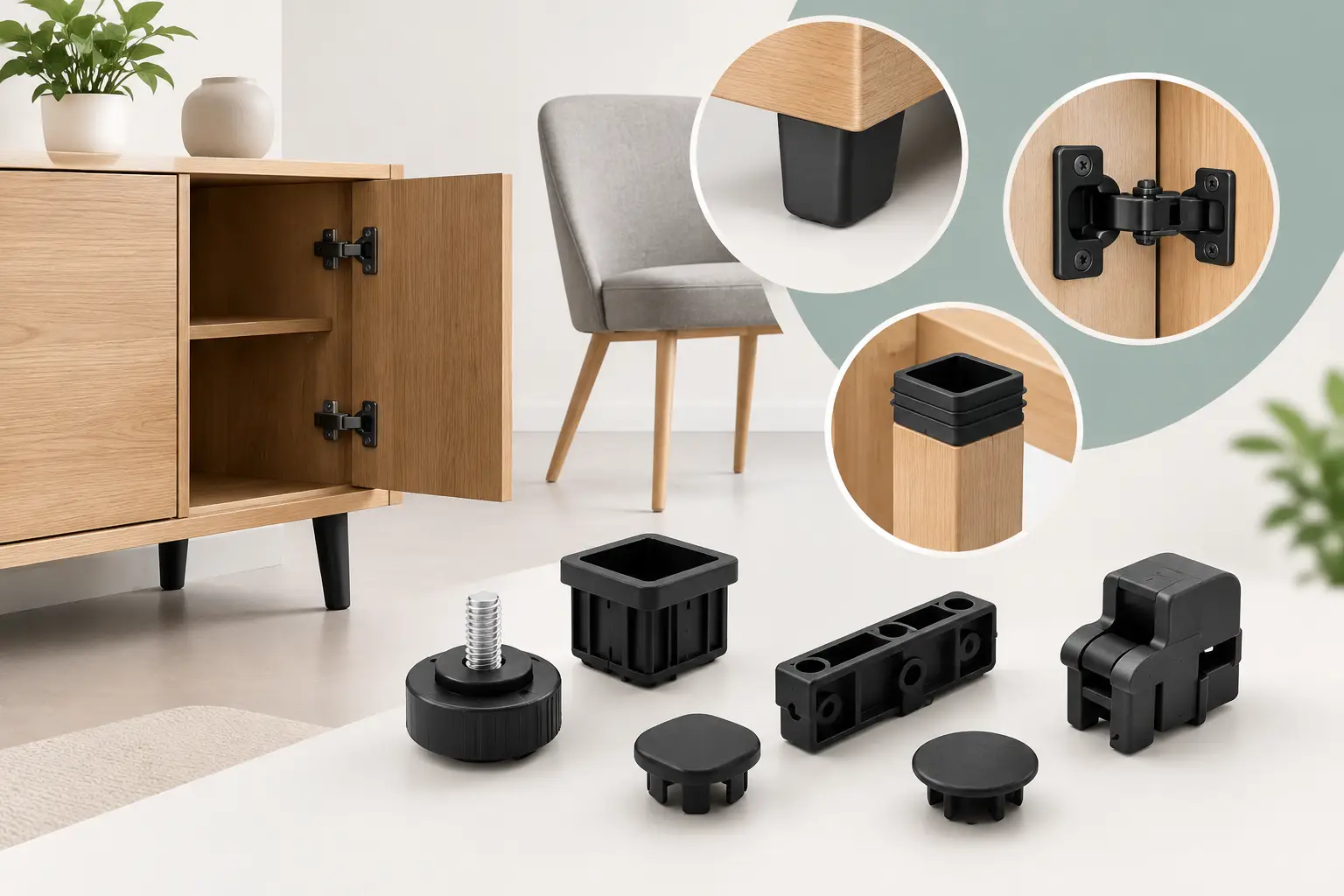
A late tool correction can cost more than a higher piece price ever will. When a component is tied to an assembly launch, a field replacement program, or a production line already running behind schedule, the right industrial plastic parts supplier does more than quote moulded parts. They manage the technical decisions that determine whether those parts arrive on time, meet specifications, and perform consistently at volume.
For OEMs, product developers, and procurement teams, supplier selection should begin with production control. A supplier that can design, build, modify, validate, mold, finish, and pack parts under one roof has fewer handoffs to manage and fewer opportunities for critical information to be lost between vendors.
What an Industrial Plastic Parts Supplier Should Control
Injection molding is often treated as a straightforward buying category: submit a drawing, request a quote, approve the sample, and order parts. That approach works only when the design is stable, tolerances are forgiving, volumes are predictable, and a tooling issue will not affect a major deadline.
Most industrial programs are less forgiving. Material behavior, wall thickness, gate location, shrinkage, weld lines, cosmetic requirements, assembly interfaces, and cycle time all affect the final result. A part can look acceptable in an early sample while still creating warpage, inconsistent fit, or excessive scrap during repeat production.
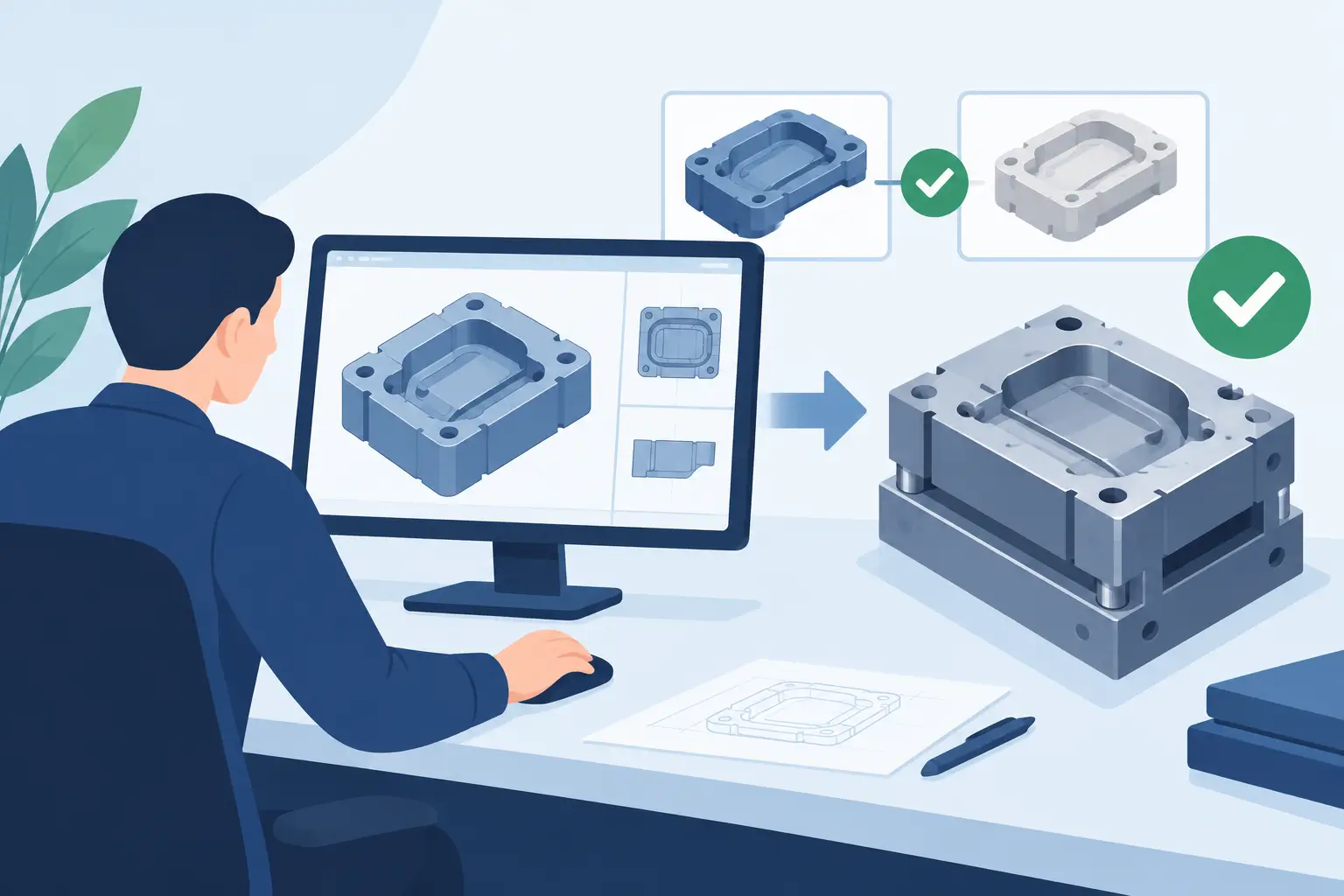
The supplier needs the authority and capability to address these issues before they become expensive. That means engineering review should connect directly to toolmaking and molding, rather than being separated among several companies with separate responsibilities. It also means the supplier should be able to modify the mold when production data calls for a change.
A full-service partner controls the path from part concept to shipped product. That typically includes design-for-manufacturing input, mold design and fabrication, injection molding, secondary operations, inspection, packaging, and logistics preparation. Not every project needs every service, but having them available reduces coordination risk when requirements change.
Start With the Part, Not the Quote
A low initial quote works well for simple, proven parts with existing tools and steady demand. However, for a new custom component, unit price ignores the hidden costs of delayed samples, tool modifications, rejected batches, and inter-facility freight.
Evaluate suppliers based on your part’s real production risks:
-
Tolerance Stack-up: Can the supplier hold critical dimensions across millions of cycles?
-
Material Behavior: Do they understand shrink rates, moisture limits, and filler orientation?
-
Application Demands: How will the part handle functional loads, environmental exposure, and assembly stress?
-
Cosmetic Requirements: Can they manage surface finishes without creating sink marks or gate blush?
Look for suppliers that provide proactive engineering feedback early. Adjusting a feature on a CAD model takes minutes; modifying hardened tool steel after trial runs takes weeks.
Tooling Capability Changes the Timeline
The mold is not a background asset. It is the production system that creates every part, cycle after cycle. Its quality affects dimensional repeatability, appearance, machine uptime, maintenance needs, and the practical cost per piece.
Suppliers that outsource tooling can still produce good results, but response time depends on another company’s schedule and technical priorities. That becomes a concern when a customer needs a dimensional correction, cavity repair, or production adjustment quickly. In-house mold design, fabrication, maintenance, and modification create a more direct route from issue identification to corrective action.
Tooling capacity should be judged by more than the ability to build a mold. Verify the supplier’s experience with the relevant tool complexity, steel selection, cavity count, cooling strategy, hot or cold runner requirements, and expected production volume. A prototype mold may be the right choice for market validation, while a multi-cavity production tool may be necessary to achieve the required output and piece cost. The right answer depends on demand certainty and the cost of being unable to scale.
Assess Production Capacity in Practical Terms
Machine counts alone do not guarantee capability. Look closely at press tonnage ranges, resin handling setup, floor space for repeat orders, and process control systems.
Press capacity must align with part geometry and mold dimensions. At Glasfil, our molding capabilities—featuring 19 injection molding machines with capacities up to 560 tons—allow us to support a broad range of programs, from intricate technical parts to large structural housings.
True capacity also encompasses auxiliary equipment:
-
Resin dryers and desiccant systems
-
Automated material handling lines
-
Part-handling robotics
-
In-house quality labs and calibration tools
For international programs, operational redundancy across multiple plants adds scheduling flexibility, provided both facilities maintain identical quality standards and process controls.
Quality Must Be Built Into the Process
Inspection at the end of production catches defects. Process control prevents many of them from occurring. Buyers should look for a supplier that treats quality as an in-house manufacturing discipline, not as a final sorting activity.
This begins with clear acceptance criteria. Critical dimensions, appearance standards, functional tests, approved material grades, color references, and packaging requirements should be defined before production starts. Sampling plans should reflect the part’s application. A cosmetic consumer-facing component requires a different inspection focus than an internal structural part, while a utility component may require functional testing under real operating conditions.
During molding, the supplier should monitor the variables that influence consistency: melt temperature, mold temperature, injection pressure, holding pressure, cooling time, cycle time, and material conditioning. Documented process settings make repeat orders more dependable and make deviations easier to investigate.
Traceability is equally useful when parts are used in regulated, safety-sensitive, or long-life products. Lot identification and retained production records provide a practical way to isolate a concern rather than disrupting an entire supply chain.
Look Beyond Molding When the Finished Part Needs More
Many industrial parts require additional processing after leaving the press. Moving components between separate vendors for post-molding work adds freight costs, transit delays, and damage risks.
An integrated supplier coordinates all post-molding steps around the primary molding schedule:
-
Assembly & Fastening: Insert installation, heat staking, and mechanical assembly.
-
Joining & Machining: Ultrasonic welding, precision drilling, and gate trimming.
-
Decoration & Finishing: Pad printing, surface treatment, painting, and custom marking.
-
Kitting & Logistics: Custom packaging, protective tray design, and batch labeling.
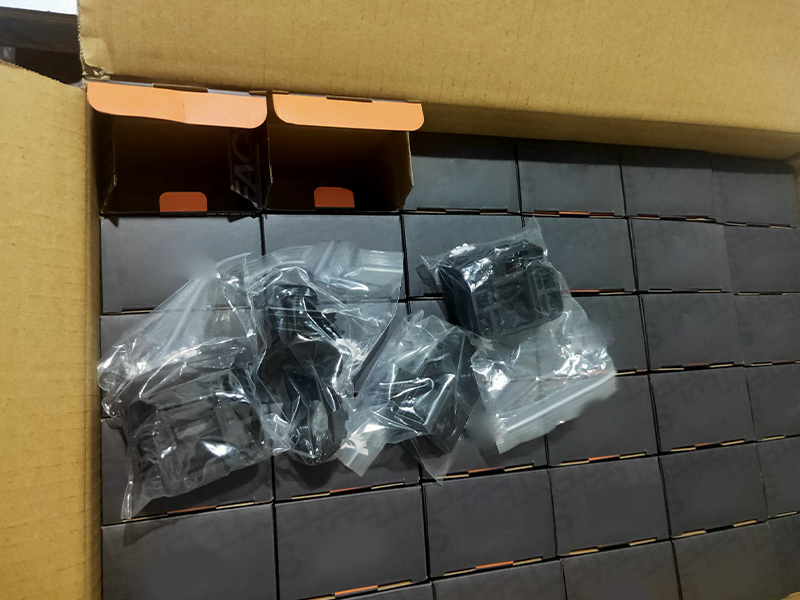
Treat packaging as vital product protection. Precision components and cosmetic surfaces require custom trays, protective films, or compartmentalized cartons to survive transit without damage.
Evaluate Communication by the Questions a Supplier Asks
A dependable supplier does not need a perfect brief to begin a productive conversation. They should ask for the drawings, 3D files, material requirements, target volumes, application conditions, key dimensions, cosmetic expectations, and launch timing needed to identify risks.
They should also be clear about what remains uncertain. A confident production partner does not promise a fixed outcome before assessing the part, tool scope, and validation needs. Instead, they provide a practical plan that identifies decisions, timing, ownership, and the information required to proceed.
For international programs, communication discipline becomes even more valuable. Buyers need prompt technical responses, documented revisions, reliable production updates, and packing documentation that supports shipment and receiving. Experience serving customers across multiple countries is useful when it is backed by a repeatable process rather than broad claims alone.
Glasfil approaches this work as an integrated manufacturing responsibility, with in-house design, mold modification capability, 19 molding machines, and support from tooling through finished-part delivery. For the right project, this level of control can compress the route from approved design to production into an eight-week completion timeline.
Choose for Repeatability, Not Just the First Sample
A first-off sample proves that a part can be made. It does not necessarily prove that it can be made repeatedly at the required rate, quality level, and cost. Before approving a supplier, ask how they move from sampling to stable production, how they record approved process conditions, and how they respond when a tool or part drifts from specification.
The strongest supplier relationship is built around fewer surprises. Select the partner that can identify manufacturing risks early, act on them without unnecessary handoffs, and maintain control after the first shipment. That is how custom plastic components become dependable production parts rather than recurring supply-chain problems.
Contact us to discuss your project, request a quotation, or arrange a technical consultation. Our team will help you determine the most cost-effective and reliable way to manufacture your part.