A mold that looks competitive on a quotation can become the most expensive item in a product launch. Late design changes, unstable cycles, flash, poor cooling, or a supplier that cannot repair the tool quickly can delay production long after the initial purchase order is approved. This tooling supplier review checklist helps OEMs, engineers, and procurement teams assess whether a supplier can deliver a production asset, not simply manufacture a mold.
The right review goes beyond tool price and lead time. It tests how well the supplier controls design decisions, material selection, moldmaking, sampling, quality verification, modification, and the transition to repeat production. For injection molded components, these functions are connected. A tooling partner that manages them under one roof can identify risks earlier and respond faster when the part, mold, or demand forecast changes.
Start the tooling supplier review checklist before requesting quotes
A meaningful supplier review starts with clear project inputs. If every bidder receives an incomplete drawing, no defined resin, and no forecast, quotations will be based on different assumptions. The lowest number may exclude the actions required to make the part manufacturable and stable at volume.
Provide the current 3D model, 2D drawing where available, material specification, annual volume, expected product life, cosmetic requirements, critical dimensions, assembly interfaces, and target launch date. State whether the tool will remain at the supplier’s facility, be transferred to another molder, or support production across multiple locations. These details affect cavity count, steel grade, hot runner selection, cooling strategy, maintenance planning, and validation requirements.
Ask each supplier to document assumptions rather than bury them in a one-line quote. A capable manufacturer will identify concerns around draft, wall thickness, undercuts, weld lines, shrinkage, gate location, tolerances, and ejection before steel is cut. That early engineering discussion is often a better indicator of project performance than a polished sales presentation.
Review engineering capability, not just moldmaking capacity
Tooling performance begins with part design. A supplier should be able to explain how the mold design supports consistent molding, not merely confirm that the geometry can be built.
Confirm design-for-manufacturing support
Review whether the supplier performs a formal design-for-manufacturing analysis and what the output includes. Useful feedback addresses draft angles, nominal wall consistency, ribs and bosses, sink-risk areas, parting-line placement, gate options, venting, ejection, cooling access, and expected material behavior.
For technical parts, ask how the supplier manages dimensional variation from shrinkage, fiber orientation, post-mold conditioning, and assembly loads. The answer should be specific to the resin and geometry. A general statement that “the mold will be adjusted after trial” is not enough when a critical interface affects sealing, electrical connection, or moving components.
Assess mold design ownership and revision control
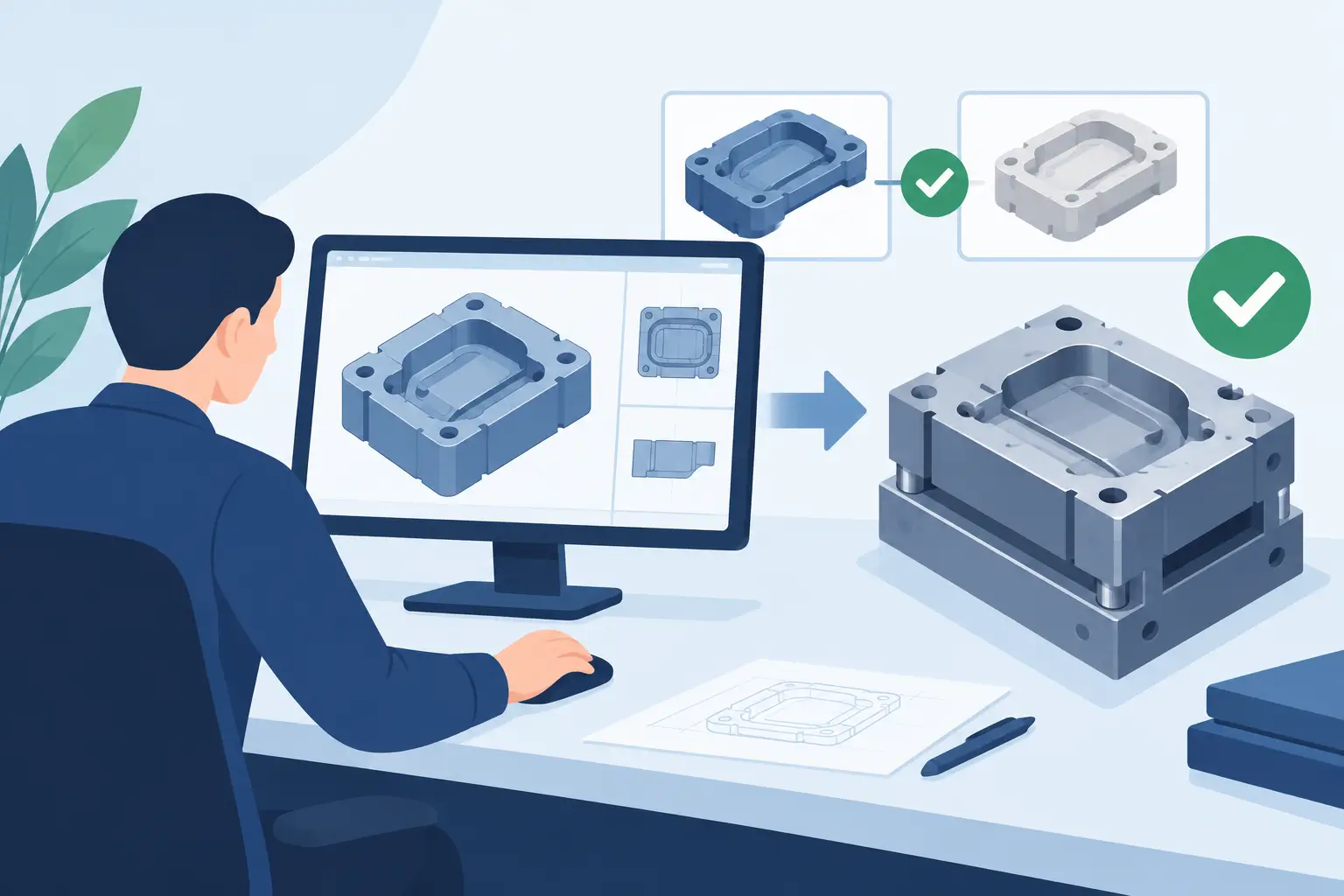
Determine who designs the mold, who approves the design, and how revisions are controlled. You need visibility into the tool concept before fabrication begins, especially for multi-cavity molds, family molds, threaded features, slides, lifters, or hot runner systems.
Request a mold design review covering cavity layout, steel selection, cooling circuits, gating, ejection, wear components, sensors where required, and maintenance access. Clarify ownership of the final mold files and whether the supplier maintains complete build records. If a tool must later be repaired, duplicated, or moved, missing documentation creates avoidable risk.
Verify in-house control across the production chain
A supplier can be technically skilled yet still create delays if key operations are outsourced without clear control. Outsourcing is not automatically a problem. Specialized coatings, heat treatment, or hot runner components may reasonably come from qualified external partners. The issue is whether the supplier owns the schedule, quality result, and corrective action.
Use this part of the tooling supplier review checklist to establish where critical work happens and who is accountable for it:
- Mold design, CNC machining, EDM, polishing, assembly, and bench fitting
- Mold trials, injection molding, process development, and dimensional inspection
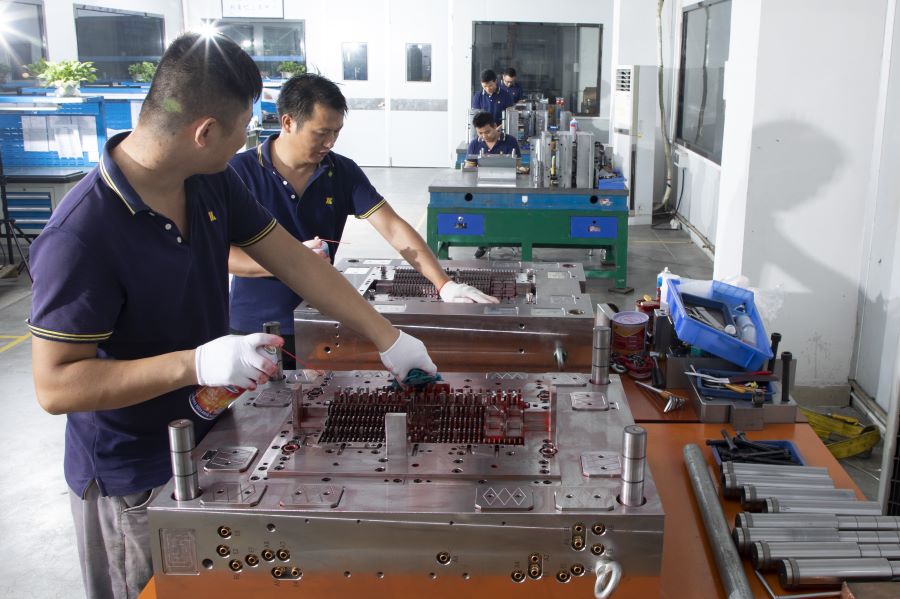
- Tool modifications, preventive maintenance, emergency repair, and spare-part management
- Secondary processes such as printing, assembly, ultrasonic welding, finishing, packing, and shipping
A full-service manufacturer can reduce handoffs between the mold shop and molding floor. When toolmakers and process engineers work from the same production feedback, they can correct cooling, venting, gating, ejection, or steel conditions quickly. Glasfil, for example, maintains in-house mold modification capability alongside injection molding, which supports faster correction when trial results require action.
Ask for a realistic project schedule with decision points. A quoted eight-week completion timeline has value only when the supplier can explain the sequence from DFM review through design approval, machining, assembly, trial, measurement, correction, customer approval, and production release.
Match tool construction to volume and operating conditions
A mold should be specified for its intended workload. An inexpensive prototype or bridge-production tool may be appropriate for a low-volume launch, but it may not tolerate years of continuous production, abrasive glass-filled resin, automated handling, or tight uptime requirements.
Review the proposed steel grades for cores, cavities, sliders, and wear inserts. Ask why those materials fit the resin, projected cycles, surface finish, and corrosion exposure. For example, PVC, flame-retardant materials, and certain filled resins can require additional attention to corrosion resistance and wear. A supplier should also explain heat treatment, surface treatment, and where replaceable inserts reduce future repair time.
Cavity count deserves the same scrutiny. More cavities can lower piece cost, but they increase tool cost, balancing requirements, maintenance complexity, and the consequences of a single cavity failure. The right choice depends on annual demand, cycle time, machine availability, product life, and launch risk. Do not accept cavity count as a pricing lever alone.
Test molding capacity and process discipline
A completed mold is only useful if it runs consistently in the right machine environment. Review the supplier’s press range, available tonnage, automation, resin handling, drying capability, temperature control, and experience with your material class. Machine tonnage alone does not prove suitability. Shot size, tie-bar spacing, injection unit performance, clamp force, cooling capacity, and auxiliary equipment all matter.
Ask how the supplier establishes the molding process at trial. A disciplined approach defines a process window, records key parameters, confirms cycle time, and documents approved settings. It also separates tool-related defects from process-related defects. Without this distinction, teams can spend weeks adjusting machine settings to compensate for a mold design issue.
For repeat orders, confirm capacity planning. Can the supplier support forecast growth, production peaks, and urgent replacement demand? Are tools assigned to machines based on capability and availability? A supplier with multiple presses and active production planning can offer more reliable scheduling than one whose capacity is already committed.
Make quality evidence part of the award decision
Quality should be visible in the supplier’s records, equipment, and response process. Request sample inspection reports from comparable projects, including first article results, dimensional reports, cosmetic criteria, and traceability practices. For parts with critical features, ask how measurements are taken, how gauges are validated, and how nonconforming parts are contained.
The review should also cover trial acceptance. Define the number of samples, inspection method, acceptance criteria, approved resin, color requirements, and expected production conditions before the first shot. A hand-picked set of acceptable samples from a trial is not the same as evidence that the process is repeatable.
When a problem occurs, evaluate the supplier’s corrective-action method. Strong suppliers document the issue, identify root cause, implement containment, verify the correction, and update the relevant tooling or process record. This matters most after launch, when a defect can interrupt an assembly line or generate field-service costs.
Clarify commercial control, tool ownership, and service response
The purchase order should state what is included in the tooling price: design reviews, mold flow analysis if required, trial runs, sample quantity, measurement reports, texture, hot runner components, spare parts, modifications, packaging, and shipping. Ambiguity at this stage frequently becomes a change-order dispute later.
Confirm tool ownership, storage terms, insurance responsibilities, access rights, and transfer procedures. Also establish the maintenance plan. Preventive maintenance intervals should reflect resin type, production cycles, and tool complexity, while the supplier should define how it handles emergency repair, replacement inserts, and downtime communication.
For international programs, review export packaging, documentation, communication cadence, and working-hour overlap. A supplier with experience supporting projects across markets should be able to provide clear status reporting without requiring the customer to chase every milestone.
A supplier review should leave your team with confidence in the next production decision, not just a lower quoted mold cost. Choose the partner that can show how it will protect the tool, the process, and your launch date once production pressure begins.
Contact us to discuss your project, request a quotation, or arrange a technical consultation. Our team will help you determine the most cost-effective and reliable way to manufacture your part.