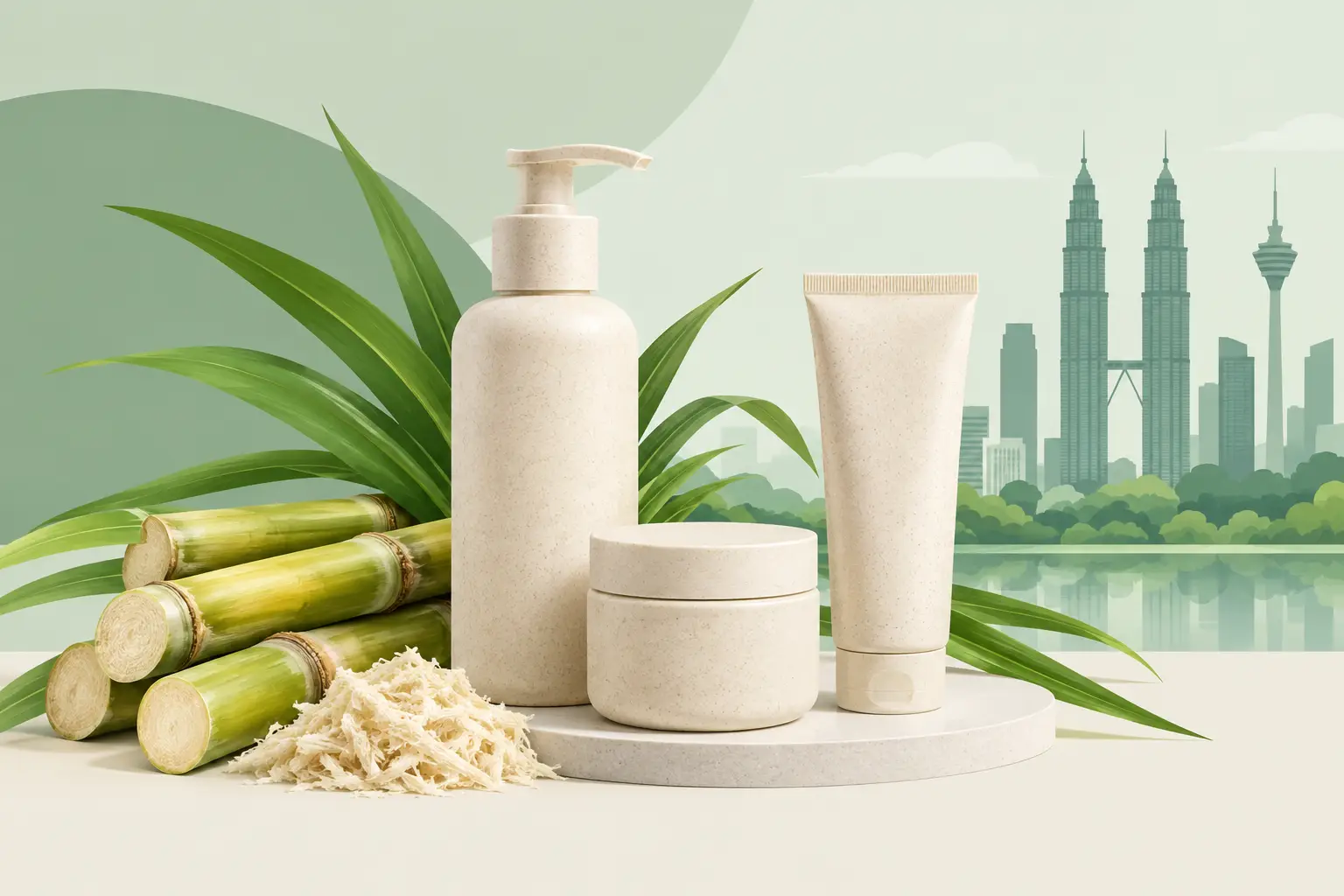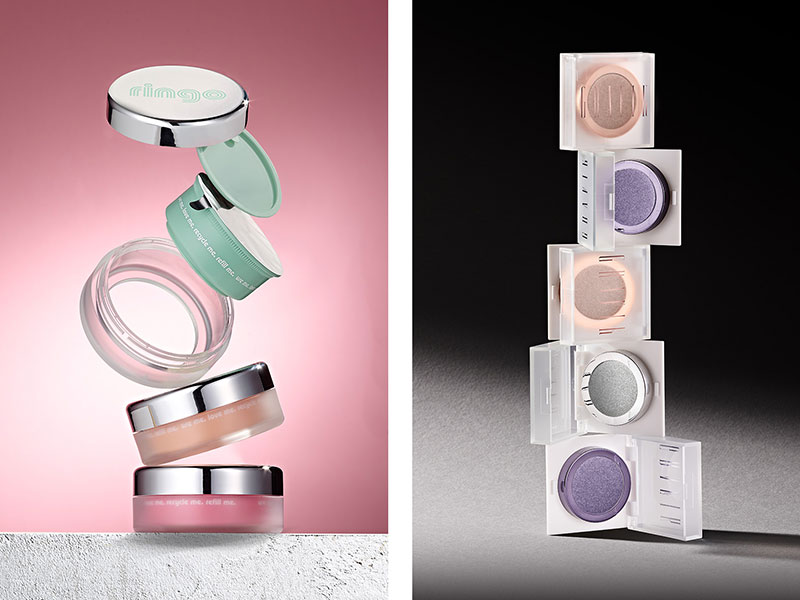
A cosmetics package can look sustainable on a mood board and still fail on the production floor. A refillable jar that leaks, a PCR-rich cap with inconsistent color, or a multi-material compact that workers cannot separate at end of life creates cost, quality, and compliance problems at the same time. The future of sustainable cosmetic packaging in 2026 therefore relies less on making broad environmental claims and more on engineering packaging systems that workers can manufacture repeatedly, fill reliably, and manage realistically after use.
For beauty brands, packaging developers, and contract manufacturers, the priority is clear: reduce material impact without compromising product protection, shelf appeal, line efficiency, or unit economics. One single material will not define the strongest solutions. Disciplined design decisions from concept through tooling, molding, assembly, and quality control will define them instead.
The Future of Sustainable Cosmetic Packaging in 2026 Is Practical
Sustainable cosmetic packaging is moving away from one-size-fits-all solutions. Glass, aluminum, recycled plastic, refill formats, and bio-based resins all play a role, but each introduces different manufacturing and supply-chain conditions.
-
Glass: Communicates premium value and supports endless recycling, yet adds transport weight and breakage risk.
-
Aluminum: Offers strong recyclability and premium aesthetics, but often requires liners, inserts, or additional components that complicate recovery.
-
Refill Systems: Reduce material use over multiple purchase cycles, but only when consumers adopt them and the refill mechanism survives repeated use.
-
Plastics: Remain necessary for many cosmetic applications because they offer light weight, durability, moldability, and compatibility with high-volume production.
The industry no longer asks whether plastic can fit a sustainable strategy. It asks whether engineers specify, design, and produce that plastic in a way that supports circularity and avoids unnecessary complexity.
In 2026, regulators and consumers expect brands to assess packaging beyond the primary container. An oversized cap, a difficult-to-remove metalized sleeve, a non-recyclable pump, or a secondary carton that adds little functional value can weaken a sustainable claim. Packaging teams need to evaluate the full system, not just the most visible component.
Mono-Material Design Will Shape More Product Briefs
Mono-material design offers the most workable path for many plastic cosmetic packs. This means selecting a compatible material family for the jar, cap, closure, and other rigid components wherever performance allows. Manufacturers frequently consider polypropylene because it sees wide use in cosmetic packaging, offers good chemical resistance, and successfully forms jars, caps, closures, and living hinges.
Mono-material design does not require identical parts throughout the pack. Some applications still demand a different resin, liner, spring, or sealing element to protect a formula or deliver the required user experience. It means eliminating unnecessary material combinations and technically justifying every exception.
This approach affects product development early. A heavy decorative overcap, glued-on badge, or separate soft-touch layer may improve perceived luxury, but it reduces recyclability and adds assembly cost. Beauty brands will increasingly decide which visual elements are essential to the product and which they can achieve through mold texture, form, embossing, debossing, or direct decoration instead.
For injection-molded parts, design for manufacturing becomes crucial:
-
Wall thickness must support consistent filling and cooling.
-
Toolmakers must design undercuts, threads, snap fits, and hinge features for repeatability.
-
If consumers will reuse a closure through several refill cycles, engineers must conduct cycle testing, torque validation, and fatigue assessment before production begins.
Recycled Content Requires Tighter Process Control
Post-consumer recycled resin will remain a major part of sustainable cosmetic packaging in 2026, particularly for non-contact components such as caps, overcaps, cases, and outer shells. However, adding recycled content involves more than a simple material substitution.
PCR can vary in color, melt flow, odor, contamination risk, and mechanical performance. These variables directly influence molding behavior, surface finish, shrinkage, and the consistency of tight-tolerance features. A cap that molds correctly in virgin resin may require changes to gate location, process settings, pigment strategy, or wall geometry when technicians introduce recycled content.
The highest PCR percentage does not automatically yield the best outcome. A lower percentage that maintains reliable molding, dimensional stability, and a long service life achieves a stronger commercial and environmental result than a high-content part with elevated scrap rates or field failures. Teams should base material selection on verified supply, product compatibility, appearance expectations, and the component’s actual function.
Color presents another practical challenge. Natural recycled resin often exhibits variations that pale or translucent packaging cannot easily conceal. Darker colors may hide these flaws, but they can hinder automated sorting and recycling pathways depending on regional technology. Brands should finalize their color strategy during early development rather than treating it as a late-stage marketing decision.
Refill Systems Must Be Designed for Real Use
Refillable cosmetic packaging has moved beyond the simple idea of placing a new container inside a decorative outer shell. In 2026, successful refill systems will be designed around consumer behavior, hygiene, compatibility, and manufacturing efficiency.
A refill must be easy to identify, install, and remove without damaging the durable pack. The primary package should clearly communicate when it is empty and how the refill works. If the system requires too many steps, creates mess, or feels less premium than a conventional pack, repeat use may be limited.
Engineering teams also need to consider the attachment method. Snap fits may eliminate adhesives and make disassembly easier, but they require careful tolerance control. Threaded mechanisms can create a familiar experience but may increase cycle time, component count, or the potential for cross-threading. Magnetic assemblies can provide a premium feel, yet magnets introduce cost and end-of-life separation challenges.
The right solution depends on product format. A face cream jar, pressed-powder compact, lipstick case, and serum dispenser each have different hygiene, barrier, and dispensing requirements. Refillability should be built around the formula and the user journey, not added as a generic feature.
Decoration Is Becoming an Engineering Decision
Cosmetic packaging still has to sell. Sustainable design cannot require every brand to abandon color, texture, premium tactile cues, or shelf differentiation. It does require smarter choices about how those effects are produced.
Brands are reducing decorative elements that make separation difficult, such as oversized labels, permanent mixed-material coatings, and glued components. More attention is going to mold-in texture, embossed branding, laser marking, controlled use of inks, and decoration methods that preserve the recyclability of the base component where possible.
This is where early collaboration between brand teams, designers, toolmakers, and molders produces better results. A texture that looks excellent in a rendering may trap material, show flow lines, or complicate release from the mold. A logo may need adjusted depth, draft angle, or placement to remain crisp over long production runs. Solving these issues before tool fabrication protects launch timing and avoids expensive modifications later.
Tooling Flexibility Supports Better Sustainability Decisions
Packaging sustainability targets often change during development. A brand may switch from virgin material to PCR, revise a refill interface, reduce part weight, or replace a decorative component after initial samples. Without in-house control over mold design and modification, these changes can create long delays.
Tooling should be planned for the manufacturing reality of the product, including expected annual volume, material behavior, cosmetic surface requirements, and potential design evolution. A well-built mold does more than produce a component. It enables stable cycle times, lower scrap, consistent dimensions, and the ability to adjust the product when market or regulatory requirements change.
For high-volume programs, even modest weight reductions can create meaningful material savings over time. But lightweighting has limits. Removing too much material can lead to sink marks, deformation, lower top-load strength, or poor closure performance. The right target is the lowest material use that still meets functional and quality requirements.
Glasfil approaches this work as an integrated manufacturing task: mold design, precision tooling, injection molding, secondary processing, quality checks, and delivery planning must support the same packaging objective. That level of control matters when a design needs to move from an early concept to repeatable production on a tight timeline.
What Beauty Brands Should Validate Before Production
A sustainable pack should be validated as a production system, not approved solely from a prototype sample. Before committing to volume production, teams should test formula compatibility, leak resistance, opening and closing performance, drop resistance, transport conditions, decoration durability, and the consistency of recycled-content material across supply batches.
They should also confirm that sustainability claims match the actual package design and regional collection infrastructure. A technically recyclable component is not necessarily recycled in every market. Likewise, a refill system delivers its intended benefit only when the durable format is genuinely reused.
The most valuable supplier conversations are specific. Ask how the material will behave in the mold, what tolerances a snap fit requires, where cosmetic defects may occur, how a surface treatment affects downstream processing, and what changes can be made quickly if validation identifies a problem.
The best sustainable cosmetic packaging in 2026 will not be the package with the longest list of claims. It will be the one that uses only the material it needs, performs reliably in consumers’ hands, and can be produced at scale with controlled quality. Start those engineering decisions early, because the mold, material, and assembly method will determine whether a sustainability concept becomes a dependable product.
Contact us to discuss your project, request a quotation, or arrange a technical consultation. Our team will help you determine the most cost-effective and reliable way to manufacture your part.