A mold can be technically accurate and still fail as a production asset. If it cannot hold tolerances across repeated cycles, accept engineering changes quickly, or support the intended resin and production volume, it becomes a source of delay rather than a route to market. The most consequential precision tooling industry trends go beyond tighter machining tolerances; they change how OEMs, product developers, and procurement teams specify tools, select suppliers, and manage production risk.
For buyers of custom plastic components, the direction is clear: tooling decisions must connect to the full manufacturing process. Mold design, steel selection, cooling, process validation, maintenance, and secondary operations all affect the final part. Treating the mold as a separate purchase may appear cost-effective initially, but it often creates expensive handoffs when parts need refinement or production schedules change.
Precision Tooling Industry Trends Are Moving Upstream
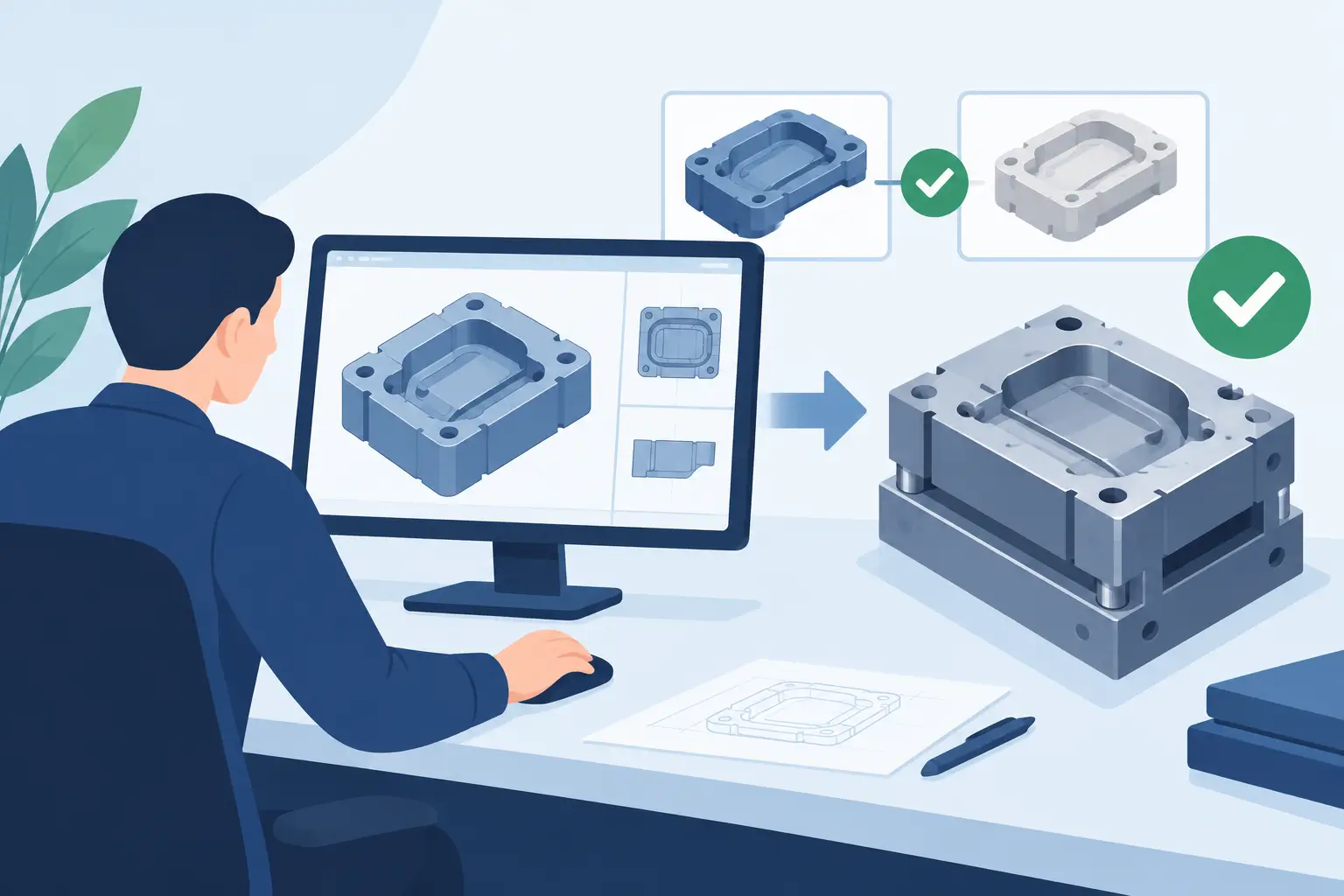
Engineering teams now address tooling during early product development rather than waiting until part geometry is finalized, primarily to avoid the heavy cost of late-stage corrections. Small design features—insufficient draft angles, uneven wall thickness, inaccessible gate locations, or difficult undercuts—create far larger consequences once machining begins.
Design for manufacturability operates as an active, ongoing requirement:
-
Moldmakers evaluate part geometry, material behavior, expected shrinkage, cosmetic requirements, ejection strategies, and production volumes before tool release.
-
The goal focuses on identifying where design choices add cycle time, compromise repeatability, or create avoidable tool complexity without unnecessarily constraining product design.
-
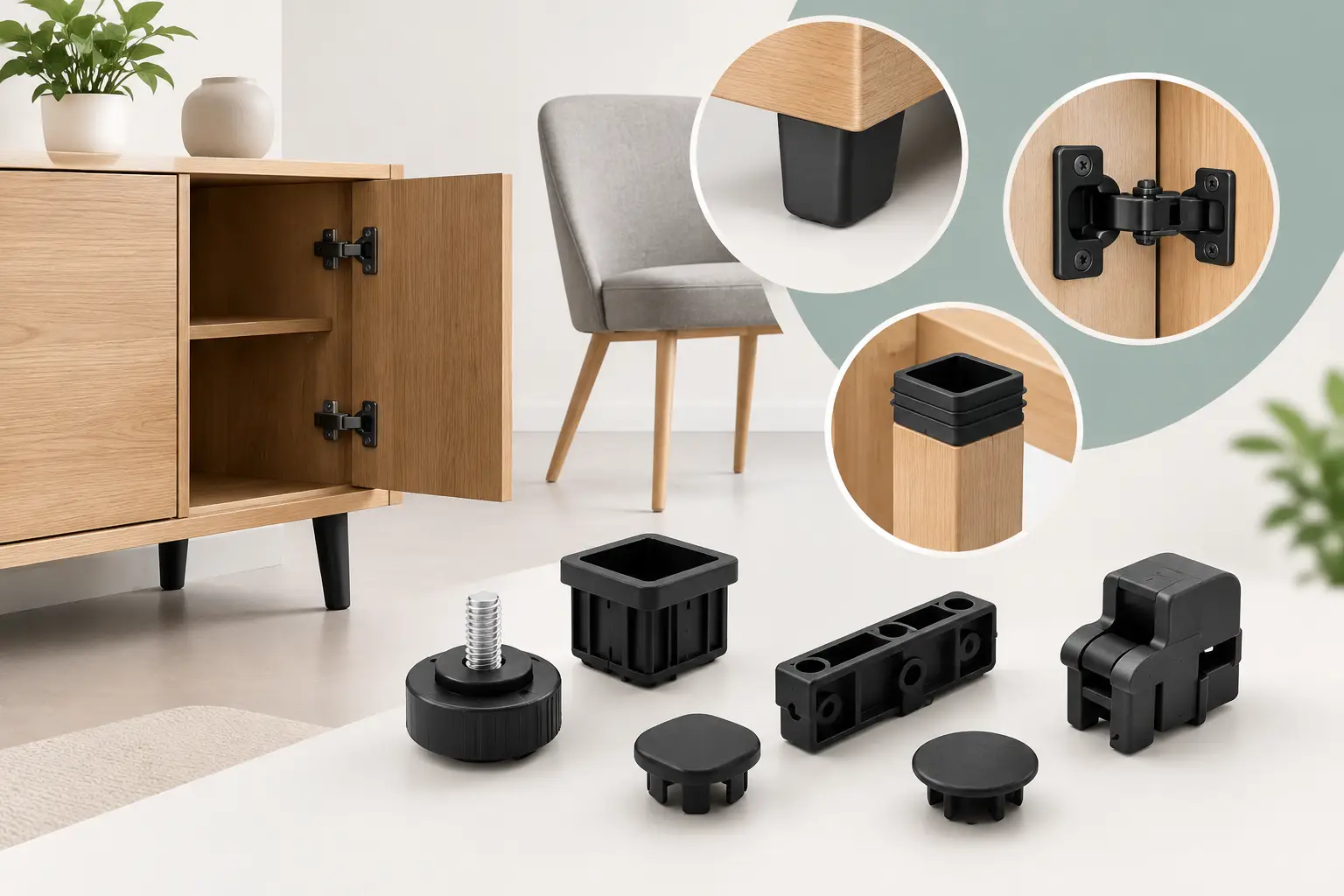
This proves especially relevant for tight functional interfaces (electrical housings, water meter components, automotive clips, bathroom accessories, and automation parts) where performance relies on consistent post-molding dimensions.
-
Early tooling input establishes realistic tolerances and prevents mismatches between CAD intent and production capability.
Faster Lead Times Depend on In-House Control
Market pressures demand faster product launches, quicker replacement parts, and shorter communication loops between design offices, external toolrooms, molding plants, and finishing providers.
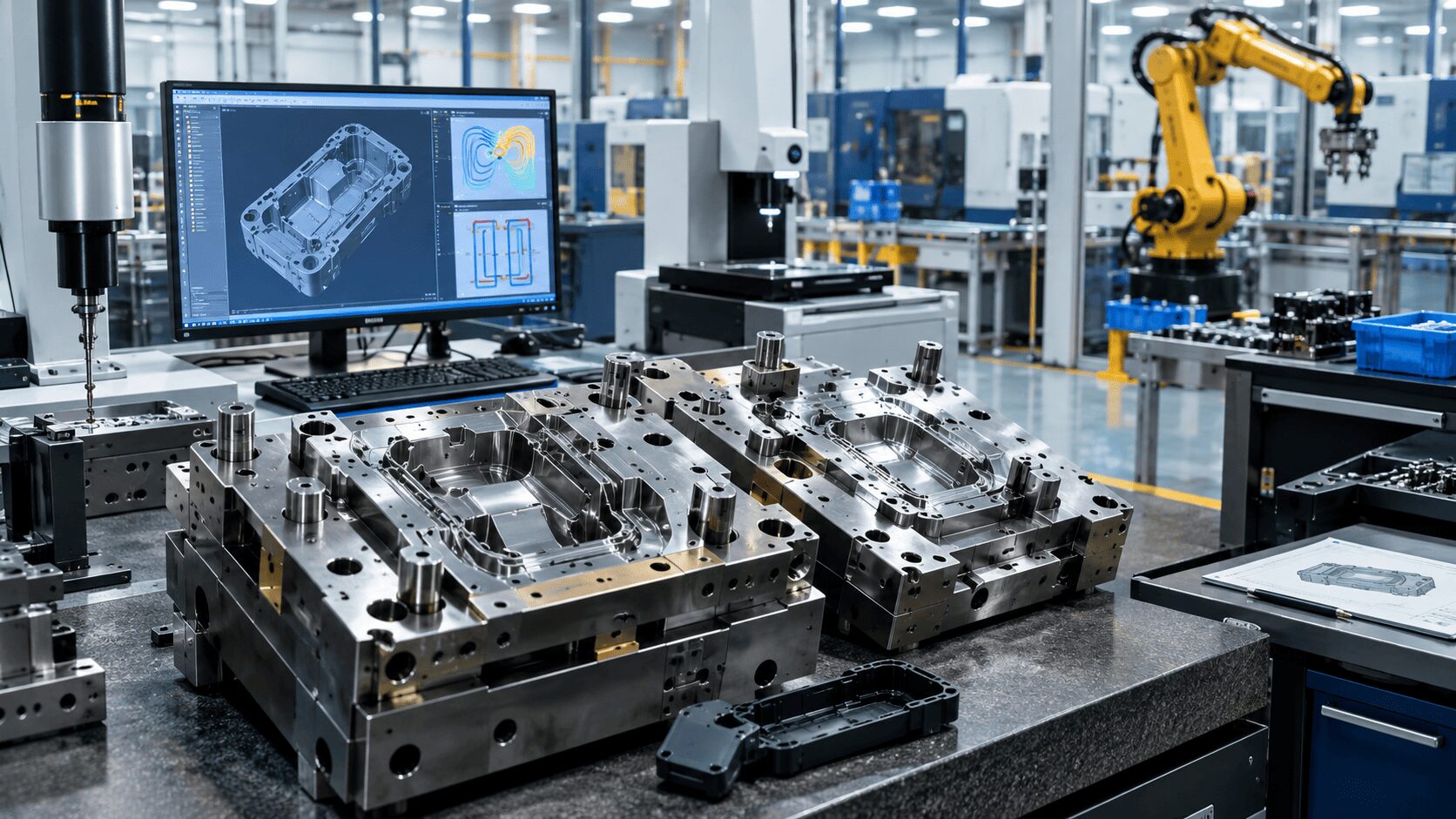
Integration solves this challenge. Manufacturers that control mold design, fabrication, modification, molding, and quality inspection in-house eliminate delays caused by fragmented responsibility. When trials reveal fill issues or demand dimensional adjustments, toolrooms and molding teams work from unified production data to plan changes around actual machine performance.
Fast tooling requires structured execution:
-
Lower-Volume Programs: Aluminum tooling or simplified construction offers the right commercial fit.
-
High-Volume Production: Hardened steel, durable components, optimized cooling, and maintenance access justify longer initial builds based on lifecycle demand, material abrasiveness, and downtime costs.
Cooling Design Is Becoming a Commercial Issue
Cooling has evolved from a hidden technical detail into a direct lever for part quality, unit cost, and capacity planning. Poor cooling causes warpage, sink marks, inconsistent dimensions, and longer cycle times. Across high-volume runs, even minor cycle-time reductions significantly alter program economics.
Modern mold design applies thermal analysis and deliberate cooling layouts to manage heat at thick sections, ribs, bosses, and areas surrounding inserts. While conformal cooling benefits specific complex geometries, it increases tool costs and manufacturing constraints, making it unnecessary for parts with conventional cooling access and moderate volume requirements. Buyers should evaluate whether a supplier’s cooling strategy aligns with the part, resin, cosmetic standard, and forecasted volume to ensure stable cycle times.
Automation Raises the Standard for Mold Reliability
Labor constraints, process consistency needs, and demands for traceable output drive automation beyond large-scale programs into part removal, inspection, assembly, labeling, and packing.
Automated cells place greater performance demands on the tool itself:
-
Cells require predictable ejection, consistent part orientation, controlled gate vestige, and stable dimensions.
-
Molds that perform acceptably under manual handling can cause systemic stoppages when paired with robots, camera systems, or downstream assembly fixtures.
-
OEMs must define downstream automation requirements (such as automated assembly, vision inspection, ultrasonic welding, or directional packing) before finalizing mold designs to inform gate placement, ejection marks, datum surfaces, and handling features early.
Data Is Strengthening Tool Maintenance Decisions
Precision tooling is also becoming more data-led. Instead of relying only on calendar-based maintenance, manufacturers are tracking cycle counts, defect patterns, downtime events, dimensional trends, and recurring process adjustments. This creates a clearer picture of when a mold needs cleaning, lubrication, component replacement, or a design correction.
Preventive maintenance remains essential, particularly for multi-cavity tools and high-output programs. Wear in slides, ejector systems, gates, and parting lines can gradually affect flash, surface finish, and dimensional control. The earlier these issues are identified, the more likely a planned intervention can prevent a production disruption.
A disciplined maintenance process also matters when a customer needs to restart a discontinued part or move an existing tool. Tool condition should be evaluated before production promises are made. Documentation, spare-component availability, tool history, and trial results provide a more reliable basis for planning than visual inspection alone.
Material Changes Require Tooling Flexibility
Material selection is evolving due to performance requirements, cost pressure, regulatory expectations, and customer preferences. Recycled-content polymers, reinforced compounds, flame-retardant grades, and specialty engineering resins can all change how a tool performs.
Glass-filled materials, for example, can accelerate wear at gates and high-flow areas. Some resins require more precise temperature control, while others can be more sensitive to moisture or shear. A tooling strategy that worked for one polymer may not provide the same surface finish, dimensional stability, or service life after a material change.
This does not mean every mold needs the most expensive steel or coating. It means the material decision must be part of the tooling conversation. When resin selection is still open, testing should focus on the requirements that matter most: impact performance, appearance, chemical resistance, electrical behavior, cost per part, and processing window. The best material is the one that meets the application needs while remaining manufacturable at the required volume.
Quality Expectations Are Expanding Beyond Final Inspection
Customers increasingly expect evidence of quality throughout the production process, not only a final inspection report. For precision plastic components, that includes controlled material handling, documented process settings, first-article verification, in-process checks, dimensional measurement, and traceability appropriate to the application.
Tool quality and process quality are inseparable. A well-built mold supports repeatable parts, but stable results also require the right machine capacity, correct clamping force, disciplined setup, and trained operators. Conversely, a capable molding process cannot fully compensate for poor venting, worn shutoffs, inconsistent cooling, or inadequate ejection.
This is why an integrated manufacturer offers a practical advantage. Glasfil combines in-house mold design and modification capability with injection molding, secondary processing, quality assurance, packing, and shipping. For buyers managing launch schedules or repeat production, that structure reduces the number of handoffs and creates clearer accountability when a part needs improvement.
What Buyers Should Ask Before Releasing a Tool
The strongest tooling programs begin with specific commercial and technical questions. Buyers should ask how the mold design supports the expected annual volume, what assumptions have been made about resin and shrinkage, how cooling and ejection will be validated, and what change process applies after the first trial.
They should also ask who owns the tool data, where modifications will be completed, how maintenance is documented, and how part quality will be measured during production. These questions are not procurement formalities. They reveal whether a supplier is prepared to support the mold as a production asset over time.
The most useful next step is to bring the toolmaker into the conversation while part design, material choice, and launch timing can still influence one another. That is where precision tooling creates its real value: not in a drawing or a machine alone, but in the controlled path from a product idea to repeatable parts arriving when they are needed.
Contact us to discuss your project, request a quotation, or arrange a technical consultation. Our team will help you determine the most cost-effective and reliable way to manufacture your part.