When your moulded part gains real market traction, pressure mounts fast. A tool that processed pilot volumes efficiently can suddenly create a bottleneck; quality issues you managed easily at 5,000 parts cost a fortune at 500,000, and every delay directly disrupts inventory, assembly lines, and customer commitments. That is where mastering production scaling matters—not as a theory, but as a discipline.
You cannot scale production simply by adding press time. In injection moulding, high volume exposes every weakness in your process: tool design, resin behavior, cycle time, maintenance schedules, inspection methods, packaging, and logistics. If you underbuild any of these areas, you face the same predictable results: missed deliveries, rising scrap rates, and a part that costs more as demand grows.
How to scale moulded production without losing control
Many teams make their first mistake by treating scale as a purchasing problem. They assume the answer simply means adding machines, adding shifts, or finding a lower-cost supplier. Sometimes teams truly need extra capacity, but scale usually fails much earlier. It fails when a process lacks the stability to hold up under sustained production pressure.
A well-scaled moulded part relies on three elements working together: a tool built for target volumes, a moulding process that demonstrates a reliable operating window, and a production system that maintains repeatability over longer runs. If any element falters, output becomes inconsistent regardless of total capacity.
This is why early production decisions matter. If your commercial forecast predicts growth, engineers must design the mould for more than just first-launch quantities. Choices regarding gate design, cooling layout, steel selection, cavitation, maintenance access, and wear surfaces all dictate whether the tool can support expansion without major interruptions.
Start with tooling built for volume, not just launch
Tooling is where scale is either enabled or restricted. A single-cavity mould may be appropriate for validation, but it may not be economical once demand rises. On the other hand, moving too early to a high-cavitation tool can create unnecessary cost if demand is still uncertain. The right decision depends on annual volume, part geometry, resin type, takt time, and how much flexibility the program requires.
The practical question is not whether the mould can make the part. It is whether it can make the part repeatedly, at the required rate, with predictable maintenance and acceptable scrap. That is a different standard.
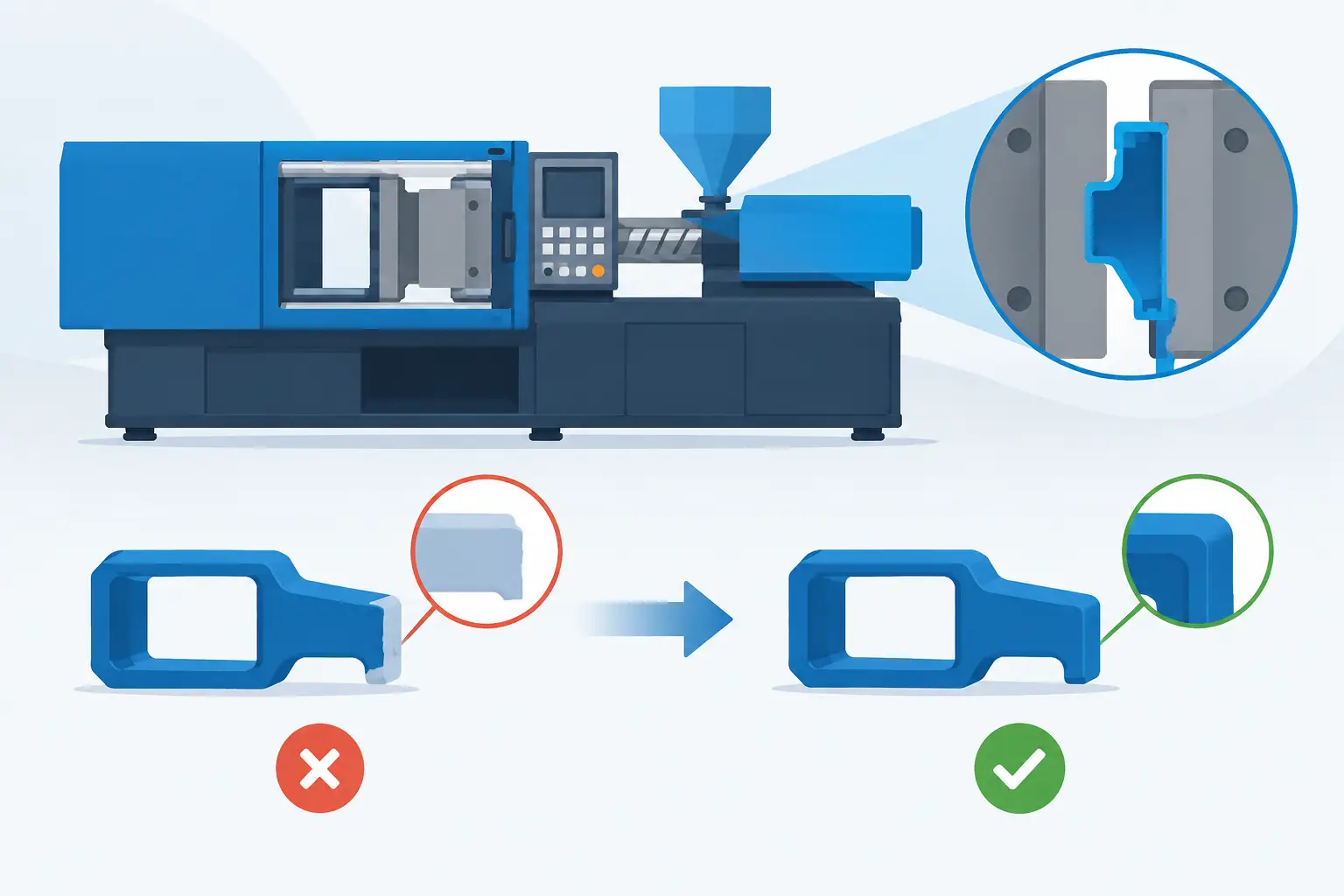
For higher-volume programs, the mould needs to support process consistency over time. That includes balanced filling, effective venting, controlled cooling, and surfaces that hold tolerance after repeated cycles. If modifications are likely after launch, in-house mold adjustment capability becomes especially valuable because it reduces downtime and avoids the slow back-and-forth that often happens when tooling and production are split across different suppliers.
Validate the process window before demand spikes
A process that works on a good day is not a scalable process. Before production ramps, manufacturers should establish a clear process window for temperature, pressure, fill time, cooling time, and material handling. This process window keeps output stable when machine utilization rises or shifts change.
Manufacturers often blame volume for scaling problems, when the real issue is process variation. Resin moisture changes, startup conditions drift, technicians adjust machine settings too freely, or operators compensate for tooling issues without documented controls. Low volumes can hide these problems. At scale, they become chronic.
Scientific molding methods, documented setup parameters, and first-article verification all help, but discipline remains the key. The process should not depend on one experienced technician knowing how to “make it run.” Teams must be able to transfer, measure, and repeat it.
Capacity planning is more than machine count
Buyers often ask whether a moulder has enough machines to support a ramp. That is a fair question, but machine count alone does not tell you much. Actual scalable capacity depends on tonnage fit, mould compatibility, cycle time, changeover frequency, labour coverage, material flow, and downstream operations.
A 560-ton machine does not help if the part runs best on a smaller press and high demand has already saturated that press family. In the same way, available moulding time means little if finishing, assembly, or packing becomes the next bottleneck. The right manufacturing partner looks at the full path from resin input to shipped cartons.
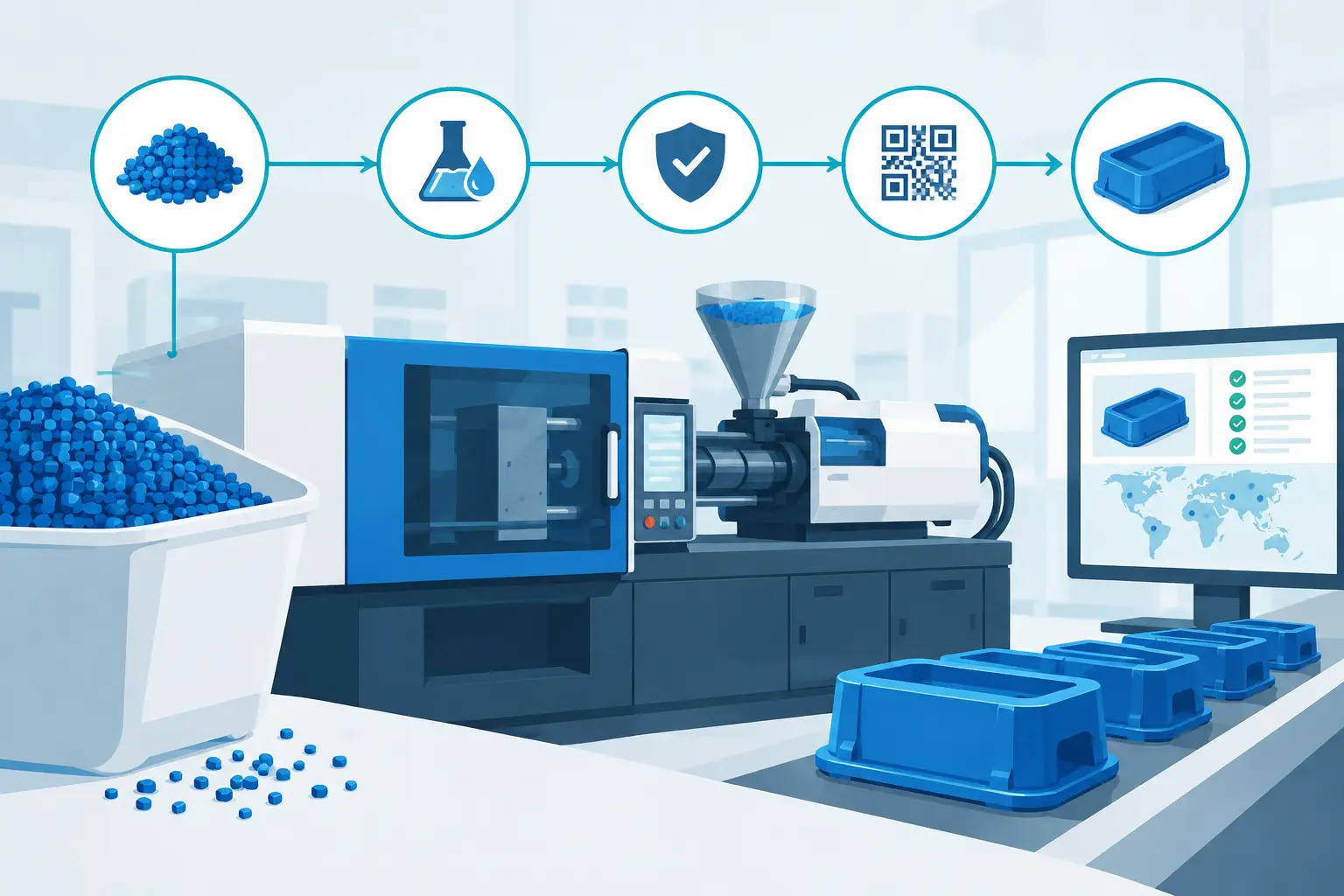
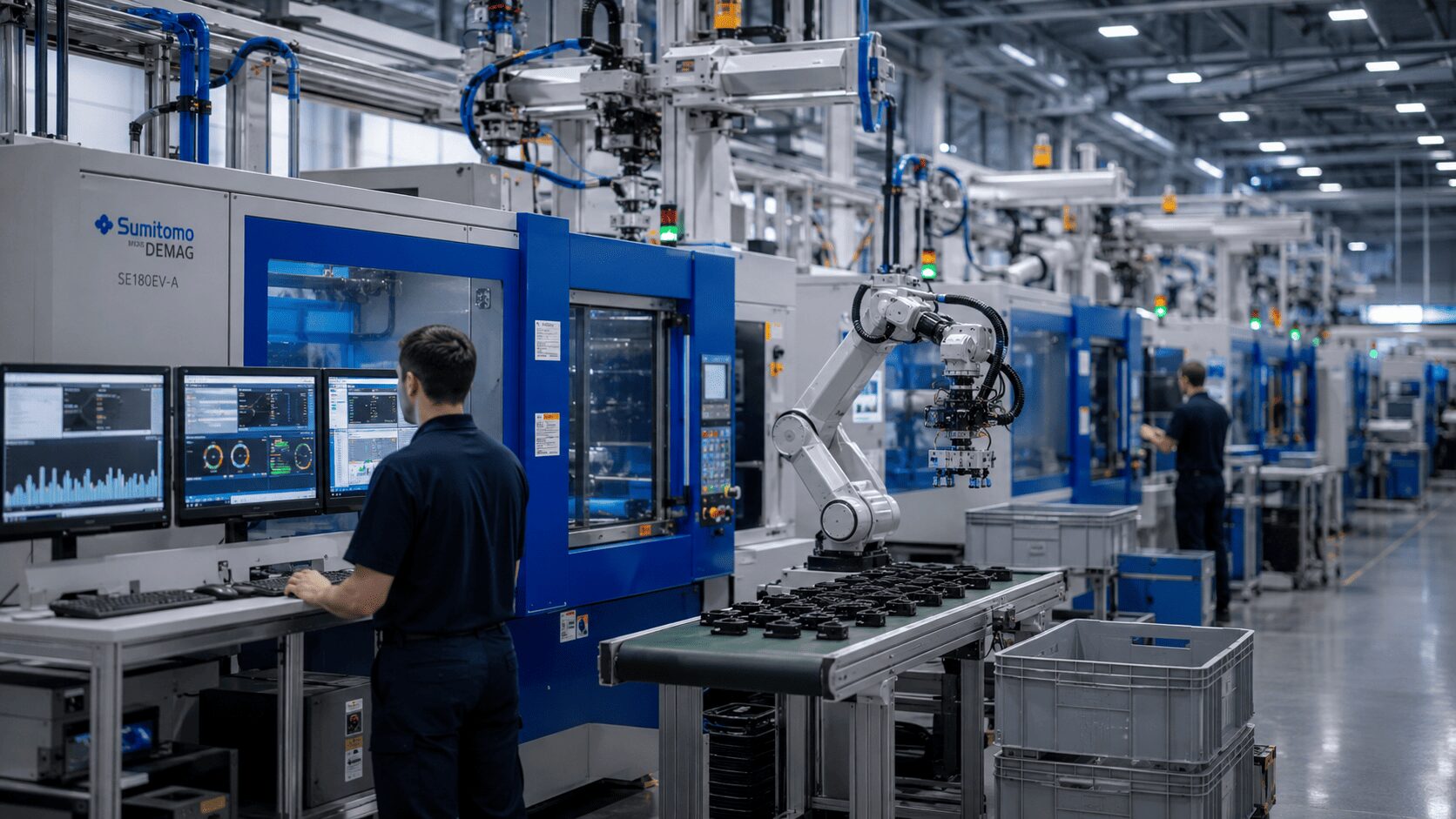
This is where integrated operations create an advantage. When a single provider manages mould design, moulding, secondary processing, quality control, and logistics in one production environment, teams make faster scheduling decisions and execute corrective actions more easily. You face fewer handoffs, make fewer assumptions, and lose less time waiting for another vendor to respond.
Build redundancy where failure is costly
You don’t need to duplicate every program, but you should never rely on a single fragile point for critical production. If a tool operates under heavy load, make preventive maintenance planning a core part of your capacity strategy. When a part is business-critical, keeping backup inserts, spare components, or a secondary validated machine easily warrants the investment.
This choice highlights one of the clearest trade-offs in scaling moulded production. Redundancy raises upfront costs, while a lack of redundancy increases delivery risk. Finding the right balance depends on customer penalties, inventory strategy, lead times, and how severely an outage would disrupt the finished product.
Quality systems have to scale with the part
When one vendor fabricates the mould, a second handles production, a third manages finishing, and quality issues pass through several separate teams, scaling slows down—even with a competent crew. Fragmented accountability drags out every adjustment.
For companies aiming to launch quickly and ramp with confidence, a one-stop manufacturing structure eliminates friction. Design refinement, tool maintenance, moulding, finishing, packing, and shipping all directly drive output. Unifying these functions under one roof accelerates changes and keeps production data tied directly to the physical part.
This is why manufacturers with strong in-house control scale more smoothly. They modify moulds, rebalance schedules, troubleshoot defects, and adapt packaging without waiting for external suppliers to align. For buyers under deadline pressure, that speed offers far more than convenience—it actively reduces commercial risk.
Watch the hidden causes of scrap during scale-up
Scrap often rises during expansion for reasons that seem small at first. Material handling may be less controlled during added shifts. Packaging may not protect parts adequately between moulding and secondary operations. A cycle time reduction may distort the part just enough to create assembly issues later.
These are not isolated technical problems. They are signs that the production system is being stretched without full alignment. The most effective response is to review the whole manufacturing chain, not just the press settings.
Supplier structure affects ramp speed
When one vendor fabricates the mould, a second handles production, a third manages finishing, and quality issues pass through several separate teams, scaling slows down—even with a competent crew. Fragmented accountability drags out every adjustment.
For companies aiming to launch quickly and ramp with confidence, a one-stop manufacturing structure eliminates friction. Design refinement, tool maintenance, moulding, finishing, packing, and shipping all directly drive output. Unifying these functions under one roof accelerates changes and keeps production data tied directly to the physical part.
This is why manufacturers with strong in-house control scale more smoothly. They modify moulds, rebalance schedules, troubleshoot defects, and adapt packaging without waiting for external suppliers to align. For buyers under deadline pressure, that speed offers far more than convenience—it actively reduces commercial risk.
How to scale moulded production in a way that stays economical
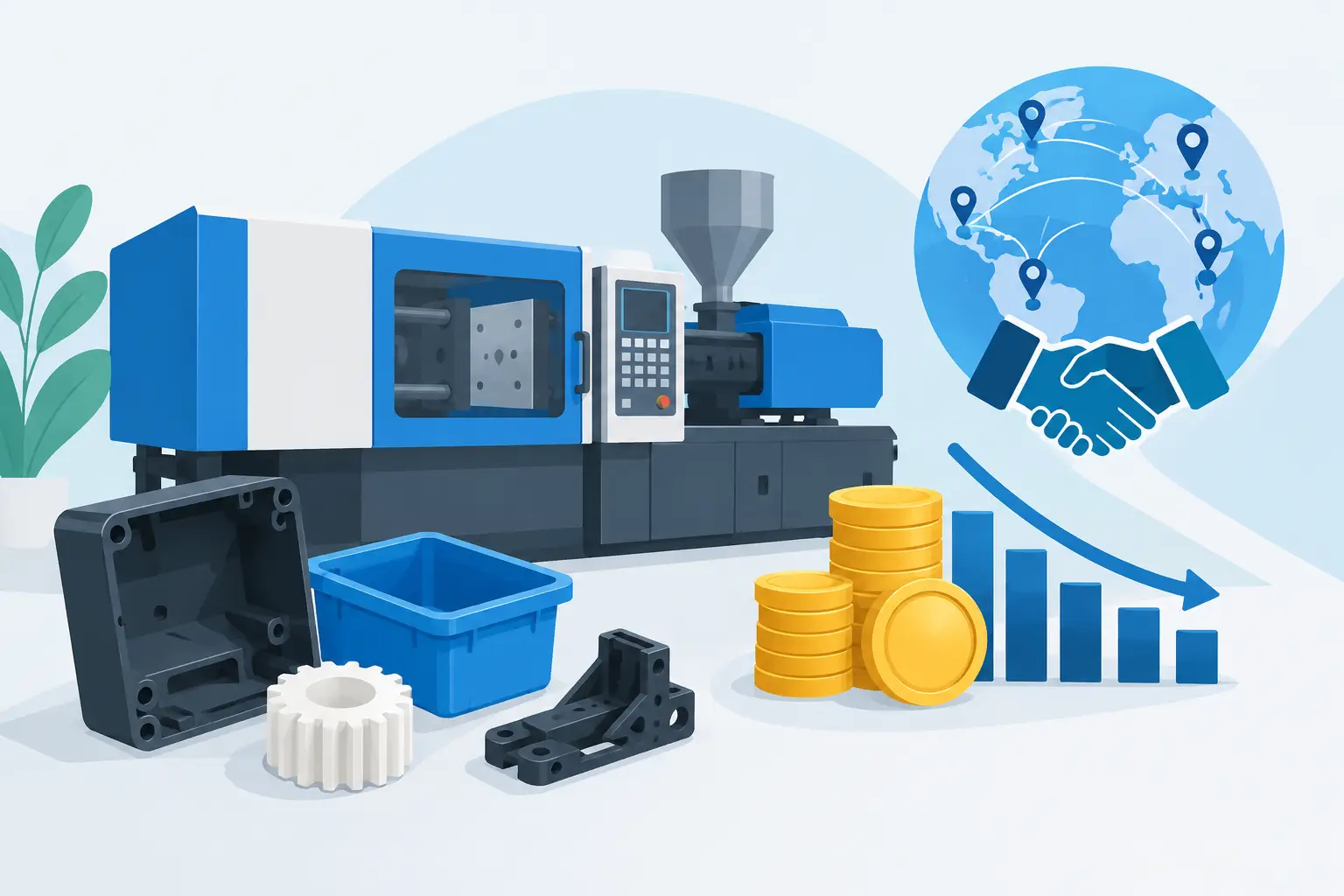
The cheapest unit price at low volume does not always remain the cheapest at higher volume. As demand grows, total manufacturing economics matter more than quoted piece price. Cycle efficiency, scrap rate, tool uptime, maintenance response, packaging quality, and shipping reliability all affect landed cost.
This is where some sourcing decisions backfire. A supplier may quote aggressively, but if they cannot hold process stability, support tool changes quickly, or coordinate secondary work efficiently, the hidden costs show up later in premium freight, stockouts, rejected lots, and internal firefighting.
A scalable moulding operation should be evaluated on total execution capability. Can the tool be maintained without long delays? May the process be documented and repeated across shifts? Will the manufacturer support engineering changes after launch? May quality data be produced quickly when issues arise? Those questions tend to matter more than a narrow per-part comparison.
For OEMs, product developers, and procurement teams, the practical answer to how to scale moulded production is straightforward: build around control. Control of tooling, control of process, control of quality, and control of the production flow after the part leaves the press. Companies like Glasfil are structured around that model because scaling moulded parts is rarely solved by one department alone.
If demand is rising, the best time to prepare the production system is before the orders force the issue. A ready mould, a process that is validated, and a supplier that can act quickly will save more than time. It will protect the program when volume stops being a forecast and becomes a commitment.
If you are evaluating a new project or facing ongoing tooling and production challenges, contact us to discuss your requirements, request a technical consultation, or submit your RFQ.