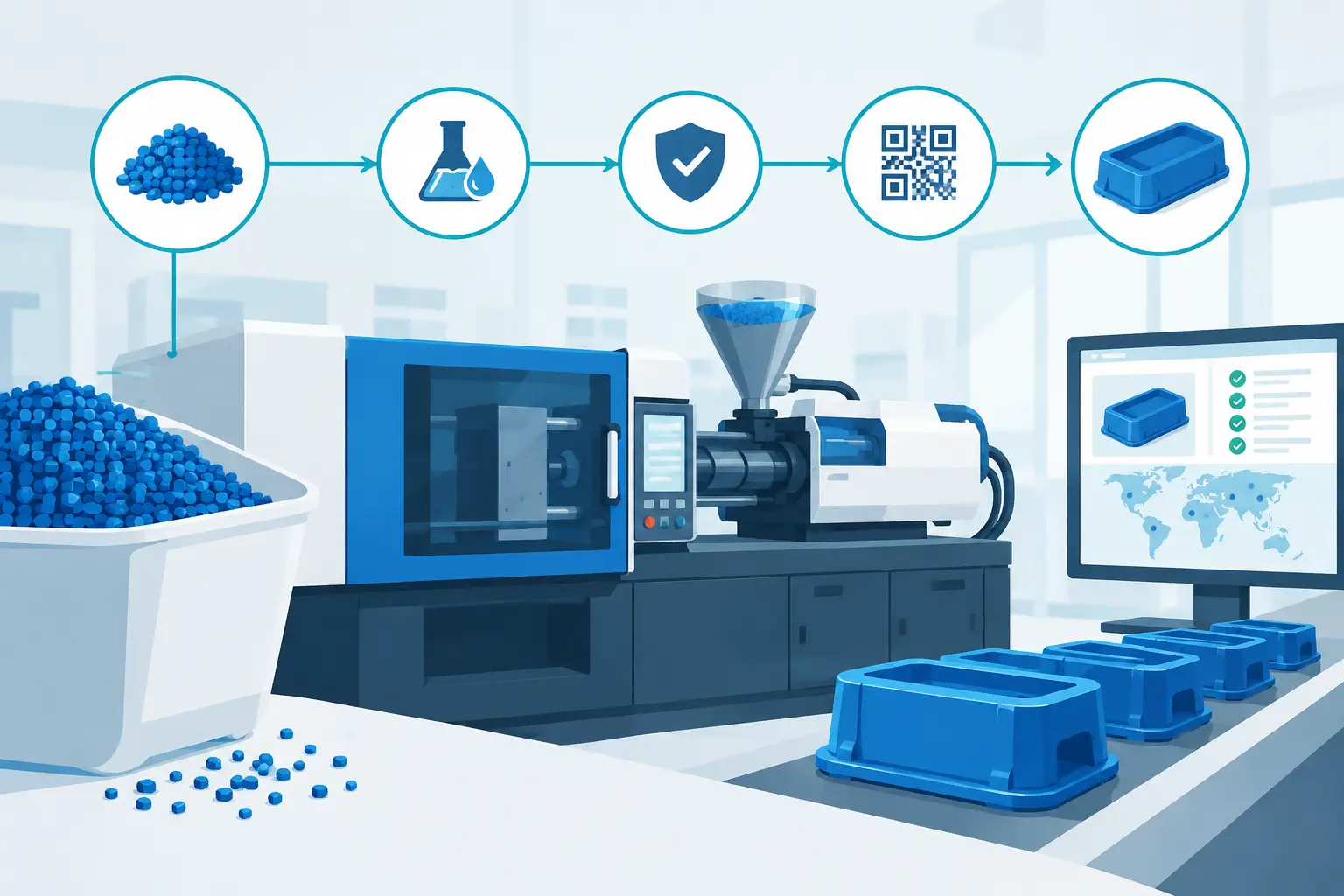
A part that appears inexpensive at $0.40 can become an expensive program if it requires an overbuilt mold, excessive cycle time, high scrap rates, or manual finishing. An effective injection moulding cost guide looks beyond the quoted unit price. It shows where cost is created, which decisions are fixed early, and where engineering changes can produce measurable savings before production begins.
For procurement teams and product engineers, the objective is not simply to find the lowest initial quote. It is to establish the lowest dependable total cost across tooling, production, quality, delivery, and the full expected production life of the part.
What Makes Up Injection Moulding Cost?
Injection molding economics are driven by two categories: upfront costs and recurring costs. Upfront costs are concentrated in engineering, mold design, mold fabrication, sampling, and validation. Recurring costs include resin, machine time, direct labor, secondary operations, inspection, packing, and freight.
The balance changes with production volume. A low-volume part may carry a high cost per unit because the mold investment is spread across relatively few pieces. At higher annual volumes, a well-designed multi-cavity tool can reduce the unit cost significantly, provided demand is stable enough to justify the capital investment.
A practical calculation is:
Total part cost = allocated tooling cost + material cost + conversion cost + secondary process cost + quality and packing cost + logistics cost
Every term deserves attention. A supplier that only discusses resin price and machine rate is not providing the information needed for a reliable sourcing decision.
Tooling Cost: The First Major Investment
The injection mold is usually the largest upfront cost in a custom plastic part program. Its price reflects more than the size of the finished component. Complexity, steel selection, number of cavities, precision requirements, surface texture, undercuts, cooling design, ejection method, and expected mold life all affect the final tooling cost.
A simple single-cavity mold for a straightforward part may be appropriate for early market testing or lower-volume production. A hardened, multi-cavity production mold requires more investment, but it can deliver shorter cycle times, higher output, and a lower cost per part over a long run.
Tooling should be specified around the business case, not only the part geometry. If annual demand is uncertain, investing immediately in a high-cavity mold can tie up capital without a clear return. Conversely, selecting a low-cost tool for a high-volume product can lead to maintenance interruptions, inconsistent quality, and lost production capacity.
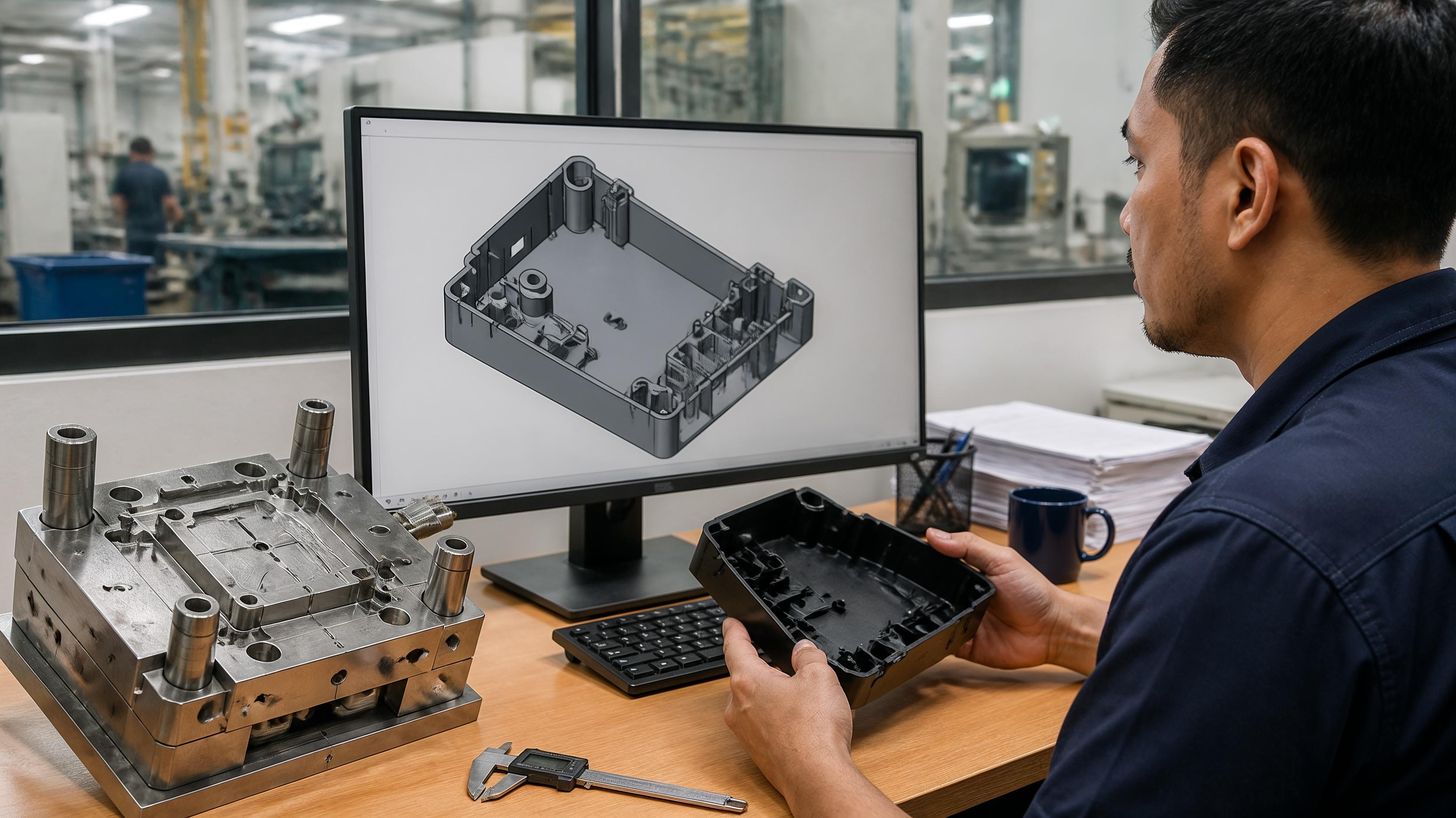
Mold modifications are another consideration. Product designs frequently change after initial samples, especially when assembly, fit, or field performance is evaluated. Working with a manufacturer that controls mold design, fabrication, and modification in-house reduces the delay and coordination risk associated with sending tooling between separate suppliers.
Design Choices That Raise Tooling Cost
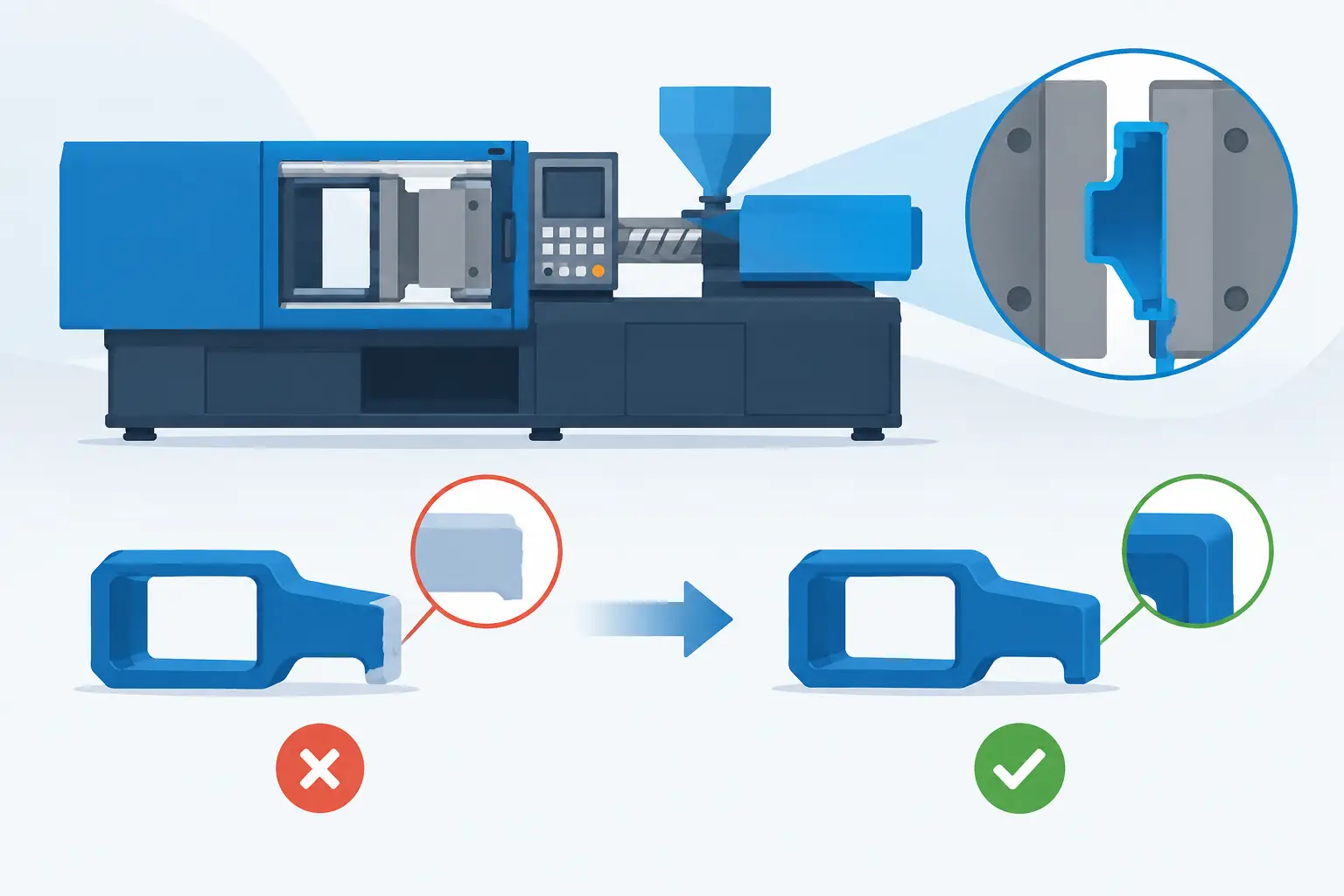
Some features are necessary. Others can be redesigned without affecting the product’s function. Common cost drivers include side actions for undercuts, deep ribs that complicate filling, tight tolerances across large dimensions, unusual textures, thin walls, and complex parting lines.
Uniform wall thickness, practical draft angles, accessible gate locations, and simplified geometry can make the mold easier to build and more stable to run. Design for manufacturability is not about reducing every feature. It is about identifying which features create production risk and whether they deliver enough product value to justify that cost.
Material Cost Is More Than the Resin Price
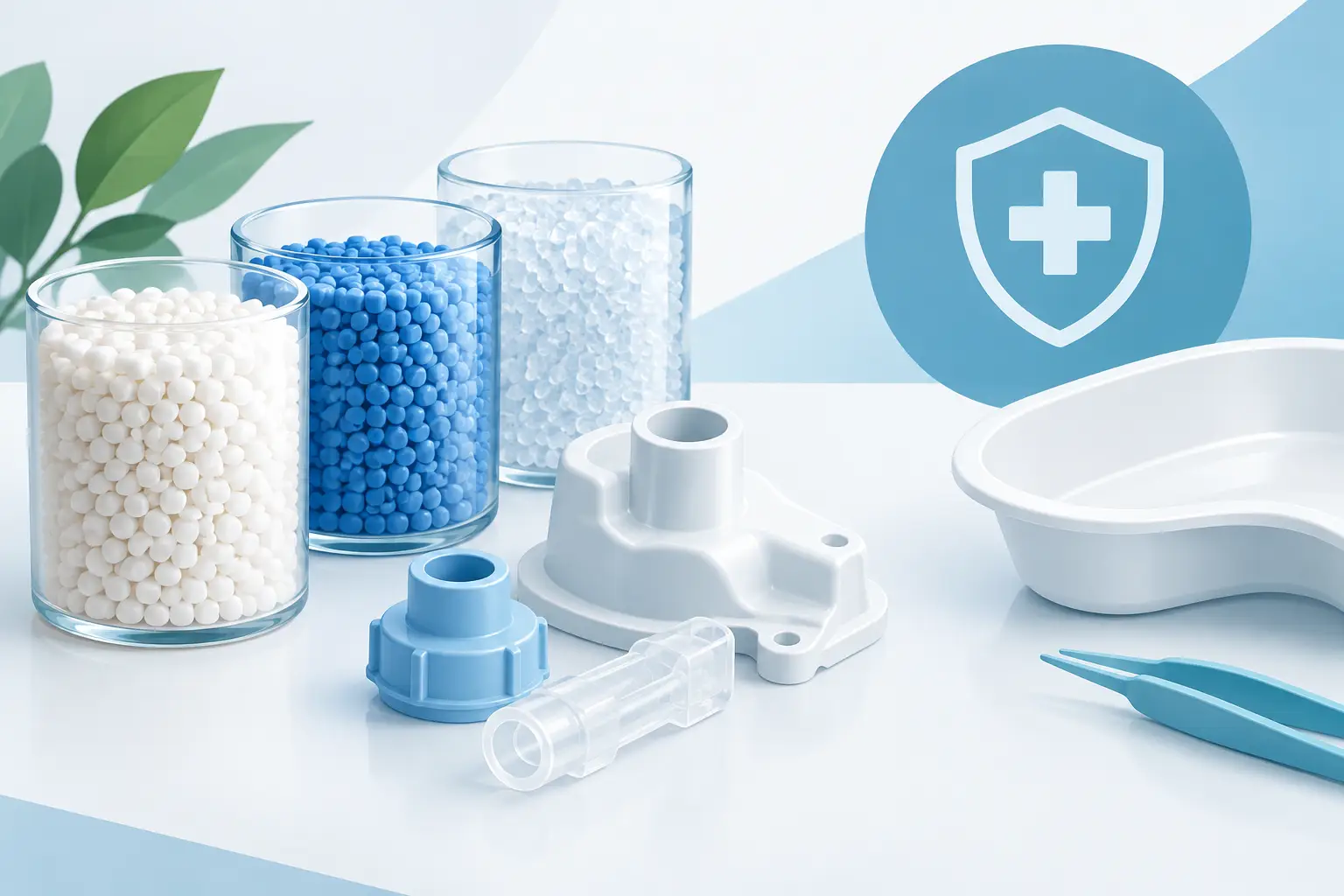
The resin selected for a part affects material cost, cycle time, tooling approach, finishing requirements, and performance in use. Commodity materials may be suitable for noncritical applications, while engineering-grade polymers are often required for heat resistance, impact strength, chemical exposure, electrical properties, or dimensional stability.
Material consumption includes the finished part weight plus runners, sprues, purge material, and scrap. Hot-runner systems can reduce runner waste, particularly in high-volume programs, but they increase initial mold complexity and maintenance requirements. The right choice depends on production volume, material cost, allowable recycled content, and part quality requirements.
Color also matters. Standard colors are generally simpler to source than custom color matching. For branded products, appearance requirements may justify the additional control. For internal components, specifying a standard color can avoid unnecessary material and lead-time variation.
When comparing quotes, confirm whether the supplier has included resin at current market pricing, whether price adjustment mechanisms apply, and whether the quoted material grade is fully equivalent to the engineering specification. A lower quote based on an unapproved substitute is not a cost reduction.
Cycle Time Determines Conversion Cost
Conversion cost is the cost of turning resin into acceptable parts. It is influenced heavily by cycle time: the seconds required to close the mold, inject material, cool the part, open the mold, eject the part, and prepare for the next cycle.
Cooling is often the largest portion of that cycle. Part thickness, resin type, mold cooling channel design, and required dimensional stability determine how quickly a part can be removed without warpage or cosmetic defects. Saving a few seconds per cycle can have a meaningful impact over hundreds of thousands of shots.
Machine size also affects cost. A part should run on a machine with sufficient clamping force and shot capacity, but oversized equipment can add unnecessary hourly cost. The correct machine is selected based on projected area, material behavior, mold size, cycle requirements, and process stability.
Glasfil operates 19 injection molding machines up to 560 tons, allowing production to be matched to the actual requirements of the mold and part rather than forcing every project into a limited machine range.
Secondary Operations Can Change the Real Unit Price
Many custom parts leave the press only partly complete. They may require trimming, assembly, printing, ultrasonic welding, inserts, machining, labeling, painting, or specialized packing. These operations are often where a seemingly competitive molding quote changes after the full production scope is defined.
Manual work deserves particular scrutiny. Hand trimming or assembly can be appropriate for lower volumes, prototypes, or complex assemblies. At scale, however, automation, better mold design, or an integrated secondary fixture may be more economical and more repeatable.
Insert molding provides a useful example. Molding around a metal insert can eliminate a separate assembly step and improve retention, but it requires accurate insert handling, process control, and a mold designed for the operation. The lowest cost route depends on part volume and the consequences of an assembly failure.
Ask for a clear separation between molding, secondary processing, packing, and logistics. This makes it easier to compare suppliers on an equivalent basis and identify operations that may be consolidated.
Quality Cost Is Either Planned or Paid Later
Precision parts require a defined inspection strategy. That may include first-article approval, in-process checks, dimensional inspection, visual standards, material traceability, functional testing, and documented sampling plans. These activities have a cost, but uncontrolled defects cost more through sorting, rework, returns, production stoppages, and customer claims.
The level of quality control should match the application. A cosmetic consumer component and a water meter component may both be molded from plastic, but their failure modes and traceability needs are different. Critical dimensions, sealing surfaces, electrical interfaces, and safety-related features require more disciplined control than nonfunctional appearance details.
The best time to control quality cost is during mold and process development. A stable tool, optimized cooling, defined process window, and approved inspection criteria reduce the need for expensive containment activity later.
How Volume Changes the Cost Decision
Volume is the central variable in an injection molding business case. Consider a program requiring 20,000 parts annually versus one requiring 500,000. The lower-volume program may favor a simpler tool, fewer cavities, and more flexible operations. The higher-volume program may justify a multi-cavity mold, hot runner, automated handling, and dedicated inspection fixtures.
Do not evaluate volume only as a single annual number. Consider order frequency, forecast reliability, peak demand, service inventory, expected product life, and potential revisions. A forecast that changes sharply every quarter needs a different tooling strategy from a stable, multiyear OEM program.
Tooling amortization should also be visible. If a $60,000 mold is allocated across 100,000 parts, it adds $0.60 per part before material or processing. Across one million parts, that same mold adds $0.06 per part. This does not mean high volume always produces the lowest total cost. Inventory exposure, financing, and design changes still matter.
Questions to Ask Before Accepting a Quote
A useful quote should state the assumptions behind the number. Confirm the material grade, part weight, cavity count, cycle time estimate, machine size, expected annual volume, scrap allowance, quality requirements, secondary operations, packing format, and delivery terms.
Also ask who owns the mold, where it will be maintained, how modifications are managed, and what happens if demand increases. These points affect supply continuity as much as the initial part price. A complete manufacturing partner should be able to explain the trade-offs in practical production terms, not simply provide a line-item total.
The strongest cost reduction work happens before steel is cut. Bring a realistic demand forecast, functional requirements, target price, and known assembly constraints to the first technical review. That gives the manufacturing team room to improve the design, select the right tool strategy, and build a production plan that protects both cost and delivery when the program moves from concept to repeat orders.
Contact us to discuss your project, request a quotation, or arrange a technical consultation. Our team will help you determine the most cost-effective and reliable way to manufacture your part.