A mold can produce a clean first shot and still be the wrong tool for the production plan. Buyers budgeting a new program must recognize that mould life expectancy is not simply a tooling specification; it determines replacement risk, part consistency, maintenance downtime, and the true cost per molded component over the life of the project.
A tool expected to run 50,000 parts requires a different design, steel grade, cooling strategy, and maintenance approach than a tool intended for several million cycles. The right answer is not always the most expensive mold. Buyers should choose the mold engineered for the resin, geometry, tolerances, production volume, and operating conditions the program actually requires.
What Does Mould Life Expectancy Mean?
Mould life expectancy defines the number of injection cycles a mold can complete while continuing to produce parts within agreed specifications, assuming planned maintenance and reasonable repairs. It does not represent a fixed expiration date.
A mold does not suddenly stop at its rated cycle count. Instead, predictable areas develop wear: moving components gain clearance, gates erode, parting lines flash, vents lose effectiveness, cooling performance declines, and polished surfaces lose their finish. A well-built and properly maintained tool can often exceed its original target, whereas a poorly matched tool can show quality issues far earlier.
For planning purposes, manufacturers commonly group tools by intended output. Prototype and bridge tooling may suit a few thousand to tens of thousands of shots, while production tooling often handles hundreds of thousands of cycles. Engineers can build hardened, high-volume tooling for one million cycles or more, depending on material, part design, and maintenance discipline.
The key distinction lies between projected cycle life and usable production life. Manufacturers measure usable life by the tool’s ability to make conforming parts at the required cycle time, not merely by whether it can still open and close.
The Factors That Determine Mold Tool Life
Tool steel selection
Steel selection directly affects wear resistance, corrosion resistance, polishability, and repairability. Softer pre-hardened steels remain economical and practical for moderate production runs, especially when tight timelines and non-abrasive resins dictate the choice. Hardened tool steels provide greater resistance to wear and deformation in demanding, high-volume applications.
The job dictates the correct grade. Glass-filled nylon, mineral-filled polypropylene, and other abrasive compounds place far more stress on cavities, cores, gates, and slides than unfilled commodity materials. PVC and certain flame-retardant resins introduce corrosive conditions. In those cases, corrosion-resistant steel or protective coatings may cost more initially, but they prevent accelerated damage and repeated rework.
Resin and additive package
The base polymer tells only part of the story. Reinforcement, colorants, flame retardants, recycled content, and processing additives alter how the material behaves inside the tool.
Glass fiber offers a common example. It improves part stiffness and strength, but it abrades flow paths, shutoffs, gates, and cosmetic surfaces. A tool performing well with unfilled ABS may not deliver the same life expectancy with a heavily glass-filled engineering resin. Engineers must review material selection and tool design together before cutting steel.
Part geometry and mold construction
Complex parts create more opportunities for wear. Deep ribs, thin walls, undercuts, tight shutoffs, unscrewing mechanisms, lifters, slides, and fine textures all add engineering value, but each requires appropriate construction and maintenance access.
A simple two-plate mold usually features fewer wear points than a multi-action tool. However, that does not make complex tooling a poor choice; it simply means the expected production volume must justify the design, and designers should configure wear-prone components for controlled replacement rather than expensive emergency repair.
Gate location and runner design matter as well. High-velocity flow at a gate can erode steel over time. Poor venting causes burning, pressure spikes, and unnecessary stress on the mold. Effective cooling remains equally important because inconsistent temperatures contribute to warpage, extended cycle times, and thermal fatigue.
Processing conditions
Even an excellent tool loses productive life when operators run it outside its intended process window. Excessive injection pressure, clamp force, melt temperature, mold temperature, or cycle speed increase wear and damage delicate features.
For example, using more clamp force than necessary may temporarily mask a parting-line issue while increasing the risk of crushed shutoffs and damaged mold faces. Excessive packing pressure stresses cores and cavity inserts. Running too cold increases pressure demand, while running too hot accelerates resin degradation and creates deposits in vents and on polished surfaces.
Stable processing protects the tool and supports repeatable part quality. Documented setup parameters benefit every production mold, especially where multiple machines or production sites are involved.
Estimating Mould Life Expectancy Before Tooling Begins
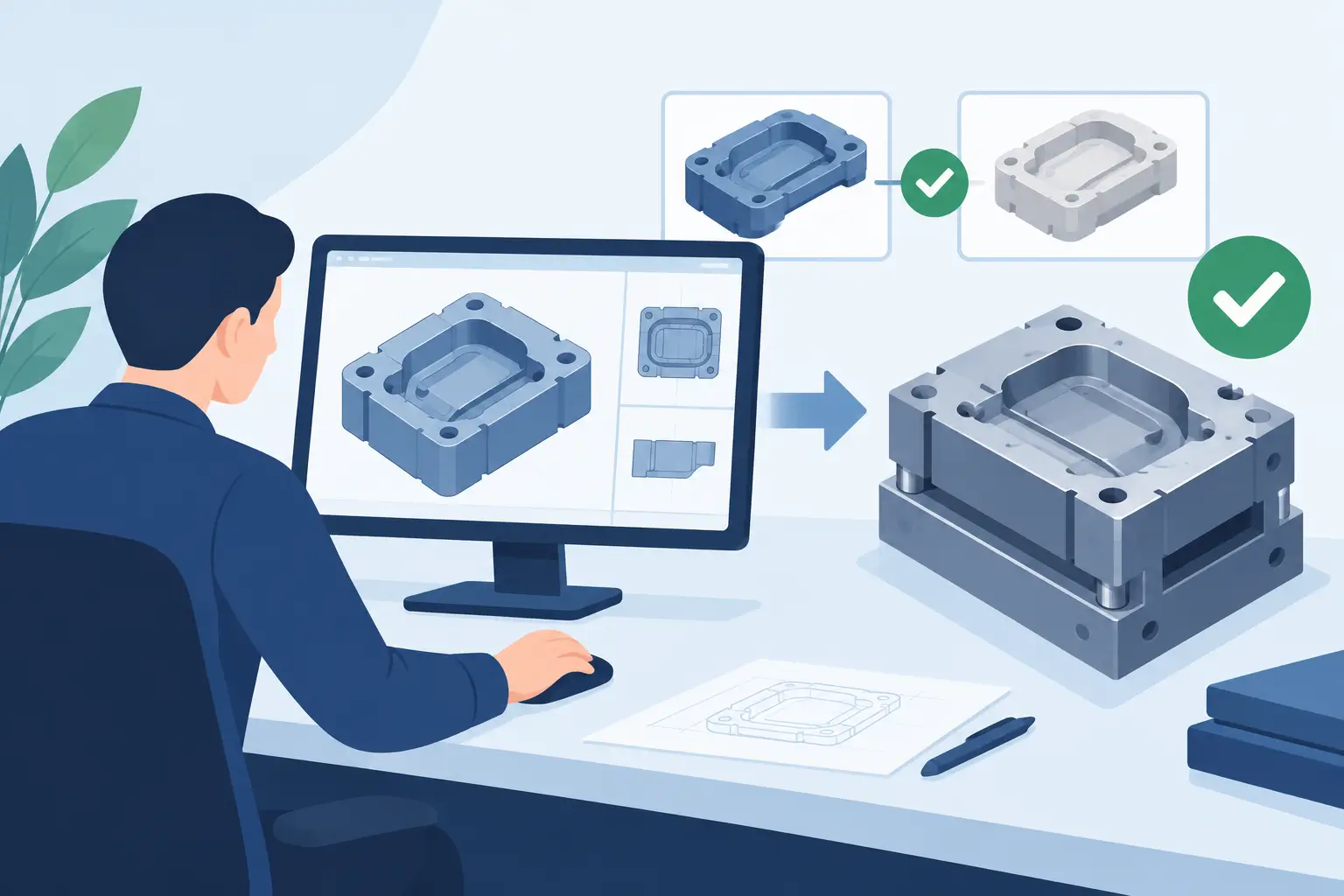
The design review phase—before fabrication starts—offers the best opportunity to protect tool life. Buyers should provide realistic information concerning annual demand, total program volume, resin grade, cosmetic expectations, critical dimensions, and likely future changes. Underestimating volume can lead to a lower-cost tool that becomes a bottleneck, while overbuilding a mold for a short-run product ties up capital without yielding a practical return.
A productive review should answer several operational questions:
-
How many parts must producers manufacture each year?
-
Will demand remain steady or prove seasonal?
-
Will the tool run unattended or in long production campaigns?
-
Do abrasive fillers, strict surface requirements, or tight tolerances apply?
-
Will the product undergo revision during its market life?
These answers guide decisions regarding cavity count, steel treatment, replaceable inserts, cooling circuits, hot versus cold runner systems, and spare components. They also determine whether designers should configure the tool for rapid maintenance. A mold allowing quick access to a wear insert significantly reduces downtime compared with one requiring extensive disassembly.
At Glasfil, in-house mold design, fabrication, modification, and maintenance create a shorter feedback loop between tool condition and production output. When a part or process requirement changes, the team responsible for the mold evaluates the effect on cycle time, wear, and quality directly, avoiding the delays of handing work across disconnected suppliers.
Maintenance Is What Turns a Rating Into Real Service Life
Preventive maintenance is not an optional afterthought once a mold enters production. It is the operating discipline that keeps minor wear from becoming dimensional drift, flash, sticking parts, poor ejection, or unplanned shutdowns.
Maintenance frequency should be based on cycle count and process severity, not just calendar time. A high-output tool running abrasive material may need inspection much more often than a low-volume mold producing an unfilled resin. Maintenance records should track shots, repairs, replaced components, lubrication, cooling performance, and any recurring quality issue.
A practical maintenance program typically includes cleaning vents and parting lines, inspecting gates and ejector pins, checking slides and lifters for wear, verifying cooling channels, lubricating moving elements where appropriate, and preserving the tool correctly between production runs. Water quality deserves attention. Scale or corrosion in cooling lines reduces heat transfer, extends cycle times, and can create temperature variation that appears as a molding problem.
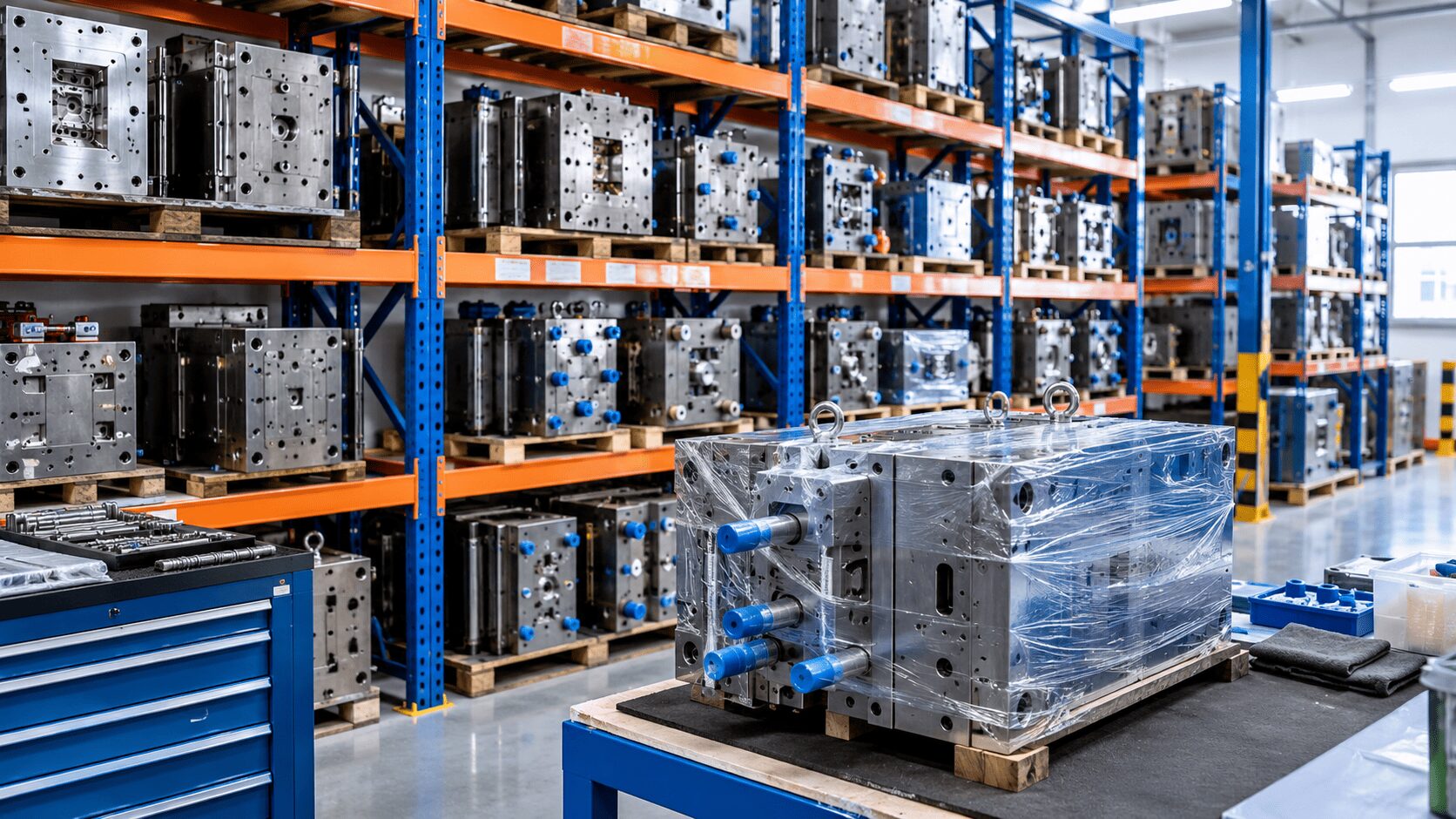
Storage also matters. A cleaned, dried, protected tool is more likely to restart successfully after months on the shelf. A mold stored with residual water, contaminants, or inadequate rust prevention can lose useful life without producing a single part.
Warning Signs That Tool Life Is Being Consumed Faster
Production teams should not wait for a major breakdown to inspect a mold. Small changes in part appearance or machine performance are often early signals.
Flash at the parting line can indicate worn shutoffs, damaged mold faces, or insufficient clamping. Short shots or burn marks may point to blocked vents, material changes, or altered process conditions. Scratches, drag marks, sticking parts, and inconsistent ejection can signal surface damage, poor lubrication, or wear in moving components. A gradual increase in cycle time may reveal cooling restrictions or deteriorating part release.
Not every defect originates in the tool. Resin moisture, machine condition, process settings, and handling can produce similar symptoms. The value of an integrated manufacturing partner is the ability to diagnose the complete system rather than replacing mold components without addressing the root cause.
Plan Tool Life Around the Program, Not the Purchase Order
The lowest tooling quote is rarely the lowest lifetime cost when it creates frequent downtime, rejects, repair expense, or an early replacement requirement. Conversely, a fully hardened, multi-cavity production mold may not be justified for a product with uncertain demand or a short market window.
The right approach is to define the production target honestly, engineer the mold around that target, and maintain it with the same control applied to the molding process. When expected volume, resin behavior, part complexity, and service requirements are aligned from the start, a mold becomes a dependable production asset rather than a recurring operational risk.
Before approving a tool, ask how it will be serviced after 10,000, 100,000, or 1,000,000 cycles. That question often reveals whether the proposed mold is built only to launch the part or built to keep delivering it.
Contact us to discuss your project, request a quotation, or arrange a technical consultation. Our team will help you determine the most cost-effective and reliable way to manufacture your part.