A late mould launch rarely starts with one big mistake. More often, lead time stretches because small delays stack up – a design revision waiting on feedback, a tool adjustment sent to a third party, a material issue caught too late, or finishing and packing handed off across multiple vendors. That is why the top ways to shorten lead times are usually not isolated fixes. They come from tightening control across the entire product realisation process.
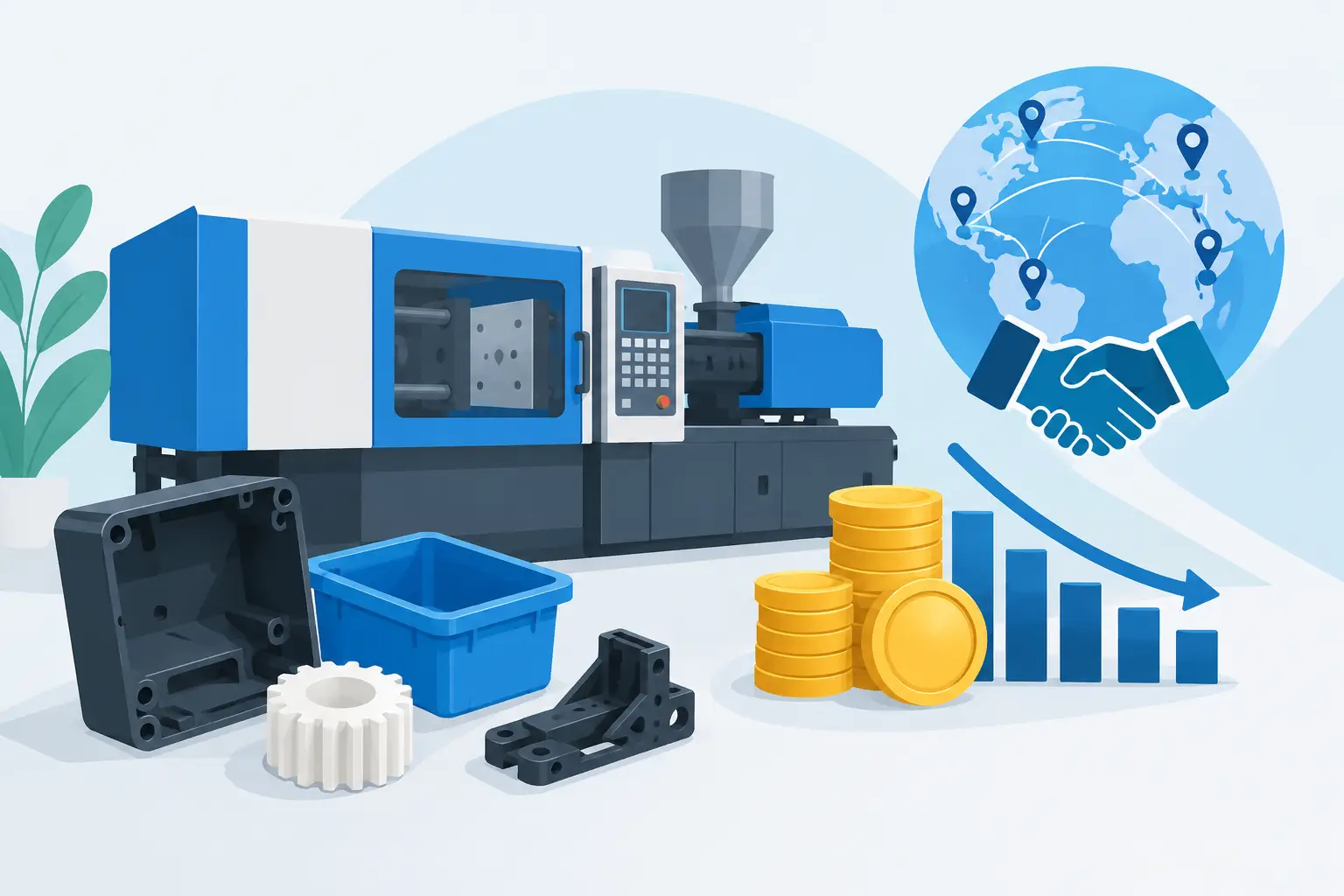
For OEMs, procurement teams, and product developers, shorter lead times are not just about moving faster. They reduce inventory risk, protect launch dates, improve forecast accuracy, and make engineering changes easier to manage. In plastic injection moulding, speed comes from process discipline, technical alignment, and having fewer points where work can stall.
The top ways to shorten lead times start with process control

The fastest projects are usually the ones with the fewest handoffs. When mould design, fabrication, moulding, secondary operations, and quality checks are split across different suppliers, each transition creates waiting time. Files need to be transferred, tolerances reinterpreted, and priorities renegotiated.
An integrated manufacturing model removes much of that friction. If the same partner can review part geometry, build the mould, run trials, make corrections, and move directly into production, decisions happen faster and with better technical continuity. This is especially valuable when a new part requires early iteration or when a legacy component needs to be recreated with limited documentation.
There is a trade-off here. A specialised vendor may offer lower pricing on one step in the process. But if those savings add a week of coordination or increase the chance of rework, the total project lead time usually gets worse, not better.
Design for manufacturability should happen before tooling starts
A surprising amount of lead time is lost before the first steel is cut. Parts that look acceptable in CAD can still create avoidable problems in moulding if wall thickness is inconsistent, draft angles are too tight, gate location is poorly planned, or tolerances are unrealistic for the chosen resin and process window.
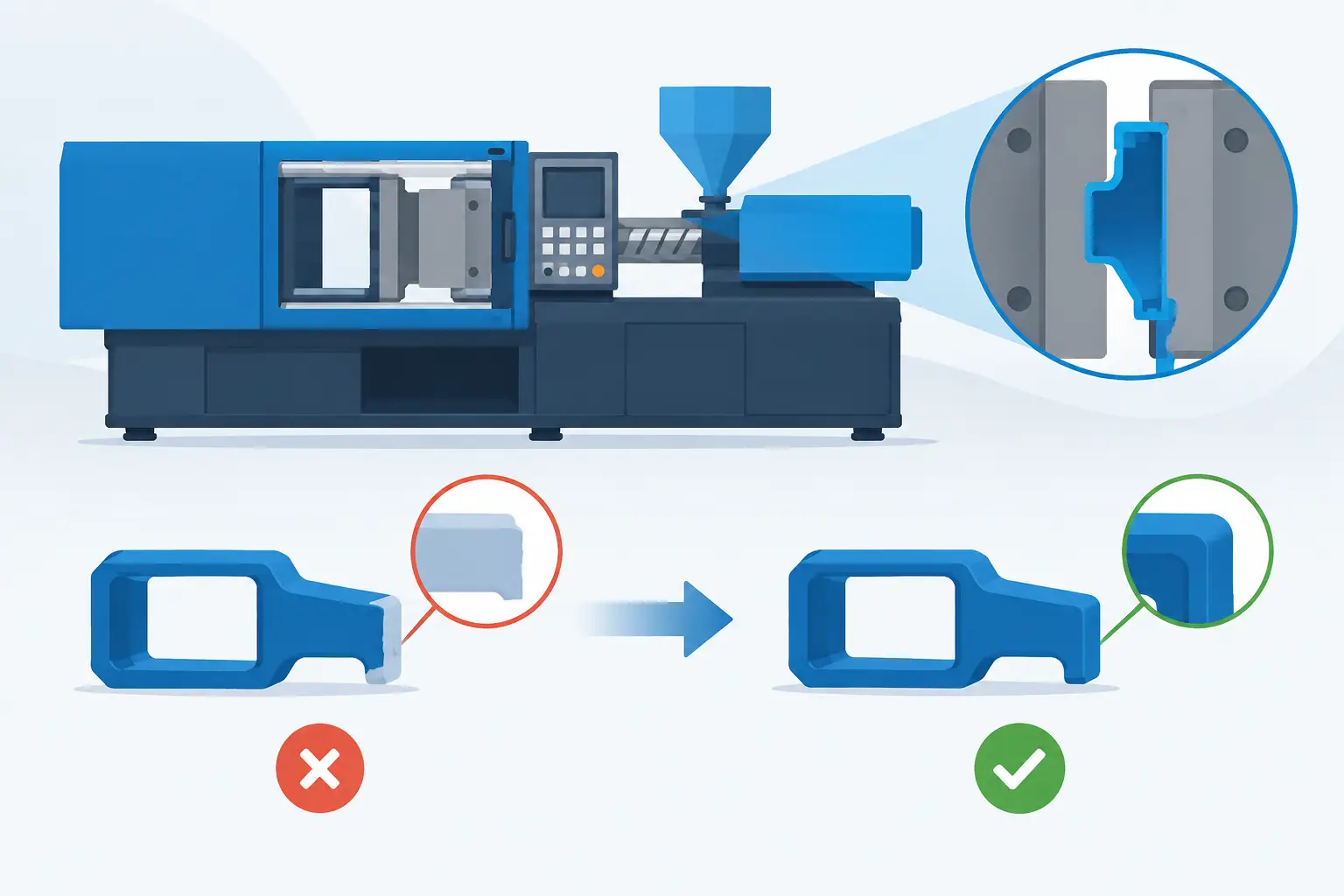
A proper design for manufacturability review shortens lead time by catching those issues early. It reduces the number of mould modifications after trial runs and lowers the risk of cosmetic defects, sink marks, flash, warpage, or filling problems. It also gives procurement and engineering teams a more realistic understanding of tooling complexity and expected production stability.
This is one of the clearest it depends areas. Not every part needs an extended engineering cycle. Simple geometries can move quickly. But for technical components, cosmetic parts, tight-tolerance assemblies, or products with multiple secondary operations, skipping DFM nearly always costs more time later.
Keep mould design and mould modification in-house
If a mould has to leave the production environment every time an adjustment is needed, the lead time becomes vulnerable. External tool shops add transport time, scheduling delays, and communication gaps. Even minor changes can become major schedule disruptions.
Keeping mould design, maintenance, repair, and modification in-house gives manufacturers more control over the critical path. Trial feedback can be translated into corrections immediately. Tool wear can be addressed before it affects output. Engineering changes can be implemented without restarting the vendor coordination cycle.
For buyers, this matters even after launch. Production lead time is not only about the initial tool build. It also depends on how quickly a supplier can respond when a cavity needs repair, a part revision is approved, or output needs to scale. A partner with full tooling control is usually better positioned to protect both first-run timing and long-term supply continuity.
Standardise approvals and reduce decision lag
Many projects are delayed not by manufacturing constraints but by slow approvals. A tool design sits waiting for signoff. First articles are reviewed too late. Packaging decisions stay open until production is ready to ship. These delays often look small on paper, but they block the next operation.
The fix is not simply to push teams harder. It is to set a clear approval structure from the start. Identify who owns design approval, material approval, cosmetic approval, sample approval, and production release. Establish response windows. Make sure technical reviewers and commercial stakeholders are aligned before the project reaches a gate.
This is particularly important for companies launching across multiple departments or regions. The more stakeholders involved, the more important it becomes to define the decision path early. Fast suppliers still need timely customer input to keep momentum.
Choose materials with supply stability in mind
Material selection affects performance, price, and processing, but it also affects lead time. Engineering-grade resins with limited availability, volatile supply, or long import cycles can slow down both pilot runs and production orders. The same applies to colourants, additives, and custom compounds.
A practical approach is to balance technical requirements with sourcing resilience. If two materials can meet the application needs, the one with stronger supply continuity may be the better commercial choice. In some cases, qualifying an alternative resin in advance can prevent future delays if the primary option becomes constrained.
This does not mean defaulting to commodity materials. For automotive, electrical, utility, or structural applications, performance requirements may leave little room for substitution. But material risk should be discussed early, not after the mould is built and production is scheduled.
Match machine capacity to the part and the program

Lead time suffers when production planning is forced into a narrow machine window. If a supplier has limited tonnage options or overloaded capacity in the range your part requires, even a finished mould may wait for machine availability.
That is why machine range matters. A manufacturer with broader press capacity can place tools more efficiently, support different shot sizes, and shift production when demand changes. This becomes even more valuable for programs with multiple parts, family tools, or forecast swings.
Capacity planning also needs to account for project type. Prototype volumes, bridge production, and mature repeat orders should not all compete for the same scheduling logic. The suppliers that protect lead time best are the ones that can align machine availability with the commercial reality of the program, not just the technical minimum tonnage.
Bring secondary operations into the same workflow
Lead time is often measured to the point when moulded parts come off the press. Buyers know that is only part of the job. Finishing, assembly, pad printing, ultrasonic welding, inspection, packing, and shipping can add days or weeks if they are fragmented across separate providers.
Bringing secondary processing into the same manufacturing workflow shortens the total order cycle and improves accountability. Quality issues are detected earlier. Packing specifications are handled closer to production. Logistics planning starts before parts sit idle.
This is where full-service suppliers have a structural advantage. Instead of treating post-moulding work as an external step, they build it into the production plan. That can make the difference between a supplier who ships components and a manufacturing partner who delivers finished, ready-to-use product.
Use quality assurance to prevent lead time loss, not just detect defects
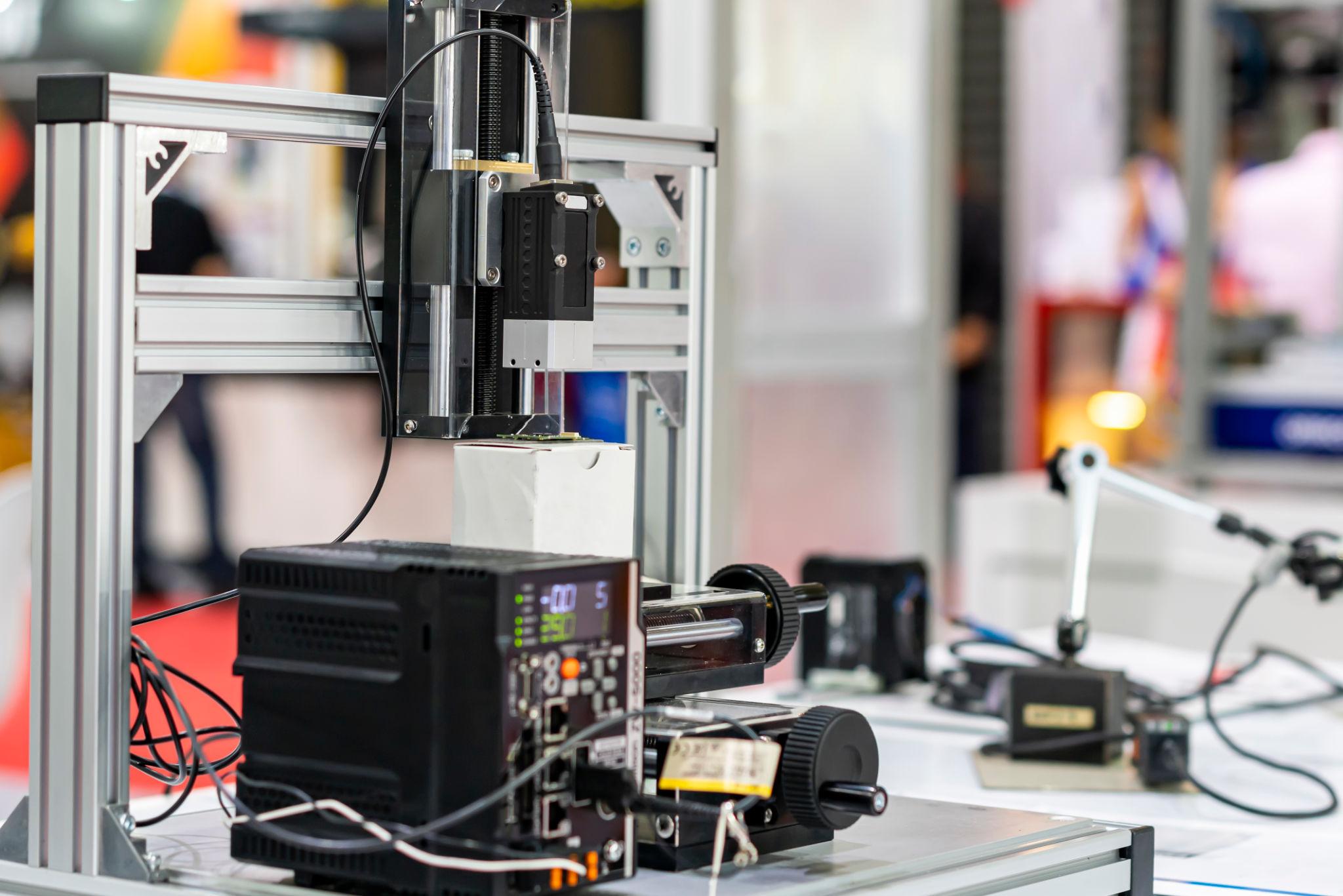
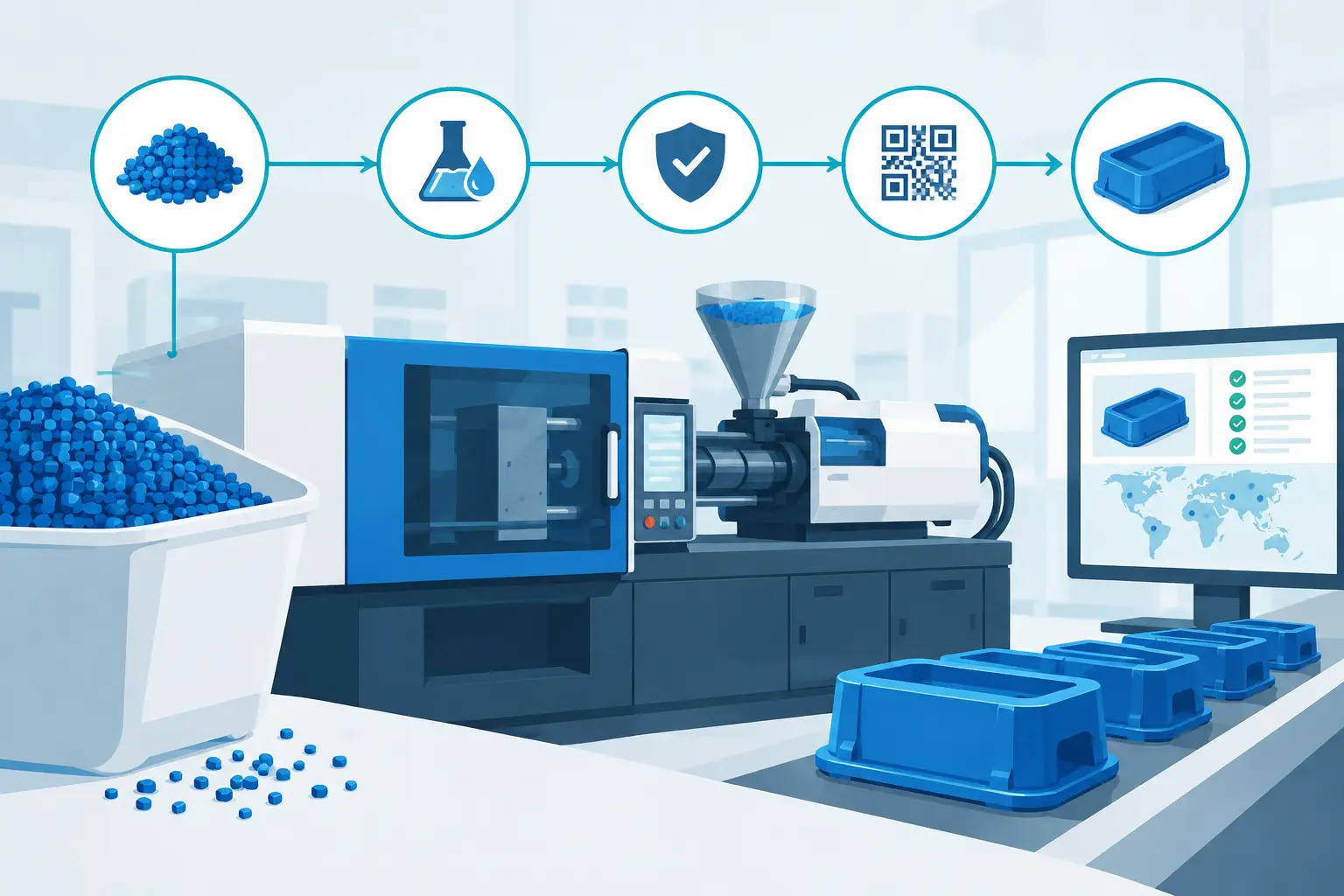
Quality systems are often discussed as a compliance requirement. In reality, they are a lead time tool. When in-process checks, dimensional validation, and documented controls are built into production, problems are found before they create scrap, rework, or shipment delays.
The key is prevention. If quality only enters the conversation after parts fail inspection, the schedule has already been hit. A stronger model uses first-article validation, process monitoring, cavity checks, and traceable inspection plans to stabilise output from the start.
For technical buyers, this also improves confidence when scaling. A project that moves quickly into production but generates recurring nonconformances is not actually fast. It simply pushes the delay downstream. Short lead times only matter if the parts arrive on spec and ready for use.
The top ways to shorten lead times depend on early alignment
No single tactic cuts lead time on every program. A simple consumer part may benefit most from fast tooling and open machine capacity. A high-precision industrial component may depend more on DFM discipline, material planning, and in-house mould correction. What stays consistent is the value of early alignment between design, tooling, production, quality, and logistics.
That is where experienced injection moulding partners create measurable speed. When engineering decisions and manufacturing execution happen inside one controlled system, projects move with fewer surprises. At Glasfil, that integrated approach is what allows complex plastic products to move from concept to completion in as little as eight weeks.
If you want shorter lead times, start by looking for the waiting points between each production step. The biggest gains usually come from removing those gaps before they become delays.
Have a project in mind? Contact us to share your drawings or requirements with us, and our team will review them with you.