Presses rarely deliver finished molded parts. That is why understanding the top secondary processes for molded parts matters early—not after cutting tooling, locking tolerances, and starting production. For OEMs, product developers, and procurement teams, selecting the right post-molding plan directly impacts part performance, cosmetic quality, lead time, unit cost, and supplier risk.
Secondary processing turns a raw plastic component into a production-ready part. A team may need to pad print a housing for branding, ultrasonically weld it for sealing, machine it for critical dimensions, or assemble it to combine inserts, seals, and fasteners. Manufacturers should not treat these steps as casual add-ons. They form a core part of the manufacturing strategy, and when teams plan them correctly, they reduce handling, protect quality, and shorten the path to shipment.
What makes a process one of the top secondary processes for molded parts?
What makes a process one of the top secondary options for molded parts?
The best secondary processes are not simply the most common ones. They solve recurring production problems without adding unnecessary complexity. In practical terms, they improve fit, function, appearance, or packaging efficiency while remaining compatible with the resin, geometry, and expected production volume.
A process that works well for a low-volume industrial enclosure can fail for a high-volume automotive clip. Decision-makers must evaluate cycle expectations, tolerance stack-up, cosmetic standards, downstream assembly needs, and whether the supplier can keep those operations under one roof. In-house control matters because every additional handoff increases timing risk and the chance of cosmetic damage or dimensional variation.
Machining and trimming
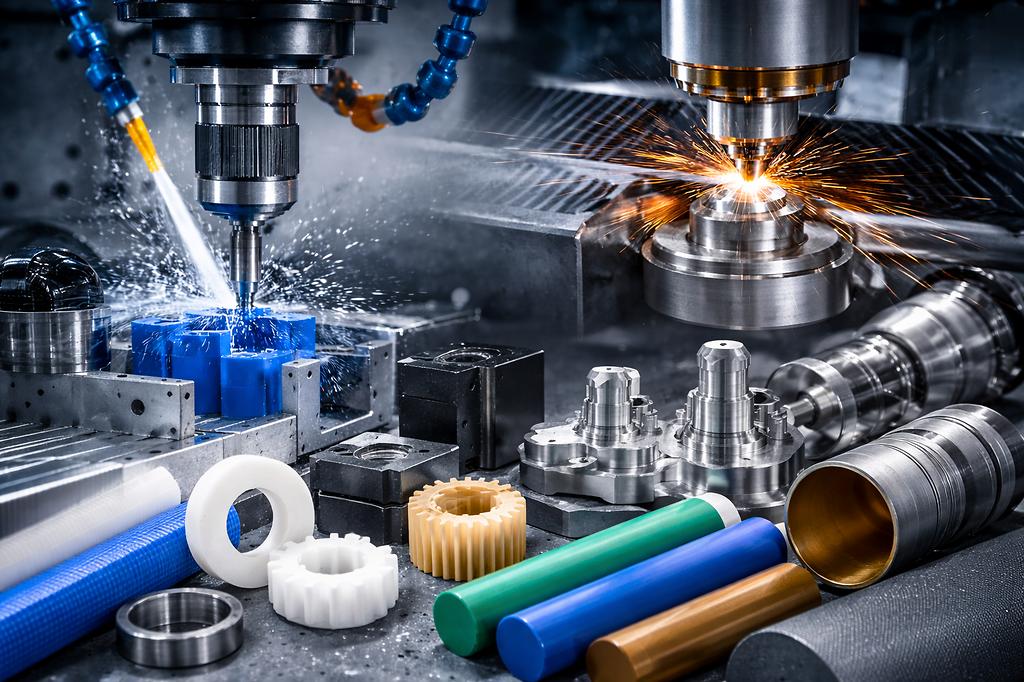
Engineers rely on machining as one of the most valuable secondary operations when parts require tighter dimensions than molding alone can reliably hold. Production teams frequently apply this to holes, slots, sealing surfaces, and datum features that interact with other rigid components.
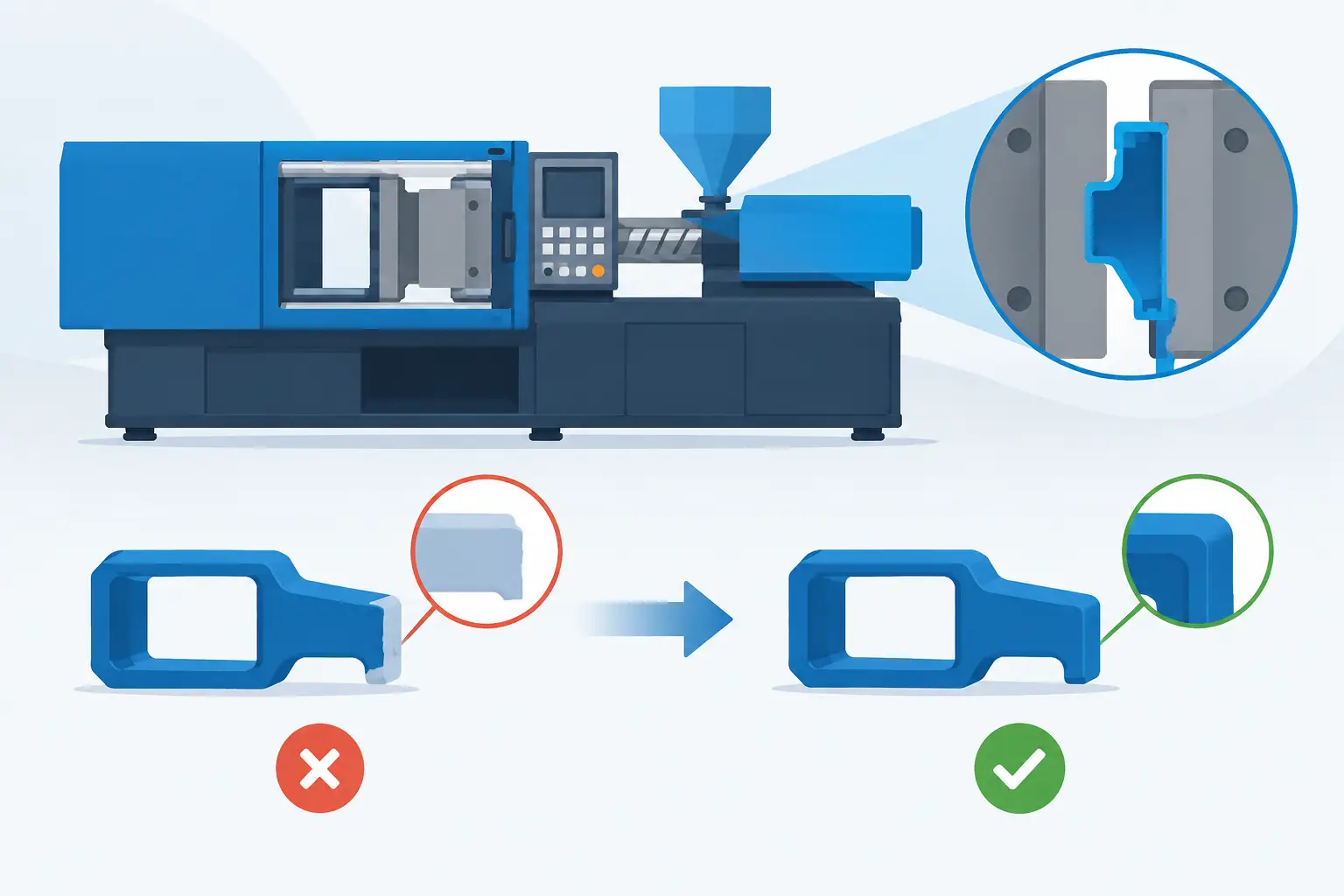
Trimming offers a simpler but equally important function. Operators or machines must cleanly remove gates, flash, and molded excess, especially on visible parts or components that fit into downstream assemblies. Lower volumes or complex geometries may justify manual trimming, whereas CNC trimming and dedicated fixtures deliver better results when teams require high repeatability and throughput.
The trade-off pits cost against precision. Designing a feature to mold cleanly usually offers the better route. However, when geometry, resin behavior, or tolerance requirements make molding alone inconsistent, secondary machining provides a more reliable production choice.
Insert installation and hardware fitting
Many molded parts need more than plastic to do the job. Manufacturers regularly integrate brass inserts, metal pins, threaded components, clips, and bushings into products that require repeat fastening, load-bearing points, or electrical contact.
Operators can install inserts through heat staking, ultrasonic insertion, press fitting, or overmolding, depending on the design. As a secondary process, teams frequently add hardware after molding to gain design flexibility or to protect the insert during the molding cycle.
This step looks simple on paper, but consistency dictates success. Poor insertion depth, local stress, or part distortion can create field failures that technicians struggle to trace. The process demands controlled fixtures, clear work instructions, and strict inspection standards. For buyers, this demonstrates exactly why choosing a one-stop manufacturing partner reduces quality risk.
Ultrasonic welding and heat staking
When assembly teams must join molded parts permanently, ultrasonic welding usually sits near the top of the list. It operates quickly and cleanly, making it well suited for thermoplastic assemblies where adhesives would slow production or create mess and variability. Operators commonly use it for sealed housings, fluid-handling components, electronic enclosures, and multi-part subassemblies.
Heat staking serves a similar purpose in different situations. Operators use it to deform a plastic post and mechanically retain another component, such as a screen, metal contact, or decorative piece. It provides a practical option when the application demands a secure mechanical lock rather than a full weld.
Engineers select between these methods based on part design, resin type, joint strength requirements, cosmetic sensitivity, and potential disassembly needs. Welding offers high efficiency, but it demands good joint design from the start. Heat staking offers more forgiveness in certain assemblies, though it may run slower and perform poorly in sealed applications.
Printing, labeling, and decorative finishing
Not every molded part sits hidden inside an assembly. Many require branding, instructions, regulatory markings, or a finished appearance that aligns with the end product. Decorators use pad printing, screen printing, hot stamping, and labeling as primary methods to add information or improve presentation.
These processes become critical in sectors like electrical products, appliances, bathroom accessories, and consumer-facing industrial components. A molded part may meet every dimensional tolerance yet still fail customer expectations if the operator smears the text, shifts the logo, or applies an inconsistent surface finish.
Teams must manage decoration as a controlled manufacturing process rather than a cosmetic afterthought. Surface energy, texture, resin selection, mold finish, and handling conditions all dictate print adhesion and appearance. If the mark must survive abrasion, chemicals, or outdoor exposure, engineers should match the finishing method directly to the application rather than choosing it out of convenience.
Assembly as a secondary manufacturing process
Engineers often overlook assembly in discussions about molded part finishing, yet it provides immense value to B2B buyers. When a supplier delivers a finished or semi-finished assembly instead of loose molded pieces, it reduces the buyer’s internal labor, simplifies inventory handling, and shortens the customer’s production timeline.
This work includes snapping together plastic components, installing seals and gaskets, adding fasteners, fitting metal parts, or preparing kits for final product integration. For many programs, the ability to absorb these steps in-house distinguishes a true manufacturing partner from a basic molded part supplier.
The real advantage lies in process control rather than simple convenience. Executing assembly where the press molds the parts enables faster feedback, better fit validation, and fewer defects caused by transport or mixed batches. It also gives procurement teams fewer suppliers to manage and fewer variables to address when schedules tighten.
Surface treatment and painting
Some molded parts require a specific texture, color consistency, UV resistance, or premium visual finish that resin selection and mold texture alone cannot achieve. In those cases, applying paint or specialized coatings adds both function and aesthetic value.
Finishers apply coatings when a product line must match branded colors precisely, when engineers select the base resin for mechanical properties rather than appearance, or when the component demands extra resistance to wear or environmental exposure. Surface treatments also help standardize appearance across multi-material assemblies.
However, painting adds process time, inspection requirements, and another potential source of scrap. Teams must carefully manage adhesion, contamination, and fixture design. While product requirements sometimes justify painting, not every part benefits from it. In many cases, a thorough design review determines whether color-in-mold provides a more economical, sufficient solution.
Quality control built into secondary processing
Secondary processes require built-in inspection. Welds need leak tests, machined features need gauging, prints need visual checks, and inserts need pull-out tests.
Disciplined suppliers build quality into every cell. Avoid manual guesswork. Use fixed fixtures, in-process checks, traceability, and strict criteria to ensure repeatability.
Plan quality before shooting initial parts. Waiting creates avoidable rework. Integrated manufacturing plans tooling, molding, finishing, and quality as one complete system.
How to choose the right combination
Choose your processes based on function, volume, and failure risks. Prioritize finishing for cosmetic parts, welding for sealed parts, and machining for precision hardware interfaces.
Volume drives the approach. Manual setups bottle up high-volume runs, while early automation wastes capital on low-volume runs. Evaluate secondary steps during initial tool design.
Production turns raw parts into finished components. Every step must serve function, speed, and repeatability. Decide early to build quality into the part instead of inspecting scrap out later.
Contact us today to request a quote or schedule a discussion with our technical team.