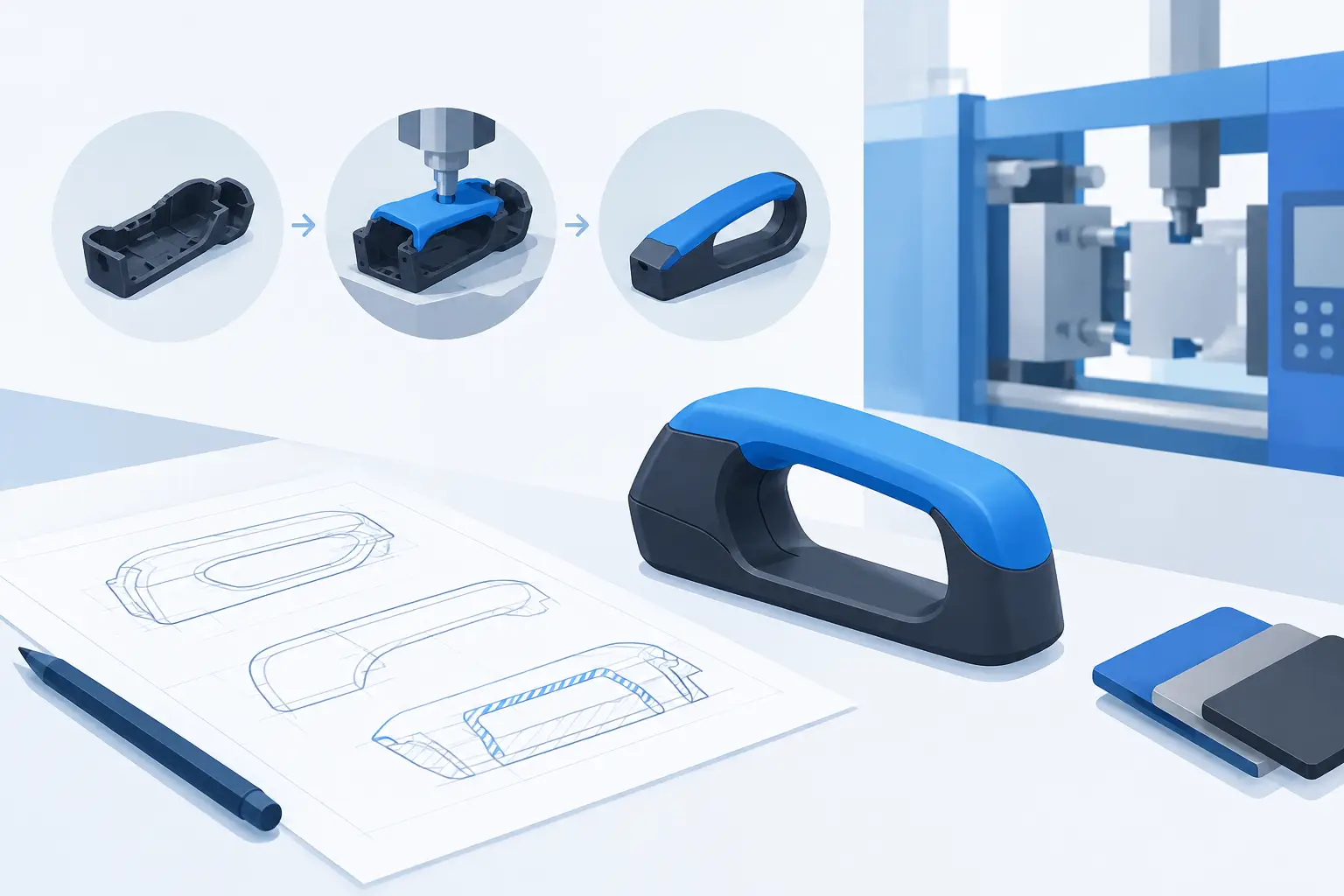
A tooling decision can determine whether a product launch runs on schedule or absorbs months of corrective work. This precision tooling buyer guide is built for teams that need custom plastic parts to perform consistently at production volume, not simply look acceptable in a first sample run.
A mold is a production asset, not a line item to purchase at the lowest quoted price. Its design, material selection, cooling strategy, maintenance access, and validation plan affect part quality, cycle time, scrap, capacity, and long-term unit cost. The right supplier should help you evaluate those factors before steel is cut.
What Precision Tooling Means in Production
A tooling decision determines whether your product launch runs on schedule or absorbs months of corrective work. Precision tooling is the engineered mold system that produces plastic components within precise dimensional, cosmetic, and functional requirements.
A mold is a major production asset, not just a line item to purchase at the lowest price. Its design, steel selection, cooling strategy, maintenance access, and validation plan directly drive part quality, cycle time, scrap rates, plant capacity, and unit cost. The right supplier helps you evaluate these factors long before cutting steel.
Precision tooling controls far more than cavity dimensions. The tool must manage melt flow, shrinkage, venting, cooling, ejection, alignment, and repeatability across millions of cycles. For a water meter housing, an electrical enclosure, or an automotive clip, a small dimensional shift causes assembly failure, leaks, poor seals, or unwanted noise. A mold that drifts as operating temperatures change is not a precision tool.
Required precision depends entirely on the application:
-
Cosmetic Products: Prioritize flawless surface finish and parting-line control.
-
Automation Components: Require ultra-tight tolerances at mating features.
-
Outdoor Construction Goods: Demand tooling decisions that handle UV exposure, impact resistance, and long runs.
Always define what the part must do before deciding how to build the mold.
Precision Tooling Buyer Guide: Start With the Part
Strong tooling projects begin with a clear part specification. Suppliers can support design refinements, but they cannot protect undefined requirements. Before requesting a quote, provide:
-
Latest 3D models and 2D drawings
-
Material specifications and annual volume forecasts
-
Target markets and known assembly interfaces
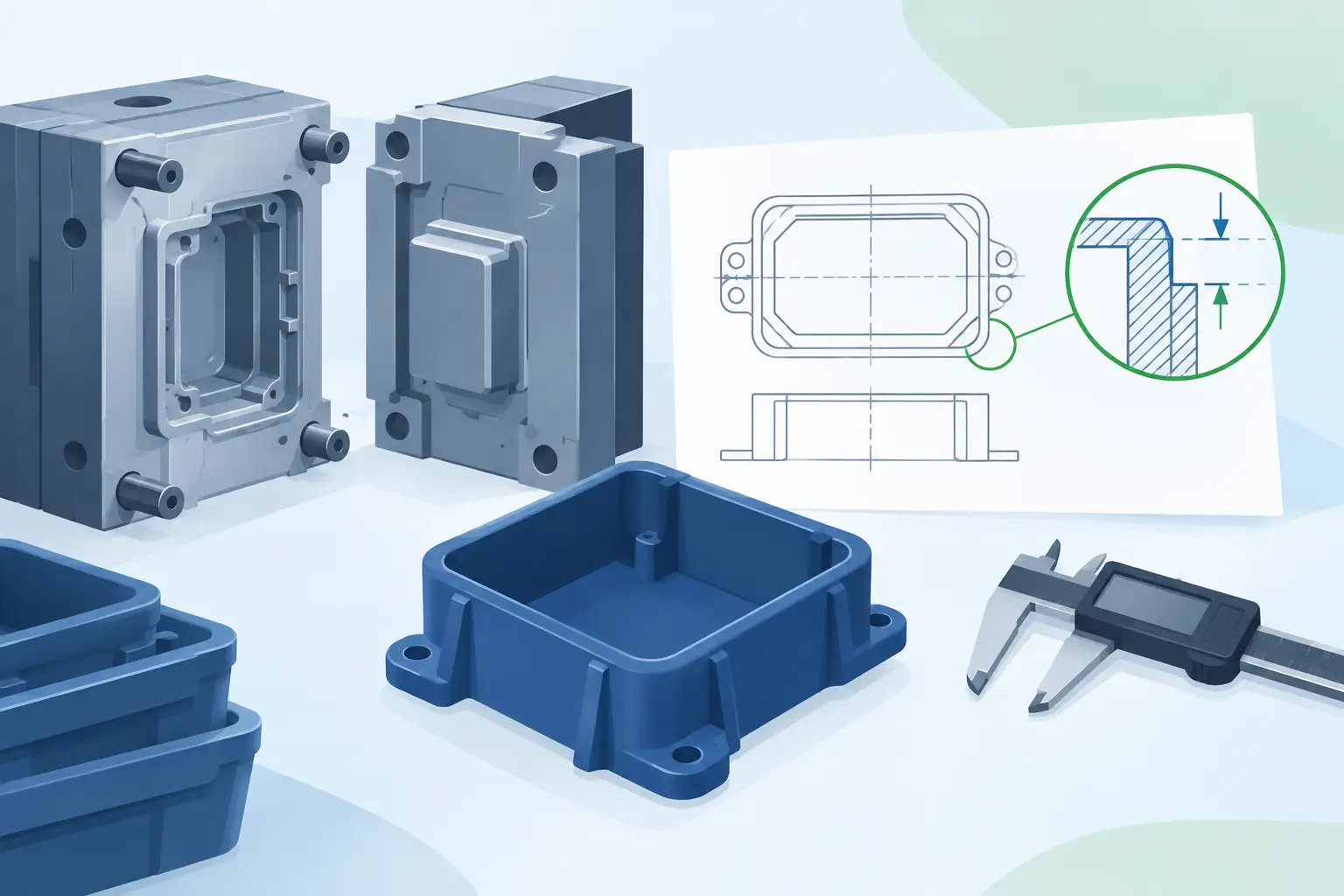
Pay close attention to tolerance callouts. Applying tight tolerances to every dimension increases tooling complexity and inspection costs without improving function. Instead, highlight critical-to-function features like snap fits, sealing faces, bearing locations, thread engagement, connector interfaces, and locating points.
Evaluate resin behavior early. Filled engineering resins provide stiffness, but they create warp risks if engineers mismanage gate placement and cooling. Softer materials simplify living hinges, but they demand different ejection methods and surface finishes.
Execute Design for Manufacturability (DFM) reviews before tool fabrication. A thorough review evaluates wall thickness transitions, draft angles, undercuts, gate locations, weld lines, sink risks, ejection points, and inspection feasibility. A good review explains real production consequences and recommends practical design changes.
Evaluate the Mold Architecture, Not Just the Quote
Two quotes can describe the same number of cavities and still represent very different manufacturing outcomes. Buyers should understand the intended mold architecture and why it suits the part, resin, projected volume, and cycle-time target.
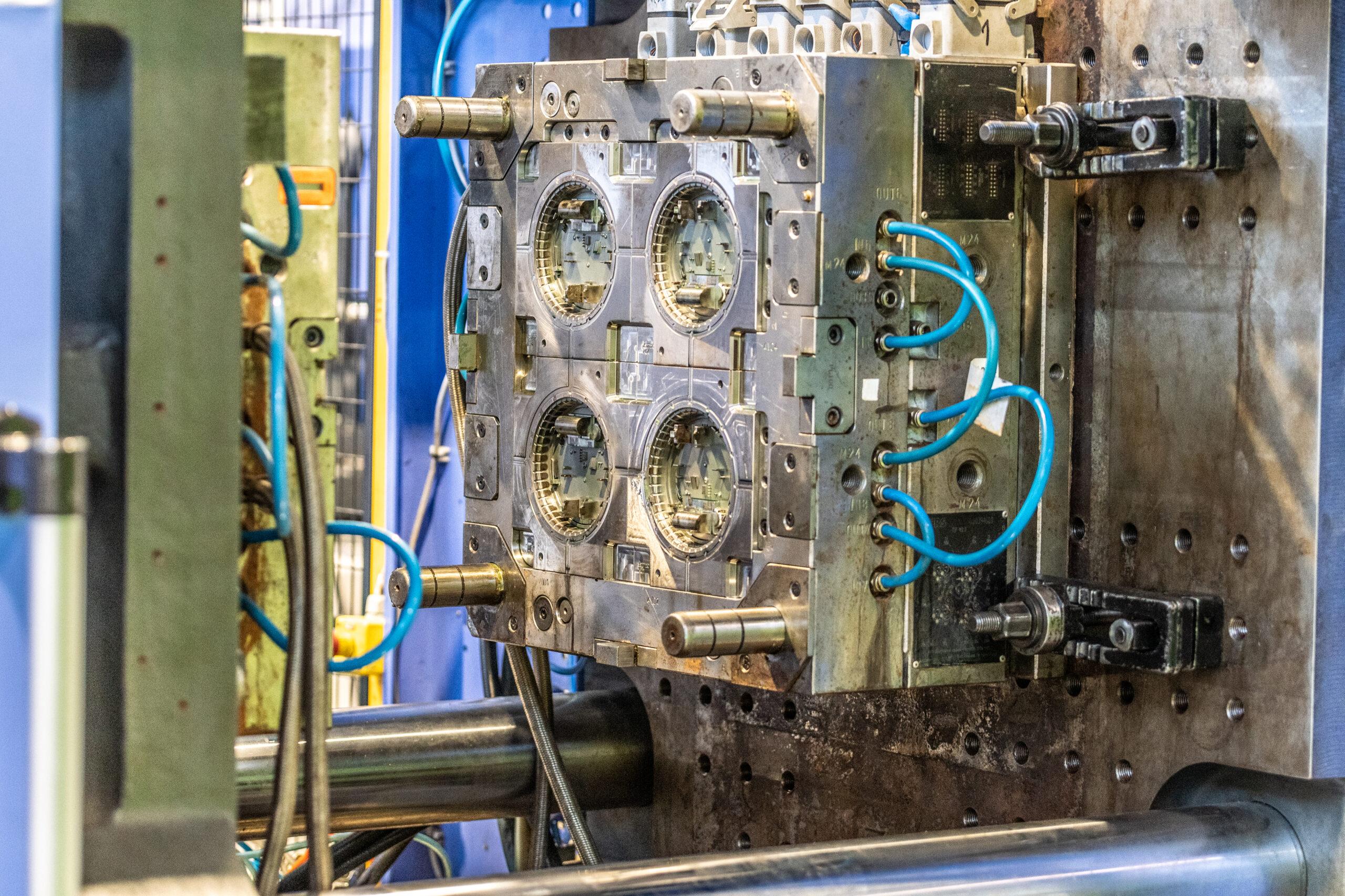
A single-cavity mold may be appropriate for low-volume production, large parts, or early market validation. A multi-cavity mold can reduce piece cost and increase output, but it requires more careful balancing, cooling, and process control. Family molds can produce several related parts in one cycle, yet they create planning challenges when individual demand changes or one component requires an engineering revision.
The gating approach also affects cost and quality. Cold runners can be simpler and less expensive to build, while hot runner systems can reduce material waste and support higher-volume programs. The best choice depends on resin cost, color-change requirements, annual volume, cycle expectations, and whether the part can tolerate a gate vestige in a particular location.
Cooling is often where mold performance is won or lost. Poor cooling can extend cycle time, increase distortion, and create inconsistent dimensions from shot to shot. Ask how cooling channels will reach thick sections, cores, slides, and heat-sensitive geometry. For complex components, conformal cooling or specialized inserts may be justified, but only when the volume and cycle-time savings support the added tool cost.
Choose Tool Steel for the Actual Production Demand
Tool steel selection should be linked to resin abrasiveness, expected mold life, finish requirements, corrosion risk, and maintenance strategy. There is no universal best steel.
For prototype or low-volume production, a lower-cost steel may provide a sensible route to market. For long-run programs using glass-filled materials, corrosion-sensitive resins, or demanding surface finishes, harder and more wear-resistant steel may protect cavity geometry and reduce downtime. Inserts can also be used strategically in high-wear areas so that a localized component can be repaired or replaced without rebuilding the entire mold.
Buyers should ask what steel grades are proposed for cavities, cores, slides, and wear components, as well as whether heat treatment, nitriding, coatings, or polishing are included. The point is not to prescribe a steel grade without context. It is to confirm that the supplier has matched the tooling specification to the production reality.
Confirm How Modifications Will Be Managed
Engineering changes are normal. The risk is not change itself but a supplier setup that makes change slow, expensive, or difficult to validate.
A buyer should know who owns the mold design data, where modifications will be performed, and how revised components will be documented. If tooling must be shipped to another facility for repair or adjustment, a small correction can become a supply-chain interruption. In-house mold modification capability provides faster response when samples reveal a dimensional issue or when a product revision reaches production.
At Glasfil, tooling design, fabrication, modification, molding, and quality activities are managed in-house. That integrated control helps shorten feedback loops between toolmakers, process technicians, and the teams responsible for final part acceptance.
Require a Defined Sampling and Validation Plan
Tool completion is not the same as production readiness. A mold should move through structured trials that verify the part, the process window, and the tool’s ability to repeat results.
First samples may reveal predictable adjustments involving gate size, venting, ejection, cooling balance, or shrinkage compensation. The supplier should provide a transparent trial process with sample feedback, dimensional reports for critical features, and documented changes. For technical products, buyers may also need functional checks such as leak testing, assembly trials, torque testing, load testing, or electrical fit verification.
A capable supplier will distinguish between a sample that looks good and a process that is stable. Production validation should consider cycle time, machine tonnage, injection pressure, cooling time, material drying conditions, and repeatability over an extended run. This matters particularly when the project will transition from small batches to recurring orders.
Assess Machine Capacity and Process Control
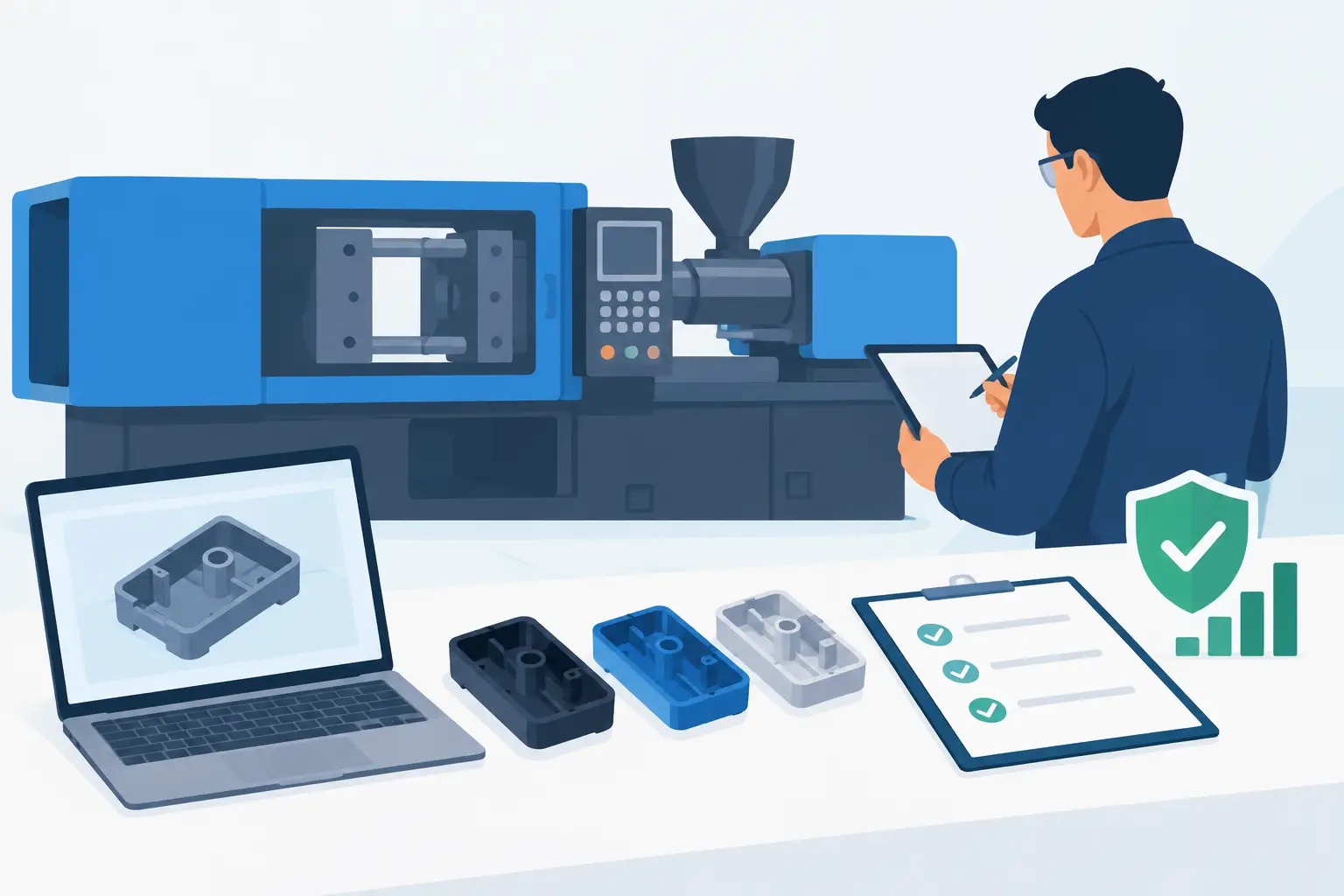
Always match the mold to the correct injection molding machine. Insufficient clamping force causes flash, while oversized machinery wastes energy and compromises process control on small parts. Select presses based on shot size, platen dimensions, ejection systems, resin characteristics, and automation needs.
Work with partners offering a broad range of machine sizes. Access to varied equipment lets technicians place your job on the ideal press, preserving schedule flexibility. For high-volume programs, ensure your supplier tracks quality data by individual cavity to catch drift before it turns into scrap.
Price Tooling by Total Cost of Ownership
The lowest tooling price can become the highest program cost when it produces excessive scrap, long cycles, frequent maintenance, or recurring quality concerns. Buyers should compare quotes based on scope, assumptions, exclusions, and expected production performance.
Request clarity on the number of cavities, steel specification, hot or cold runner system, surface finish, included trials, inspection reports, spare parts, packaging, mold ownership, storage, maintenance, and expected lead time. If a price is substantially lower than comparable bids, identify what has been omitted rather than assuming the supplier has found the same solution more efficiently.
A faster tool build also has value, but only if the supplier maintains engineering discipline. An eight-week completion target can accelerate a launch when design review, tool fabrication, sampling, and corrective actions are coordinated under one operating system.
Questions to Ask Before You Release the Purchase Order
Before approving tooling, obtain direct answers to these questions:
- Which dimensions and functions are considered critical, and how will they be measured?
- What mold architecture, steel, gating, and cooling approach are proposed, and why?
- What sampling, modification, and validation steps are included in the quoted scope?
- Where will repairs and engineering changes be performed, and what response time can be expected?
- How will the mold, molding machine, material, and quality plan be matched to forecast demand?
The most useful supplier conversations are specific. A tooling partner should be able to explain not only how the mold will be built, but how it will keep producing reliable parts after the first shipment leaves the dock.
Contact us to discuss your project, request a quotation, or arrange a technical consultation. Our team will help you determine the most cost-effective and reliable way to manufacture your part.