A small cosmetic launch shouldn’t require a major production gamble. For brands sourcing low minimum order quantity (MOQ) sustainable cosmetic packaging in Malaysia, the real challenge involves balancing a credible environmental position with packaging that protects the formula, maintains shelf consistency, and runs at a commercially sensible volume.
Low MOQs are achievable, but they require early engineering decisions. Material choice, container geometry, decoration methods, tooling strategy, and refill concepts all directly dictate unit cost, lead times, and repeatability. Sustainable packaging must function as an integrated production program rather than a simple material selection exercise.
What Low MOQ Means in Cosmetic Packaging
MOQ is primarily a manufacturing calculation rather than just a purchasing figure. Custom injection-molded jars, caps, compacts, and bottles require tooling setup, machine preparation, material purge/prep, quality checks, and packaging routines. Fixed startup activities must be distributed across the total production volume:
-
Emerging Brands: Lower MOQs minimize inventory exposure and allow real-world market testing before committing to large-scale rollouts.
-
Established Producers: Lower runs support seasonal collections, limited-edition colorways, reformulations, or regional launches.
-
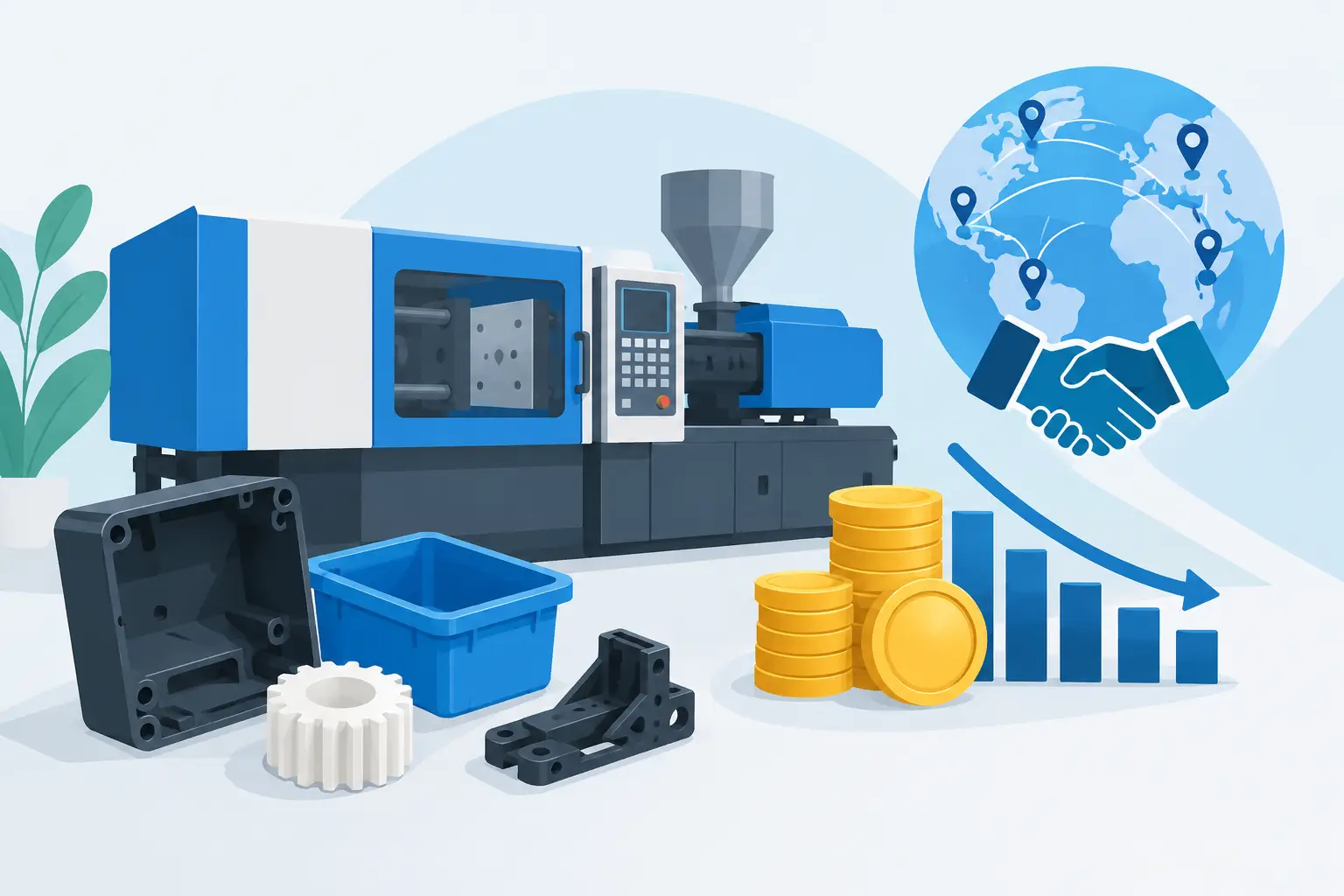
The Commercial Trade-Off: Smaller production runs carry a higher unit cost because fixed machine setups and tooling expenses spread across fewer total parts.
The objective is not chasing the absolute lowest MOQ at any cost, but identifying a production volume that preserves cash flow while enabling the molder to maintain process stability, dimensional control, and surface finish consistency.
Sustainable Cosmetic Packaging Is a System Decision
A package is only as sustainable as its full production and recovery pathway allows. Recycled content is valuable, but it does not automatically make a pack easy to recycle. A lightweight mono-material package may be a better operational choice than a multi-layer component that is difficult to separate, even if the latter contains recycled resin.
For rigid cosmetic packaging made through injection molding, polypropylene and polyethylene are common starting points. Both can support a range of formats, including jars, caps, closures, applicator components, and internal inserts. They also provide established recycling routes in many markets, although local collection and sorting infrastructure always determines the real end-of-life outcome.
Post-consumer recycled resin can reduce dependence on virgin plastic, but it introduces variables that must be managed carefully. Color consistency, flow behavior, odor, surface appearance, and mechanical performance can differ from virgin material. Premium skincare packaging with a high-gloss finish may require tighter material controls than a matte body-care jar. The right answer depends on the formula, the brand position, and the visual standard expected by the market.
Bioplastics and compostable materials also deserve scrutiny. Some have specific temperature, moisture, or disposal requirements that may not suit cosmetic supply chains. A material claim should always be matched to the actual container design, product compatibility, and disposal conditions available to the end user.
Start With the Formula, Not the Sustainability Claim
Cosmetic formulas frequently contain active ingredients, oils, alcohols, fragrances, and volatile compounds that interact with plastic. A container that looks environmentally progressive but cracks, leaks, discolors, or degrades the formula damages brand equity and creates net waste.
Compatibility testing must evaluate the formula and package together under diverse storage temperatures, checking for stress cracking, closure leakage, odor transfer, and formula-on-decoration degradation before finalizing production tooling.
Designing for Low MOQ Sustainable Cosmetic Packaging Malaysia
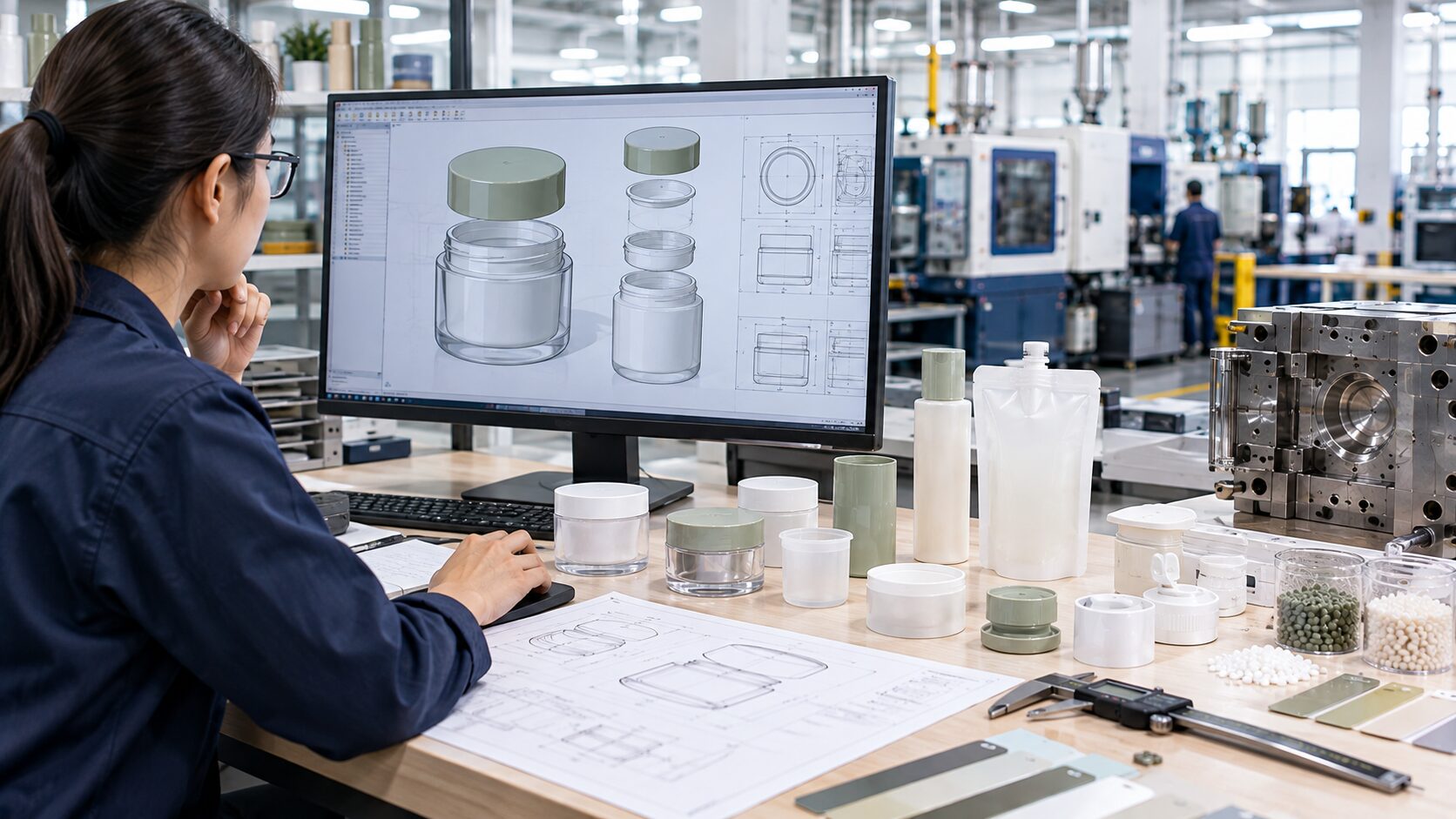
Disciplined simplification drives effective low-MOQ manufacturing. Complex features—such as deep undercuts, intricate thread profiles, multi-material structures, metalized surfaces, and manual assembly steps—increase unit costs and limit manufacturing flexibility.
Four core design choices minimize cost while elevating sustainability:
-
Mono-Material Consistency: Specify a single polymer family across the container body, closure, and internal components.
-
Optimized Wall Thickness: Remove excess material while maintaining structural rigidity for high-speed filling, transport, and consumer handling.
-
Standardized Interfaces: Utilize standard neck finishes and thread profiles unless a proprietary dosing mechanism is essential.
-
End-of-Life Disassembly: Design labels, sleeves, liners, and decorative elements to be easily separated or eliminated entirely.
Color selection also carries production weight. Natural or lightly tinted PCR plastics support a material-forward aesthetic and simplify processing. While opaque custom colors, deep blacks, and high-gloss finishes are achievable, they may complicate sorting pathways or require extra processing steps.
Reuse Existing Tooling Where It Makes Sense
For lower-volume launches, adapting an existing container platform lowers initial capital costs. Brands can create visual differentiation using custom caps, inserts, unique colors, or direct decoration while avoiding full mold tooling expenses and lead times.
However, if a launch demands a signature silhouette, proprietary closure, or specialized dispensing function, a dedicated tool delivers better long-term commercial value. Evaluate projected annual volumes, future SKU extensions, and platform reuse across product lines before deciding.
Tooling Control Determines How Fast You Can Iterate
Behind every clean cosmetic container sits a mold that dictates production stability. Gate placement, cooling line layouts, shrinkage allowances, ejection mechanisms, and thread precision determine cycle times, visual quality, and dimensional stability.
In-house tooling capabilities prove vital for low-volume custom runs because modifications can be evaluated and executed rapidly without multi-party shipping delays. Glasfil manages this process directly through:
-
In-house mold design, toolmaking, engineering modifications, injection molding, secondary finishing, packing, and shipping.
-
A machine fleet of 19 injection presses up to 560-ton clamping capacity across two manufacturing plants, matching production setup to part size and resin behavior.
-
Fast execution—achieving tight production timelines (such as an 8-week concept-to-product path) when design specs, material standards, and quality criteria are locked in early.
Questions Procurement Teams Should Ask Before Quoting
A useful quotation starts with more than a target quantity. Manufacturers need enough information to identify the right molding process, material, tooling route, and quality controls. Vague requests often produce estimates that later change when the technical requirements become clear.
Procurement and product teams should define the part dimensions, annual volume forecast, initial order quantity, resin preference, recycled-content target, color, surface finish, decoration needs, assembly requirements, and packing configuration. If the container will be filled by another party, specify the filling method and any torque, sealing, or cleanliness requirements.
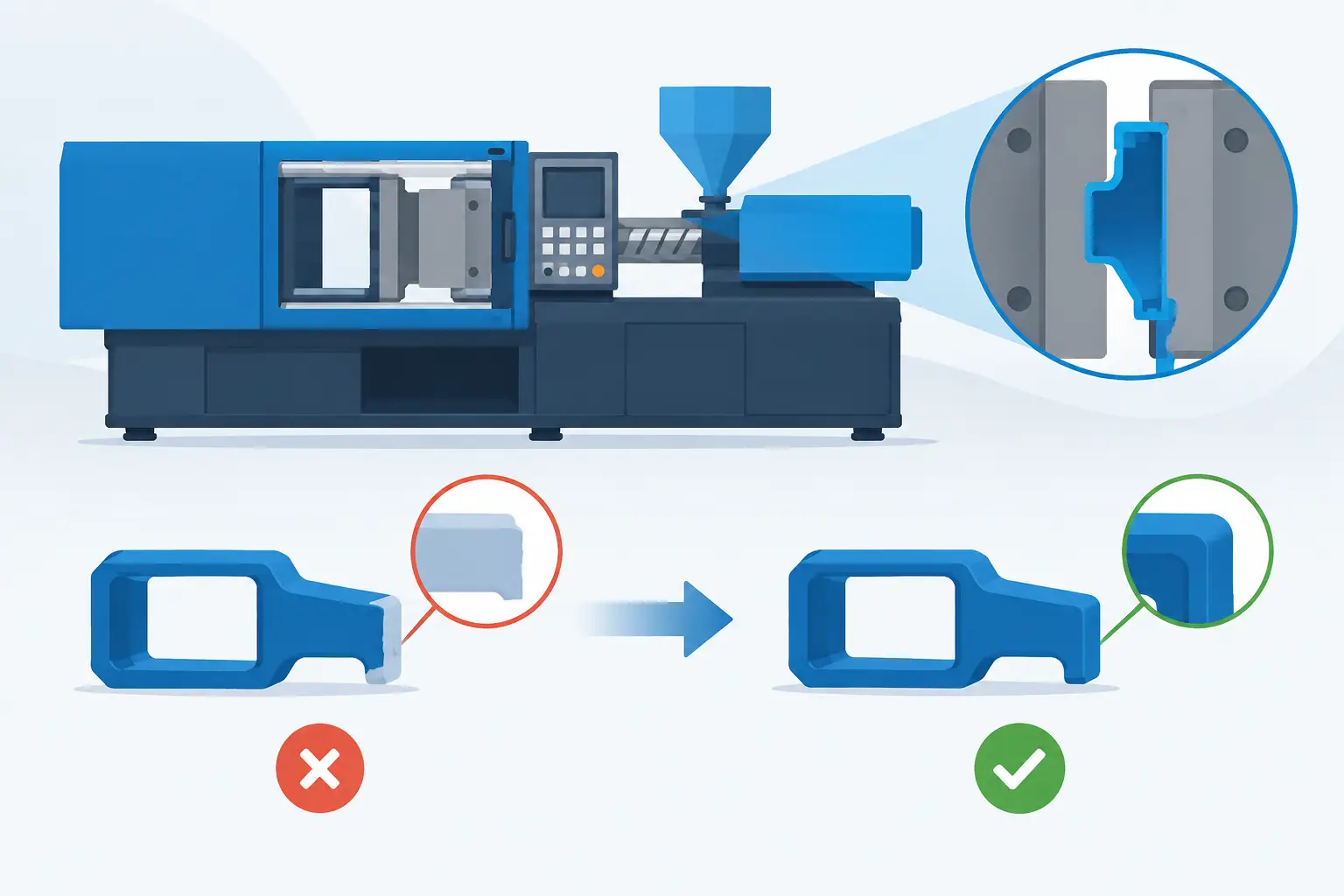
It is also worth asking how the supplier will control variation. For cosmetic packaging, visual defects matter alongside dimensions. Flow lines, gate marks, color variation, warpage, flash, and surface scratches can affect perceived product quality even when the part technically functions. A reliable manufacturer will establish inspection criteria before mass production rather than treating appearance as a subjective issue after delivery.
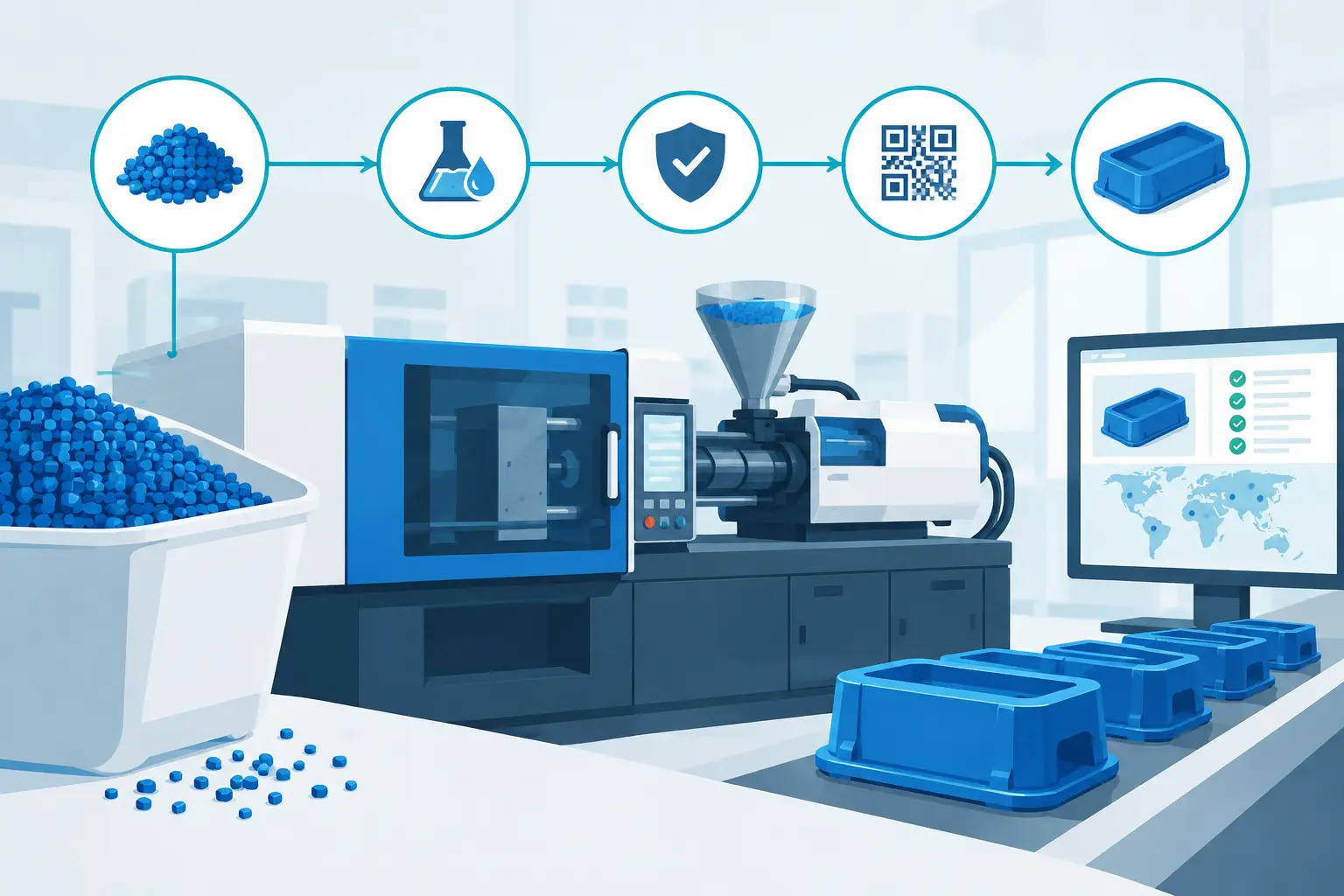
For sustainable claims, request clear documentation on resin composition and recycled content where applicable. Avoid broad environmental statements that cannot be substantiated. Accurate, specific claims protect the brand and make it easier for commercial teams to communicate responsibly with retailers and consumers.
Build a Packaging Program That Can Scale
The best first order is not always the smallest one. A very low MOQ may protect cash flow, yet repeated micro-runs can raise total cost, create color-to-color variation, and increase transport activity. Conversely, ordering too much packaging before product demand is proven can tie up capital and create obsolete inventory if the formula or branding changes.
A staged plan usually works better. Start with a commercially viable pilot quantity, retain the same core tooling and material specification, then scale production as sales data becomes reliable. This approach gives the brand a stable package platform while preserving room for new sizes, colors, and product variants.
For brands seeking low MOQ sustainable cosmetic packaging in Malaysia, the strongest results come from choosing a manufacturer that can connect design intent with tooling reality, material behavior, production quality, and delivery execution. A package that is easy to make consistently is more likely to remain cost-effective, credible, and available when the next launch needs to move quickly.
Contact us to discuss your project, request a quotation, or arrange a technical consultation. Our team will help you determine the most cost-effective and reliable way to manufacture your part.