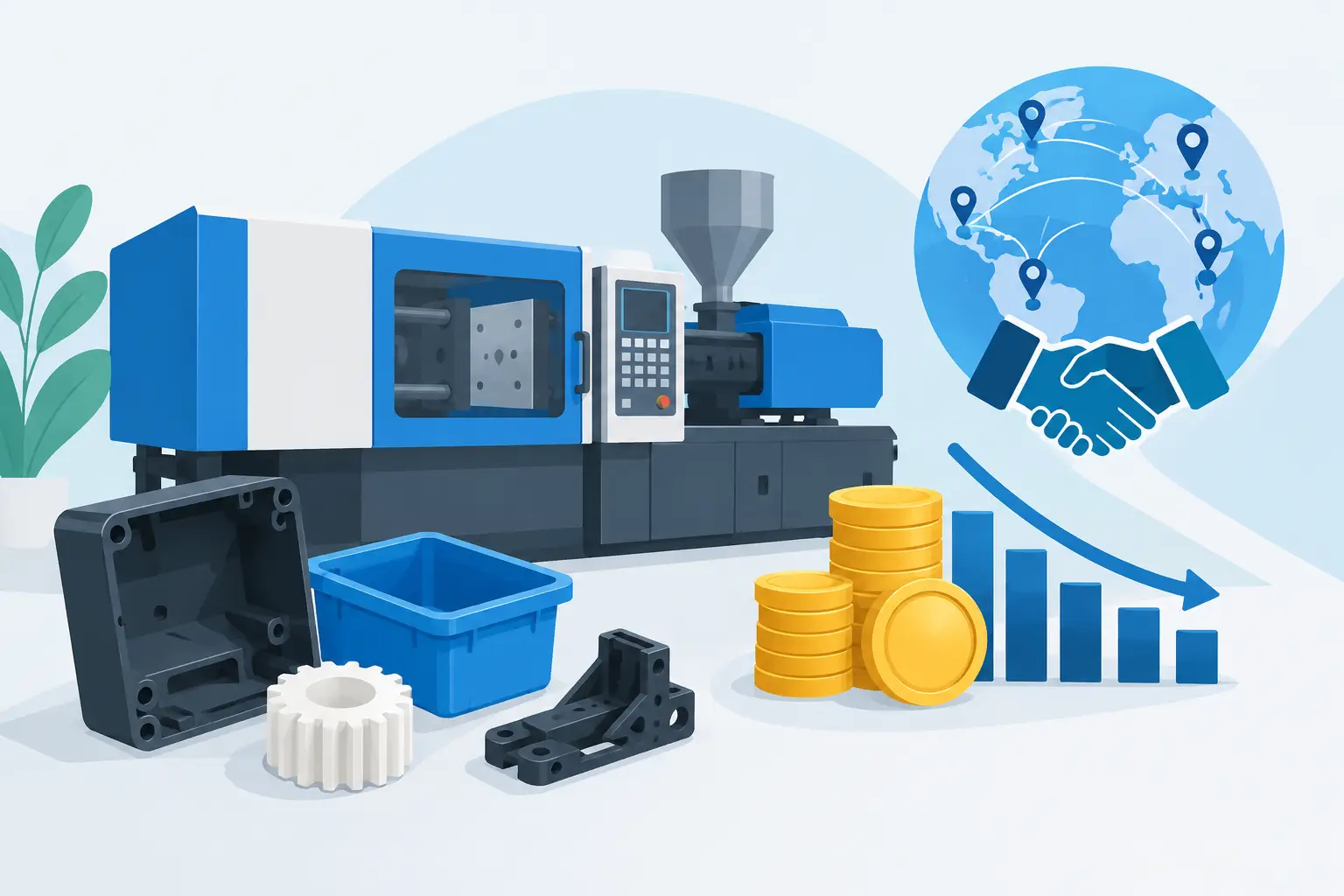
A plastic part can look correct at first inspection and still fail the production program. It may warp after assembly, show sink marks on a visible surface, miss a tight fit with a mating component, or arrive too late because tooling changes require outside coordination. OEM plastic parts production succeeds when the part, mold, process, finishing, and delivery plan are managed as one controlled operation.
For OEMs, engineers, and procurement teams, the objective is not simply to source molded components at a quoted unit price. The objective is to establish a production route that protects part function, repeatability, timing, and total cost from prototype through repeat orders.
What OEM Plastic Parts Production Actually Requires
A plastic part can look correct at first inspection and still fail your production program. It may warp after assembly, show sink marks on a visible surface, miss a tight fit, or arrive late due to delayed tooling changes. OEM plastic parts production succeeds when you manage the part, mold, process, finishing, and delivery plan as one controlled operation.
For OEMs, engineers, and procurement teams, the objective extends beyond sourcing components at a cheap quoted unit price. You must establish a production route that protects part function, repeatability, timing, and total cost from prototype through repeat orders.
Injection molding powers many custom plastic programs, but the machine itself provides only part of the result. Every decision you make before the first shot affects the quality and cost of every subsequent part. You must evaluate material behavior, wall thickness, gate position, cooling design, draft angles, tolerances, textures, and assembly interfaces before releasing tooling.
That is why a low initial tooling quote rarely offers the lowest total cost. If the mold requires frequent fixes, generates excess scrap, or fails to hold dimensions over long runs, your apparent savings disappear fast. You must design a production-ready mold around required output, expected tool life, polymer selection, cosmetic standards, and inspection requirements.
The strongest manufacturing programs bring design engineers and tooling engineers together early. This approach identifies issues while changes remain practical—long before technicians cut steel or lock in launch dates.
Part Design Must Match the Molding Process
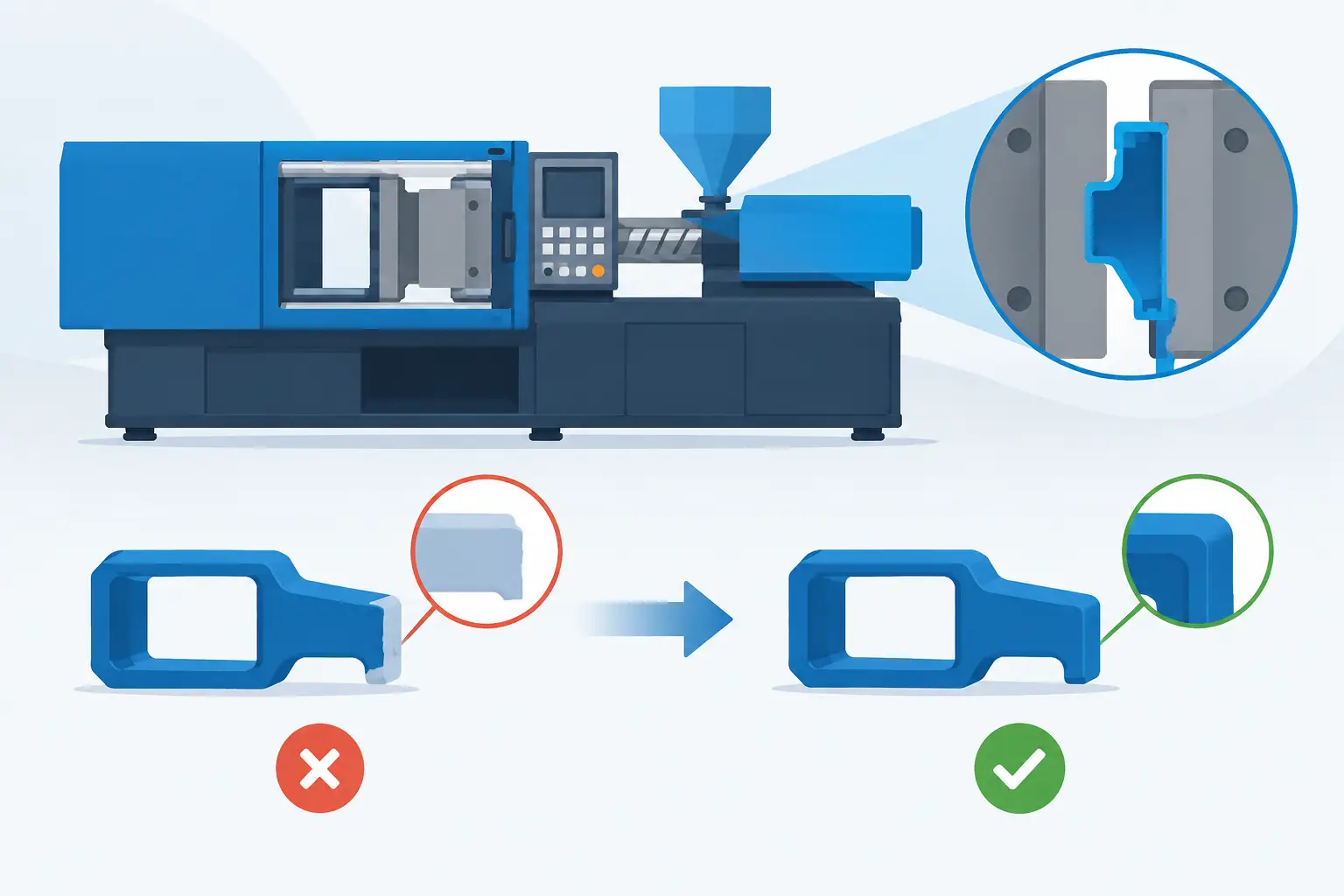
A CAD model represents an intended shape, but it does not guarantee a moldable part. Thin-to-thick transitions cause uneven cooling. Deep ribs sink. Insufficient draft prevents clean ejection. Sharp internal corners concentrate stress, while a poorly located gate leaves visible marks or distorts critical areas.
You can manage these problems easily during early design reviews. Sometimes a small geometry tweak solves the issue. In other cases, adjusting tool design, material selection, or processing windows compensates for complex features. The right fix depends on component function, appearance, annual volume, and the cost of variation.
For example, a hidden internal bracket allows more flexibility in gate location and surface finish than a visible bathroom accessory. A water meter component demands tighter material control and dimensional stability than a general furniture fitting. Your manufacturing plan must reflect the exact application rather than forcing every part through the same process.
Tooling Control Sets the Pace of Production
The mold determines how efficiently your injection molding program runs. Its cavity layout, cooling channels, ejection system, steel selection, venting, and runner design directly drive cycle time, consistency, maintenance, and part quality.
Managing mold design and fabrication in-house accelerates engineering changes and establishes clear technical accountability. The team reviewing the part works directly with the technicians building the tool and operating it on the molding floor. This shortens feedback loops when trial runs reveal dimensional issues, cosmetic concerns, or cycle time improvements.
This direct control becomes vital under launch pressure. Routing mold modifications through outside vendors adds handoffs, transit delays, and risk. Full in-house modification capability allows engineers to adjust the tool, process, and part requirements simultaneously.
At Glasfil, in-house design and tooling control drive product realization from initial mold development through finished-part delivery. This integrated model provides immense value when you need quick technical decisions without splitting responsibility across separate vendors.
Mold Trials Are a Production Decision Point
A first trial does far more than demonstrate that plastic fills a cavity. It tests the tool, material, machine, and part specification together. Teams must review samples for dimensions, weight, appearance, assembly fit, weld lines, flash, sink, short shots, and performance.
Disciplined trial runs establish a baseline for future production. The approved process window defines operating conditions that consistently yield acceptable parts. This gives production teams a reliable reference point, making it easy to spot when material shifts, machine drift, or tooling wear impact output.
Capacity Is More Than Machine Tonnage
Press capacity matters, but selecting an injection molding machine involves more than picking the largest tonnage available. Clamp force must suit projected surface area and injection pressure. Shot size, injection speed, platen dimensions, and automation needs must also align with the part and tool.
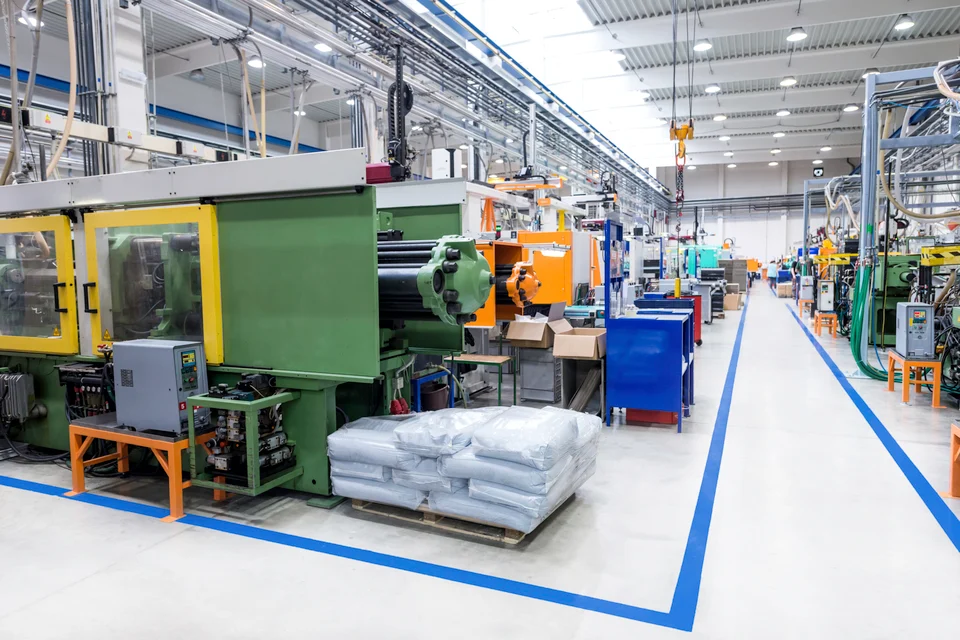
A manufacturer with diverse machine sizes places work on equipment that fits the program perfectly, avoiding oversized or undersized presses. This improves scheduling flexibility and prevents unnecessary costs. For large housings, structural parts, or multi-cavity tools, access to presses up to 560 tons expands the range of parts a supplier can produce under one roof.
True capacity also includes skilled staff, process expertise, material handling, inspection resources, and maintenance discipline. A machine sitting available on the floor adds zero value if the program lacks a stable process or the tool needs service. Managing all of these factors together yields dependable OEM output.
Quality Must Be Built Into the Work Flow
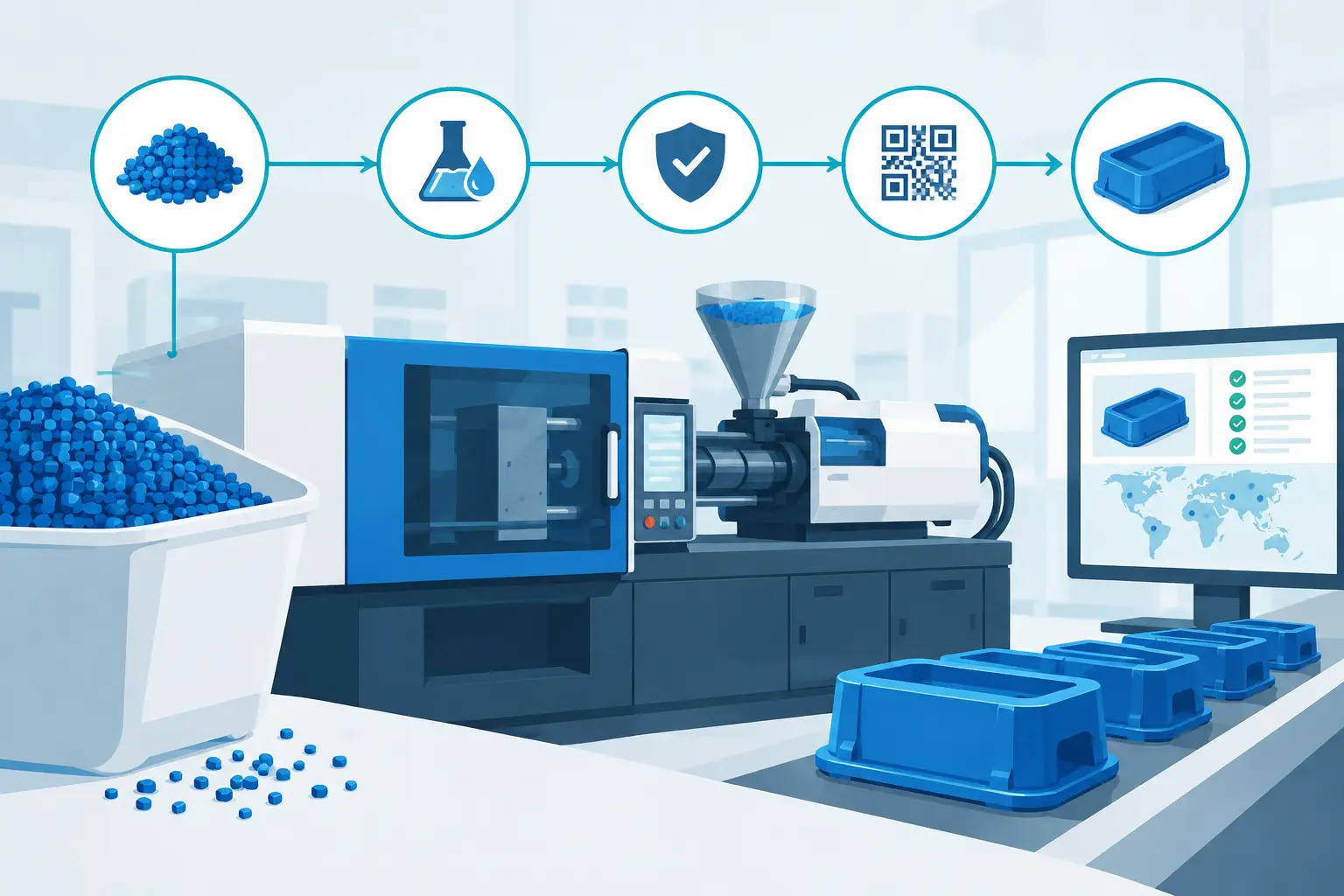
Quality assurance works best when it begins before production, not while finished parts wait in shipping boxes. Teams should set clear requirements for critical dimensions, visual standards, material specs, packaging, and traceability upfront. These criteria then guide mold trials, first-article approvals, in-process checks, and final release.
Not every dimension requires identical scrutiny. Engineers must highlight features that directly impact fit, function, safety, sealing, electrical performance, or visual appearance. Focusing inspection on these vital characteristics delivers far better control than measuring non-critical features.
In-house quality systems also allow rapid adjustments. If inspection reveals a recurring trend, the manufacturing team immediately investigates whether processing, material moisture, tool wear, cooling, or measurement methods caused it. Simply sorting bad parts after the fact never solves the core problem.
Secondary Operations Need the Same Discipline
Many OEM components require post-molding work. Parts may need trimming, drilling, ultrasonic welding, assembly, printing, marking, painting, surface treatment, or custom packaging. Every added step introduces another potential point of failure or delay.
Integrating secondary processing directly into the main production plan mitigates these risks. Engineers should design molded parts with downstream handling in mind, while inspection points confirm that finishing steps preserve critical surfaces and dimensions. Packaging also demands attention: poor tray design, inadequate separators, or incorrect box counts can ruin a perfectly molded cosmetic part during transit.
How to Choose a Manufacturing Partner for OEM Parts
The right supplier relationship is based on technical fit and execution control, not just geography or piece price. Before awarding a program, buyers should ask how the manufacturer will manage the full path from design input to repeat production. The answers reveal whether the supplier is prepared to solve problems or merely run a tool.
Look for evidence of direct control over mold design, fabrication, modification, molding, quality verification, maintenance, finishing, and shipping. Ask how engineering changes are handled, what happens if the first trial does not meet specification, and how the supplier plans for repeat orders after launch. International experience can also matter when packaging standards, documentation, and delivery expectations must work across markets.
Speed should be assessed with the same care. An eight-week completion target can be meaningful when it is supported by in-house tooling, available molding capacity, defined approval stages, and a realistic material plan. A rushed process without these controls can transfer schedule risk downstream to the OEM.
Build the Program Around the Parts That Matter Most
The best time to prevent production problems is before the tool enters fabrication. Share the latest CAD files, application requirements, expected volumes, mating-part information, appearance standards, material preferences, and target launch date at the start of the project. The more clearly those inputs are defined, the more accurately the manufacturer can design the mold and production route.
For a new product launch, the next practical step is a focused manufacturability review that identifies the features most likely to affect cost, quality, and timing. A good review does not add delay. It gives the production program a stronger foundation before the first piece of steel is cut.
Contact us to discuss your project, request a quotation, or arrange a technical consultation. Our team will help you determine the most cost-effective and reliable way to manufacture your part.