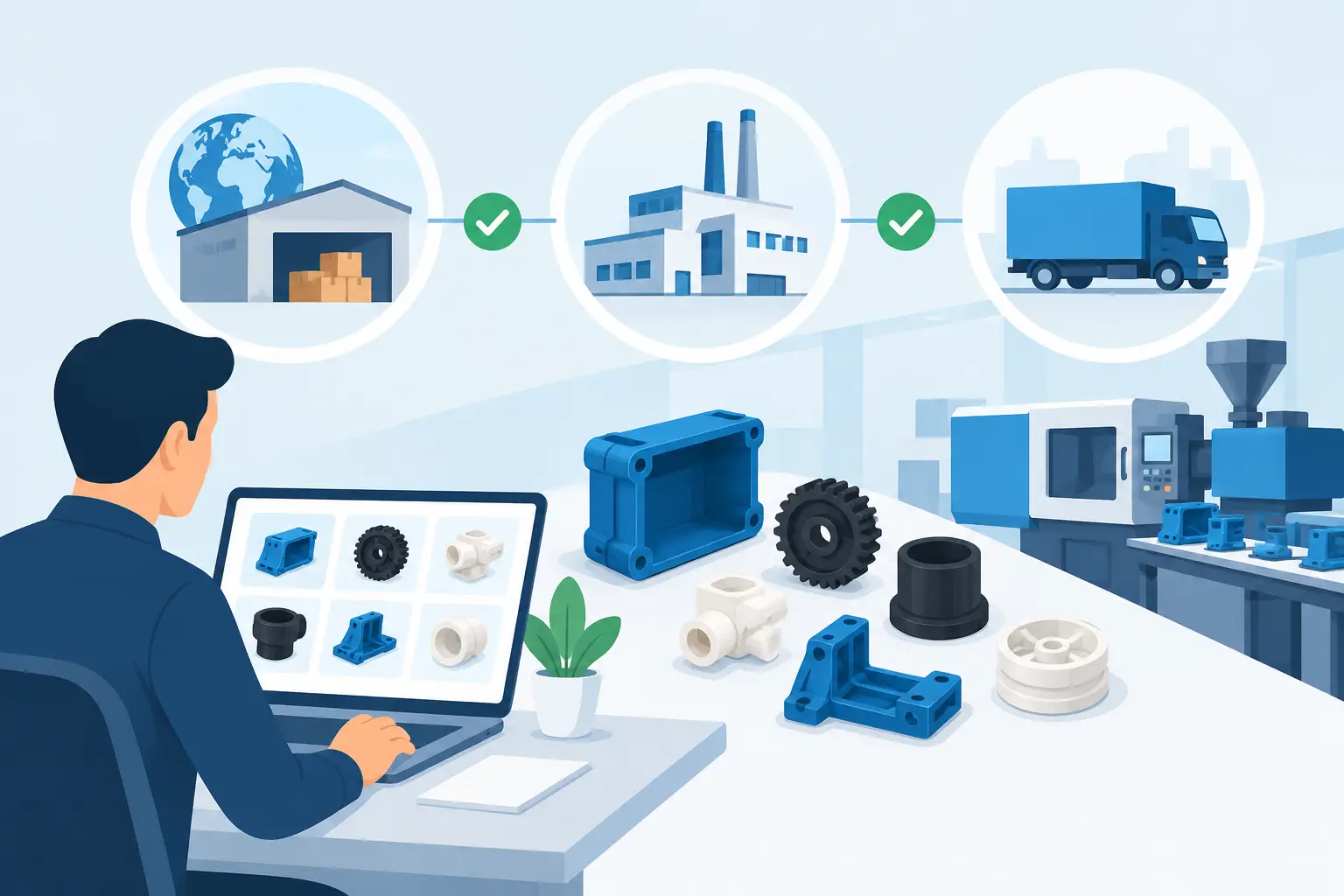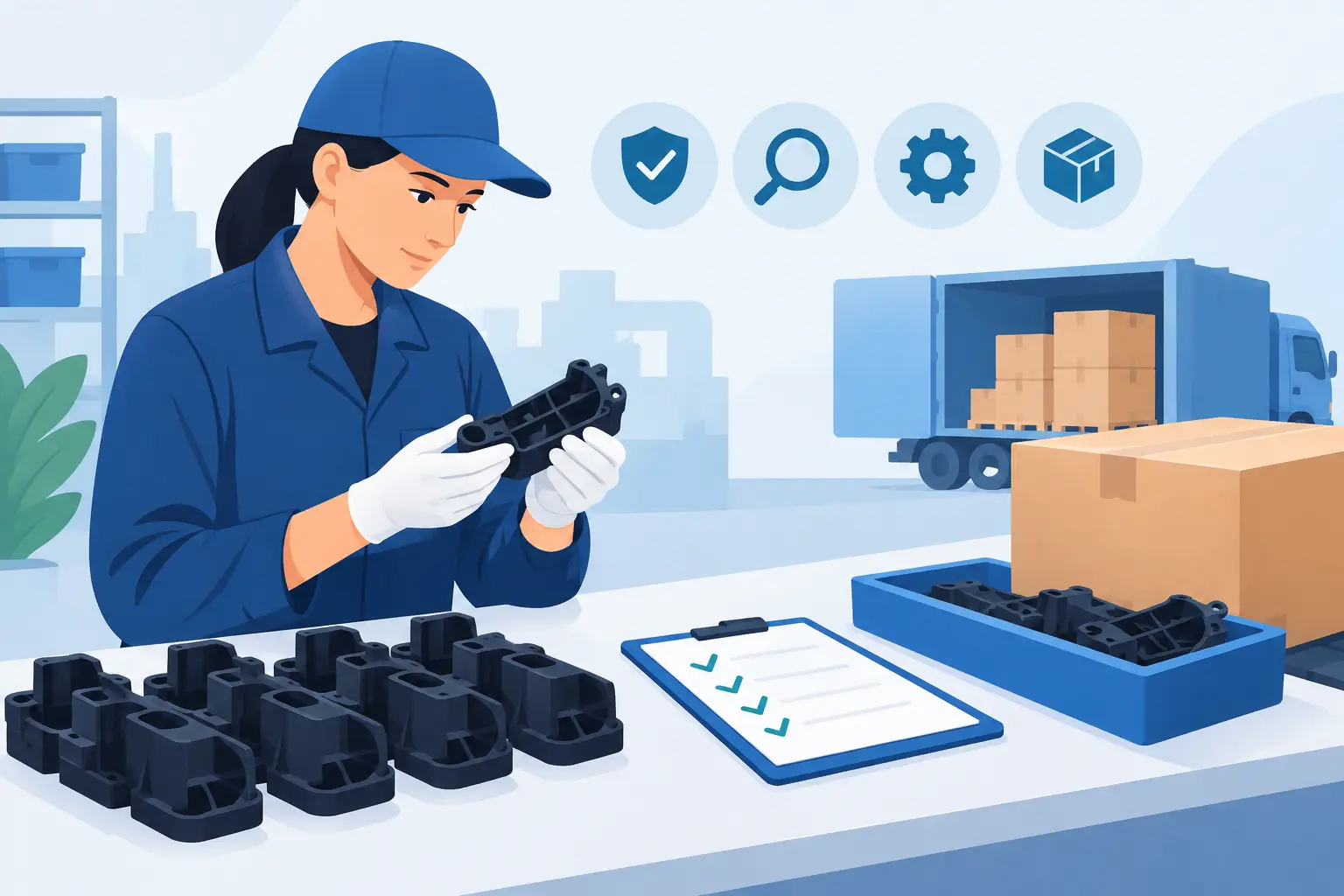
A moulded part can come out of the press dimensionally correct and still fall short in the field. Sharp gate marks, visible weld lines, poor surface feel, colour inconsistency, or weak assembly features can turn an acceptable moulded part into a customer complaint. That is where plastic component finishing becomes a production decision, not a cosmetic afterthought.
For OEMs, engineers, and procurement teams, finishing affects much more than appearance. It influences assembly speed, part protection, branding, inspection results, packaging performance, and total unit cost. If finishing is treated as a separate step instead of part of the manufacturing plan, delays and quality escapes tend to follow.
What plastic component finishing really covers
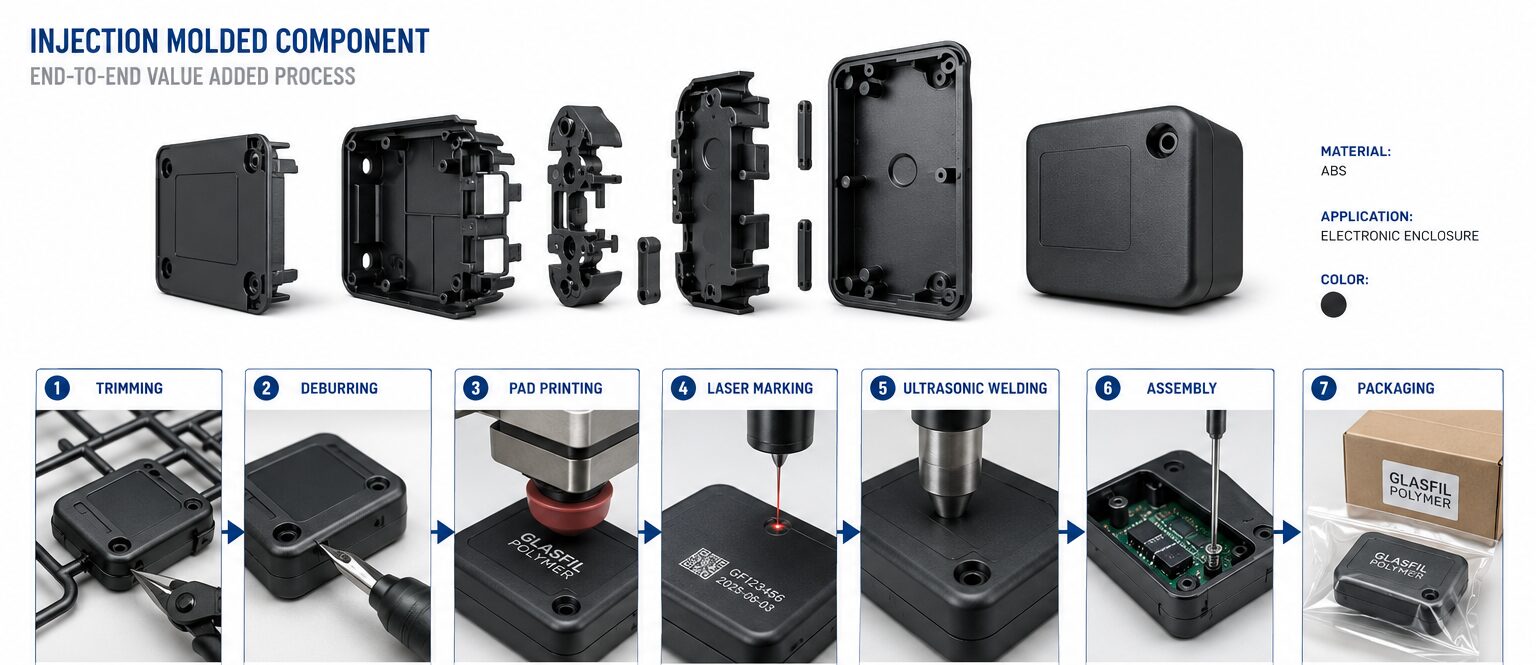
In industrial production, plastic component finishing includes the secondary processes that bring a moulded part from “formed” to “ready for use.” That can mean trimming excess material, removing gate vestige, polishing or texturing surfaces, pad printing, ultrasonic welding, heat staking, assembly, decorating, or packaging preparation.
The right finishing scope depends on what the part has to do in the final product. A housing for an electrical device may need clean edges, precise cosmetic surfaces, and permanent marking. A utility component may prioritise sealing integrity and dimensional consistency over appearance. A furniture part may need both colour stability and scratch resistance. The finishing plan has to reflect real use conditions, not just drawing notes.
This is why finishing works best when it is considered early, alongside tool design and moulding parameters. If a part is difficult to trim, mark, weld, or assemble, the root cause often starts upstream with geometry, gate location, resin choice, or mold construction.
Why finishing decisions should be made before production starts
Late finishing decisions usually create avoidable costs. A team approves a moulded part, then realises the gate witness is too visible for the retail-facing side. Or a textured surface hides sink marks well but interferes with printed graphics. Or a snap feature works in testing but needs manual deburring that slows down production.
These issues are rarely solved well with a quick patch. They require a coordinated review of tooling, process control, and secondary operations. That is why integrated manufacturers have an advantage. When design refinement, moulding, mould modification, and finishing sit under one roof, corrective action is faster and more controlled.
In practice, early planning helps answer the questions that drive cost and quality. Which surfaces are cosmetic-critical? Which edges need trimming tolerance? Will the part be assembled by hand, fixture, or automation? Does the finish need to survive chemicals, UV exposure, abrasion, or repeated handling? Those answers shape the process route before production scale magnifies mistakes.
Common plastic component finishing processes and where they fit
Not every part needs a long chain of secondary work. In fact, the best programs remove unnecessary handling wherever possible. But when finishing is required, each process should solve a specific production need.
Trimming and deflashing
This is often the first finishing step. It removes flash, gate remnants, and excess material that can interfere with fit or create a poor visual impression. For precision parts, trimming is not just cleanup. It directly affects assembly performance and dimensional repeatability.
The trade-off is speed versus control. Manual trimming can work for lower volumes or complex geometries, but it introduces operator variation. Dedicated fixtures or automated trimming increase consistency, though they require upfront planning and investment.
Surface refinement and cosmetic correction
Surface finishing can include polishing, texturing adjustments, and treatment of visible defects. This matters for customer-facing housings, bathroom accessories, appliance parts, and branded components where appearance supports perceived product quality.
But cosmetics should not be separated from mould design. A polished surface can highlight every imperfection if flow lines or sinks are not already controlled. In some cases, changing the mould texture or gate strategy produces better results than adding labour after moulding.
Printing, marking, and decoration
When parts need branding, instructions, traceability, or regulatory information, finishing often includes pad printing, laser marking, labelling, or insert decoration. The challenge is durability. Marking has to stay legible through shipping, assembly, and end use.
Material choice matters here. Some resins accept ink and marking more reliably than others. Surface energy, texture, and colour all influence print quality. A marking process that looks fine in sampling can fail quickly if adhesion testing is not part of the qualification.
Welding, heat staking, and sub-assembly
Many moulded parts are not finished until they are joined to another component. Ultrasonic welding, heat staking, and mechanical assembly are common finishing-stage operations for enclosures, technical housings, and multi-part products.
These processes add value when they are built into the original design. Bosses, ribs, welding energy directors, and part tolerances have to support repeatable assembly. If they do not, the finishing cell becomes a place where teams fight recurring fit problems instead of moving product efficiently.
The hidden cost of poor finishing control
When buyers compare suppliers, finishing is often treated as a line item. That misses the bigger risk. Poor finishing control drives scrap, rework, slow inspections, missed ship dates, and inconsistent customer presentation. It also creates quality noise that is hard to trace because defects appear after moulding, not during it.
A part with inconsistent trimming may fail assembly intermittently. A part with unstable print quality may pass outgoing inspection but be rejected by the customer later. A cosmetic defect may not affect function, yet still trigger returns in retail or visible end-use applications. These are not isolated finishing issues. They are supply chain issues.
This is where in-house process ownership matters. When the same manufacturing partner controls tooling, molding, secondary processing, and quality checks, there is less handoff risk and less ambiguity about accountability. Problems can be isolated faster, and corrective action does not depend on multiple vendors protecting their own scope.
How to evaluate a finishing partner
If your product requires secondary processing, the right question is not simply, “Can you do it?” The better question is, “Can you do it repeatedly at production speed without creating new variables?”
A capable finishing partner should be able to explain how finishing connects to mould design, resin behaviour, tolerances, and inspection criteria. They should be comfortable discussing fixture strategy, defect prevention, operator control, and how they handle engineering changes. If a supplier talks about finishing only in cosmetic terms, that is usually a sign the process is not fully integrated.
It also helps to look for practical manufacturing depth. In-house mould modification capability matters because finishing issues often trace back to tooling adjustments. Production scale matters because a process that works for pilot runs may break down at volume. Quality assurance matters because many finishing defects are visual, functional, or assembly-related and need clear acceptance standards.
For companies managing new product launches, consolidation has real value. A one-stop manufacturing partner can move from design review to tooling, moulding, finishing, packing, and shipment with fewer delays between stages. That shortens communication loops and reduces the risk of one supplier blaming another when timelines tighten.
When finishing should change the way a part is designed
Sometimes the smartest finishing decision is to redesign the part so that less finishing is needed. That may mean relocating a gate to reduce witness marks, modifying shut-offs to control flash, adding draft to protect cosmetic surfaces, or redesigning assembly features for better welding performance.
This is especially relevant for repeat production and cost reduction programs. A part that needs too much manual finishing may still be manufacturable, but it will carry unnecessary labour and variation forever. Small engineering changes early can remove those burdens for the life of the product.
That is the value of working with a manufacturing team that looks at the full process, not isolated steps. At Glasfil, plastic component finishing is part of product realisation, not a disconnected service. The goal is not simply to make parts look better. It is to deliver parts that are production-ready, easier to assemble, and consistent from first run to repeat orders.
The best finishing process is the one that supports performance, protects margins, and disappears into a smooth production flow. If your team is still solving surface, trimming, marking, or assembly problems after moulding, the next improvement may not be another workaround. It may be a better manufacturing plan from the start.
If you are evaluating a new project or facing ongoing tooling and production challenges, contact us to discuss your requirements, request a technical consultation, or submit your RFQ.