A product launch can be delayed long before the first production part is moulded. The delay often starts when a team treats custom moulding vs contract manufacturing as a choice between two equivalent services. They are not equivalent. Custom moulding describes the capability required to create a part around a specific design. Contract manufacturing describes the broader commercial and operational relationship used to produce that part repeatedly.
For an OEM, product developer, or procurement team, the real question is not which label sounds better. It is whether the supplier can take responsibility for the technical and production risks that sit between a CAD model and dependable delivered parts.
Custom Moulding vs Contract Manufacturing: The Core Difference
| Feature / Responsibility | Custom Injection Moulding | Turnkey Contract Manufacturing |
| Primary Output | Bare moulded parts/components | Complete assembled, tested, or packed products |
| Tooling & Mould Care | Tooling built to spec; buyer manages secondary steps | In-house tool modification, preventive maintenance |
| Secondary Operations | Handled by customer or 3rd party vendors | Pad printing, ultrasonic welding, sub-assembly included |
| Quality Boundary | Ends at component dimensional inspection | Extends to final product testing & release packaging |
| Best For | OEMs with existing in-house assembly | Companies wanting to consolidate vendors & reduce lead times |
When Custom Moulding Is the Primary Need
Companies often use custom moulding as the starting point for new product development, replacement parts, and component redesigns. The immediate technical challenge requires you to make a mould that produces a stable part within specification.
This route makes sense when your internal team already controls most of the supply chain. You may have established material suppliers, an in-house assembly operation, quality procedures, and logistics partners. In that case, you may only need a moulding specialist to manufacture the tool and deliver moulded parts to an agreed specification.
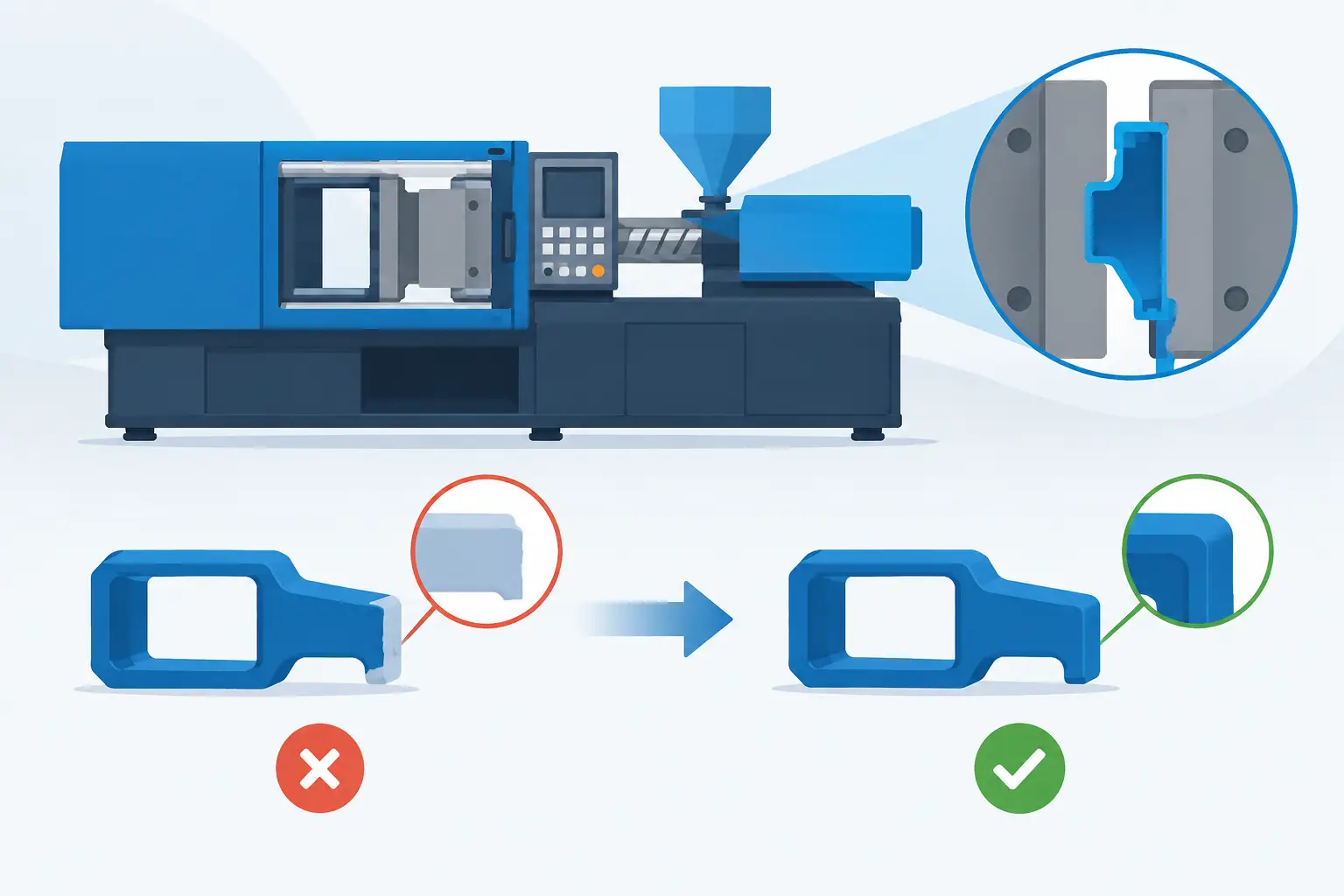
The quality of the tooling decision still matters. A low initial tool price can become expensive if the tool produces inconsistent dimensions, excessive flash, sink marks, long cycle times, or frequent downtime. Mould design must account for the resin, wall thickness changes, gate location, cooling, ejection, expected annual volume, and the cosmetic standard of the finished part.
A capable custom moulder should identify risks before engineers cut steel. For example, an undercut may require a side action, a thin rib may not fill consistently, or a highly polished visible surface may demand a different gate strategy than an internal structural component. You must treat these as manufacturing decisions, not just drawing details.
When Contract Manufacturing Delivers More Value
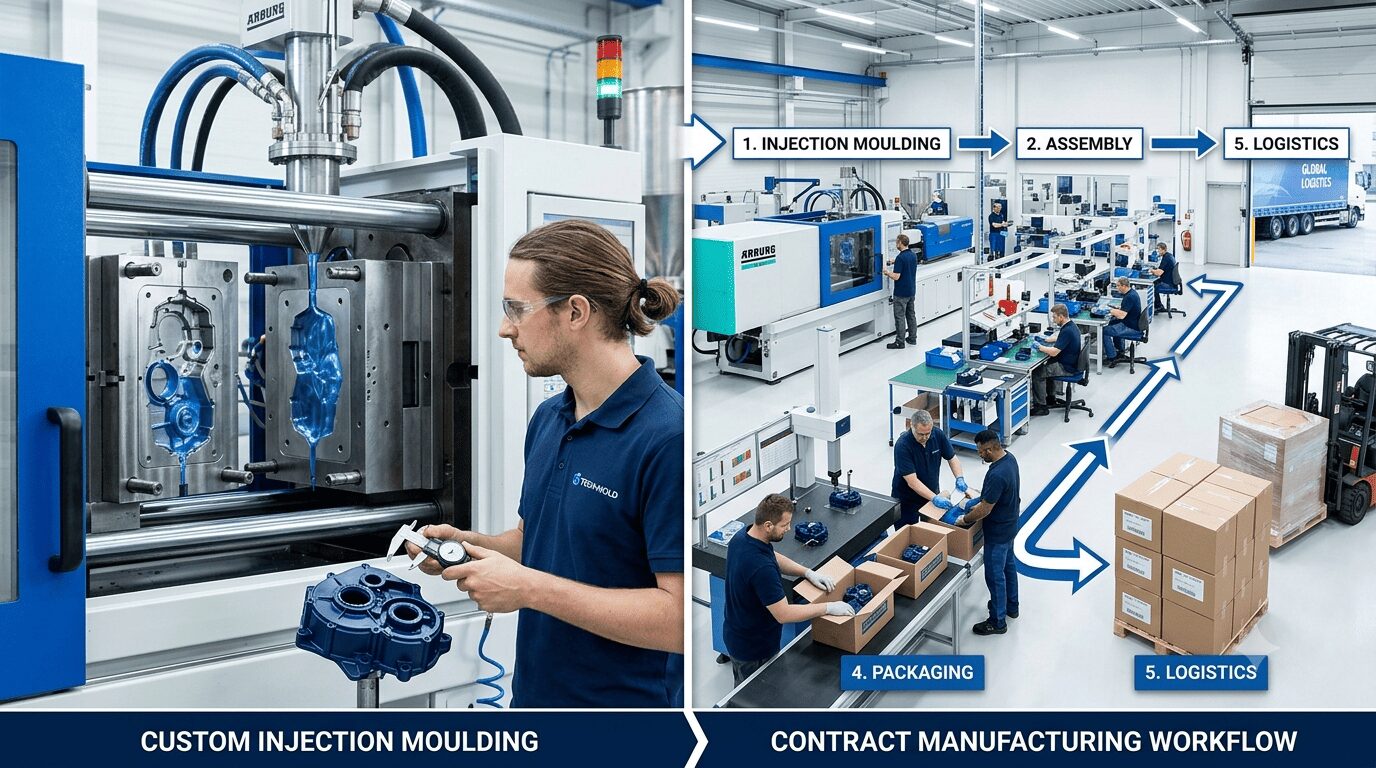
Contract manufacturing becomes more valuable as the number of handoffs increases. A moulded part that needs pad printing, ultrasonic welding, inserts, assembly, individual packaging, and shipment to multiple locations can quickly create coordination problems when each step belongs to a different supplier.
Every handoff adds lead time and accountability gaps. If a defect appears after assembly, the assembler may point to the moulder, while the moulder may point to material variation or handling damage. The buyer is left managing the investigation and the schedule impact.
A full-service contract manufacturer reduces that fragmentation by controlling the production sequence. The supplier can manage moulded part quality before secondary operations begin, keep work-in-process protected, plan capacity across the full workflow, and provide one point of responsibility for the finished deliverable.
This model is particularly practical for businesses that do not want to build internal expertise around moulds, resin behaviour, inspection plans, packing specifications, and international shipment coordination. It does not remove the need for clear requirements from the customer. It does remove the burden of managing multiple production vendors for one component or product family.
Compare the Decision by Ownership and Control
The best option depends heavily on who owns the product definition, the tooling, and the operating risk. A custom moulding project can be narrowly scoped, while a contract manufacturing relationship requires more alignment on forecasts, approvals, quality documentation, change control, and delivery expectations.
Tooling ownership
In either model, establish tooling ownership in writing. Confirm where the mould will be stored, who may authorise modifications, what happens if production moves, and how maintenance is handled. A mould is a production asset, not a one-time purchase. It will require preventive care, repair, and occasional modification as volumes and product requirements change.
In-house mould design, fabrication, maintenance, and modification capability gives the manufacturer direct control over this asset. It also reduces delays when sampling reveals an issue or when a customer needs a design update. Sending a mould to an outside tool room for every change adds time, transport risk, and avoidable communication steps.
Quality responsibility
Custom moulding may end at the moulded part inspection. Contract manufacturing can extend quality responsibility through finishing, assembly, packing, and final release. Neither approach is automatically better, but the inspection boundary must match the commercial requirement.
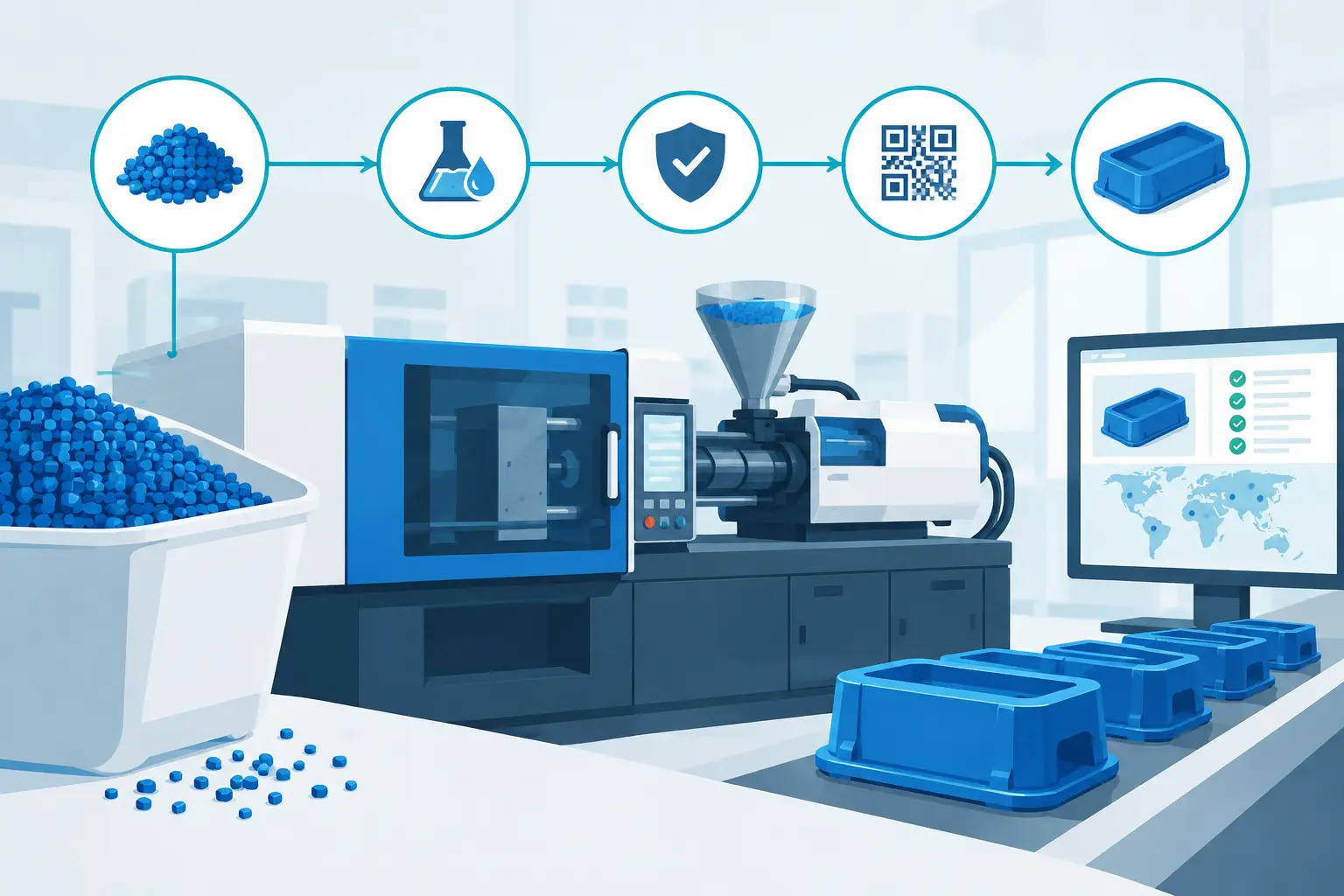
For functional parts, identify critical dimensions, material grades, appearance requirements, testing methods, acceptable defect levels, and traceability needs early. For safety-sensitive, electrical, automotive, or utility applications, the supplier should be able to show how those requirements are controlled during production rather than relying only on final sorting.
Cost structure
Custom moulding usually makes the tooling investment more visible. The buyer pays for engineering and mould construction, then receives a unit price based mainly on resin, machine time, labour, scrap, and production volume.
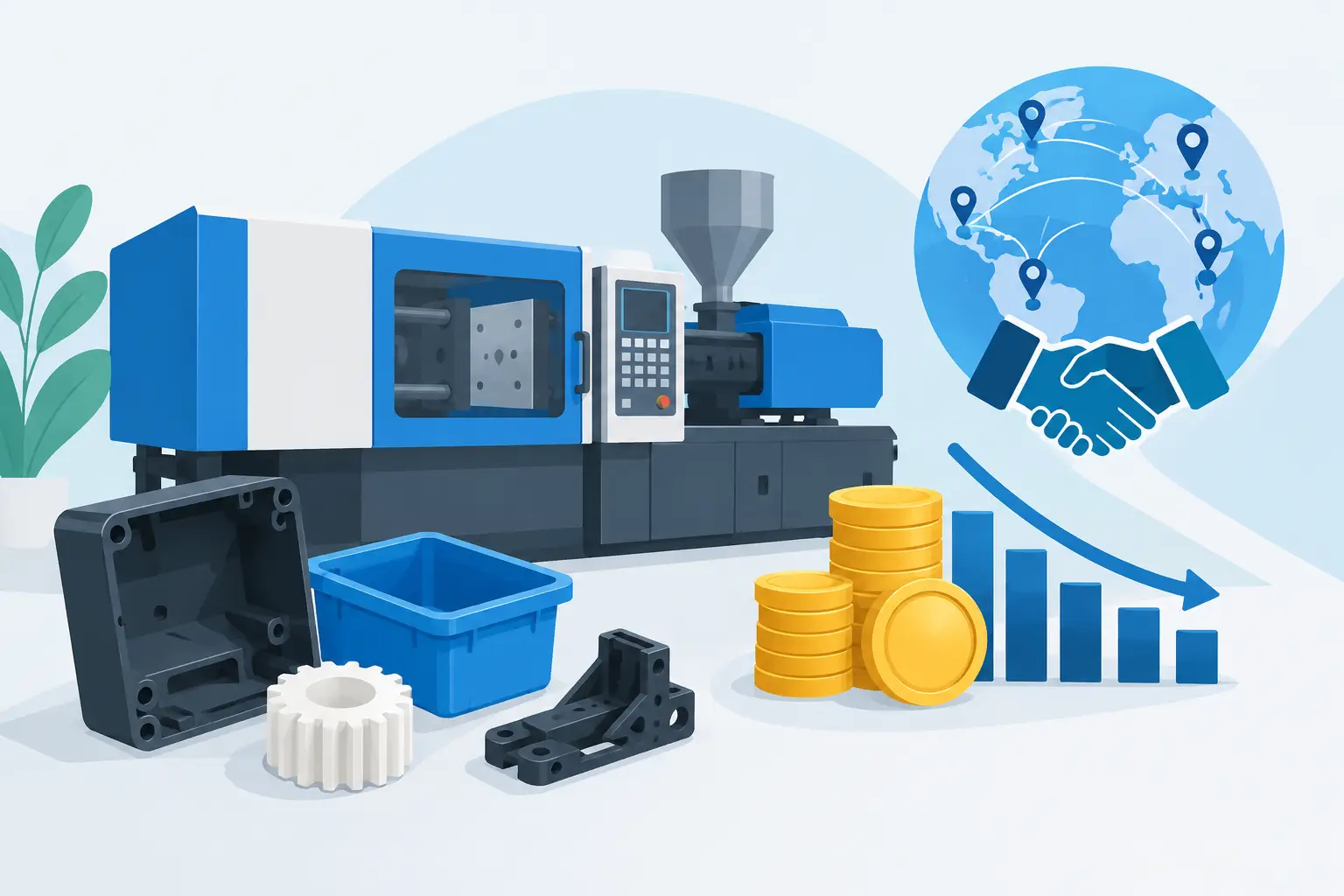
Contract manufacturing may combine more cost elements into the unit price, including finishing, assembly, packaging, quality controls, and logistics coordination. That can look higher at first glance. The more useful comparison is total landed cost: purchase price plus supplier management time, transport between processes, inventory exposure, rework, rejected parts, and the cost of delayed delivery.
The lowest unit price is not always the lowest-cost program. This is especially true for complex components or products with frequent revisions.
Questions That Reveal the Better Manufacturing Fit
Before requesting a quotation, define the decision around operational facts. Ask whether the supplier can review the design before tooling begins, build and modify the mould internally, validate samples against measurable requirements, and maintain production capacity as demand changes.
Also ask where the supplier performs secondary operations, how they contain nonconforming parts, what information they provide with each production run, and how quickly they can respond if a mould requires correction. These questions reveal whether you are buying a moulding machine hour or a managed manufacturing capability.
If you have a tight timeline, separate lead time into its actual stages: design review, tool fabrication, trial runs, corrections, approval, production, finishing, and shipment. A supplier that controls these stages in-house can make realistic commitments because fewer critical steps depend on outside schedules.
Glasfil operates this integrated model through in-house design, mould modification, injection moulding, secondary processing, quality assurance, packing, and shipping. With 19 machines up to 560-ton capacity across two plants, Glasfil focuses not simply on producing plastic parts, but on controlling the process that delivers approved parts into a customer’s operation.
Choose the Scope That Matches Your Risk
Choose a custom moulding supplier when you clearly define the requirement, and your organisation can manage the activities before and after moulding. Select a contract manufacturing partner when production reliability depends on coordinating tooling, moulding, finishing, quality, and delivery as one controlled operation.
Many projects need both. The component begins as a custom moulding challenge and becomes a contract manufacturing program once it reaches repeat production. The strongest supplier relationship supports that transition without forcing the product through a new set of vendors, systems, and assumptions.
Start the conversation with the part’s actual failure points: tolerance risk, cosmetic requirements, annual volume, tooling life, secondary operations, and delivery schedule. Build the manufacturing model around controlling those risks, not around selecting the most convenient label.
Contact us to discuss your project, request a quotation, or arrange a technical consultation. Our team will help you determine the most cost-effective and reliable way to manufacture your part.