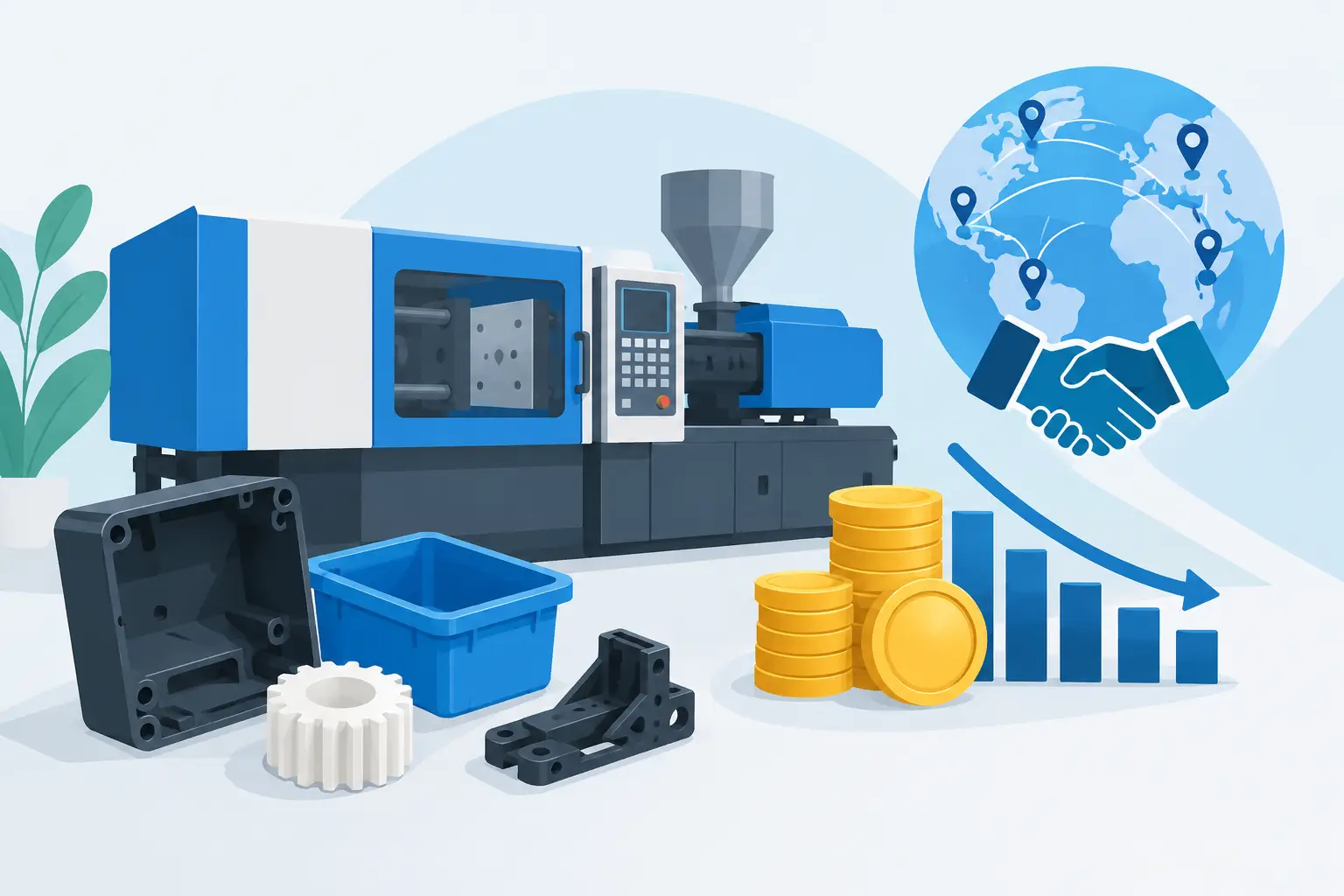
A housing that looks simple on a screen can become expensive fast once it reaches the toolroom. Electrical enclosure moulding solutions have to do more than produce a plastic shell. They need to protect internal components, hold tolerances across mating parts, support cable entries and seals, and stay consistent from first shots to repeat production.
That is why enclosure programs tend to expose the difference between a supplier that only moulds parts and a manufacturing partner that controls tooling, process development, and quality in-house. When the enclosure is part of a meter, control unit, switchgear assembly, automation device, or utility product, small deviations can lead to assembly delays, sealing failures, and field risks.
What electrical enclosure moulding solutions must solve
An electrical enclosure sits at the intersection of design intent, compliance requirements, and production reality. It has to protect electronics from dust, impact, moisture, and handling while also meeting practical assembly needs. Boss locations, wall thickness, cover fit, snap features, hinge geometry, gasket channels, and screw retention all need to work together.
In moulding terms, that creates a part family with very little tolerance for inconsistency. Warpage can throw off lid alignment. Poor venting can leave burns near thin ribs. An underdeveloped gate location can create sink on cosmetic faces or uneven fill around functional features. Material shrinkage can change how two halves seal or how fasteners engage.
This is where many enclosure projects go off track. The CAD model may be technically complete, but not fully optimised for moulding, cycle time, part ejection, or long-run repeatability. Good electrical enclosure moulding solutions start before steel is cut. They begin with part analysis, tooling strategy, and clear decisions about material, texture, assembly method, and expected volume.
Tooling decisions shape enclosure performance
For enclosure programs, tooling is not just a cost line. It is the production foundation. If the mould is built without enough attention to cooling balance, shut-off integrity, venting, and wear areas, the part may run acceptably in sampling but drift in production.
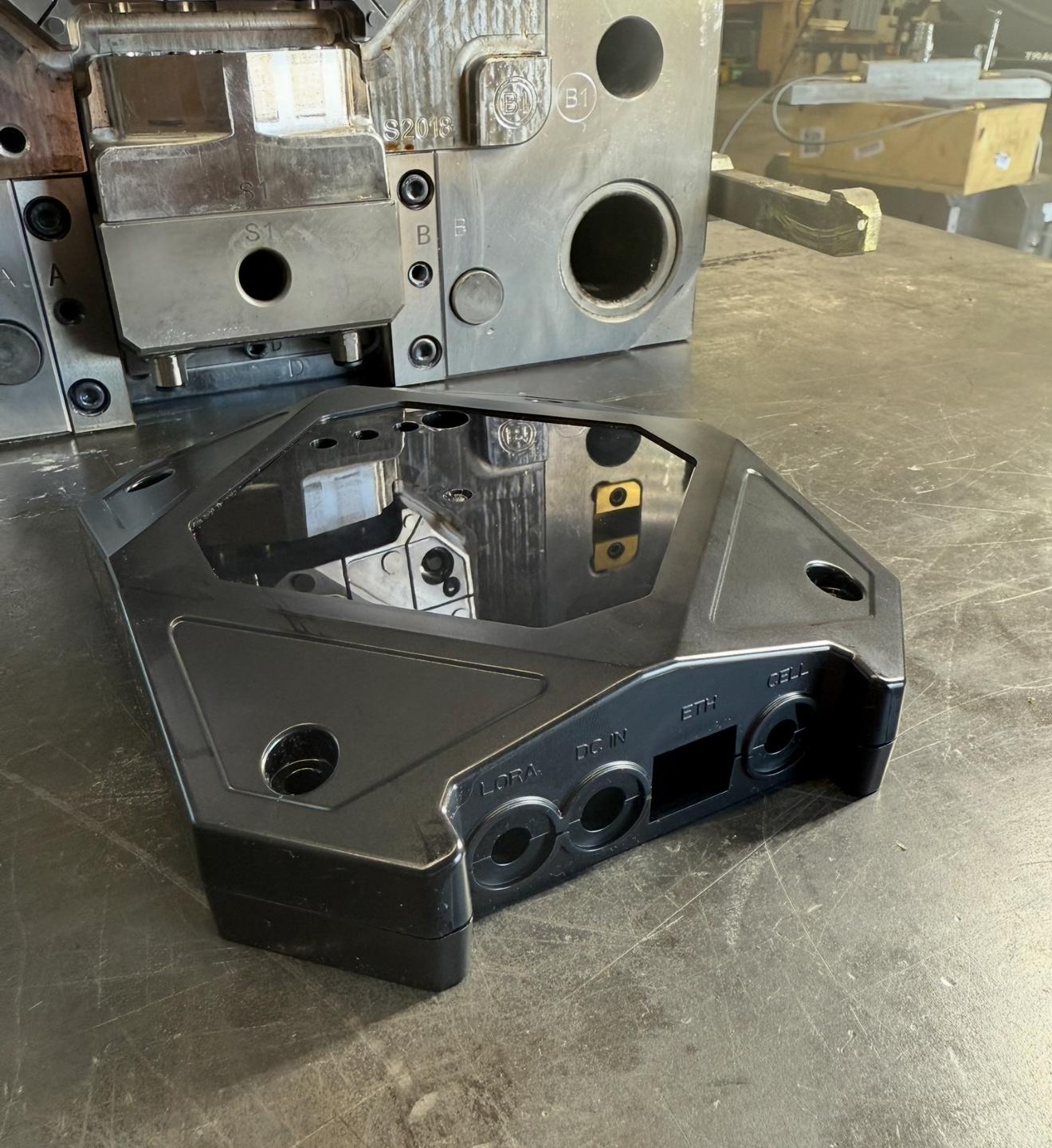
A well-engineered mould for an electrical enclosure accounts for the part’s functional surfaces as much as its visible ones. Flatness on mating edges matters. So does stability around screw bosses, latch points, and mounting tabs. If the design includes windows, inserts, undercuts, or complex cable-routing features, the tooling strategy has to support those details without creating a fragile or maintenance-heavy mould.
There is also a speed-to-market issue. Buyers often need first articles quickly, then production quantities without waiting on multiple outside vendors. When mould design, mould fabrication, mould modification, and moulding are controlled in-house, engineering changes move faster, and troubleshooting is more direct. That shortens the path from concept to validated part.
Material selection is not a simple resin choice
A large share of enclosure performance comes down to resin behaviour. The right material depends on where the enclosure will be used, how it will be assembled, and what approvals or durability targets it needs to meet.
For indoor electronics, appearance and dimensional control may carry more weight. For industrial or utility environments, impact resistance, UV exposure, heat stability, and chemical resistance may become the priority. Some applications need flame-retardant grades. Others need better stiffness to maintain sealing surfaces or threaded feature performance over time.
This is one of the most common trade-offs in electrical enclosure moulding solutions. A resin that gives excellent cosmetics may not deliver the toughness needed for harsh handling. A heavily filled material may improve rigidity but introduce more wear on tooling or create different surface behaviour. A flame-retardant formulation may affect flow and require design or processing adjustments.
The right decision comes from reviewing the enclosure as a working product, not just a moulded shape. That includes the internal hardware, fastening method, expected service conditions, and production volume.
Process control matters as much as mould design
Even a strong tool and a suitable material will not compensate for weak process discipline. Enclosures often include broad surfaces, structural ribs, closures, and precise joining features in one part. That combination can magnify small process shifts.
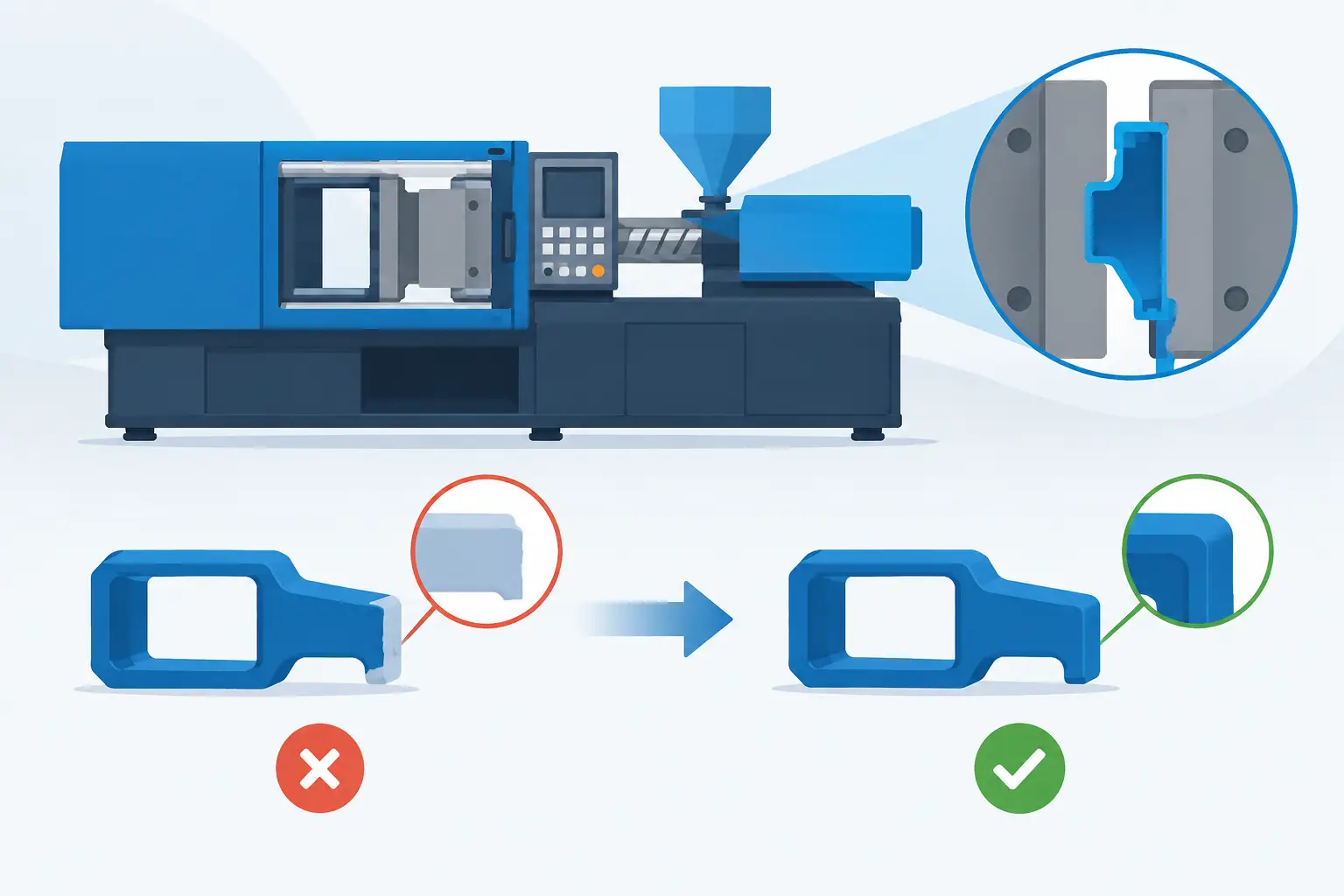
Fill pressure, holding profile, cooling time, mould temperature, and drying conditions all affect final dimensions and stability. If the process window is not defined properly, one batch may assemble cleanly while the next creates lid mismatch, flash at shut-offs, or stress around screw points.
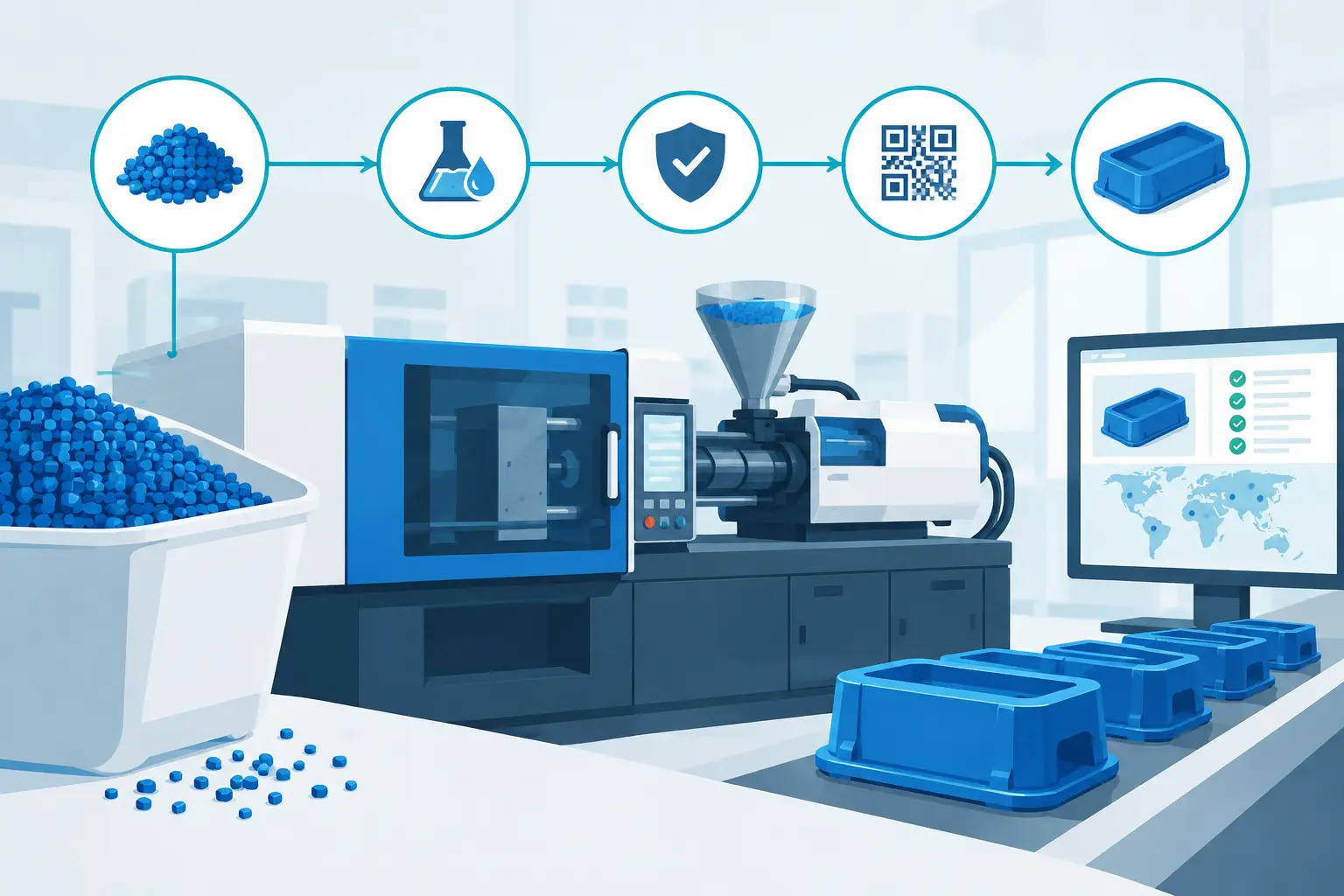
For OEMs and procurement teams, the practical issue is supply consistency. They do not just need one approved sample. They need repeat production with predictable fit and low defect rates. That is why in-house quality assurance, documented process control, and tool maintenance are central to enclosure manufacturing.
A capable moulder treats enclosure production as a controlled system. The mould is maintained. Process parameters are tracked. Critical dimensions are checked against functional requirements, not only nominal drawings. When changes are needed, they are handled within the same production ecosystem rather than passed between separate vendors.
Electrical enclosure moulding solutions for different production stages
Not every buyer comes to a moulder with the same starting point. Some have a finished design and need a dependable production partner. Others have a concept, an old component to replicate, or a part that failed in the field and needs redesign.
That is why the best electrical enclosure moulding solutions are flexible across development stages. Early-stage programs benefit from design-for-manufacturing review before tooling begins. Existing products may need mould transfer support, dimensional correction, or material substitution. Mature programs often focus on cycle-time improvement, defect reduction, or added capacity.
The value of an integrated manufacturer is clear here. Tooling, moulding, secondary processing, finishing, packing, and shipping are connected. Instead of coordinating separate shops for each step, the buyer works through one production chain. That reduces communication gaps and gives engineering teams better control over timing, revisions, and accountability.
For companies launching products under deadline, this can be the difference between hitting a market window and losing it. Glasfil’s model is built around that requirement, with in-house tooling, moulding capacity up to 560 tons, and the ability to move from concept to finished product in a compressed timeline.
Secondary operations are often part of the real solution
An enclosure rarely ends at moulding. Many programs require post-moulding work to make the part ready for assembly or shipment. That can include drilling, tapping, insert fitting, ultrasonic welding, pad printing, labelling, custom packing, or subassembly.
This matters more than it first appears. If secondary operations are outsourced after moulding, tolerances and handling risks increase. Lead times stretch. Responsibility becomes fragmented. For enclosure components that need a clean cosmetic finish and reliable fit, every transfer between suppliers adds cost and potential variation.
A one-stop manufacturing setup improves control. The moulded part can move directly into finishing and packing under the same quality system. For procurement teams, that simplifies supplier management. For engineers, it helps preserve design intent through the full production route.
What buyers should look for in an enclosure moulding partner
The right partner is not just the shop with press capacity. It is the one that can show technical control over the factors that make enclosure parts succeed in production.
That starts with tool design capability, mould manufacturing experience, and full modification support after trials begin. It also includes machine range, material handling discipline, quality systems, and the ability to support both pilot quantities and ongoing runs. International project experience helps too, especially for companies balancing cost, quality, and delivery across multiple markets.
Ask practical questions. Who owns tooling revisions? How are warpage and fit issues diagnosed? Can the supplier manage texture, cosmetic standards, and secondary operations in-house? What happens if the design needs adjustment after T1 samples? These are not minor details. They are usually where enclosure projects either stabilise or stall.
Good electrical enclosure moulding solutions are built on execution, not promises. They come from a manufacturing partner that understands how enclosure geometry behaves in resin, in steel, on the machine, and in the customer’s final assembly.
When that level of control is in place, the enclosure stops being a recurring production problem and becomes what it should be from the start – a dependable part that protects the product, supports assembly, and scales with demand. That is the standard worth building toward.
If you are evaluating a new project or facing ongoing tooling and production challenges, contact us to discuss your requirements, request a technical consultation, or submit your RFQ.