A plastic part can look straightforward on a screen and still become expensive, delayed, or inconsistent once it reaches production. The difference is often decided before the first production shot. Mould fabrication services determine how reliably a part fills, cools, ejects, holds tolerance, and repeats across thousands or millions of cycles.
For OEMs, product developers, and procurement teams, tooling is not simply a line item to source at the lowest price. It is the production system behind the part. A well-engineered mould protects launch timing, part quality, and unit economics. A poorly planned one creates a long chain of corrections that affects every downstream operation.
What Mould Fabrication Services Should Cover
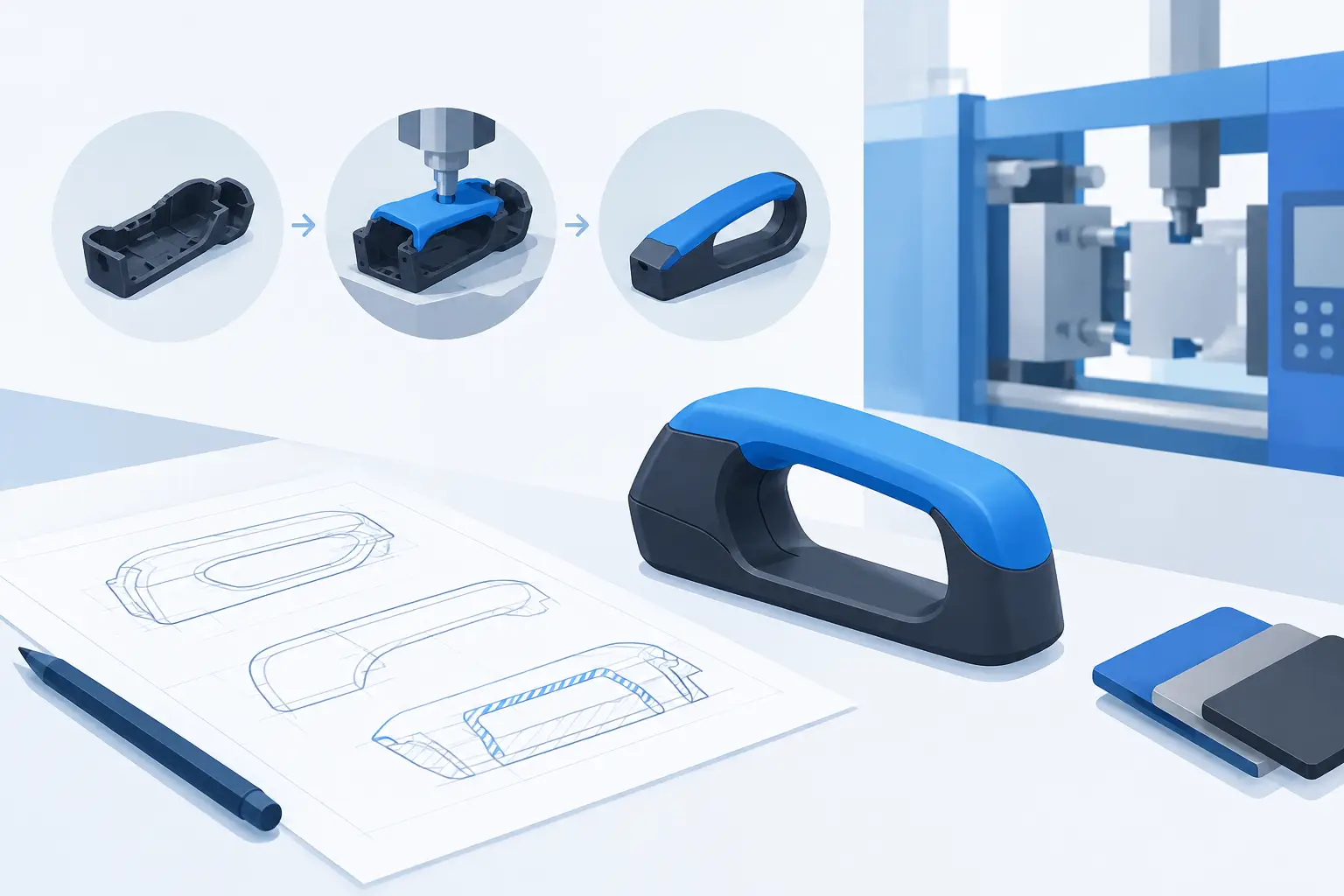
Mould fabrication begins with the conversion of a part design into a production-ready tool. That work includes manufacturability review, mould design, steel selection, machining, assembly, testing, modification, and maintenance planning. For injection moulded parts, the tool must work with the selected material, machine tonnage, production volume, cosmetic requirements, and cycle-time target.
The strongest supplier relationship connects these steps instead of treating each as a separate handoff. When mould designers, toolmakers, moulding technicians, and quality teams work under the same operational control, issues can be identified earlier and resolved faster. This matters most when a part has tight tolerances, difficult geometry, cosmetic surfaces, inserts, threads, clips, or multiple secondary operations.
A capable partner should be able to evaluate more than whether a part can be moulded. The practical question is whether it can be moulded consistently, at the required rate, with an acceptable scrap level and a process that can be maintained over time.
Start With Design for Manufacturing
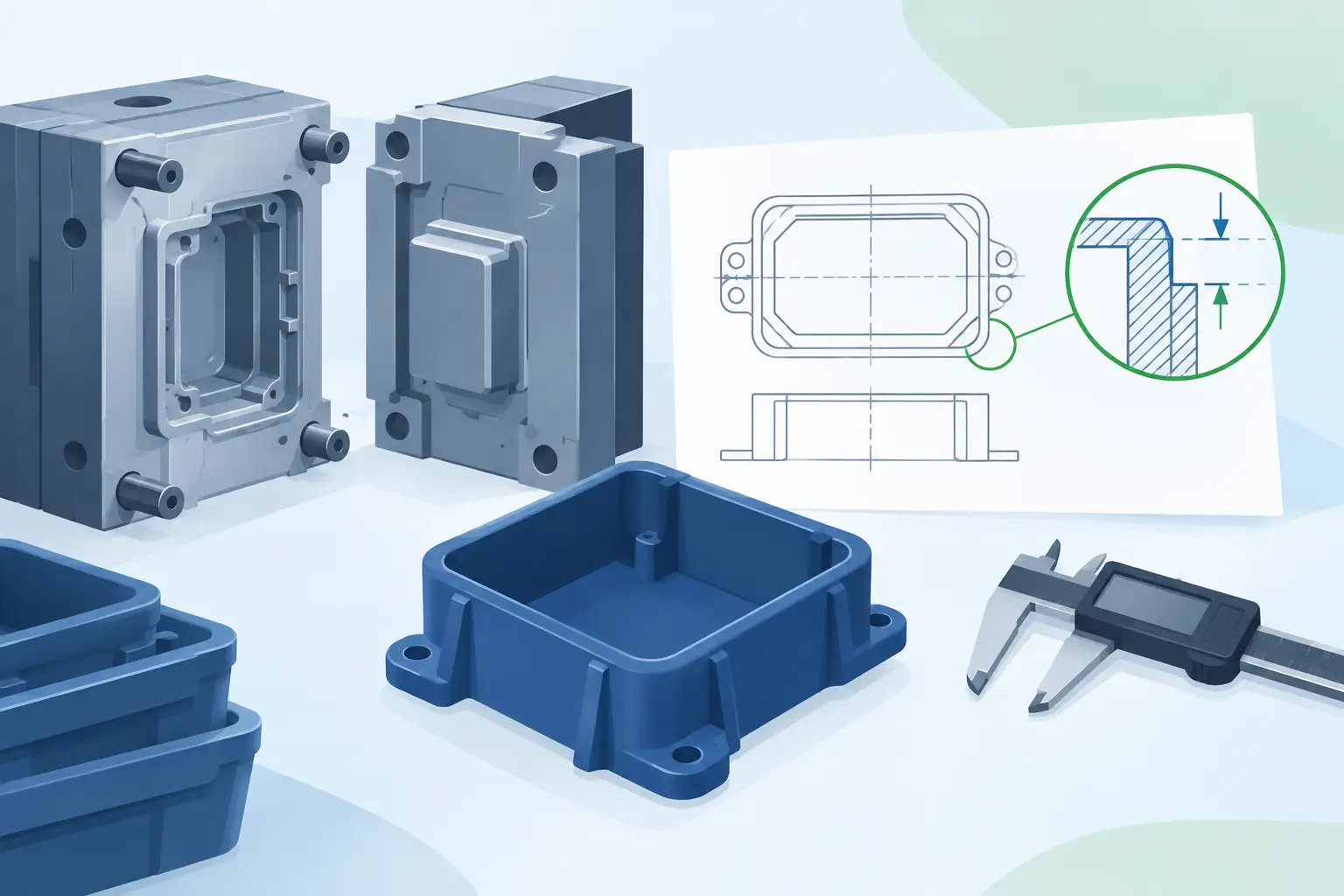
The most valuable tooling decisions happen before steel is cut. A design for manufacturing review examines wall thickness, draft angles, ribs, bosses, undercuts, gate location, parting lines, shrinkage, and ejection. Each of these features affects the cost and complexity of the mould, as well as the quality of the finished component.
For example, eliminating an unnecessary undercut may remove the need for a side action and reduce both tooling cost and cycle-time risk. Adding draft to a textured surface can prevent scuffing during ejection. Adjusting a thick section can reduce sink marks, warpage, and cooling time. These are not cosmetic refinements. They are production decisions.
Material choice must be reviewed at the same stage. Polypropylene, ABS, polycarbonate, nylon, and glass-filled engineering resins behave differently in the tool. Their shrink rates, flow behavior, moisture sensitivity, and thermal requirements influence cavity dimensions, cooling design, venting, and processing windows. A mould built without material-specific consideration may require avoidable modification after initial trials.
When a project involves an existing part, the review should also account for the reason for replacement. A discontinued component may need to match legacy interfaces. A defective component may need stronger ribs, a revised material, or improved tooling geometry. Replicating the original shape without understanding the original failure can repeat the same problem.
Design Changes Are Cheaper Before Tooling Begins
Not every design issue should be corrected. Some added mould complexity is justified when it protects function, assembly, or a customer-facing finish. The objective is not to make every tool simple. It is to invest complexity where it delivers a measurable production or product benefit.
That balance requires direct engineering input. It also requires a supplier willing to explain the trade-off between initial tooling cost, part cost, cycle time, maintenance needs, and expected production volume.
Tool Design Must Match the Production Requirement
A prototype tool, a bridge-production tool, and a high-volume production mould should not be designed to the same standard. The right approach depends on forecast demand, target lead time, expected product life, and tolerance requirements.
For lower-volume validation runs, a simpler tool may be the appropriate commercial decision. For repeat production, better steel, optimized cooling, durable wear surfaces, and automation-ready features can reduce total cost over the life of the program. Choosing the least expensive tool at the outset can be costly if it creates frequent downtime, variable parts, or an early rebuild.
Tool design must also fit the moulding machine. Clamp force, shot capacity, tie-bar spacing, injection pressure, and available automation all affect what can be produced efficiently. A mould designed in isolation may technically run, yet produce an unnecessarily long cycle or operate too close to a machine limit.
Glasfil maintains 19 injection moulding machines up to 560 tons, giving its engineering teams a practical production context when developing tools for customer programs. That alignment between fabrication and moulding is especially useful when a project needs to move from concept through finished-part delivery on a compressed timeline.
Precision Fabrication Is More Than CNC Machining
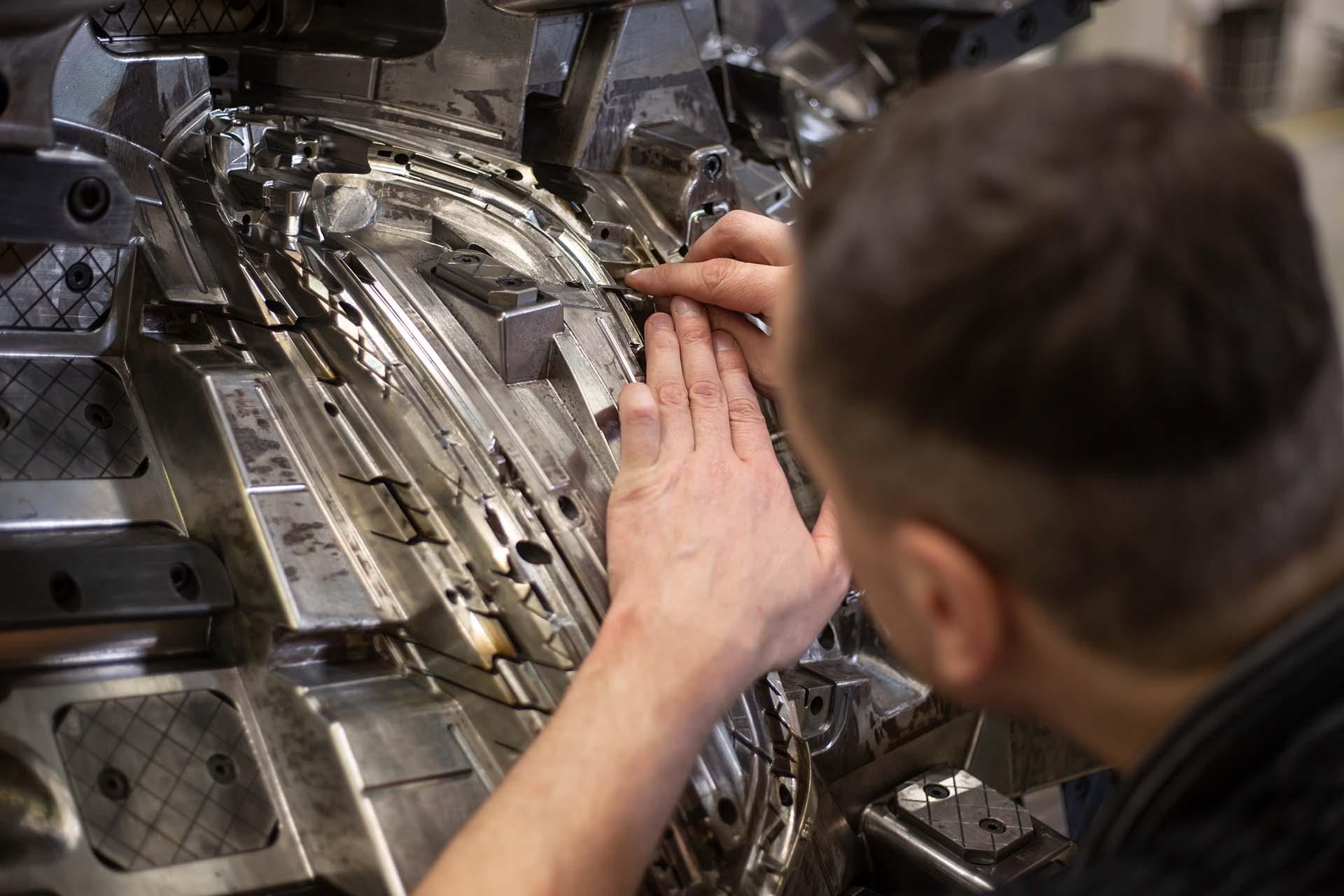
High-quality mould fabrication relies on accurate machining, but machining alone does not guarantee a production-ready result. Mould components must be manufactured, fitted, assembled, and verified as a working system. Cavity and core alignment, shutoff conditions, slider movement, cooling circuits, venting, and ejection all require careful attention.
Cooling design is one of the clearest examples. Insufficient or uneven cooling can increase cycle time and create warpage, dimensional variation, or surface defects. A well-designed cooling system supports stable production, not merely a successful first trial.
The same applies to gates and vents. Gate position influences flow pattern, weld lines, pressure demand, and packing behavior. Poor venting can cause burns, short shots, or inconsistent filling. These details are often invisible in a finished part, but they have a direct effect on yield and delivery performance.
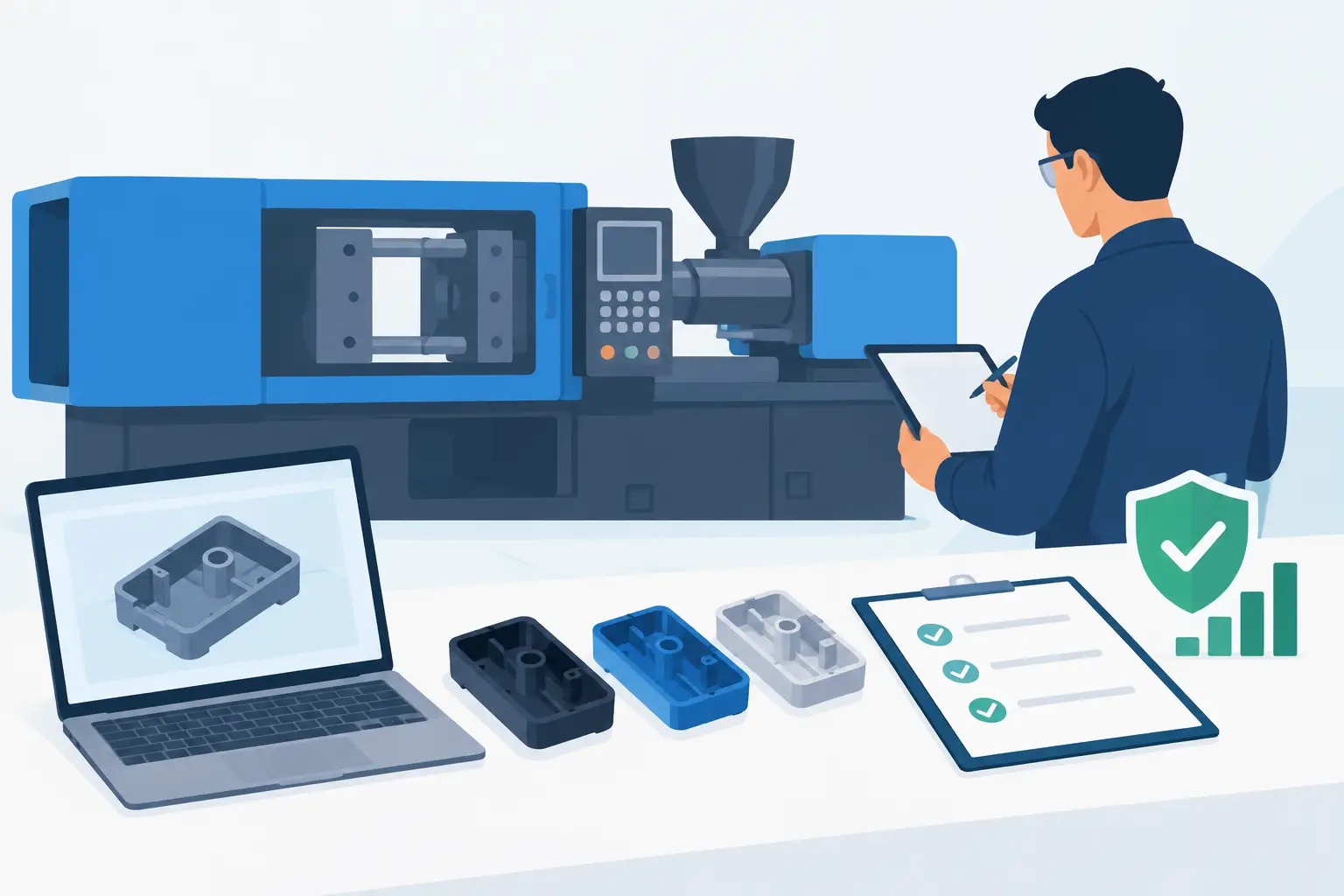
Testing is therefore essential. Initial mould trials should confirm more than whether the cavity fills. The team should review part dimensions, appearance, weight consistency, filling balance, ejection, cycle time, and process repeatability. If modifications are required, in-house mould adjustment capability can prevent the delays associated with sending tools between separate suppliers.
Why In-House Control Reduces Program Risk
Projects lose time when design, tooling, moulding, finishing, and quality are managed by different companies with different schedules and priorities. When a defect appears, each party may focus on its own stage rather than the full production chain.
An integrated manufacturer can trace an issue from the finished part back through processing conditions, material handling, mould function, and original design intent. That does not eliminate technical challenges, but it makes corrective action faster and more accountable.
This control is valuable in several common situations: a new product launch with an immovable deadline, a part that requires cosmetic finishing after moulding, a customer needing repeat orders with consistent quality, or a legacy component that must be reproduced without reliable original tooling data. In each case, the supplier’s ability to coordinate decisions matters as much as the individual capabilities listed on a quotation.
Questions to Ask Before Selecting a Tooling Partner
Before committing to a supplier, buyers should look beyond tool price and requested delivery date. Ask how the supplier reviews manufacturability, where the mould will be designed and fabricated, how trials are handled, and who owns the modification process after first samples.
It is also useful to confirm how the supplier manages quality requirements. Critical dimensions, appearance standards, inspection methods, traceability expectations, and packing requirements should be clear before production approval. If secondary operations such as assembly, printing, machining, or finishing are required, those steps should be planned with the tool and part process rather than added at the end.
Finally, discuss mould maintenance. Production tools need scheduled inspection and repair to protect repeatability. A maintenance plan is particularly important for abrasive resins, high-cycle programs, tools with moving components, and parts where minor flash or dimensional drift can disrupt assembly.
Treat the Mould as a Production Asset
The best mould fabrication services do not end when the first acceptable parts are produced. They establish a controlled route from part design to stable manufacturing, with room for refinement as demand, materials, and product requirements evolve.
For buyers, the practical goal is clear: choose a tooling partner that can explain how the mould will perform in real production, not only how quickly it can be built. That conversation early in the program is where launch risk is reduced, and dependable supply begins.
Contact us to discuss your project, request a quotation, or arrange a technical consultation. Our team will help you determine the most cost-effective and reliable way to manufacture your part.