A molded part can meet every dimensional requirement and still fail in the field if the joining method is wrong. Plastic component assembly is where individual molded parts become a functional product, and where material behavior, tolerances, fixtures, labor, and quality control must work together. For OEMs and product teams, treating assembly as an afterthought often creates avoidable rework, cosmetic defects, leaks, weak joints, and delayed launches.
The most reliable approach is to engineer the part, mold, assembly method, and inspection plan as one production system. That reduces handoffs, limits variation, and makes it easier to move from a validated sample to repeatable volume production.
Why Plastic Component Assembly Needs Early Engineering
Assembly requirements influence plastic part design long before the first production cycle. A housing that will be ultrasonically welded needs different joint geometry than one designed for screws. A snap-fit enclosure requires controlled wall thickness, material flexibility, and sufficient clearance to assemble without whitening or cracking. Even the location of a gate, ejector pin, or parting line can affect assembly appearance and fit.
This is why manufacturing review should begin during the design stage. Engineers need to consider how parts will orient in a fixture, where force will be applied, how operators or automation will access the components, and what characteristics must be verified after joining. The objective is not simply to make two parts connect. It is to make them connect correctly thousands or millions of times.
Tolerance stack-up is a common source of trouble. Each molded component has an allowable dimensional range. When several components come together, those small variations accumulate. A design that works with ideal samples may bind, rattle, or leave inconsistent gaps in production. Critical interfaces should therefore be identified early, with tolerances assigned according to function rather than copied broadly across a drawing.
Material selection is equally significant. Polypropylene, ABS, polycarbonate, nylon, POM, and glass-filled polymers respond differently to stress, heat, vibration, chemicals, and moisture. The best joining process depends on the resin, component geometry, service environment, expected load, appearance standards, and production volume.
Selecting the Right Plastic Component Assembly Method
There is no universal best process. The right choice balances product performance with cycle time, capital investment, assembly access, and long-term service needs.
Snap Fits and Press Fits
Snap fits can reduce component count and eliminate fasteners, making them an efficient solution for many covers, housings, consumer products, and electrical enclosures. They support fast assembly and can be designed for repeated opening when necessary.
Their limitation is stress. Sharp corners, excessive deflection, or unsuitable material can cause cracking, stress whitening, or loss of retention over time. Press fits offer a similarly clean assembly route but demand close control of interference dimensions. They are useful for inserts, caps, shafts, and other components where a permanent mechanical connection is required.
Screws, Inserts, and Mechanical Fasteners
Fasteners are practical when products require serviceability, replacement parts, or assembly of dissimilar materials. Thread-forming screws can work well in properly designed bosses, while heat-staked or molded-in threaded inserts provide a stronger and more repeatable thread for repeated use.
The trade-off is added parts, longer assembly time, and a greater risk of stripping, misalignment, or overtightening. Boss design, pilot holes, fastening torque, and driver control must be specified. If the product will face vibration or thermal cycling, the joint needs validation under those actual conditions rather than only a bench test.
Ultrasonic Welding and Heat Staking
Ultrasonic welding is often selected for permanent, clean, high-speed plastic joints. It is widely used in automotive, electrical, medical-adjacent industrial applications, fluid-handling components, and sealed housings. Well-designed energy directors and correctly controlled welding parameters can create a strong bond without separate adhesives or fasteners.
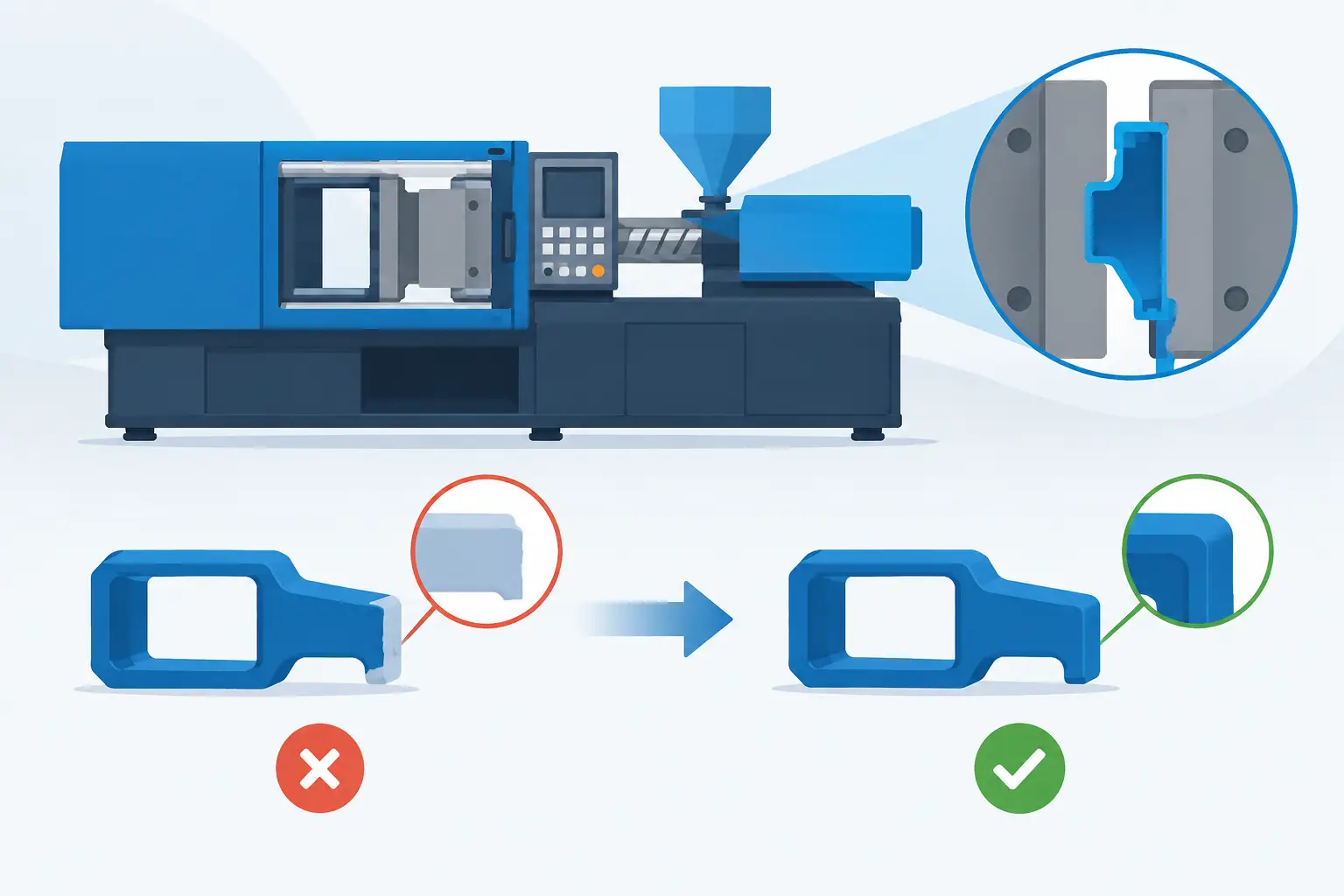
However, welding is not a cure for poor part fit or unstable molding. Part variation, moisture, inconsistent material, and weak fixture support can produce flash, incomplete welds, cosmetic marks, or leaks. The weld joint must be designed with the process in mind, and production should be supported by validated settings and routine checks.
Heat staking is especially useful for joining plastic to metal or securing delicate components where a mechanical head is formed from a plastic post. It can be reliable and cost-effective, but the process must control heat, dwell time, and forming pressure to avoid distorted parts.
Adhesive Bonding
Adhesives can join dissimilar materials and accommodate shapes that are difficult to weld or mechanically fasten. They are useful when a sealed bond, low-stress connection, or cosmetic exterior is required.
They also introduce process discipline requirements. Surface preparation, adhesive storage, mix ratio, open time, cure time, and application volume all affect bond performance. Adhesive assembly can be the right solution, but it needs more control than it may appear to need at the prototype stage.
Assembly Quality Begins With Molded Part Consistency
Assembly stations cannot reliably compensate for inconsistent molding. Warpage, sink marks, flash, short shots, poor flatness, and shifting dimensions create downstream problems that operators may only be able to sort, not solve.
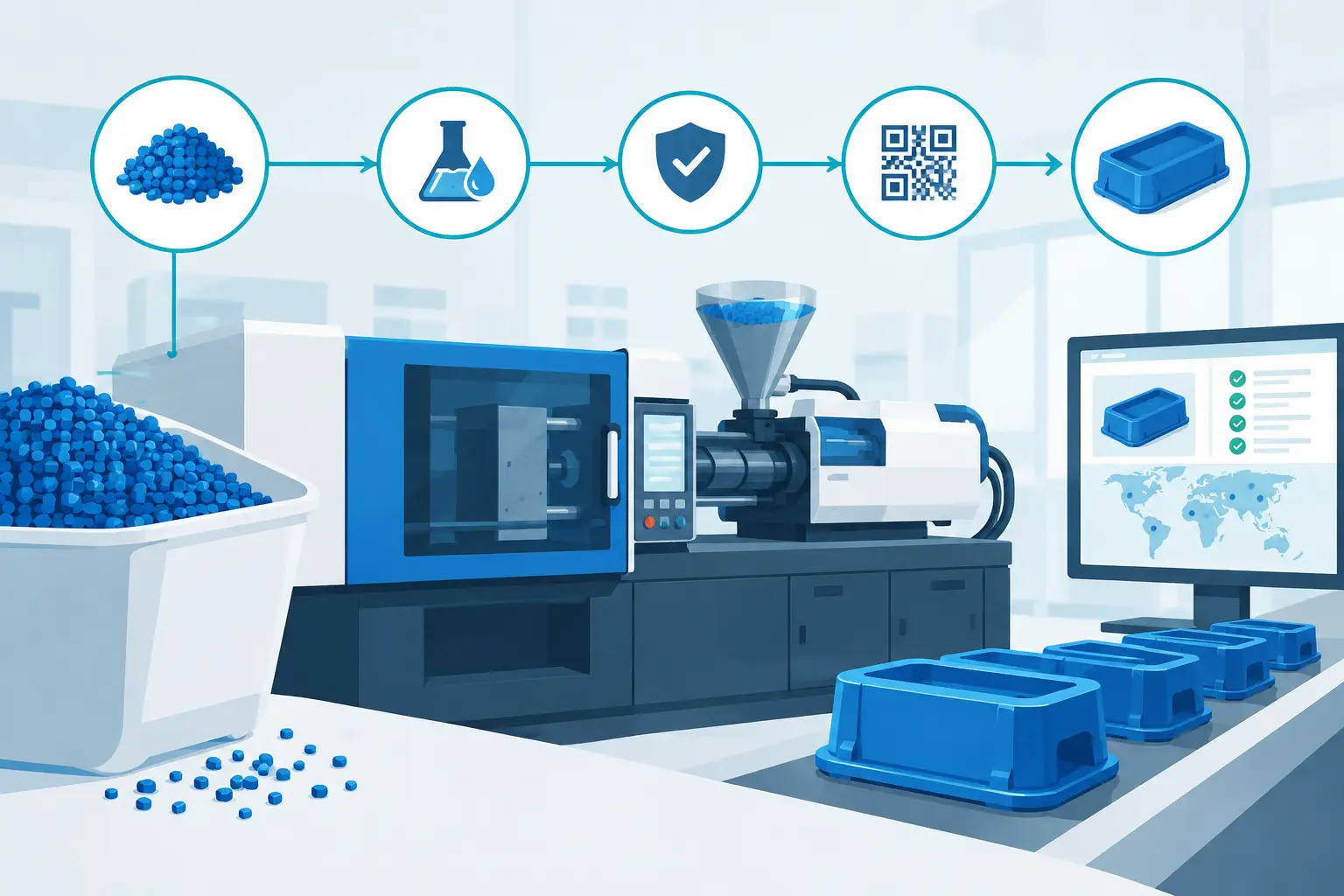
A controlled injection molding process provides the foundation for dependable assembly. That includes stable material handling, validated process parameters, mold maintenance, in-process inspection, and measurement of the dimensions that affect mating surfaces. For appearance-sensitive products, color consistency, surface texture, weld-line location, and gate vestige also matter.
Tooling decisions have a direct effect on assembly performance. A mold designed for repeatability makes it easier to hold critical interfaces across production runs. When refinements are needed, the ability to modify and maintain the mold in-house shortens the correction cycle and keeps technical responsibility close to the process.
For complex projects, Glasfil brings tooling, molding, secondary processing, and quality control into one manufacturing operation. This reduces the delays and accountability gaps that often occur when molded components travel between separate suppliers before final assembly.
Fixtures Turn a Manual Step Into a Controlled Process
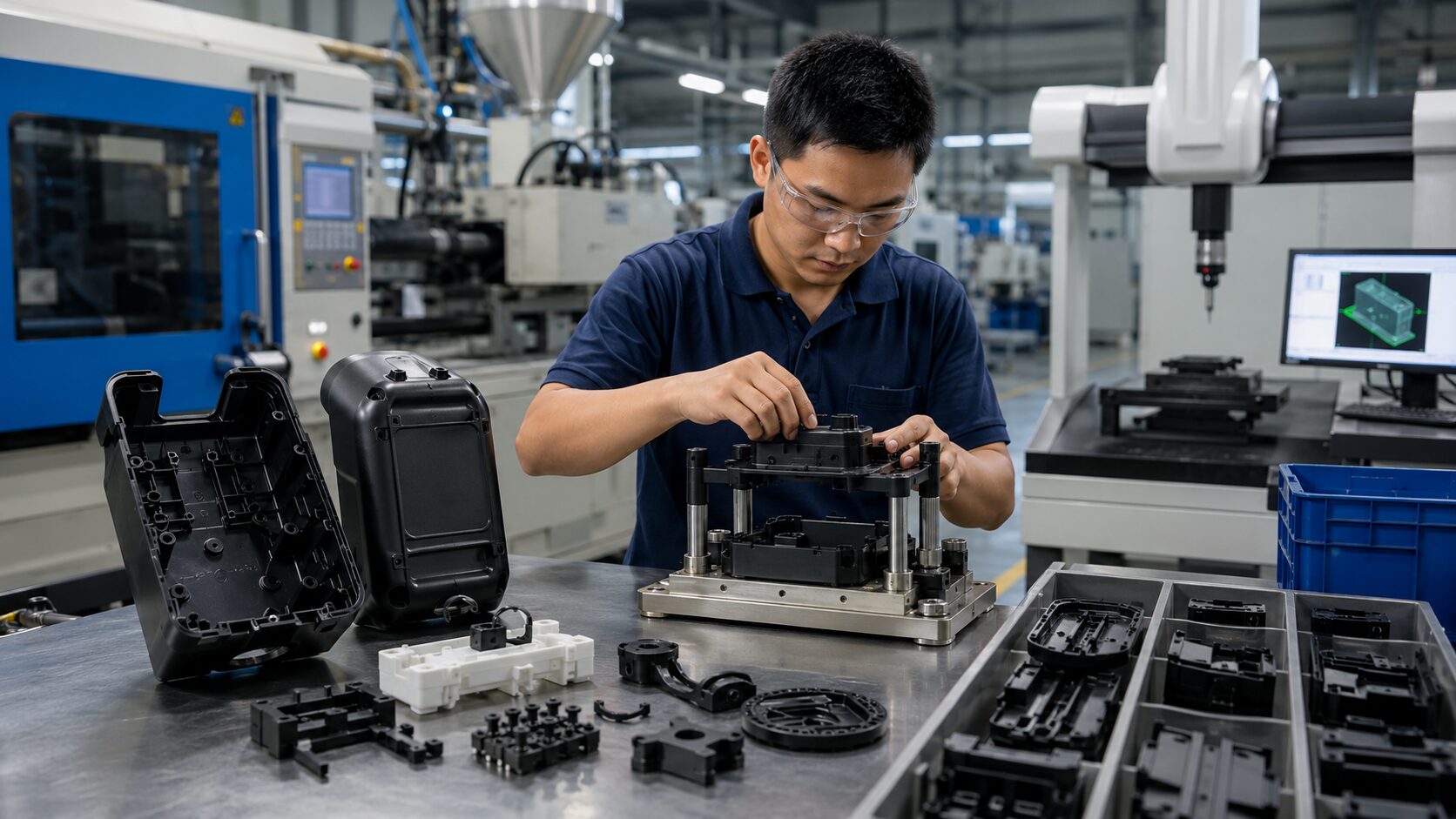
Even simple assembly benefits from a purpose-built fixture. Fixtures position parts consistently, protect visible surfaces, guide operators through the correct sequence, and ensure force is applied where the design can support it. They are particularly valuable for snap-fit operations, welding, heat staking, insert installation, and multi-component products.
A fixture should prevent incorrect orientation where possible. If a part can be assembled backward, the process should make that physically difficult or impossible. Poka-yoke features, sensors, nest geometry, and simple visual controls can prevent defects before they reach inspection.
Automation may be justified when volume, repeatability, safety, or cycle-time requirements support the investment. But full automation is not always the right first move. Lower-volume products, frequent design changes, or high-mix production may be better served by well-designed semi-automated stations. The decision depends on total production demand and the cost of variation, not on automation for its own sake.
Validate the Joint for Real Use Conditions
A completed assembly should be tested according to its actual function. A water meter component may require leak testing and pressure validation. An automotive interior part may need vibration, temperature cycling, and retention testing. An electrical enclosure may need checks for fit, closure force, and protection of internal components.
Validation should cover more than the first acceptable sample. Teams should test parts from different molding cycles, material lots, and ends of the tolerance range. This reveals whether the assembly method has enough process margin for production.
Inspection plans should focus on features that indicate function. Depending on the product, that may include joint appearance, gap and flush, weld depth, pull force, torque, leak rate, electrical continuity, or component presence. Visual inspection alone is rarely enough for joints that must withstand load, pressure, or repeated use.
Traceability also matters for critical products. Recording material batches, molding parameters, assembly settings, inspection results, and operator or station data makes it possible to investigate a field concern quickly and contain risk without disrupting unrelated production.
Build Assembly Into the Supply Plan
When molding, finishing, assembly, packing, and shipping are managed separately, each transition creates another opportunity for damage, delay, and unclear ownership. Integrated production planning reduces those risks. Parts can move directly from molding to controlled secondary operations, with packaging designed around the finished assembly rather than around loose components.
This is particularly valuable when products require pad printing, coating, labeling, insert installation, welding, or custom packaging. The manufacturing partner should understand the finished product specification, not only the individual molded part drawing. That perspective helps prevent a technically acceptable part from becoming an operational problem later in the process.
The strongest assembly programs are built before production pressure arrives. Define the joint function, validate the material and geometry, control the molded inputs, and use fixtures and inspection methods that match the risk. When those decisions are made early, assembly becomes a predictable production capability rather than the final point where hidden design issues appear.
Contact us to discuss your project, request a quotation, or arrange a technical consultation. Our team will help you determine the most cost-effective and reliable way to manufacture your part.