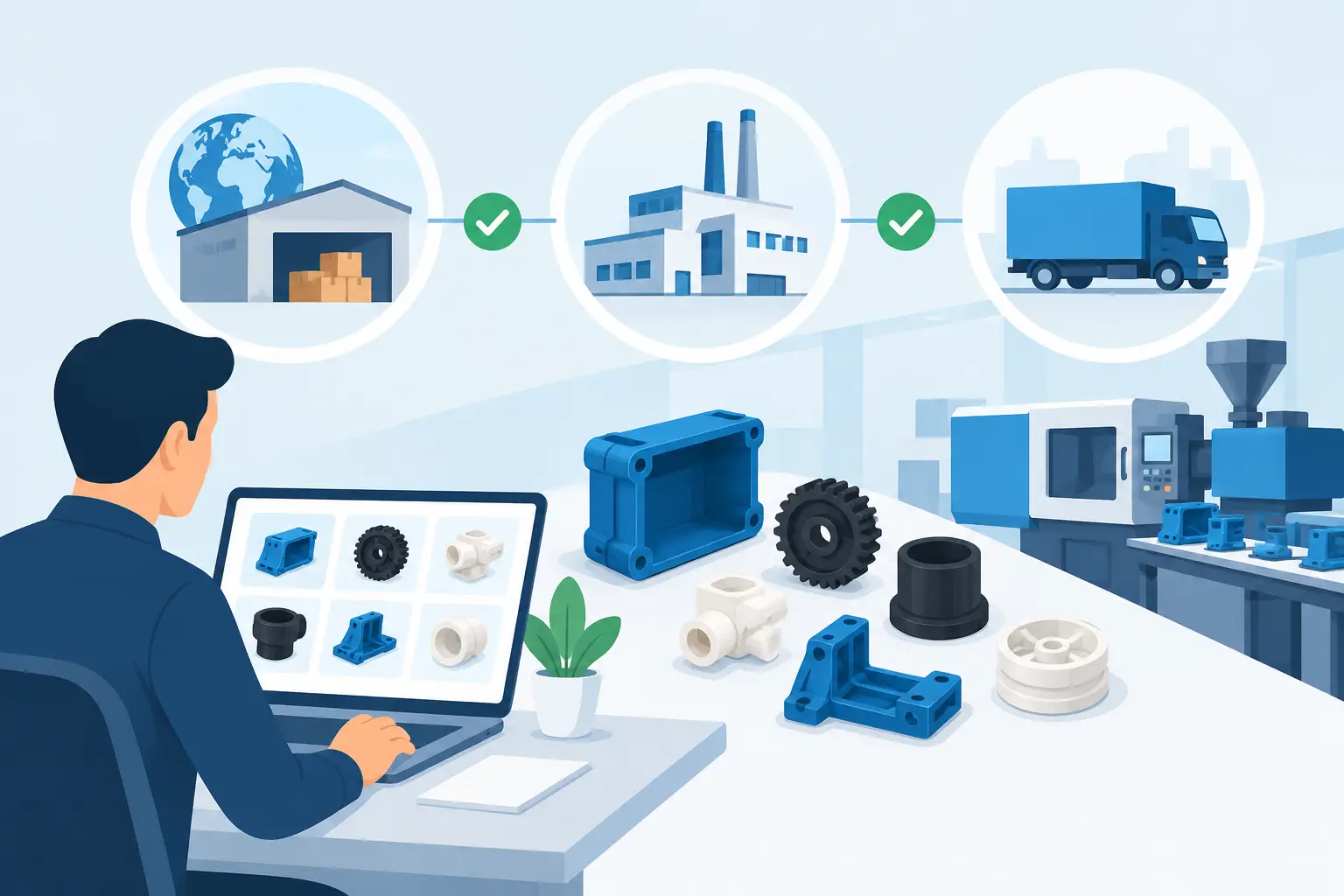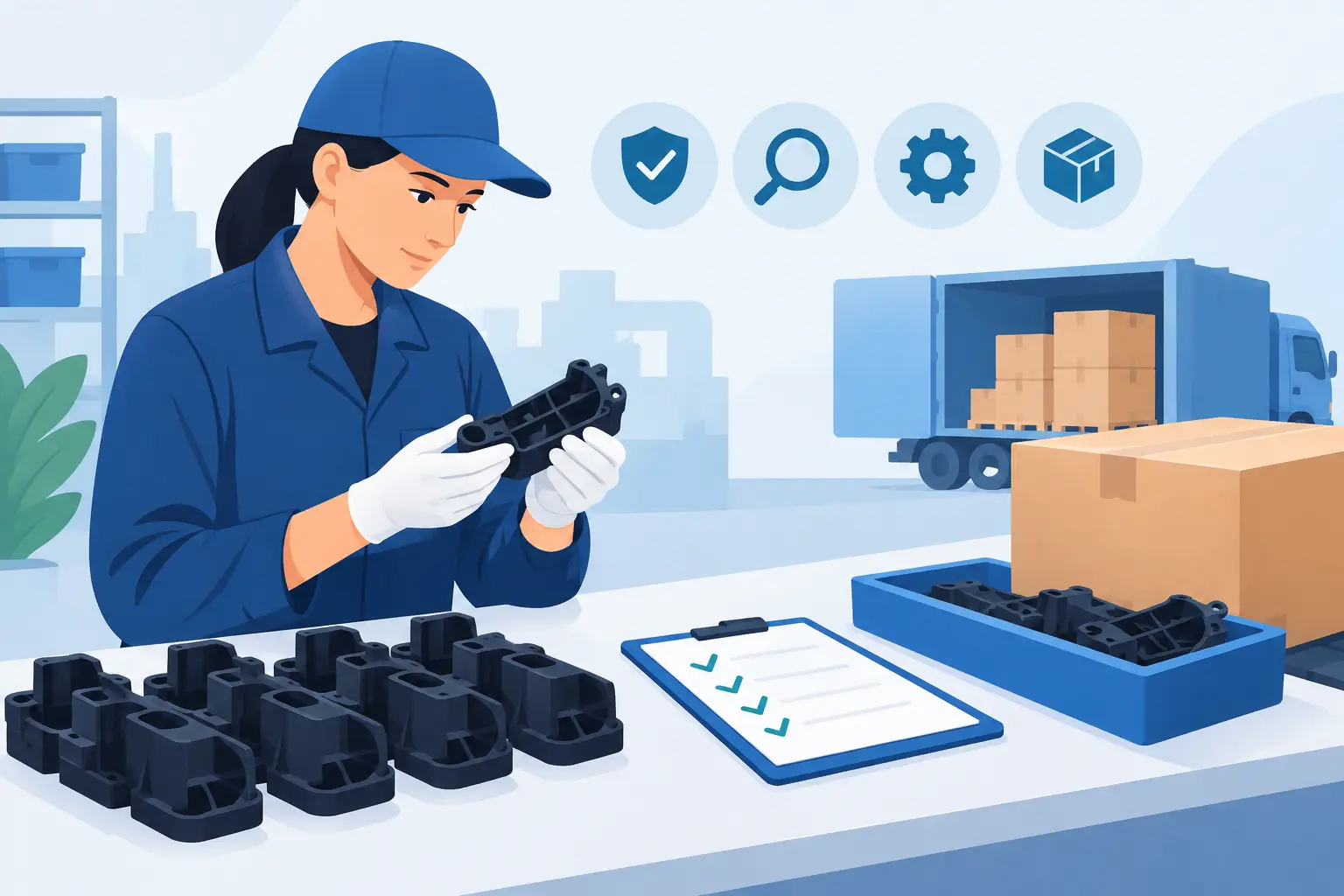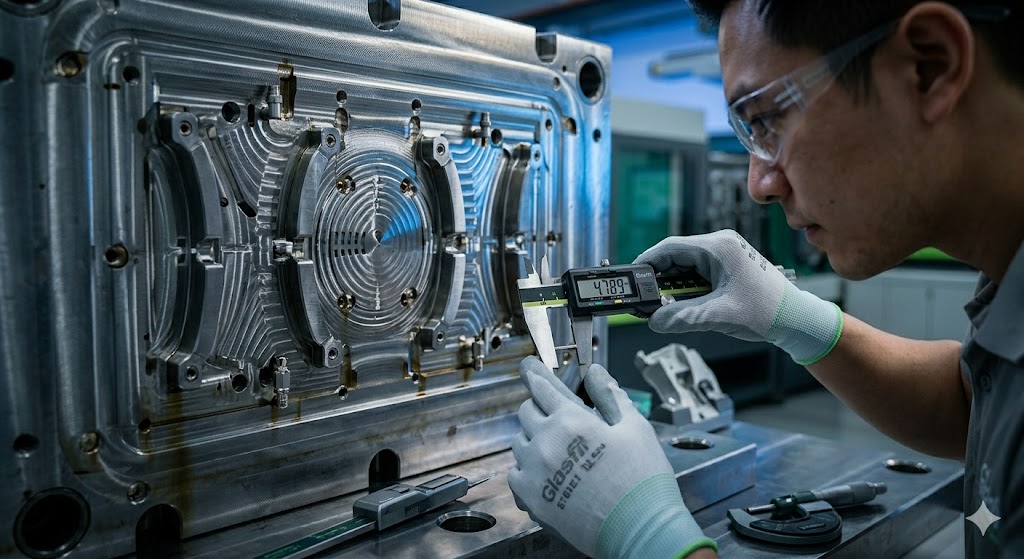
A plastic part rarely fails because of the press alone. More often, the real problem starts earlier – in the tool design, the machining tolerances, the cooling layout, or the way mould changes are handled after the first trial. That is why precision tooling services are not a side function in injection moulding. They are the foundation of repeatable part quality, stable cycle times, and predictable production.
For OEMs, product developers, and procurement teams, the tooling decision affects far more than the first shipment. It influences launch timing, defect rates, engineering flexibility, maintenance costs, and the supplier’s ability to respond when a design change appears late in the process. If the tool is built well but managed poorly, delays follow. If the tool is built and maintained under one roof, decisions get faster, and quality control gets tighter.
What precision tooling services actually include
In many sourcing discussions, tooling is treated as a single transaction – design the mould, cut the steel, sample the part, then move to production. In practice, precision tooling services cover a much broader set of activities. They include design for manufacturability review, mold design, material and cavity planning, fabrication, fitting, testing, modification, preventive maintenance, and repair.
That scope matters because injection moulding is rarely static. Part geometry evolves. Resin choices change. Wall thickness may need adjustment after the first articles. Gate location might need refinement to solve filling or cosmetic issues. If the tooling supplier and the moulder operate separately, every change introduces handoffs, delays, and accountability gaps.
An integrated tooling operation removes much of that friction. Engineering, toolmaking, moulding, and quality teams can work from the same data, inspect the same part behaviour, and make corrections without losing time between vendors.
Why precision tooling services affect part quality
Part quality starts with the mould’s ability to produce the same result every cycle. That sounds obvious, but consistency depends on details that are easy to underestimate. Machining accuracy, venting, runner balance, cooling efficiency, shutoff integrity, and steel selection all have a direct impact on dimensional stability and appearance.
When precision tooling services are handled with close process control, the mould is built for actual production conditions, not just for a theoretical CAD model. That means the tool is evaluated against shrinkage behaviour, resin flow, ejection stress, expected volume, and maintenance access. A mould that looks complete on paper can still create flash, sink, short shots, warpage, or excessive wear if those factors are not addressed early.
This is where in-house control becomes a practical advantage, not just a marketing point. When the same manufacturer designs, fabricates, trials, modifies, and runs the tool, root-cause analysis gets sharper. If a part drifts out of tolerance, the team can check the mould, process window, and inspection data together instead of debating where responsibility begins.
Precision tooling services and speed to production
Lead time pressure is real across automotive, electrical, construction, furniture, utility, and industrial applications. New product launches move quickly, and replacement parts often carry even tighter deadlines because downtime is already costing money. In those conditions, speed depends less on promises and more on how much capability exists in-house.
Precision tooling services shorten timelines when mould design, machining, fitting, sampling, and revision can happen without waiting on outside suppliers. That does not mean every project moves at the same pace. A simple single-cavity tool is different from a complex multi-cavity mould with tight cosmetic and dimensional requirements. But the principle holds: fewer handoffs usually mean fewer delays.
The other time factor is modification. Many projects do not fail because the first tool is wrong. They slow down because no one can revise it quickly after the first trial. Design changes are common, especially when a product is moving from prototype intent to full production reality. A supplier with full mould modification capability can react much faster than one that has to send the tool elsewhere for every adjustment.
Where cost control really comes from
Buyers often compare tooling quotes line by line, but the lowest initial price is not always the lowest total cost. Precision tooling services influence long-term economics through scrap reduction, cycle efficiency, tool life, maintenance planning, and how easily a mould can be serviced without extended downtime.
A cheaper tool may still produce acceptable parts at startup, but if it requires frequent repairs, unstable process settings, or repeated manual intervention, production costs rise quickly. That burden shows up in lost machine time, extra inspection, missed delivery dates, and avoidable quality claims.
The better question is not simply, “What does the tool cost?” It is, “What will this tool cost to run, maintain, and modify over the next several years?” For repeat production programs, that distinction matters a great deal.
There are trade-offs, of course. Not every application needs the same tooling complexity. A lower-volume industrial component may justify a different mould strategy than a high-volume consumer or automotive part. The right approach depends on annual demand, tolerance requirements, resin type, and how likely the design is to change.
How to evaluate precision tooling services
If you are sourcing a new program, look beyond the machine list and ask how the tooling function is managed. Precision tooling services should be judged by execution discipline as much as by equipment.
Start with design ownership. If the supplier controls mould design internally, communication is usually tighter, and design revisions move faster. Then look at modification capability. Design changes after sampling are normal, so the ability to make corrections in-house reduces schedule risk.
Quality integration is another major indicator. Tooling, moulding, and inspection should not operate as isolated departments. When process feedback loops are short, dimensional issues can be corrected with less trial-and-error. Maintenance matters too. A supplier that can maintain and repair moulds proactively is better positioned to protect production continuity over the life of the program.
Capacity should also match the work. Tooling precision means little if the manufacturer cannot scale into repeat moulding with stable scheduling. Buyers need both toolmaking competence and enough moulding capacity to support launch, ramp-up, and ongoing demand.
Why one-source manufacturing changes the tooling equation
Precision tooling services deliver the strongest value when they sit inside a broader manufacturing system. Tooling does not exist in isolation. It feeds moulding, secondary processing, assembly, packing, and shipment. Every disconnect between those stages creates room for delay or error.
That is why many industrial buyers prefer a one-source manufacturing partner. When one team manages product realisation from mould design through finished plastic parts, there is more visibility into timelines, more accountability for quality, and less risk of misalignment between design intent and production reality.
For companies launching a new part, replicating a discontinued component, or upgrading an underperforming design, this integrated model reduces friction at every stage. Engineering input is available earlier. Tool corrections happen faster. Production planning starts before the mould is fully finalised. Quality standards can be built into the process instead of being inspected afterwards.
Glasfil follows that model closely, combining in-house mould design, mould fabrication, modification, injection moulding, secondary operations, maintenance, and quality assurance in one operation. For buyers, that structure matters because it turns tooling from a separate purchase into a controlled part of the production system.
What strong precision tooling services look like in practice
The best tooling programs are not defined by a single milestone. They are defined by repeatability. The first samples are close to the target. Corrections are made quickly. Production ramps without recurring surprises. The mould remains maintainable. Part quality stays stable across repeat orders.
That level of performance usually comes from disciplined engineering and operational control, not from shortcuts. It requires accurate mould design, careful fabrication, disciplined trials, documented revisions, and a team that understands how tool condition affects moulding behaviour over time.
For business buyers, that is the real value of precision tooling services. They reduce uncertainty. They help products launch faster, run more consistently, and stay commercially viable long after the first production order. When the tool is right, and the support behind it is real, the entire supply chain gets easier to manage.
If you are evaluating manufacturing partners, ask the tooling questions early. The quality of the answers will tell you a lot about how your production program is likely to perform when deadlines tighten and changes inevitably arrive.
If you are evaluating a new project or facing ongoing tooling and production challenges, contact us to discuss your requirements, request a technical consultation, or submit your RFQ.