A moulded part that was acceptable five years ago can be too expensive, too slow to launch, or too inconsistent for today’s production demands. That is what makes the future of injection moulding a business issue, not just a technical one. For OEMs, product developers, and procurement teams, the next phase of moulding will be defined by faster tooling decisions, smarter process control, and tighter integration from design through delivery.
This shift is already visible on the factory floor. Customers are asking for shorter lead times, lower defect rates, cleaner traceability, and more flexibility when product revisions happen late. At the same time, resin costs, labour availability, and quality expectations keep moving in the wrong direction for manufacturers that rely on fragmented outsourcing. The companies that adapt will not be the ones chasing trends. They will be the ones building production systems that respond faster and hold tolerance under pressure.
What the future of injection moulding actually looks like
The future of injection moulding is not one single breakthrough machine or one new polymer that changes everything overnight. It is a steady move toward more controlled, data-driven, and integrated manufacturing. That matters because buyers are no longer evaluating moulding suppliers only on piece price. They are looking at speed to market, engineering support, change management, and supply reliability.
In practical terms, this means several things are happening at once. Tooling is becoming more iterative, with design refinement happening earlier to prevent downstream defects. Moulding cells are becoming more connected, so process drift can be identified before scrap rates rise. Secondary operations are being pulled closer to the moulding operation because handoffs create delays, variation, and accountability gaps.
For manufacturers serving demanding sectors such as automotive, electrical, construction, and utility products, the priority is not novelty. It is repeatability. A supplier that can control mould design, mould modification, moulding, finishing, and inspection in-house is in a stronger position than one coordinating those steps across multiple vendors.
Automation will keep expanding, but not in the simplistic way people expect
When people talk about automation, they often picture lights-out production with minimal human involvement. In reality, injection moulding still depends heavily on engineering judgment, tooling knowledge, and practical process discipline. Automation is growing, but its real value is in reducing variation, increasing consistency, and improving response time.
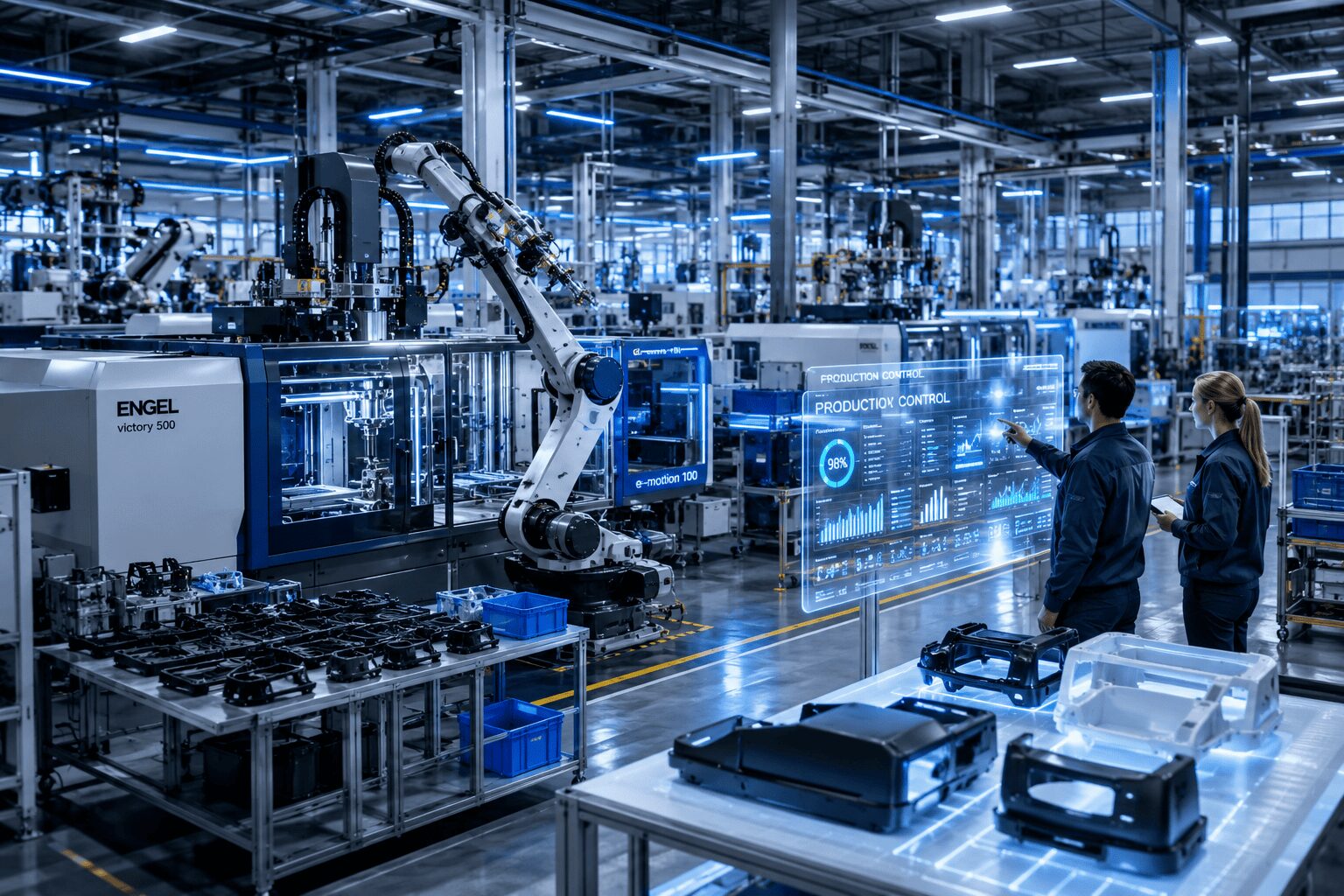
Robotic part handling, automated material feeding, in-line inspection, and machine monitoring all help stabilise output. They can reduce cycle interruptions, prevent part damage, and improve traceability. For high-volume parts, that translates directly into lower cost per unit and more predictable delivery.
But there is a trade-off. Automation works best when the tooling, process window, and part geometry are already well understood. If a product is still changing, or if the part has difficult cosmetic and dimensional requirements, a fully automated approach may not be the smartest first step. The future belongs to manufacturers that know where automation adds value and where experienced technicians and process engineers still need to stay close to the operation.
This is especially true during launch. A production cell may eventually run with a high level of automation, but early runs often benefit from tighter manual oversight. That balance between efficiency and control will separate capable moulding partners from suppliers that overpromise and then struggle during scale-up.
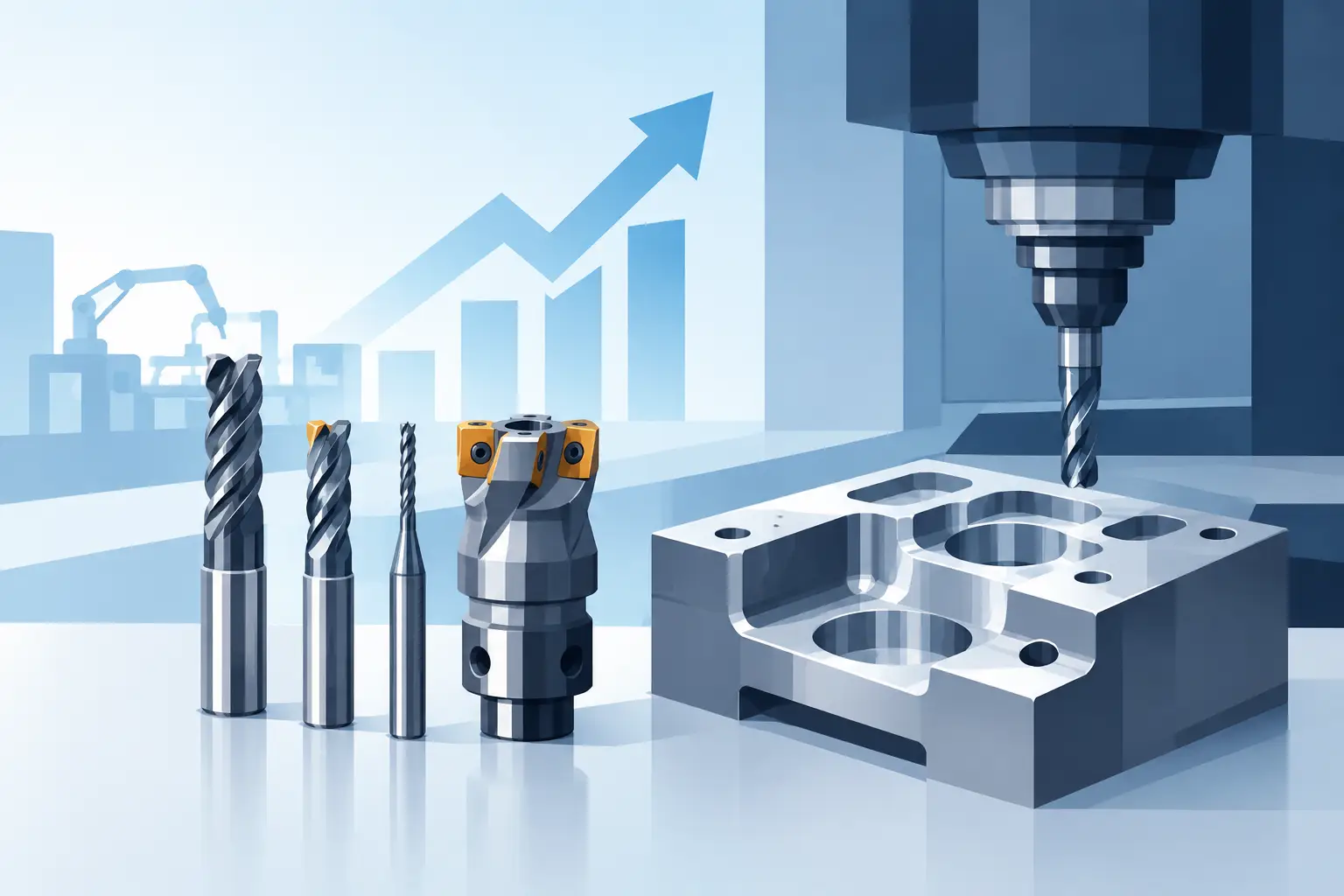
Tooling speed will matter more than machine count
A common mistake in supplier evaluation is focusing only on moulding capacity. Machine tonnage matters, but the real bottleneck in many projects is tooling. If the mould is delayed, poorly designed, or difficult to modify, production speed becomes irrelevant.
That is why the future of injection moulding is tied closely to tooling strategy. Faster mould design, in-house fabrication, and immediate modification capability are becoming competitive requirements. Product launches rarely move in a straight line. Wall thickness changes, gate locations need adjustment, shrink behaviour differs from simulation, or assembly requirements evolve after first trials.
A manufacturer with direct control over toolmaking can respond in days instead of weeks. That difference affects time to approval, time to first article acceptance, and time to stable production. It also reduces the risk of disputes between a mould maker and a moulder when quality issues appear.
For buyers, this changes how a moulding partner should be assessed. The question is not just whether a supplier can build a mould. The question is whether that supplier can refine it quickly, maintain it properly, and keep production moving when design changes occur.
Materials are changing, but application fit still comes first
There is strong market pressure around recycled content, engineered resins, lightweighting, and alternatives to traditional plastics. Some of these developments will reshape part design and sourcing decisions. Some will remain limited to specific applications because regulatory, mechanical, or cosmetic requirements are not flexible.
That is the reality buyers need to keep in mind. Material innovation is important, but no resin choice exists in isolation. A material affects mould wear, cycle time, dimensional stability, post-processing, and field performance. A resin that looks promising from a sustainability standpoint may introduce shrinkage variation or fail under thermal load. A lower-cost substitute may solve one procurement issue while creating a warranty problem later.
The next generation of moulding will rely more on material selection guided by actual manufacturing conditions, not just datasheets. That puts greater value on suppliers that can support development work, prototype adjustments, and production validation under one roof.
In many industries, the winning approach will be application-specific rather than ideological. Some products will move toward recycled or reformulated compounds. Others will continue to require highly stable engineering materials because the performance risk is too high. Good manufacturing decisions will come from balancing compliance, cost, availability, and process behaviour.
Quality control is moving closer to real-time
Traditional quality systems often catch problems after they have already produced scrap, delays, or customer complaints. The future is more proactive. Machine data, cavity pressure monitoring, visual inspection systems, and tighter process documentation are pushing quality control upstream.
This matters because moulded part defects are not always random. Flash, warpage, sink marks, short shots, and dimensional drift usually point to specific interactions between tool condition, material behaviour, machine settings, and cycle discipline. If those factors are tracked properly, correction can happen faster and with less waste.
For business buyers, better quality systems mean more than fewer defects. They also mean stronger traceability, better PPAP and validation support where required, and more confidence when production is scaled across multiple runs or shipment schedules.
The most capable manufacturers will treat quality assurance as part of process design, not just inspection after the fact. That approach is especially valuable for parts that feed into assemblies where a small variance can create expensive downstream failures.
Integrated manufacturing will outperform fragmented sourcing
As products become more time-sensitive and supply chains stay volatile, fragmented manufacturing creates more risk. One vendor handles design feedback, another builds the mould, another runs the parts, and another completes finishing and packing. Every handoff increases lead time and reduces accountability.
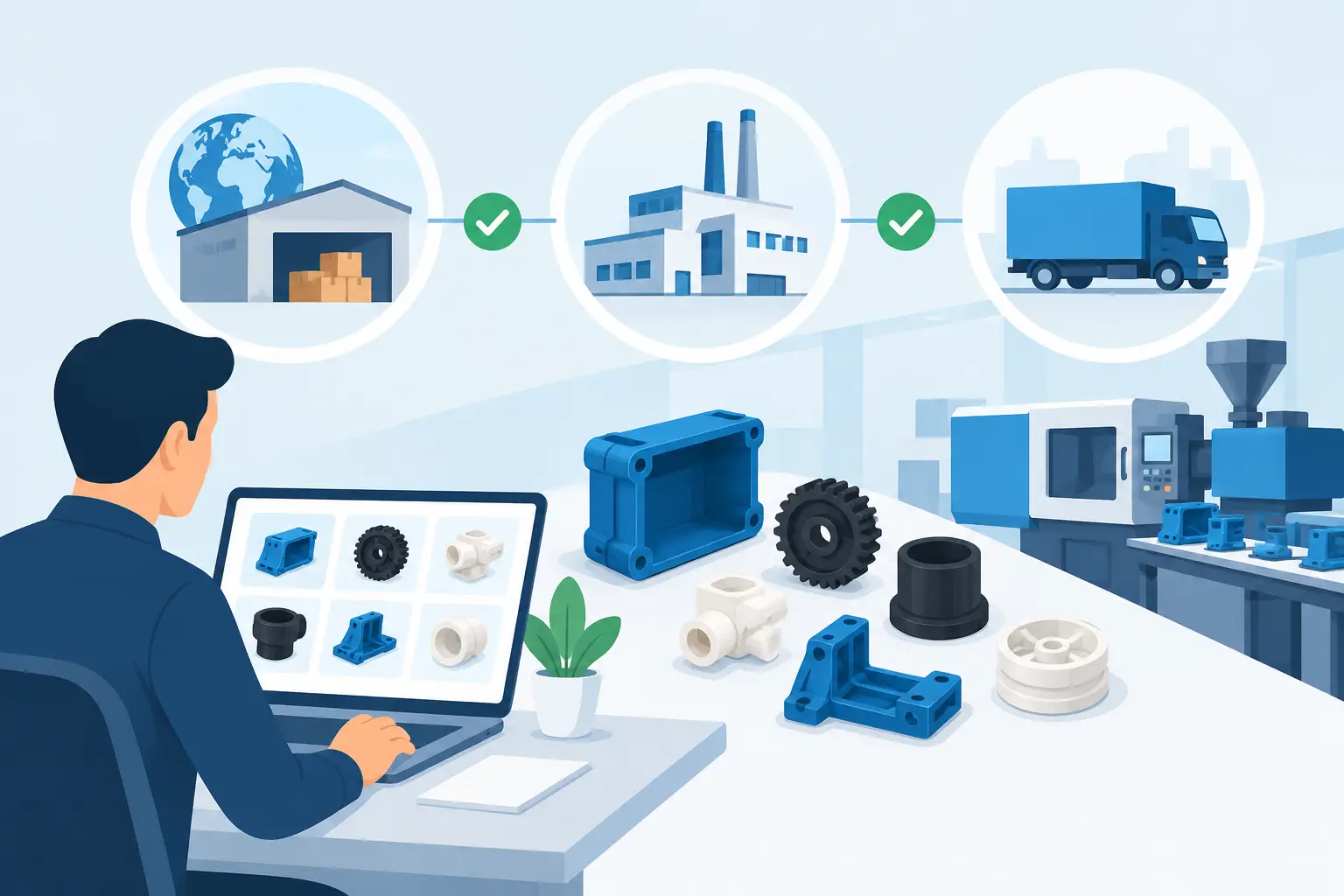
That model is under pressure. More buyers want one manufacturing partner that can manage the project from concept refinement through tooling, moulding, secondary processes, packing, and shipping. The reason is straightforward. Integrated manufacturing shortens communication loops and makes problem-solving faster.
If a moulded part needs a dimensional correction, the teams responsible for tooling, process setup, and inspection can act together. If demand suddenly increases, production planning is easier when key operations are already aligned. If cosmetic finishing becomes a concern, the issue can be addressed without sending parts across multiple suppliers and waiting for updates.
This is where manufacturers with strong in-house capability have an advantage. Glasfil, for example, operates as an end-to-end moulding partner rather than a single-step supplier, which is the direction more serious buyers are already moving toward.
What should buyers expect from the next generation of moulders?
The supplier relationship is changing. Buyers should expect more than a quoted cycle time and a unit price. They should expect engineering feedback before tooling mistakes become expensive. They should expect a mould maintenance discipline that protects output over the long term. They should expect clear communication when tolerances, materials, or part geometry create trade-offs.
They should also expect speed, but speed with control. Fast execution only matters when the parts are right, the tooling is stable, and the supplier can keep up once volume increases. A rushed launch without process discipline simply moves the problem downstream.
The strongest moulding partners in the years ahead will be the ones that combine tooling knowledge, production capacity, quality assurance, and practical problem-solving. They will not sell injection moulding as a commodity. They will deliver it as a controlled manufacturing system built to handle change.
That is where the market is going. The future of injection moulding belongs to manufacturers that can shorten the path from idea to repeatable production while keeping quality, cost, and responsiveness in balance.
If you are evaluating a new project or facing ongoing tooling and production challenges, contact us to discuss your requirements, request a technical consultation, or submit your RFQ.