A material change that looks good in a sustainability report can quickly become a production problem if it causes warpage, inconsistent colour, reduced impact strength, or longer cycle times. For OEMs and product teams, sustainable plastic manufacturing trends are only valuable when they produce parts that meet specification, run reliably in volume, and remain commercially practical.
The conversation has moved beyond simply asking whether a part contains recycled material. Buyers now need to understand where recycled or bio-based resins fit, how design choices affect material efficiency, and what traceability is required to support environmental claims. The best results come from treating sustainability as an engineering and supply chain decision, not a last-stage material substitution.
Sustainable Plastic Manufacturing Trends Shaping Production
Recycled content is becoming application-specific
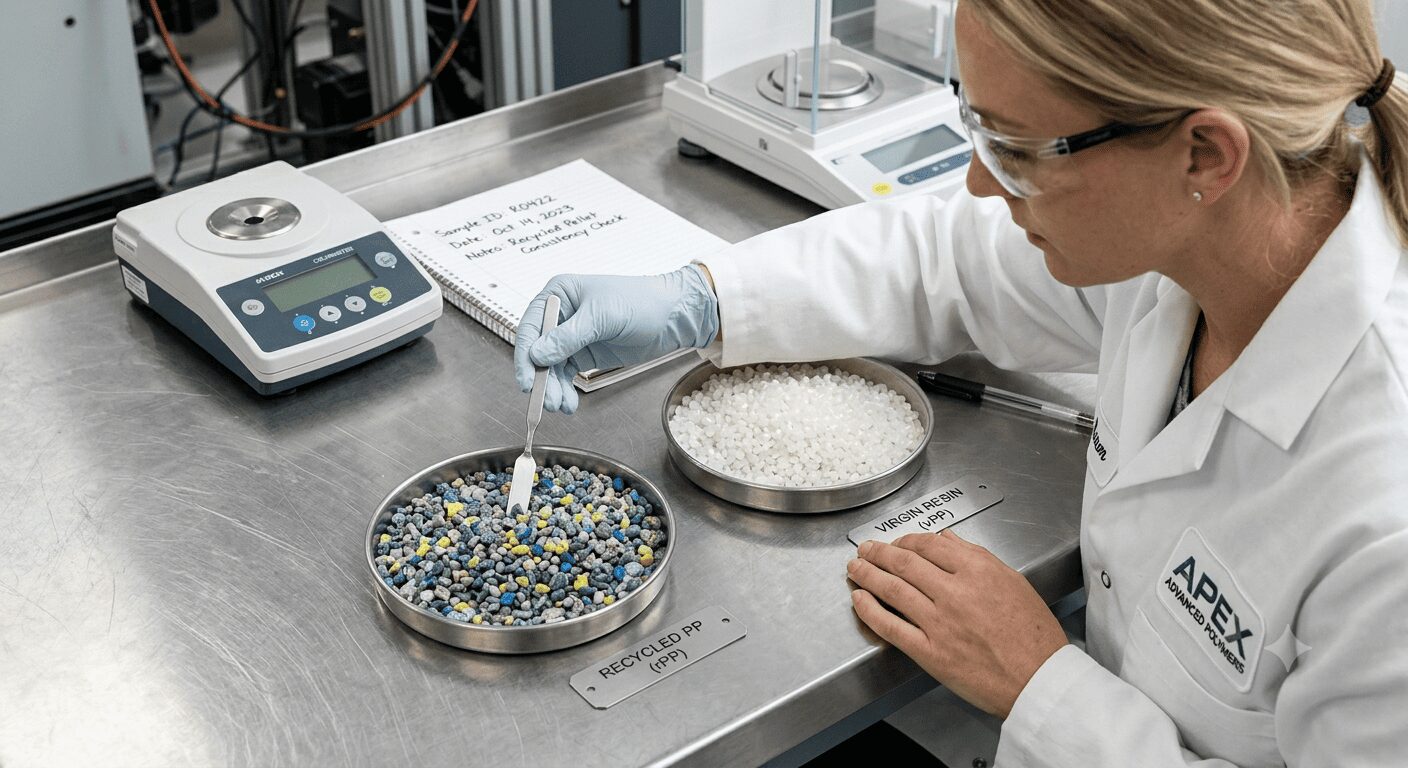
Post-consumer recycled and post-industrial recycled resins are increasingly available across commodity and engineering-grade material families. That does not mean every grade is interchangeable with virgin resin. Recycled feedstock can vary in melt flow, contamination risk, odour, colour consistency, and mechanical performance. The acceptable level of variation depends on the component.
For a hidden construction fitting, furniture component, or noncritical housing, recycled content may be incorporated with limited changes to performance requirements. For an electrical enclosure, automotive component, water-related part, or precision assembly, the evaluation must be more rigorous. Dimensional stability, flame performance, chemical resistance, pressure behaviour, and long-term ageing may matter as much as initial tensile strength.
A practical approach is to define the part’s functional risks before selecting the resin. In some cases, a recycled-content blend is suitable for the entire part. In others, recycled material is better used in a non-cosmetic component, a less demanding variation of the product, or a controlled percentage blended with virgin resin. The right answer depends on the application, not on a universal recycled-content target.
Design for material efficiency is gaining priority
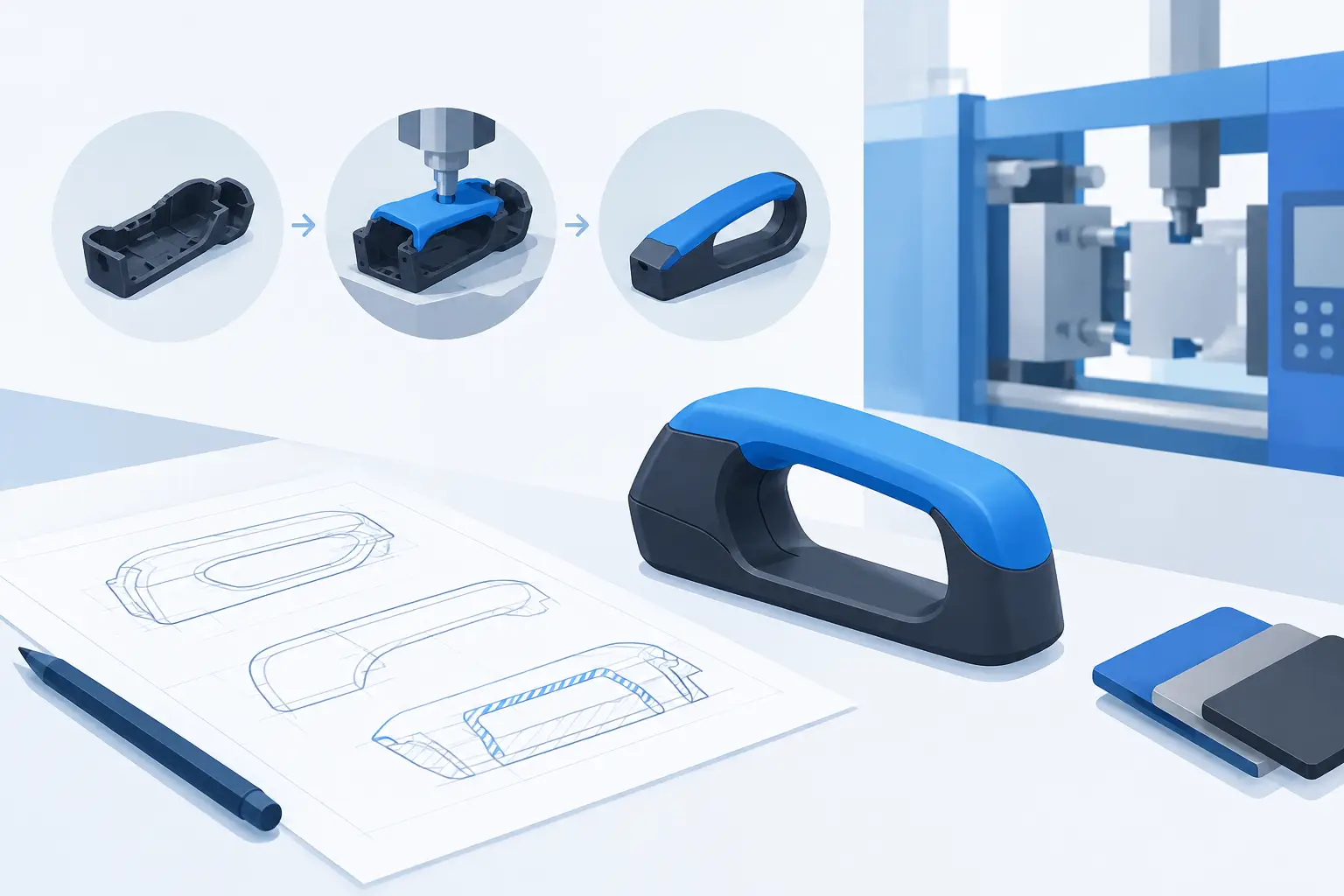
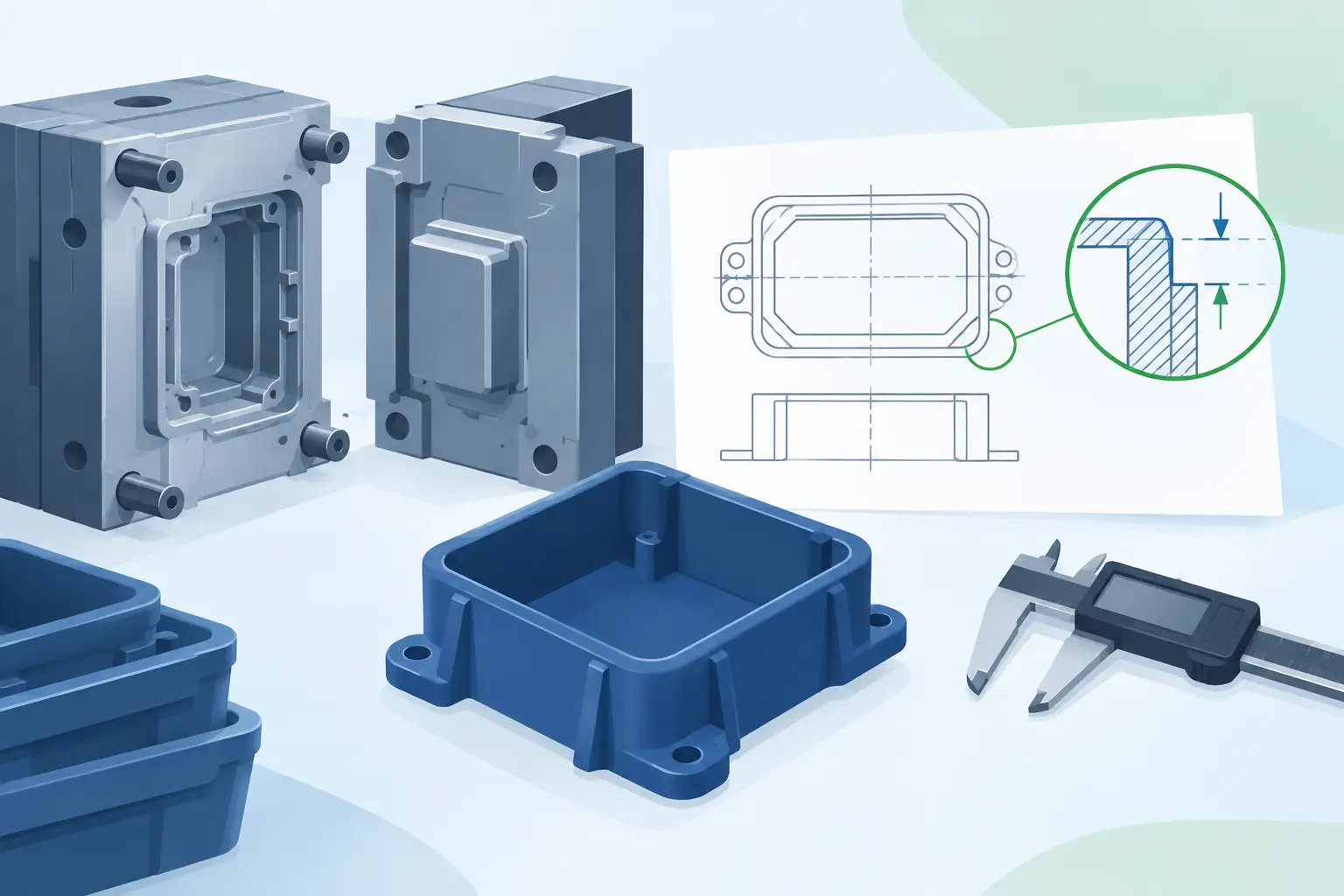
The most sustainable gram of plastic is often the gram that never enters production. This is pushing product developers to review wall thickness, rib design, part consolidation, and gate placement earlier in the development process. A lighter part may reduce material use, but it must still fill consistently, resist deformation, and withstand real-world loading.
Injection moulding provides several opportunities to improve efficiency without compromising function. Uniform walls can reduce sink marks and cycle time. Properly designed ribs can deliver stiffness with less resin than thickened sections. Removing unnecessary material from noncritical areas can reduce part weight across every production run.
Part consolidation is another major opportunity. Replacing several assembled components with one well-designed moulded part can reduce material handling, fastening operations, transport volume, and assembly defects. It can also make end-of-life sorting easier when the original assembly combines several incompatible materials. However, consolidation should not prevent repair or make a product impossible to disassemble when serviceability is a core requirement.
Tooling decisions are part of the sustainability equation
Mould design has a direct effect on scrap, energy use, cycle consistency, and the usable life of a production program. A tool that produces unstable parts or requires frequent intervention creates waste long before the finished product reaches a customer.
Well-engineered cooling channels, appropriate venting, balanced runner systems, and reliable ejection reduce avoidable defects. The same principles support productivity: a stable process consumes fewer resources per acceptable part than a process with high rejection rates and repeated adjustments.
Hot runner systems can reduce runner waste in suitable high-volume applications, particularly where cold runners represent a meaningful share of shot weight. They also add complexity, maintenance demands, and upfront tooling cost. For short runs, simple geometries, or materials sensitive to residence time, a cold runner design may remain the more appropriate choice. Sustainability should be evaluated across the complete production lifecycle rather than through one feature alone.
In-house mould fabrication and modification also matter. When tooling, moulding, quality review, and repair capabilities are coordinated, issues can be identified and corrected faster. That reduces the risk of extended trial cycles, repeated shipment of tools between suppliers, and production losses caused by slow engineering response.
Energy efficiency is moving from a facility metric to a part metric
Manufacturers are under growing pressure to understand the energy associated with individual components and production runs. This is changing how teams assess machine selection, cycle time, automation, and process monitoring.
An injection moulding machine should be matched to the mould and shot size rather than selected only for available tonnage. Oversized equipment can consume more energy than necessary, while undersized equipment can create process instability and quality risk. Efficient barrel heating, well-maintained hydraulic or electric systems, optimised cooling, and disciplined startup procedures all contribute to lower energy use per good part.
Cycle time deserves particular attention. Reducing cycle time by a few seconds across a large annual volume can create a meaningful energy and capacity benefit. But aggressive cycle reduction that produces internal stress, poor surface quality, or insufficient cooling simply shifts cost downstream. The target is not the shortest possible cycle. It is the most efficient stable cycle that consistently meets part requirements.
Regrind use is becoming more controlled
Production scrap does not automatically need to become waste. Sprues, runners, and rejected parts can often be reground and returned to the process, especially for non-cosmetic components and resins that tolerate reprocessing well. The keyword is controlled.
Every heat history can influence polymer behaviour. Excessive regrind percentages or poorly segregated material can affect flow, colour, impact performance, and part consistency. Manufacturers need clear rules for grinding, storage, labelling, blend ratios, and lot control. Regrind should be measured and managed as a production input, not treated as an undefined material stream.
For parts with critical safety, regulatory, cosmetic, or mechanical requirements, regrind may be restricted or excluded. That decision should be based on validation data and customer requirements. A lower scrap number has little value if the result is higher field failure risk.
Traceability Is Becoming a Customer Requirement
Environmental claims are receiving closer scrutiny from customers, regulators, and procurement teams. A statement such as “made with recycled plastic” is no longer sufficient for many B2B programs. Buyers increasingly need documentation that identifies material grade, recycled-content source, supplier declarations, production lots, and any applicable testing results.
Traceability also improves operational control. When a dimensional issue, colour variation, or performance concern appears, lot-level records help isolate the cause quickly. The same discipline supports quality assurance, supplier accountability, and more credible sustainability reporting.
For custom components, the material specification should clearly distinguish between a general sustainability preference and a mandatory functional requirement. For example, a buyer may request a minimum recycled-content percentage, but the specification must also establish which properties cannot change: impact resistance, UV stability, flame rating, food-contact compliance, or dimensional tolerance. Clear priorities prevent late-stage conflict between environmental goals and product performance.
Circular Design Requires Earlier Engineering Decisions
Recyclability is shaped before a mould is cut. Material combinations, coatings, metal inserts, adhesives, pigments, and labels all influence whether a component can be sorted and processed at end of life. Single-material designs are often easier to recycle, but they are not automatically the best technical solution.
A product exposed to heat, chemicals, outdoor weather, or electrical risk may require a specialised polymer, insert, or surface treatment. The engineering task is to reduce unnecessary complexity while protecting the performance the end user depends on. Where disassembly is realistic, designing for separation can help. Where a durable multi-material construction is essential, product life extension may provide a stronger environmental result than a nominally recyclable but short-lived alternative.
This is especially relevant for industrial and utility-related products. A water meter component or electrical housing may remain in service for years under demanding conditions. Material selection must account for durability, maintenance needs, and failure consequences alongside end-of-life considerations.
How Buyers Can Turn Trends Into Better Production Decisions
Sustainable manufacturing programs work best when procurement, design, quality, and production teams align before material approval. Start with the component’s actual function and failure modes. Then assess available materials, expected volumes, tooling implications, recycled-content goals, and verification requirements.
Prototype trials and mould-flow analysis can identify problems early, but production validation remains essential. A resin that performs well in a small test run may behave differently at full production speed, under a specific cooling arrangement, or after exposure to expected environmental conditions. Documented trials reduce the risk of approving a material based on assumptions.
An integrated manufacturing partner can make this process more efficient by connecting design refinement, toolmaking, moulding, secondary operations, and quality checks in one controlled workflow. Glasfil applies this approach to help customers evaluate manufacturability before production commitments are made, with in-house tooling control supporting faster adjustments when a part or process requires refinement.
The next productive conversation is not “Can this part be made more sustainable?” It is “Which change delivers a measurable improvement while protecting performance, cost, and supply reliability?” That question leads to decisions that can hold up on the production floor as well as in the boardroom.
If you are evaluating a new project or facing ongoing tooling and production challenges, contact us to discuss your requirements, request a technical consultation, or submit your RFQ.