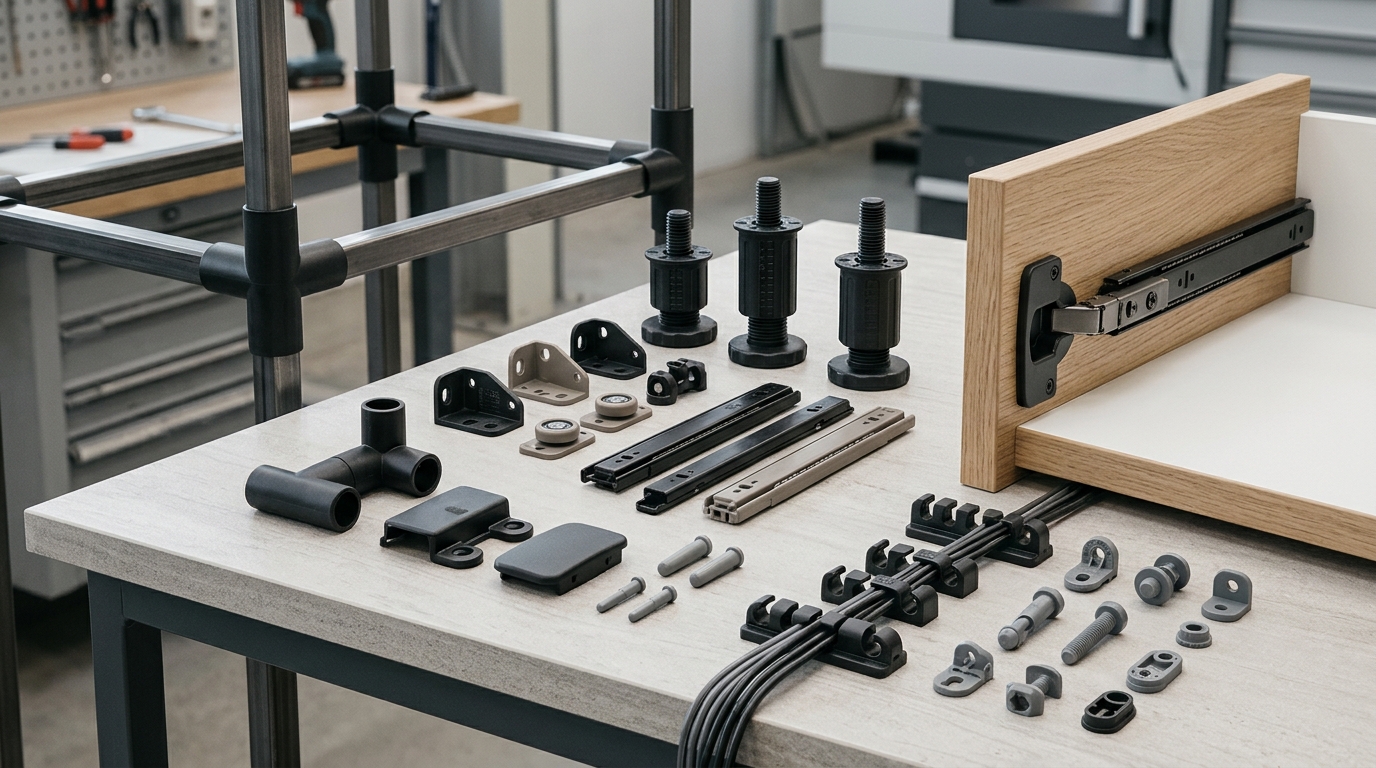
A drawer glide that binds after six months, a cabinet foot that cracks under a loaded unit, or a connector that loosens during assembly can turn a low-cost component into an expensive field issue. Furniture hardware plastic parts must do more than match a drawing. They must carry loads, survive repeated movement, fit mating components, maintain their appearance, and remain economical at production volume.
For OEMs, furniture brands, and hardware suppliers, the manufacturing decision starts well before the first molded part. Material selection, wall design, tooling strategy, tolerance planning, and secondary operations all determine whether a part performs consistently from the first shipment to the next production run.
Why Furniture Hardware Plastic Parts Fail in Use
Most failures are not caused by one obvious defect. They develop where product requirements, part geometry, and manufacturing limits were never fully aligned. A hinge cover may look correct but warp enough to expose a gap. A shelf support may pass a static load test yet creep under a sustained load. A plastic insert may fit a metal tube in one batch and become too loose when the tube supplier’s dimensions shift.
Furniture hardware faces a particular combination of demands. Components are often visible, handled repeatedly, and assembled with materials that behave differently, including steel, aluminum, wood, particleboard, glass, and upholstered panels. Temperature changes during shipping and storage can affect fit. Cleaning chemicals, moisture, UV exposure, and impact can affect surface quality and long-term strength.
The practical requirement is not simply to mold a part. It is to define how that part will behave in the finished furniture system. That means establishing the true load path, assembly method, cycle count, cosmetic expectation, and allowable dimensional variation before tooling is finalized.
Start With the Job the Part Must Do
A clear functional brief prevents costly changes later. Engineers should identify whether the component is structural, cosmetic, protective, fastening-related, or a combination of these roles. A leg cap that protects flooring has different requirements from a concealed bed-frame connector, even if both are small injection-molded parts.
Load conditions deserve special attention. Static loads tell only part of the story. A reclining mechanism, folding table latch, adjustable foot, or sliding-door guide experiences repeated stress and friction. A part can withstand an initial test but fail after thousands of cycles because of wear, fatigue, or creep.
Environmental conditions also change the material decision. Indoor office furniture may prioritize dimensional stability and clean appearance. Outdoor furniture hardware needs greater resistance to UV exposure, moisture, and temperature variation. Bathroom furniture may require improved chemical and humidity resistance. The right specification depends on the application, not on a generic preference for the strongest or least expensive resin.
Define the interfaces early
The mating features usually control the success of the component. Snap fits, screw bosses, living hinges, press-fit inserts, threaded connections, and sliding surfaces should be reviewed as a system. A small adjustment to draft angle, rib thickness, or engagement depth can improve assembly while reducing the risk of stress whitening or breakage.
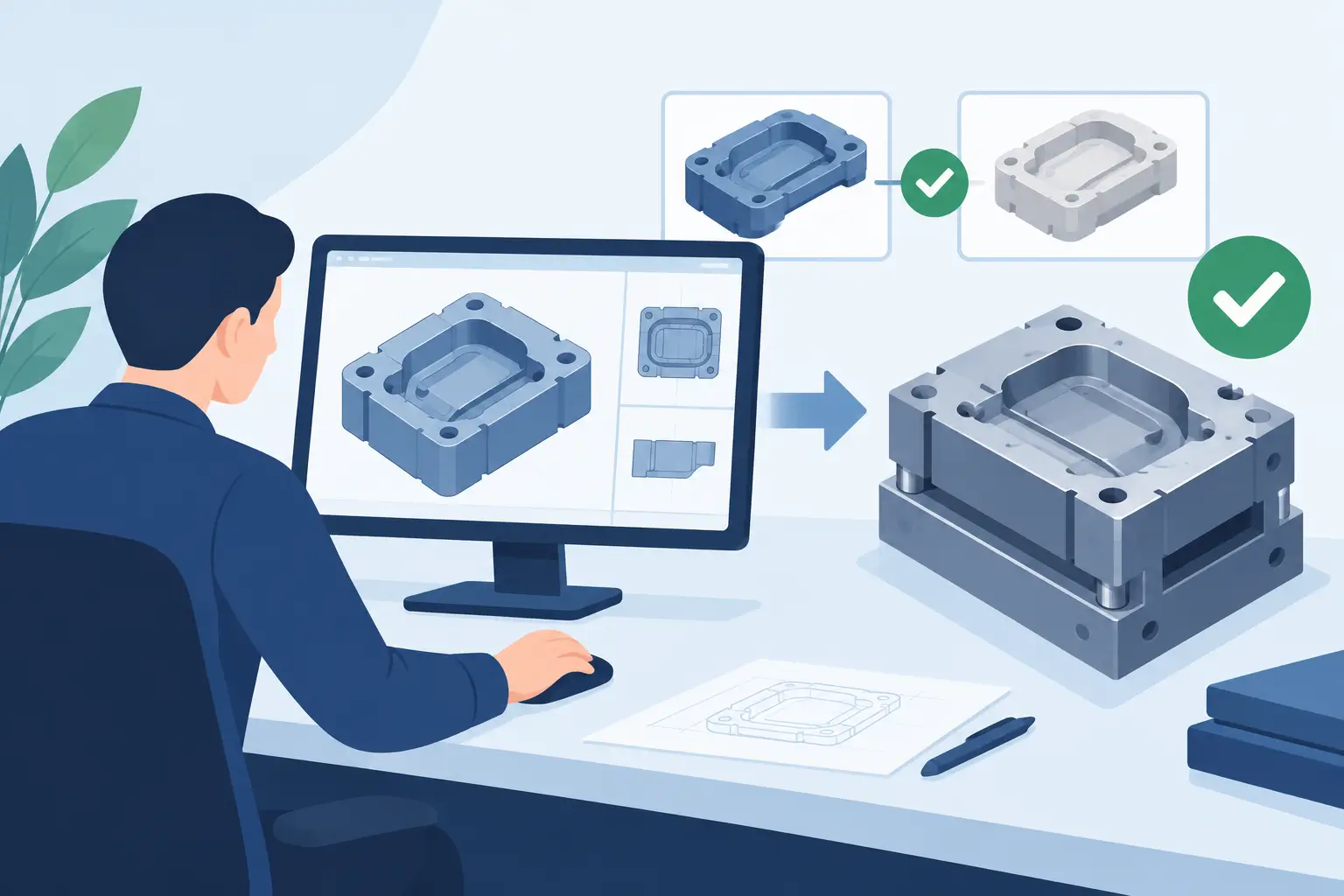
Where plastic joins metal, tolerance stack-up must be calculated rather than assumed. Metal tubes, stamped brackets, wood panels, and molded components each have different production variation. Designing only to nominal dimensions can produce assembly problems on the factory floor. A capable manufacturer reviews these interfaces before cutting steel for the mold.
Select Materials for Performance, Not Just Price
Common resins such as polypropylene, polyethylene, ABS, nylon, polycarbonate, POM, and glass-filled engineering plastics can all have a place in furniture hardware. The decision should follow the operating requirement.
Polypropylene is often suitable for living hinges, caps, and parts where chemical resistance and flexibility matter. ABS can provide a good appearance and balanced impact performance for interior visible components. POM is frequently considered for low-friction moving parts, guides, and clips. Nylon can offer strength and wear resistance, although moisture absorption must be accounted for. Glass-filled materials increase stiffness, but they may be less suitable for thin snap features or high-cosmetic surfaces.
Color, texture, and finish also affect the material choice. A matte black foot or handle cover must maintain a consistent surface across batches. A visible component may need to resist scratching during packing and assembly. If the part will be painted, printed, plated, or overmolded, material compatibility needs to be verified during development rather than after production begins.
Material data sheets are useful starting points, but they do not replace application testing. The real question is whether the molded part, at its actual wall thickness and under its actual service conditions, will meet the required life cycle.
Tooling Determines Repeatability
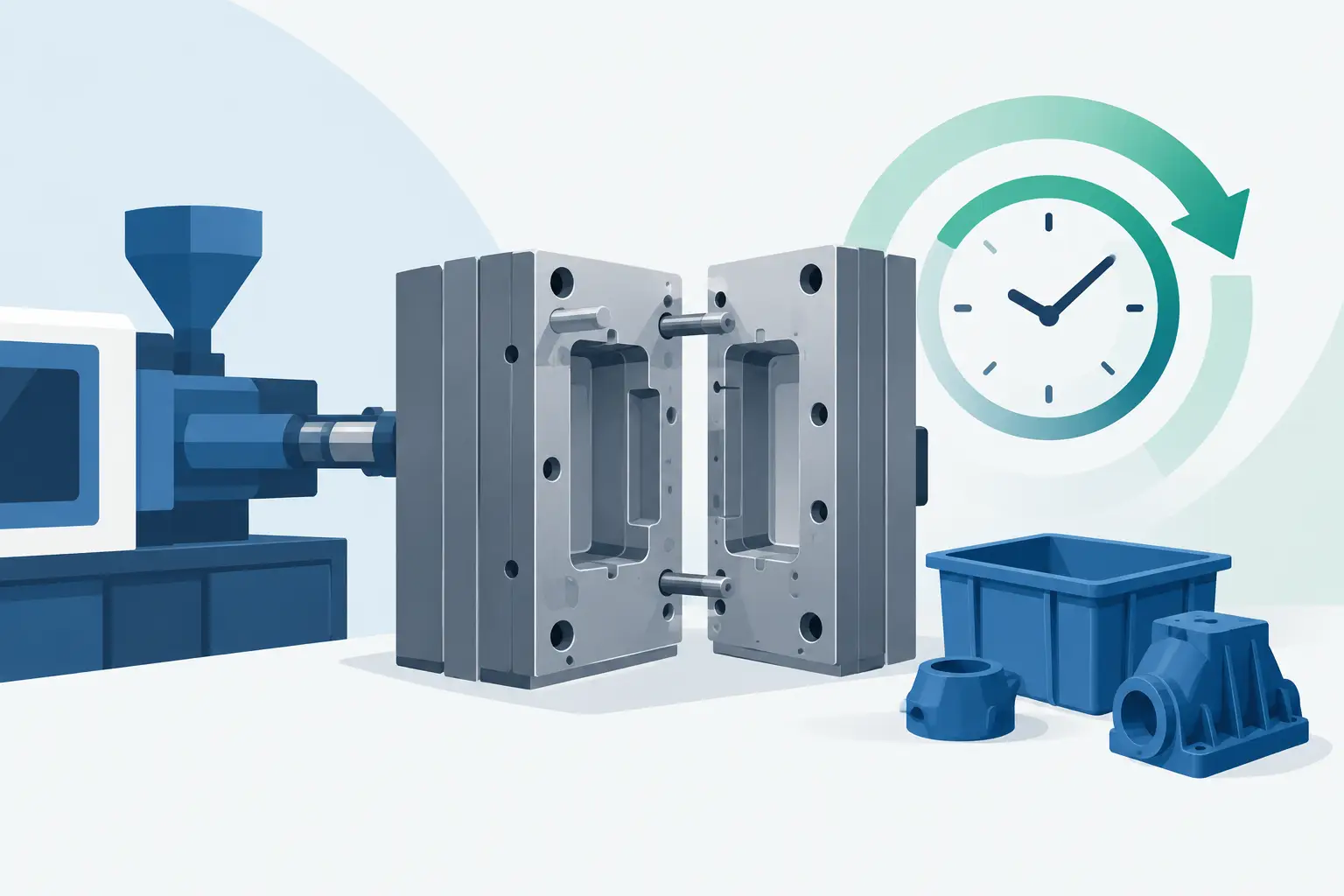
For repeat production, the mold is the production system. Its quality affects cycle time, dimensional consistency, surface finish, maintenance frequency, and the cost of every part made afterward. A low initial tooling price can become expensive when the mold produces flash, inconsistent fits, excess scrap, or frequent downtime.
Good tool design considers gate location, material flow, cooling, ejection, venting, shrinkage, and the parting line from the beginning. Gate placement is especially important on visible furniture components and mechanically stressed features. Poor flow can create weld lines in critical areas, while inadequate cooling can cause distortion and extend the molding cycle.
Part geometry should support molding rather than fight it. Consistent wall thickness reduces sink marks and warpage. Ribs add stiffness efficiently when sized correctly. Draft allows reliable ejection and protects cosmetic surfaces. Sharp internal corners concentrate stress, so radii are often a better long-term choice.
Tooling should also match forecast demand. A prototype tool may support initial validation, but a production program may require hardened steel, multiple cavities, automated handling, or interchangeable inserts for product variants. The right approach depends on annual volume, product life, expected revisions, and the cost of a supply interruption.
Build Quality Into the Production Plan
Inspection at the end of the line cannot correct a process that is not under control. Dimensional requirements, cosmetic standards, approved samples, and functional tests should be defined before serial production. For furniture hardware, that may include fit gauges, pull tests, torque tests, cycle testing, color comparison, and visual checks for flash, sink, short shots, and surface damage.
Traceability is equally valuable when the part is part of a larger assembly. Lot identification, documented process parameters, and retained samples help isolate issues quickly if a problem appears after shipment. This is particularly relevant for international furniture programs where a production delay can affect several assembly sites.
Secondary processing must be planned as part of the same workflow. Assembly of metal inserts, pad printing, ultrasonic welding, trimming, packaging, and custom labeling can introduce variation if handled by disconnected suppliers. An integrated manufacturer can control the sequence, protect cosmetic surfaces, and pack components according to the requirements of the furniture assembly operation.
At Glasfil, in-house mold design, mold modification, injection molding, finishing, and quality control allow product teams to address manufacturing changes without losing control between multiple vendors. That integration is especially valuable when a hardware part requires rapid refinement before launch or dependable repeat supply after approval.
Furniture Hardware Plastic Parts Need a Practical Development Path
The fastest route to stable production is rarely skipping engineering review. It is identifying the decisions that affect cost and performance while changes are still inexpensive. A focused design-for-manufacturing review should examine function, material behavior, critical dimensions, moldability, surface requirements, assembly method, and expected production volume together.
For new programs, prototype parts can confirm fit and user interaction before production tooling is committed. For existing programs, reverse engineering and mold modification may be more practical than redesigning an entire assembly. Discontinued parts, recurring quality complaints, and supplier transitions often create opportunities to improve a component’s geometry, resin, or tooling performance.
The most useful supplier discussion starts with real operating information: drawings, mating-part details, expected annual quantities, target market, load requirements, appearance samples, and known failure modes. With that information available early, manufacturers can recommend a production path based on evidence rather than assumptions.
A furniture component may be small, but its effect on assembly speed, product quality, and customer perception is not. Treat the part as an engineered interface, validate it under real conditions, and choose a manufacturing partner that can control the details from tooling through delivery.
Contact us to discuss your project, request a quotation, or arrange a technical consultation. Our team will help you determine the most cost-effective and reliable way to manufacture your part.