A lipstick cap that looks premium on a retail shelf still has to survive a hot warehouse, resist hand cream, close consistently, and run efficiently by the tens or hundreds of thousands. For teams researching “sugarcane bioplastic cosmetic packaging Malaysia trending bio-based material,” that is the practical starting point: a bio-based resin is only valuable when it performs reliably in the finished package.
Sugarcane-derived plastics are gaining attention because they can reduce reliance on fossil feedstocks without forcing brands to abandon familiar packaging formats. However, the material decision is not as simple as replacing one resin with another. For cosmetic packaging, the right result depends on product chemistry, geometry, decoration, recycled-content targets, end-of-life claims, and the capabilities of the molding partner.
Why sugarcane bioplastic cosmetic packaging is gaining traction in Malaysia
Beauty and personal-care brands are under pressure from retailers, consumers, and internal sustainability commitments to show measurable progress on packaging. In Malaysia, where contract manufacturing, regional distribution, and export-oriented production are significant, brands are looking for materials that can support environmental positioning while remaining compatible with established molding and filling operations.
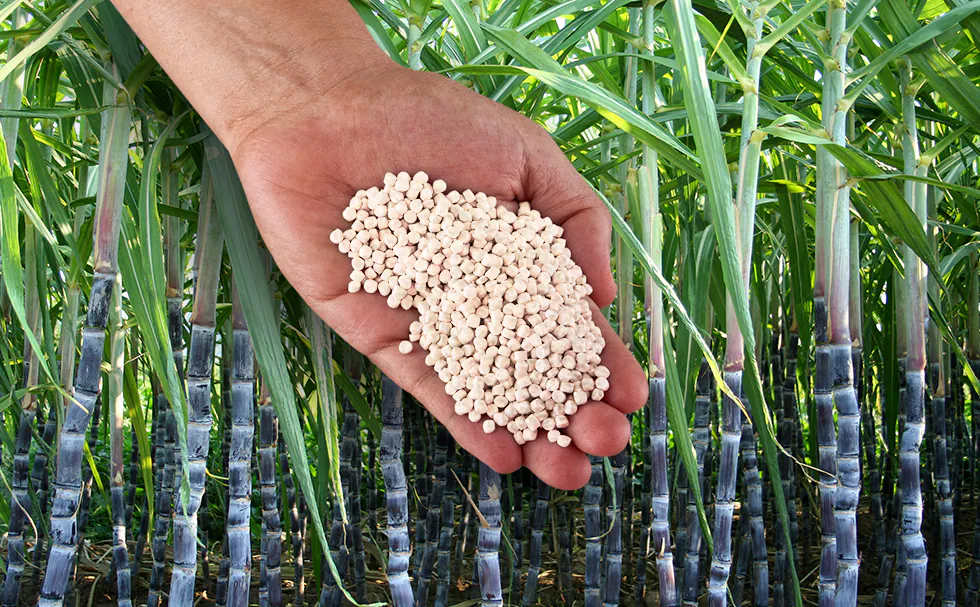
The most common sugarcane-based option is bio-based polyethylene, often called bio-PE. Its carbon source comes from sugarcane ethanol rather than conventional petroleum feedstock. Because its polymer structure can be equivalent to conventional polyethylene, it may be processed in many of the same applications, including cosmetic jars, caps, closures, bottles, and certain dispenser components.
That familiarity is a major commercial advantage. A beauty brand can pursue a renewable-feedstock story without necessarily redesigning every component, changing filling equipment, or accepting an unfamiliar recycling stream. It also means buyers should distinguish carefully between bio-based, biodegradable, compostable, and recyclable. These terms are not interchangeable.
Bio-PE is generally recyclable where polyethylene collection and processing systems exist, but it is not automatically biodegradable or compostable. A responsible package claim must reflect the actual resin, component structure, local collection infrastructure, and applicable marketing rules. Overstating the end-of-life benefit can create more risk than value.
Material selection starts with the cosmetic formula
A material that performs well for a dry powder compact may not be appropriate for a facial oil, exfoliating acid serum, or fragrance-heavy body product. Cosmetic packaging is a chemical interface, not merely a branded container.
Bio-PE can be a strong candidate for many low- to moderate-risk applications, especially when conventional PE is already proven for the product. It offers useful toughness, moisture resistance, and flexibility. For injection-molded packaging, it can support practical formats such as caps, lids, jars, inner cups, spatulas, and promotional accessories.
Its limits must also be evaluated early. PE has lower heat resistance and stiffness than some engineering plastics, which can affect thin-wall features, snap closures, thread engagement, and storage conditions. Highly volatile formulas, essential oils, aggressive solvents, and active ingredients may require compatibility testing or a different resin family. If the package uses a pump, metal spring, elastomer, or multilayer barrier structure, the full assembly must be assessed rather than the visible outer part alone.
Color and finish also matter. A natural-looking bio-based package is not always the desired result. Luxury cosmetics may require high-gloss surfaces, deep opaque colors, metallic effects, soft-touch finishes, or precise color matching across several components. Pigments, masterbatch selection, resin lot variation, and molding conditions all influence the final appearance. Sustainability goals should be specified alongside the visual standard, not added after tooling is complete.
Bio-based content is not the same as recycled content
Procurement teams often compare sugarcane bioplastic with post-consumer recycled plastic, but they solve different problems. Bio-based resin changes the feedstock source. PCR supports circular use of existing plastic. Either option may be appropriate, and some packaging strategies use both where material availability and quality allow.
The trade-off is consistency. Virgin bio-based PE can offer more predictable appearance and processing than high-PCR formulations, particularly for premium cosmetic parts with tight cosmetic requirements. PCR may offer a stronger circularity narrative but can introduce color variation, odor concerns, or performance variability depending on the source and percentage used. The correct choice should follow the product brief, not a generic sustainability hierarchy.
Tooling and molding decisions determine the commercial outcome
For cosmetic packaging, the resin is only one part of the manufacturing decision. Tool design, gate location, cooling layout, shrinkage control, surface texture, and automated handling determine whether a component looks refined and runs at a stable cycle time.
A sugarcane-derived drop-in resin may be close to its conventional equivalent, but it should never be treated as an automatic one-for-one substitution after a mold has been finalized. The manufacturer should review resin data, flow behavior, shrinkage expectations, part thickness, and functional tolerances before production approval. Small differences can affect warpage, sink marks, thread fit, cap torque, and snap performance.
This is particularly relevant for multi-part cosmetic packs. A jar and lid may be produced in different materials for stiffness or aesthetics. A closure may need controlled interference fit. A compact may use hinges, living hinges, magnets, or decorative inserts. Changing one component material can alter assembly behavior across the entire package.
Early design-for-manufacturing review prevents expensive correction later. The review should cover wall thickness transitions, ribs, draft angles, undercuts, decoration areas, tamper-evident features, and the intended assembly method. It should also define critical-to-quality dimensions instead of relying only on a visual sample approval.
For brands moving quickly from concept to launch, integrated tooling and molding control is especially valuable. A manufacturer such as Glasfil can assess the component design, fabricate or modify the mold in-house, run trials, complete secondary processes, and manage production as one connected program. That reduces handoffs when the material, fit, or finish needs adjustment.
What brands should verify before making a sustainability claim
The strongest packaging programs are documented, testable, and specific. A supplier statement that a resin is “green” is not enough for a product launch, retailer review, or export market.
Brands should request evidence of the bio-based resin grade and its declared renewable content, then confirm whether the claim applies to the entire package or only selected components. A cap made with bio-PE does not make a pump bottle fully bio-based. Decoration, labels, liners, metallization, and inserts may materially change the composition and recycling outcome.
Compatibility testing should reflect the actual formula and storage profile. Depending on the product, this may include leakage checks, weight loss, color change, odor transfer, stress cracking, closure torque retention, and elevated-temperature exposure. For prestige packaging, abrasion resistance and decoration adhesion are also relevant.
A practical validation plan normally includes initial samples, pilot production, dimensional inspection, assembly testing, and controlled approval samples. The goal is not to over-test every program. It is to test the risks that could cause product loss, customer complaints, or a late launch delay.
Where sugarcane-based packaging makes the most sense
Sugarcane bioplastic is most compelling when it supports both the sustainability brief and the operating requirements of the package. It can be well suited to skincare jars, body-care closures, stick deodorant components, sample containers, caps, and other molded formats where PE-like performance is appropriate.
It may be a less suitable first choice when the package requires high heat resistance, exceptional rigidity, a high chemical barrier, crystal-clear transparency, or demanding resistance to solvents. In those cases, a hybrid solution or another polymer may provide a better balance of performance and environmental goals.
The best projects avoid material decisions based solely on trend language. They begin with the formula, package function, annual volume, target market, brand claim, and manufacturing route. From there, the resin and tooling strategy can be engineered around real production requirements.
A bio-based package earns its place when it closes correctly, protects the formula, presents the brand well, and can be manufactured repeatedly without avoidable waste. That is the standard worth setting before the first mold steel is cut.
Ready to upgrade your cosmetic packaging? Contact us today to evaluate your design and run a trial with sustainable materials.